Post-Doctoral Fellow at University of Toronto. Interested in machine learning (especially machine learning interatomic potential) in computational chemistry.
New @ChemRxiv preprint: AIMNet2(Score), a label-free way to score protein-ligand complexes. No experimental affinity data. Just QM-level physics from AIMNet2 MLIPs: interaction energy + ligand desolvation + conformational strain, on a single bound structure. #compchem🧵
🚨 AIMNet2 MLIP models are now available on @huggingface 😊 Check it out: https://t.co/X921f1j7qk and updated documentation: https://t.co/5bHr55di87 #compchem
Harnessing physics informed neural networks for molecular electrostatics
Molecular electrostatics underpins many processes in chemistry and biology, from enzyme-substrate recognition to protein folding. In traditional approaches, solving the underlying equations often involves substantial computational resources, which has motivated interest in more flexible and data-driven methods. Researchers now look to machine learning as a way to refine how electrostatic problems are tackled in complex molecular environments.
Achondo and coauthors employed a physics informed neural network strategy that treats the Poisson–Boltzmann equation through specialized neural architectures. The authors designed two parallel networks, each responsible for solute and solvent regions, coupled through an interface-matching loss function. The methodology incorporated input and output scaling layers to stabilize training, random Fourier feature layers to capture higher-frequency details, and trainable activation functions to adjust the nonlinearity. By balancing different terms in the loss adaptively, the approach attained solution accuracies on the order of 10^–2 to 10^–3 when benchmarked against reference methods.
This research demonstrates that carefully tuned neural networks can replicate electrostatic potentials and solvation energies for realistic molecular systems. The authors show that the method can integrate information from experimental data such as NMR-derived observables, suggesting a versatile framework that unifies first-principles equations with real-world measurements. These findings emphasize the potential of machine learning to handle challenging boundary conditions in molecular simulations while maintaining quantitative precision.
Paper: https://t.co/gv587CA2Ik
MRCC 2024 release is out: https://t.co/hBcIe18PPC
New #compchem features 1/2:
- restricted open-shell LNO-CC https://t.co/Nm6cYLJ9NS
- density based basis set correction with local natural orbitals (LNO) https://t.co/KdyotsefoE
- LNO review & tutorial: https://t.co/0pX2HDgHq3
Machine learning potentials for heterogeneous catalysis
Heterogeneous catalysis, critical to refining processes and chemical production, has traditionally been tough to model at the atomic level due to large system sizes and complex reaction environments. In this perspective, Omranpour et al. highlight how machine learning potentials (MLPs) can substantially overcome these hurdles. By training on quantum-level data, MLPs provide ab initio accuracy while handling the complexities of real catalytic interfaces, including the presence of solvents, adsorbates, and defects that conventional electronic-structure methods can only treat in simplified form.
In the paper, the researchers detail the construction and validation of MLPs derived from carefully curated electronic structure reference data. They rely on approaches such as high-dimensional neural networks and message-passing neural nets to map each atom’s local environment to its energy contribution, collectively forming a global potential energy landscape. Active learning workflows guide the selection of new training configurations, ensuring that critical atomistic arrangements—like adsorbates on surfaces or solvent-induced structural rearrangements—are captured. This balance of efficiency and precision allows simulations of thousands of atoms over nanosecond timescales, maintaining close agreement with the underlying density functional theory.
By using MLP-driven molecular dynamics, the authors demonstrate valuable insights into how heterogeneous catalysts evolve under realistic conditions. Examples include the restructuring of oxide surfaces in contact with water, metal cluster reshaping at elevated temperature, and the coupling of adsorbates to catalytic sites. Their perspective indicates that MLP-based simulations will be central in deciphering dynamic reaction pathways and guiding catalyst optimization. This leap from static models toward more faithful, time-resolved simulations opens new possibilities for scientific discovery, ultimately enabling rational design of catalysts and improved industrial processes.
Paper: https://t.co/WtaTrGEqRh
Preprint: https://t.co/7jaDLHLOAx
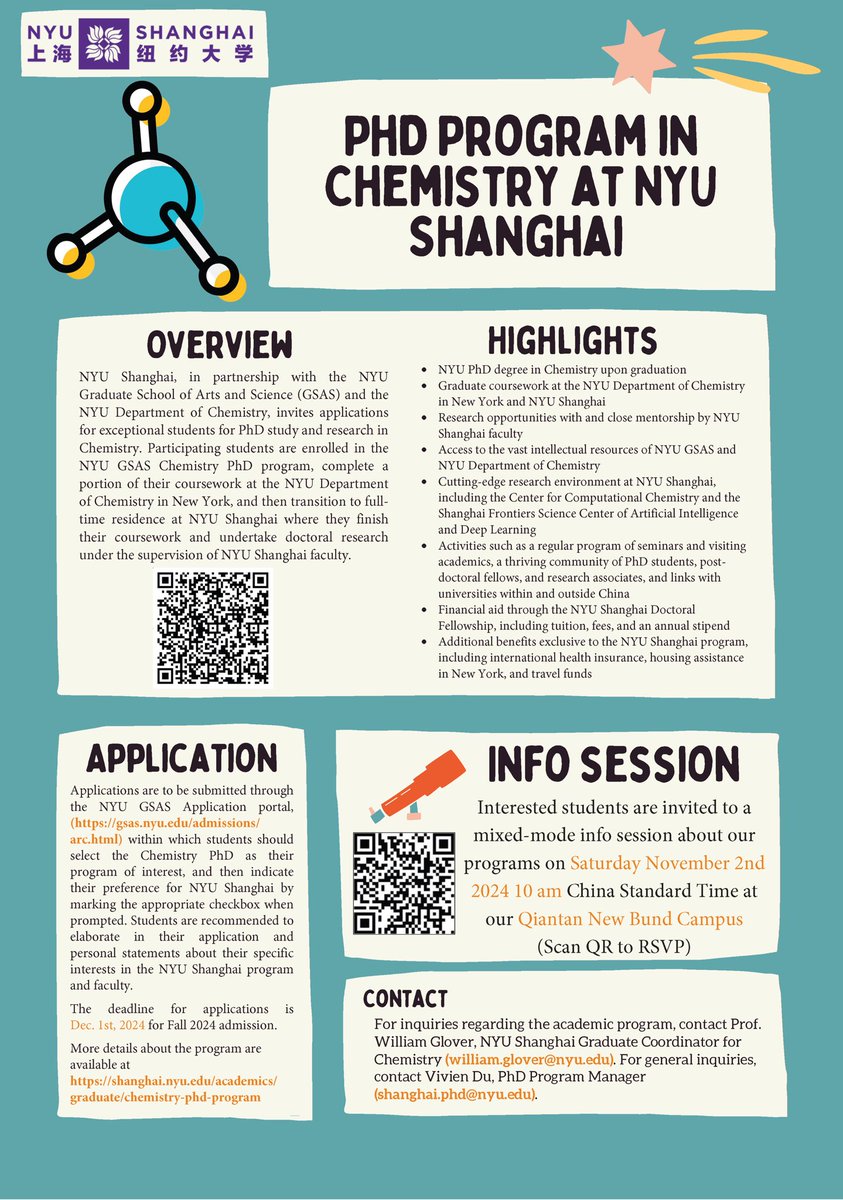
Come and join our team! Stipends are currently ~$24k pa in the PhD program and ~$22k pa in the MSc program. Research in many different sub-disciplines from the more traditional to interdisciplinary. https://t.co/9k0Sp8qWKj
Attention #ExpressEntry candidates : Starting in spring 2025, you will no longer receive additional points for having a job offer: https://t.co/2RWzlD1ouH
This temporary measure will reduce fraud by removing the incentive to illegally buy or sell labour market impact assessments to improve a candidate’s chances of being selected to come to Canada as a permanent resident.
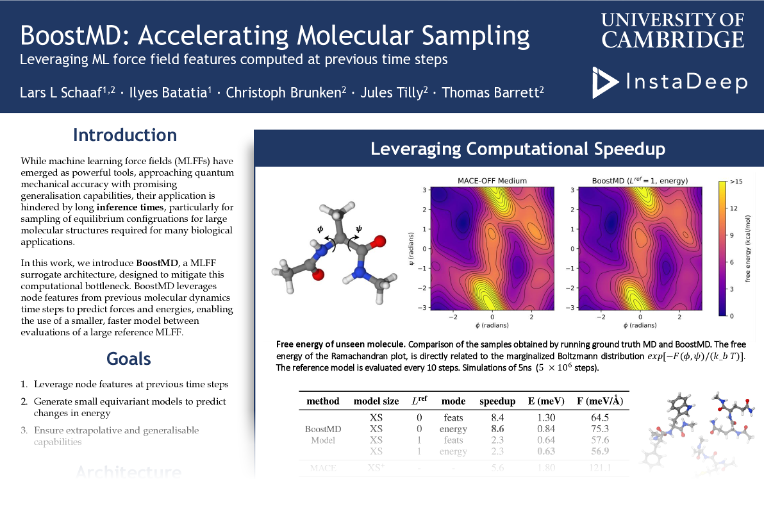
Come checkout *BoostMD*, a new approach for accelerating machine learning force fields, by leveraging infromation from previous time steps.
Today at MLSB @ Neurips (Room E-11).
paper: https://t.co/EwH1FjEnxF
#compchem Good read: Nuclear Quantum Effects in Liquid Water Are Marginal for Its Average Structure but Significant for Dynamics https://t.co/wkogJP6Ae2
We are hiring (resharing appreciated)!
Given a few recent successful grant applications (I got my SNSF Starting Grant 🚀), we are extending the LIAC (@SchwallerGroup) team and have multiple openings (PhD/postdoc) for 2025.
Are you interested in #AI4Science and machine learning with real-world applications in chemistry?
Apply now (deadline: December 20th) by filling in the following form: https://t.co/iTDjnMNIWX. Interviews with selected candidates will take place in January/February.
We offer a highly dynamic and collaborative environment with competitive salaries (https://t.co/OQtVfGxjfk) and benefits (https://t.co/pSFV8N3Fff).
We strongly encourage candidates of all different backgrounds and identities to apply. Each new hire is an opportunity for us to bring in a different perspective, and we are always eager to further diversify our team.
Check out https://t.co/0Rk0KOMLN9.
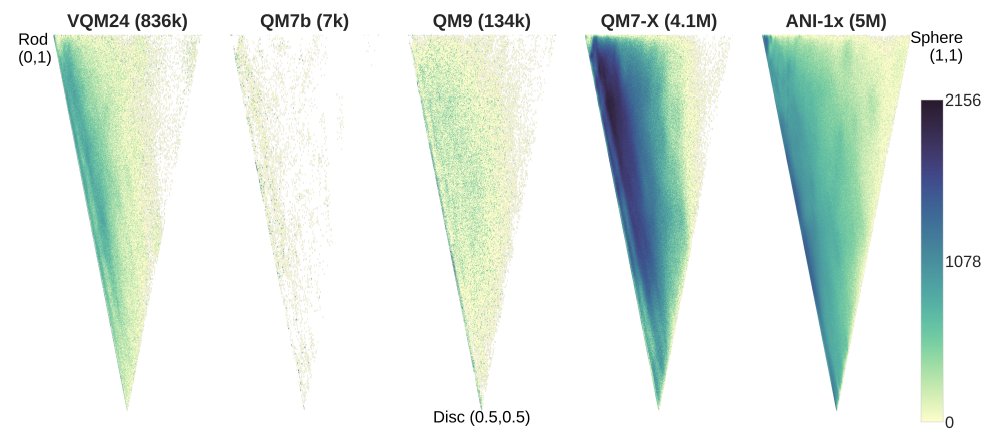
With less than 1M compounds, our VQM24 dataset sets a new SOTA in terms of covering more comprehensively the compositional and configurational space of small molecules. Wonderful joint efforts by current and past team-members and collaborators. Hopefully useful for
#ML
&
#compchem https://t.co/PQnw9qKK8m
2 fully funded PhD Doctoral positions in computational chemistry/biology/AI are available in the Major group at Bar-Ilan University within the framework of a Horizon project (European MSCA Doctoral Network 'ModBioTerp'). Contact me at: [email protected]
We are delighted to host our first class of ACT-CMS (Accelerating Curricular Transformation in the Computational Molecular Sciences) Faculty Fellows for their workshop this week! They are developing learning activities to integrate programming & computation into their courses.😀