I hope one day Ukrainians will be celebrating just like Americans are today.
Not because someone won an election, but because the war is finally over and russia can go to hell.
@gabepgomes Tsss! Dont tell them about chemistry 😉 Let them loose their perceived billon evaluations and end up exactly the same place as previous “AI in drug discovery” wave from 2016-2018s 😎
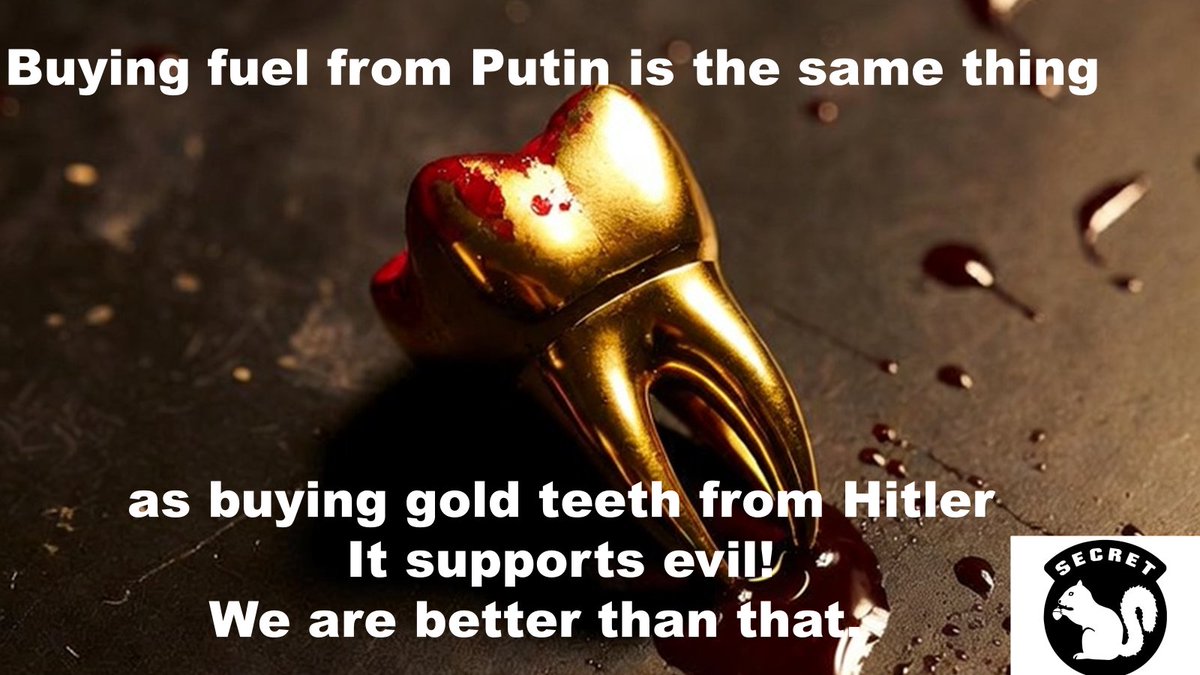
We went from sanctioning Russian oil to buying it in three weeks.
Instead of ending his disastrous war in Iran, Trump is now funding Russia's war in Ukraine.
We used to hold dictators and autocrats accountable.
Now our president negotiated a deal to fund Putin's unjust war.
Hey #compchem and #ai4science submit your databases, web and application notes to publish at JCIM! High quality review and good visibility for the community!
Application Notes in JCIM: A Home for Data, Software, and Web-Based Services in Cheminformatics and Molecular Modeling
https://t.co/gEmZTRNAQg
#JCIM Vol66 Issue17 #Editorials
For more details, check out our
paper: https://t.co/SpyKbIzw1N,
code: https://t.co/UrWAkgvjpF,
EurekaBench website: https://t.co/mgmCtkJbYN.
Work done with amazing collaborators Zhengxuan Wu (@ZhengxuanZenWu), Kevin S. Chen (@kevinschen13), Seungone Kim (@seungonekim), Joseph Janssen, Zora Zhiruo Wang (@ZhiruoW), Bhupalee Kalita (@BhupaleeK), Runtian Gao, Aaron Ho, Andrew Oakleigh Nelson, Olexandr Isayev (@olexandr), Francisco Villaescusa-Navarro (@paco_astro), Ching-Yao Lai (@chingyaolai), Howard Chen (@__howardchen), Graham Neubig (@gneubig).
Huge thanks to everyone who gave valuable feedback throughout this work! 🎉
(8/8)
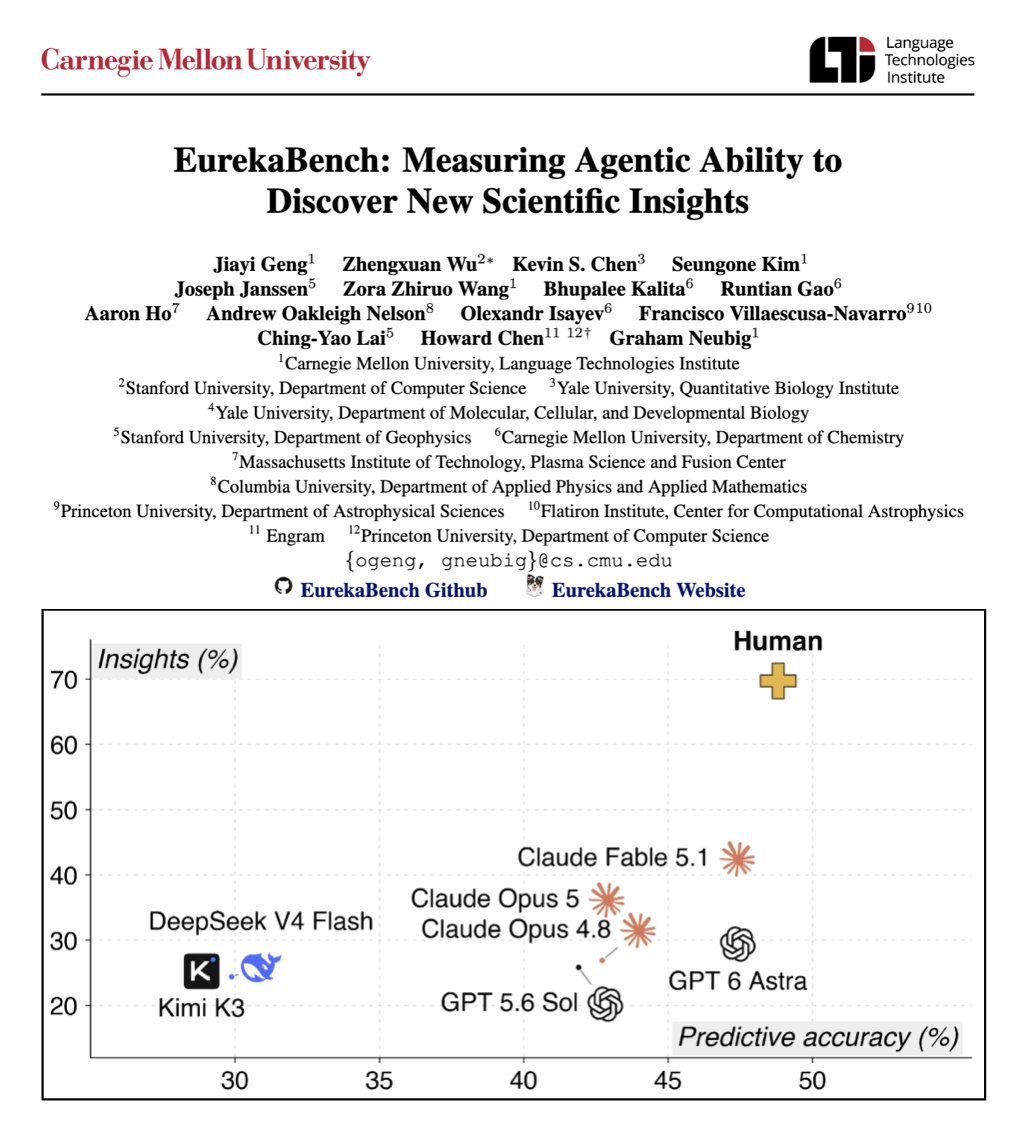
AI scientist agents are great at optimizing and finding solutions through endless trial and error. But is that really what science is about?
As Terrance Tao eloquently put, the role of math and science should be more than that – they are "lighthouses" that guide and inspire exploration through understanding and insights. Can AI agents discover novel insights through experimentation?
To study these gaps, we worked with domain experts to introduce EurekaBench, a benchmark spanning 6 science domains that evaluates an agent’s ability to discover genuinely new scientific insights.
(1/n)
High-throughput physics-based enzyme engineering
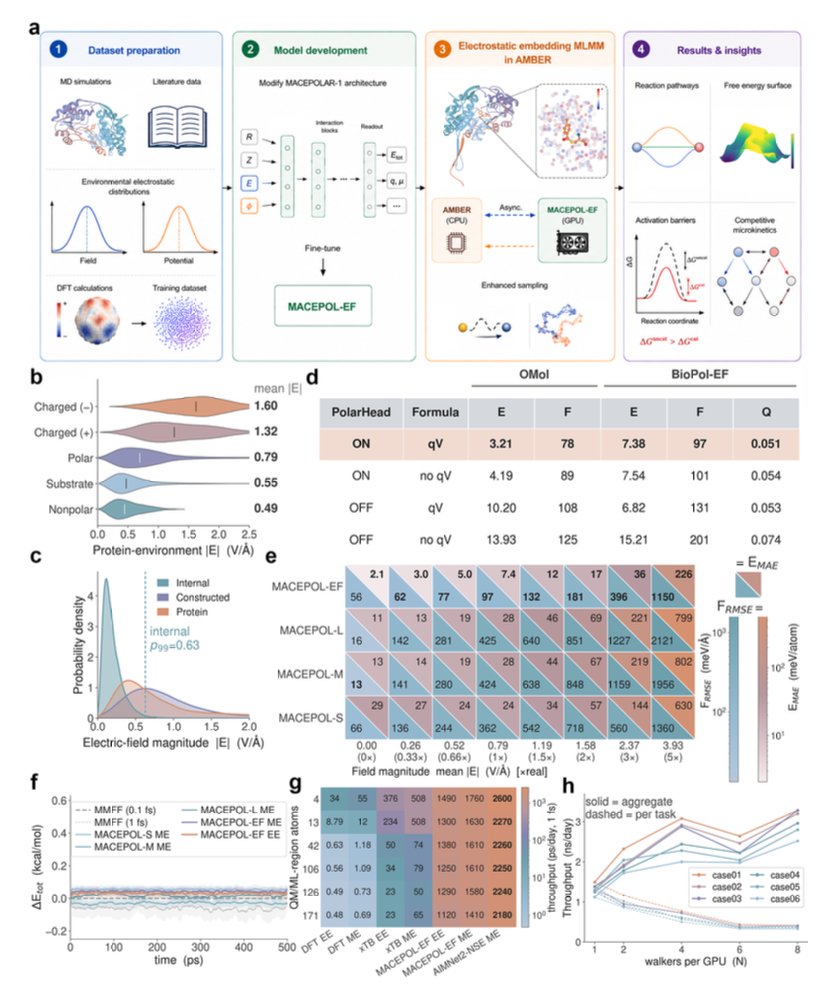
1. The study presents a scalable, physics-based enzyme-engineering workflow that reaches quantum-mechanical accuracy for enzyme electrostatics while staying fast enough for high-throughput, atomistic free-energy calculations of multistep catalytic mechanisms.
2. A central contribution is MACEPOL-EF, an electric field-aware machine-learning interatomic potential (MLIP) designed for the unusually strong and heterogeneous electric fields found in protein active sites (roughly 0.49–1.60 V Å−1, consistent with Stark-effect measurements).
3. To train for that regime, the authors build BioPol-EF: a DFT-labeled dataset (~280k entries) where external electrostatic fields are systematically reconstructed around molecules to match protein-like, element-dependent field statistics, addressing a known failure mode of field-agnostic ML potentials in ML/MM.
4. Architecturally, MACEPOL-EF extends MACEPOLAR-1 with (i) per-atom charge–potential (qV) coupling so atoms can sense anisotropic external potentials/fields, and (ii) an adaptive polarization head that captures linear polarization plus higher-order response, while retaining physically meaningful atomic charges.
5. The paper implements a bidirectional electrostatic-embedding ML/MM scheme in AMBER: the ML region responds to MM-derived potentials/fields, while the MM region responds to on-the-fly ML electrostatics via analytic force propagation, yielding stable energy conservation and a physically consistent hybrid potential.
6. The practical target is an engineered oxidative amidase (OxiAm) derived from aldehyde dehydrogenase (ALDH) that forms amides from aldehydes + amines, competing against native hydrolysis (acid formation). Using enhanced sampling (OPES-MetaD), they compute full reaction free-energy landscapes and extract minimum-energy pathways and transition-state ensembles.
7. Mechanistically, they resolve a multistep pathway: Cys293 thiolate attack → tetrahedral intermediate → hydride transfer to NAD(P)+ → metastable thioester → branch point where either water (hydrolysis) or amine (aminolysis) attacks, with proton transfer mediated by a preorganized water-assisted H-bond network. Ensemble analysis shows early steps are rigid/preorganized, while hydrolysis/aminolysis have broad, heterogeneous TS ensembles.
8. A key modeling advance is microkinetic integration of multiple barriers (thioester formation, aminolysis, hydrolysis) rather than assuming a single rate-determining step. This improves kcat agreement with experiment (|Δlog| ~0.67 vs ~2.28 when approximating with aminolysis alone) and enables quantitative prediction of selectivity (amide/acid), including a saturation-mutagenesis panel at position 259.
9. The framework generalizes across substrate scope and homologous scaffolds: calculated log10(kcat) correlates with experimental yields across 25 aldehyde–amine combinations (r = 0.48), and the same four mutations (L163G, R166M, T234H, E259L) shift selectivity toward amidation across multiple ALDHs via scaffold-dependent atomistic mechanisms (sometimes improving selectivity at the cost of turnover, sometimes improving both).
10. In a pharma-oriented case study (ABBV-318 route), the authors use transition-state interaction energy decomposition to nominate redesign positions (including a non-obvious site F454), run virtual saturation mutagenesis with ML/MM free-energy barriers, and experimentally validate improved variants (e.g., G163C ~80% yield at pH 11; F454H ~60% yield at pH 7), illustrating how TS-ensemble physics can guide mutations beyond previously explored sites.
💻Code: https://t.co/N3XRG4iImg ; https://t.co/yDG2Oaym98 ; https://t.co/GJ77Pu4ekF
📜Paper: https://t.co/q9Vv9IB9XU
#ComputationalBiology #EnzymeEngineering #Biocatalysis #MolecularSimulation #FreeEnergy #MLMM #QMMM #AMBER #MachineLearning #Microkinetics