WHO global health communication strategy and campaigns. ДЭМБ стратегит мэдээллийн хэлтсийг удирдахад хамагаа зориулж явна 🧐🤗🇲🇳🇨🇭. “Тал шигээ сэтгэцгээе”
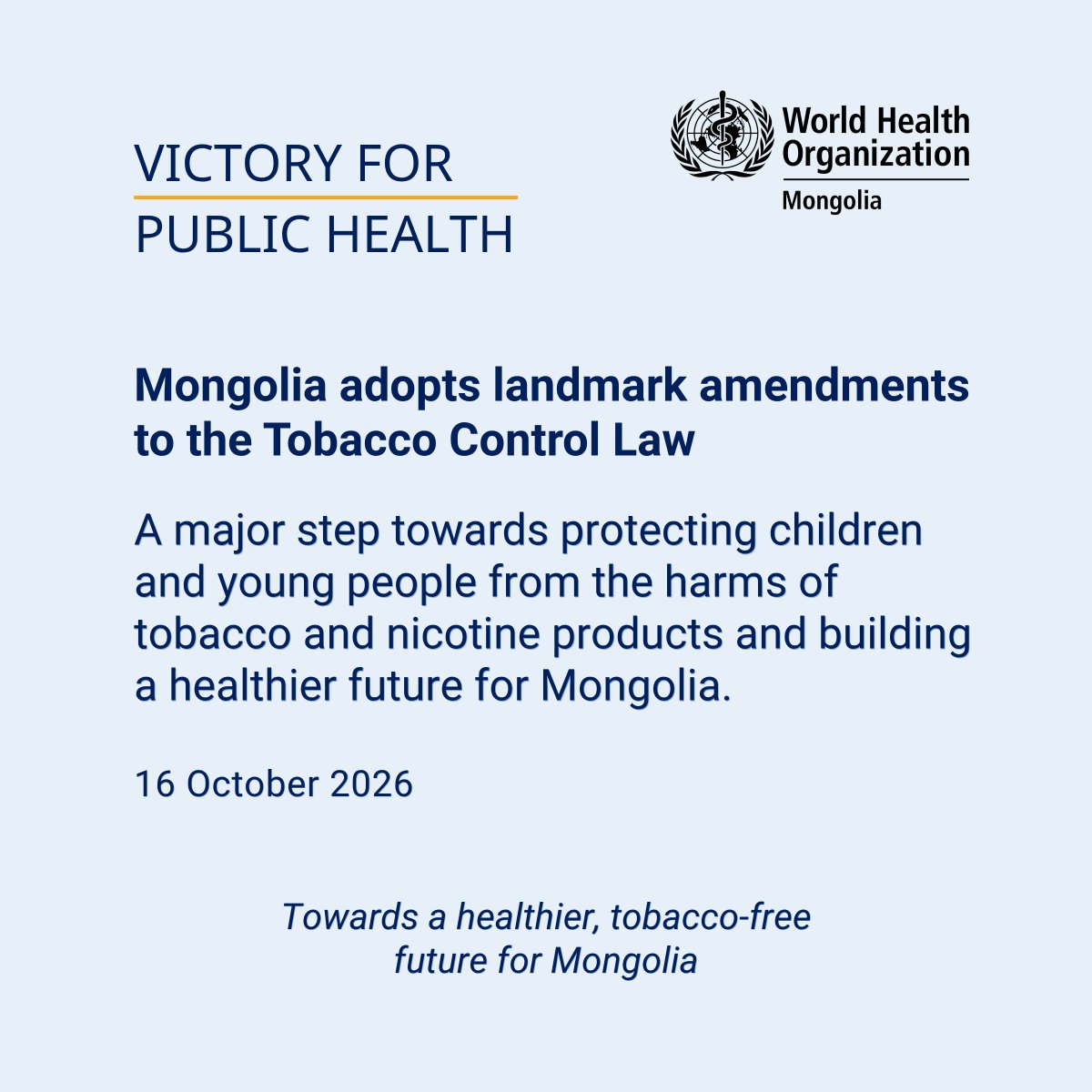
A victory for health: Mongolia🇲🇳 adopts landmark amendments to the Tobacco Control Law
16 October 2026 – The State Great Khural (Parliament of Mongolia) adopted landmark amendments to the Tobacco Control Law and related legislation, including the Law on Excise Tax.
This marks a major milestone in Mongolia’s efforts to protect public health, particularly the health of children and young people, from the harms of tobacco and nicotine products, including electronic cigarettes.
More than a decade after the previous major reform, the amendments strengthen Mongolia’s tobacco control framework and further align national legislation with international best practices and evidence-based measures for tobacco control and public health protection.
Key amendments include:
· Expanding the definition of tobacco and nicotine products to cover new and emerging products, including e-cigarettes and heated tobacco products.
· Introducing regulations for e-cigarettes and other emerging tobacco and nicotine products for the first time.
· Banning flavours in tobacco and nicotine products and display of the products at points-of-sale.
· Increasing graphic health warnings to cover at least 70% of product packaging, up from 50%.
· Introducing annual increases in excise taxes on tobacco and nicotine products from 2027 to 2031.
· Allocating a portion of tobacco tax revenue to health promotion, tobacco cessation services and disease prevention.
· Strengthening penalties and increasing fines for violations.
Higher taxes make tobacco and nicotine products less affordable and are an evidence-based way to reduce consumption, particularly among young people. The amendments are projected to reduce tobacco use among the population by 11.5% by 2031, once the law is fully implemented.
Effective implementation and enforcement of the amendments can help reduce tobacco and nicotine use, protect young people from taking up these products, support current users in quitting, and ultimately reduce tobacco-related disease and premature deaths, protecting the health of current and future generations.
WHO’s support for tobacco control in Mongolia has spanned many years, including generating local evidence, sharing international good practices, providing technical support for evidence-based policies on taxation and regulation, supporting public awareness campaigns, and continuously advocating for the adoption and implementation of measures under the WHO Framework Convention on Tobacco Control (WHO FCTC).
WHO will continue to support Mongolia in effectively implementing and enforcing the amended legislation, which is scheduled to enter into force on 1 January 2027.
WHO commends Members of Parliament and the Government of Mongolia for their leadership and commitment to protecting the next generation and build a healthier, tobacco-free future for Mongolians.
The @WorldBankGroup proudly welcomes Mongolia as an @WBG_IDA donor.
"Having benefited from IDA, we recognize the vital role of concessional financing in reducing poverty & expanding opportunities," said Min. Mendsaikhan Zagdjav, @MOFMongolia. https://t.co/hocJGG3HM0 #IDAworks
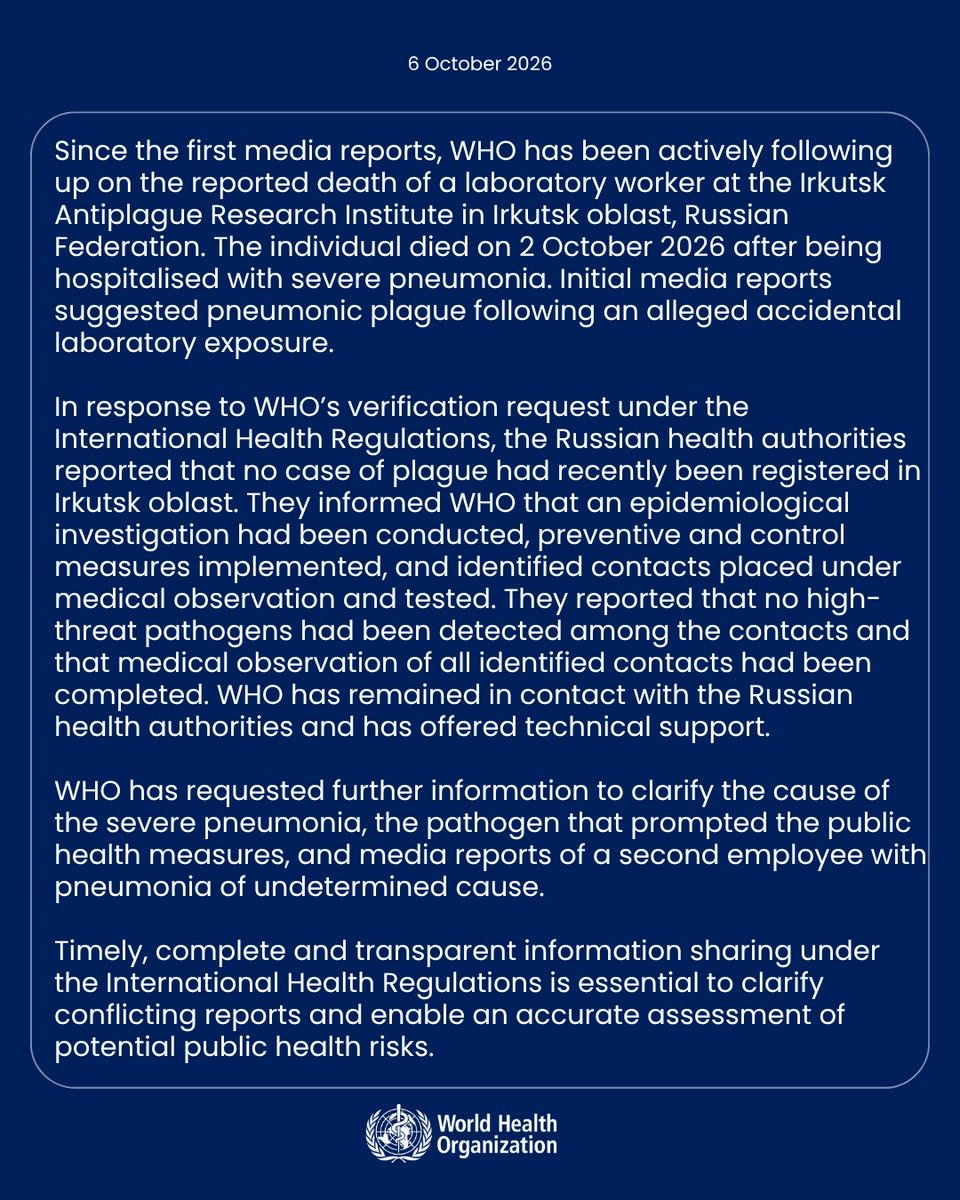
Since the first media reports, @WHO has been actively following up on the reported death of a laboratory worker at the Irkutsk Antiplague Research Institute in Irkutsk oblast, Russian Federation. The individual died on 2 October 2026 after being hospitalised with severe pneumonia. Initial media reports suggested pneumonic plague following an alleged accidental laboratory exposure.
In response to WHO’s verification request under the International Health Regulations, the Russian health authorities reported that no case of plague had recently been registered in Irkutsk oblast. They informed WHO that an epidemiological investigation had been conducted, preventive and control measures implemented, and identified contacts placed under medical observation and tested. They reported that no high-threat pathogens had been detected among the contacts and that medical observation of all identified contacts had been completed.
WHO has remained in contact with the Russian health authorities and has offered technical support. WHO has requested further information to clarify the cause of the severe pneumonia, the pathogen that prompted the public health measures, and media reports of a second employee with pneumonia of undetermined cause.
Timely, complete and transparent information sharing under the International Health Regulations is essential to clarify conflicting reports and enable an accurate assessment of potential public health risks.
Looking forward to the historic UN high level meeting on pandemics this Friday 25 September #PPPR#UNGA81
What can be done to handle the next global pandemic, to minimise its negative consequences for next generations?
Equity is not an act of charity. It is the foundation of global health security.
The Pandemic Agreement is a promise that no country will be left behind in the next crisis. #UNGA81
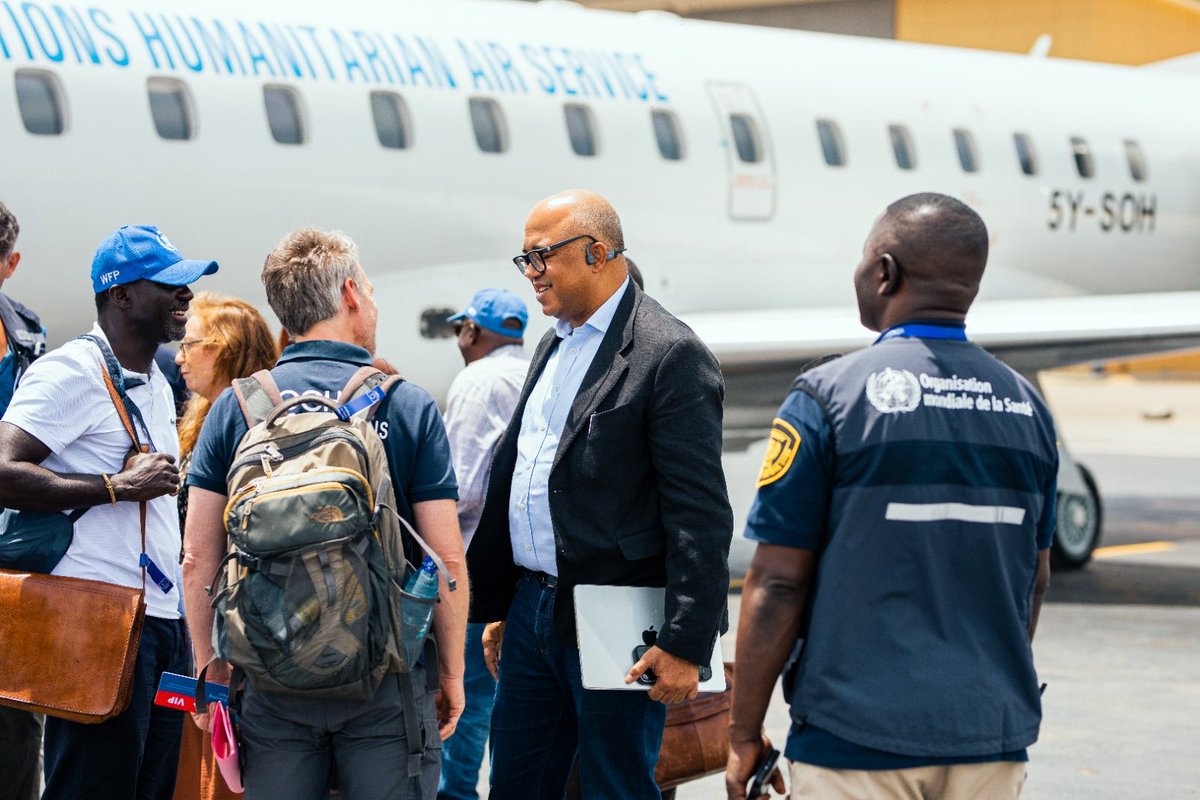
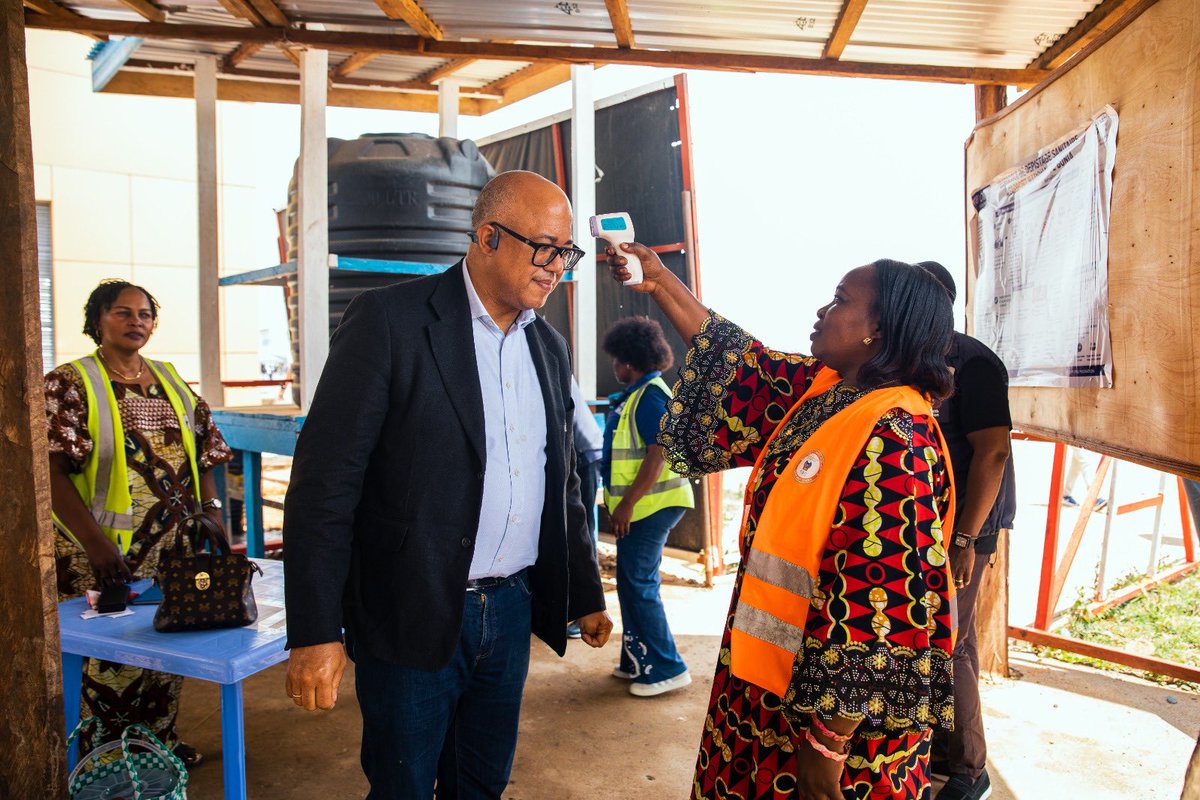
Traded the streets of New York this #UNGA for the streets of Bunia
No place I'd rather be than supporting the Government of #DRC, healthcare workers, communities & partners working nonstop to bring this #Ebola outbreak to an end
This outbreak has reached a defining moment. The progress made over the past three months shows that stronger action delivers results, but it also reminds us that incremental gains will not be enough.
We now need to significantly step up the response: moving faster to detect cases, reaching communities sooner and strengthening operations where they are needed most. The choices we make now will determine how quickly we can bring this outbreak under control, protect and save lives.
"We call on all countries to use the evidence base, use WHO’s advice and guidance and make the best policy decision based on the scientific evidence not on political interference.” - Jeremy Farrar
Les communautés sont au cœur de la riposte. Grâce au soutien du @WellcomeTrust, les décisions pour mettre fin à #Ebola_Bundibugyo seront guidées par la manière dont les populations perçoivent le risque, accèdent aux soins et réagissent à l’épidémie.
Every parent wants to keep their children safe, and vaccines are among the most powerful tools for doing that, making deadly diseases preventable.
@WHO is concerned that recent changes to US immunization policy are not aligned with decades of evidence that show when children are most vulnerable to disease, when vaccines provide the strongest protection, how many doses are needed, and which vaccines can be given together safely.
That evidence is reviewed continuously as new data emerge from across the globe. The current evidence is unequivocal: vaccines - including the MMR vaccine - are safe and do not cause autism.
Delaying vaccines or separating doses unnecessarily does not make vaccination safer and can leave children unprotected.
Global evidence and recommendations, including from @WHO, inform national experts, who consider local disease patterns, health systems and population needs, to determine which vaccines and schedules are best for their country.
Vaccination policy should be guided by rigorous, independent and transparent review of the best available science, not by political influence.
Back in Bunia after 24h in Kinshasa with DG Tedros. Under the leadership of the Incident Manager Prof. Ahuka, we are scaling up the response, adding 400 transit and treatment beds, 40 safe and dignified burial teams and launching the Ebola Free Congo River initiative.
#Measles is making a comeback because too many children remain unprotected. In 2025, 84% of children received their 1st measles vaccine dose & 77% their 2nd—well below the 95% coverage needed to stop outbreaks. Measles can be serious, even fatal. 2 doses save lives.#VaccinesWork
Ituri🇨🇩, pendant la riposte à #Ebola_Bundibugyo, nous mettons tout en oeuvre pour sensibiliser les parties-prenantes locales à la prévention des abus, de l’exploitation & du harcèlement sexuels. Priorité à la protection des communautés & la confiance dans la réponse à l’épidémie.
"𝙏𝙝𝙞𝙨 𝙞𝙨 𝙖 𝙛𝙞𝙧𝙚."
The #Ebola outbreak in the Democratic Republic of the Congo 🇨🇩 is fastest-growing ever, warns @WHO, with a
majority of new cases coming from "unknown chains of transmission."