This long overdue rule is only the beginning: Equitable enforcement of the Menthol Ban will require years of collaborative effort within communities across the US. How will the Tobacco Industry work to subvert the law? #menthol @FDATobacco https://t.co/ROM0Y7aY2q
In Nature this week: Lost in the city – grid-planned urban environments hamper future spatial navigation skills. Browse the full issue here: https://t.co/zVRMSNWzbY
Where did you grow up? A new @nature paper by @hugospiers and colleagues shows that if you grew up in a city organized on a grid, you are likely less good at navigation compared to your peers who grew up in places with winding roads https://t.co/P4eYWk4bmk
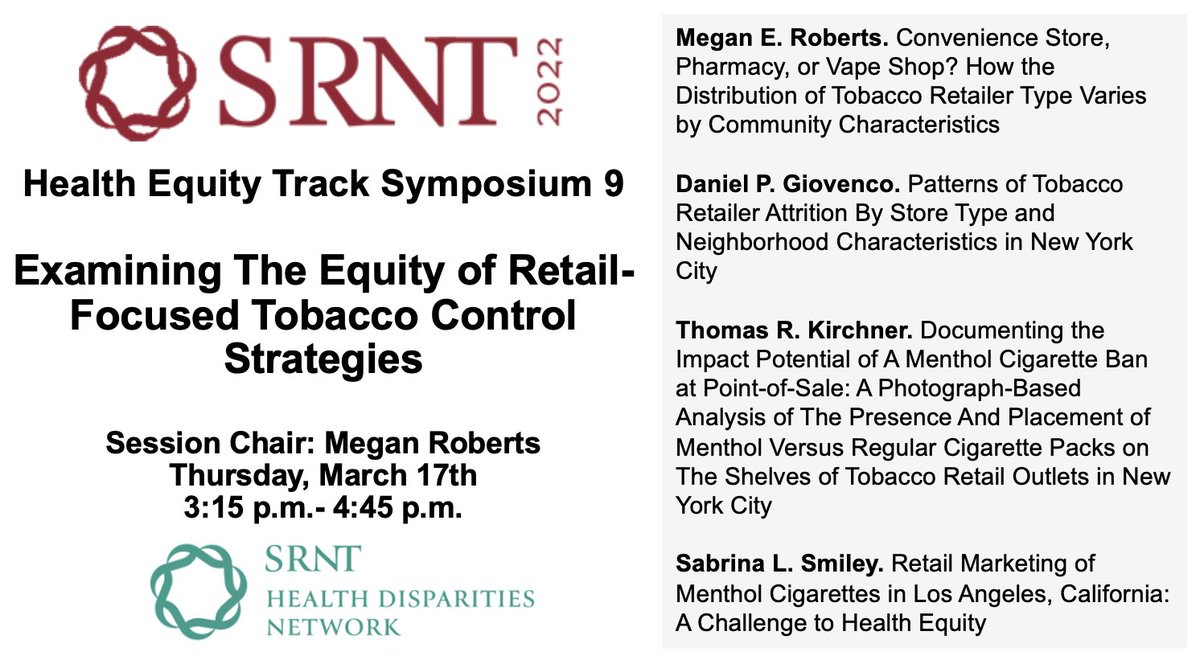
Four exciting talks will be given at the #SRNT2022 health equity track symposium of Examining the Equity of Retail-focused Tobacco Control Strategies (March 17th, 3:15-4:45PM EST). Check out the details below.
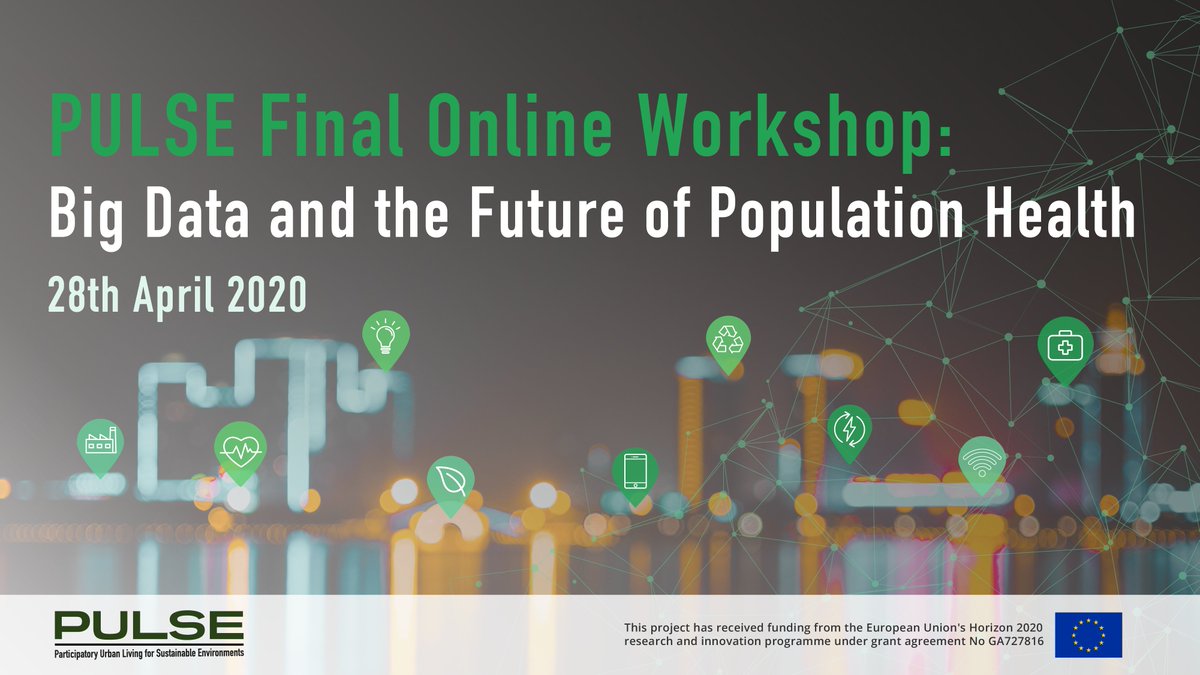
Did not have time to participate to our Final Workshop "#BigData and the Future of Population #Health"? Now you can!
📺Watch the video recording
📑 Download the slides➡️https://t.co/7F9yuz7Ipi
Fill in this 2 min survey📊and provide us with your feedback➡️https://t.co/CMye5bfMwV
So glad to be a part of this @PulseProjectEU1#PulseProject panel on the power and potential of geographically-explicit systems for citizen-driven partnerships leveraging #mhealth tools and cutting edge behavioral science.
What surfaces are people likely to touch? #COVID-19 researchers from @NYU_CUSP@NYUTandon & @nyu_gh scour NYC, checking hospitals & mass transit, to share pioneering 3D data with epidemiologists worldwide. @NSF funded https://t.co/ItVUalhMbK #NYUTandonMade
New protocol paper that uses smartphones and alcohol sensors to identify and intervene upon variables that predict heavy drinking days among adults experiencing homelessness. From my lab and Dr. Scott Walters's lab: https://t.co/sjPtkoZ3Sx #mhealth@SBMDigitalHlth@DigitalTrends
Congratulations! Learn more about MS alum @CHATURVEDIISHA's capstone research on "Automated Detection of Street-Level Product Displays" here: https://t.co/V3p3NeaGYh
Decisions about neighborhood policies are usually based on aggregated home address data. Why not just use addresses? Our new paper https://t.co/UKMiMjSf1t finds that people spend about 55% of their time outside of their “home” neighborhood! #mhealth@nyupublichealth
New research by Dr. Clancy Blair (@BlairRaverLab) and colleagues finds that young children in low-income, rural areas may be at higher risk for second- and third-hand smoke. Read more about results of this important @NICHD_NIH-study: https://t.co/EmlRWbRj7m
Hong Gao @NYUmHealth@nyupublichealth presenting at the 2018 #NYUTechSummit on the custom development of an SMS-based EMA system for real-world research on #mHealth behaviors and subjective experiences.
Avigail Vantu @NYUmHealth@nyupublichealth presenting the https://t.co/9zqeMFOLFK tool at today’s #NYUTechSummit explains why engagement with residents is essential when studying neighborhoods and health #mHealth