In 2000, 3 days before Christmas, 3 LeT jihadis opened indiscriminate fire at the Red Fort and killed 2 soldiers of the Indian Army and 1 security guard.
Three days before Christmas.
By Christmas, one of them was in police custody. Paki Muhammad Arif, alias Ashfaq, was picked from an apartment more than 11 hours away by road. Along with a pistol and live rounds.
Much is said and written of police lethargy in this country but how often do you hear of such swift aprehension?
By March 2001, a chargesheet was already in with Arif and 21 other names.
Know when the trial began?
September.
Not for all 22, but only 11.
A Lashkar terrorist is caught with evidence and trial takes 7 months to even commence. When do you think the verdict could’ve come?
October 31.
2005.
Thankfully, the verdict is in favor of the State. Death penalty for Arif, Jail for his wife Rehmana Yusuf Farooqui (bitch is Indian, by the way).
So at least one jihadi is hanged. Finally!
Not so soon.
We have a “rule of law.” Jihadi goes to High Court.
Remember, more than 230 witnesses have been recorded in support of the verdict at the trial court. Of course the higher court would agree. It does. But takes two whole years.
Hang him now?
Nope. Supreme Court.
This one agrees with the verdict too. But takes...hold your breath...4 years to say so.
We’re in 2011 now. Second half. Anyway, Supreme Court says you should hand, so you should hang, no?
Nope. Review petition, curative petition, yada yada yada...by the time we’re in 2014, the whole legal paradigm has shifted. A foreign terror convict (not accused, convict) who should have been hanged...has been made the basis for a change in the very SOP of Indian judiciary. Allow me to explain:
Earlier review petitions were heard in a closed-door setting inside judges’ chambers. No oral arguments were allowed. The judges would simply read the written files and pass an order. This is called “hearing by circulation” because the case papers are literally “circulated” among the judges rather than argued orally.
In Mumahhad Arif’s 2014 hearing, the SC ordered that this be changed to “open court hearing” for death row inmates.
The whole process was reset. Typically, a review or curative petition is only allowed once, that too within 30 days of the verdict. This ruling practically rendered all past reviews in the case immaterial and allowed a fresh petition for an open court hearing.
The highest court of the land just offered the terrorist a lifeline.
The lifeline is grabbed.
A fresh review petition is filed. Heard. And dismissed once again. But now we’re closing 2022.
Hanging finally?
Nope.
There’s still a final ace left to be played: The President of India.
A mercy plea is filed with Ms. Murmu. She rejected the plea (thank goodness)...
TWO YEARS LATER.
So trial lost, HC lost, SC lost, two reviews lost, President lost...NOW can we hang him finally?
Nope. Now it’s back to SC with a curative plea.
Just for the plea to be heard, we go from 2024 to 2026.
Jan 21 this year the SC agreed to examine a fresh curative plea from Arif based on “evolving jurisprudence regarding the death penalty,” putting his execution on hold once again.
As of this tweet, the Pakistani jihadi who opened indiscriminate fire at random unsuspecting Indians at the heart of its capital...
Remains as far from the noose as he was two decades ago.
The story of Indian judiciary.
I promised this morning to explain the origins of Age of Empires' cheat units. So here goes!
First let's cover Age of Empires 1.
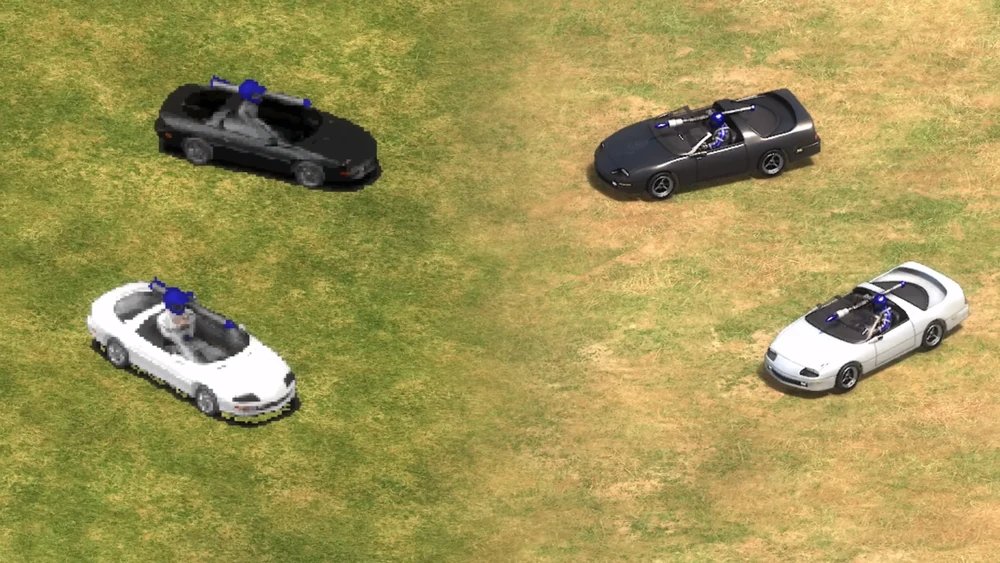
The most awesome cheat unit is probably Winsett's Z (black) AND Winsett's Z (white).
Scott Winsett (hi Scott!) was one of the two art leads we had at Ensemble Studios. Scott had a full life outside Ensemble and his beloved hobby was working on his car and (I assume) drag racing. So unsurprisingly his car made it into the game. Originally there was only his black car. Later, I believe unbeknownst to Scott, they added the white car which was actually better (higher rate of fire).
No I'm not going to GIVE you the cheat codes. Jeeze. What's an internet for?
1/10
For the last 15 years, I've always had one dream and desire which was to make Indian history interesting for everyone.
In that time period, I have tried writing blogs, long-form posts, stories and threads, to do exactly that.
Some worked, most didn't. But with every post, I always had this nagging question.
Why is Indian history always taught with a tunnel vision. Why is it so fragmented?
Why do we always learn things from the perspective of one empire, kingdom, king or invader.
Why do we never see an all India view of history?
I mean most of us struggle if we are ever are asked this question
1. What was the true extent of the Mughal Empire at its peak?
2. Who were the Cholas' contemporaries in North India?
3. While Muhammad Ghori was fighting the Second Battle of Tarain, who ruled Thanjavur?
4. While Harsha ruled Kannauj, who ruled Assam?
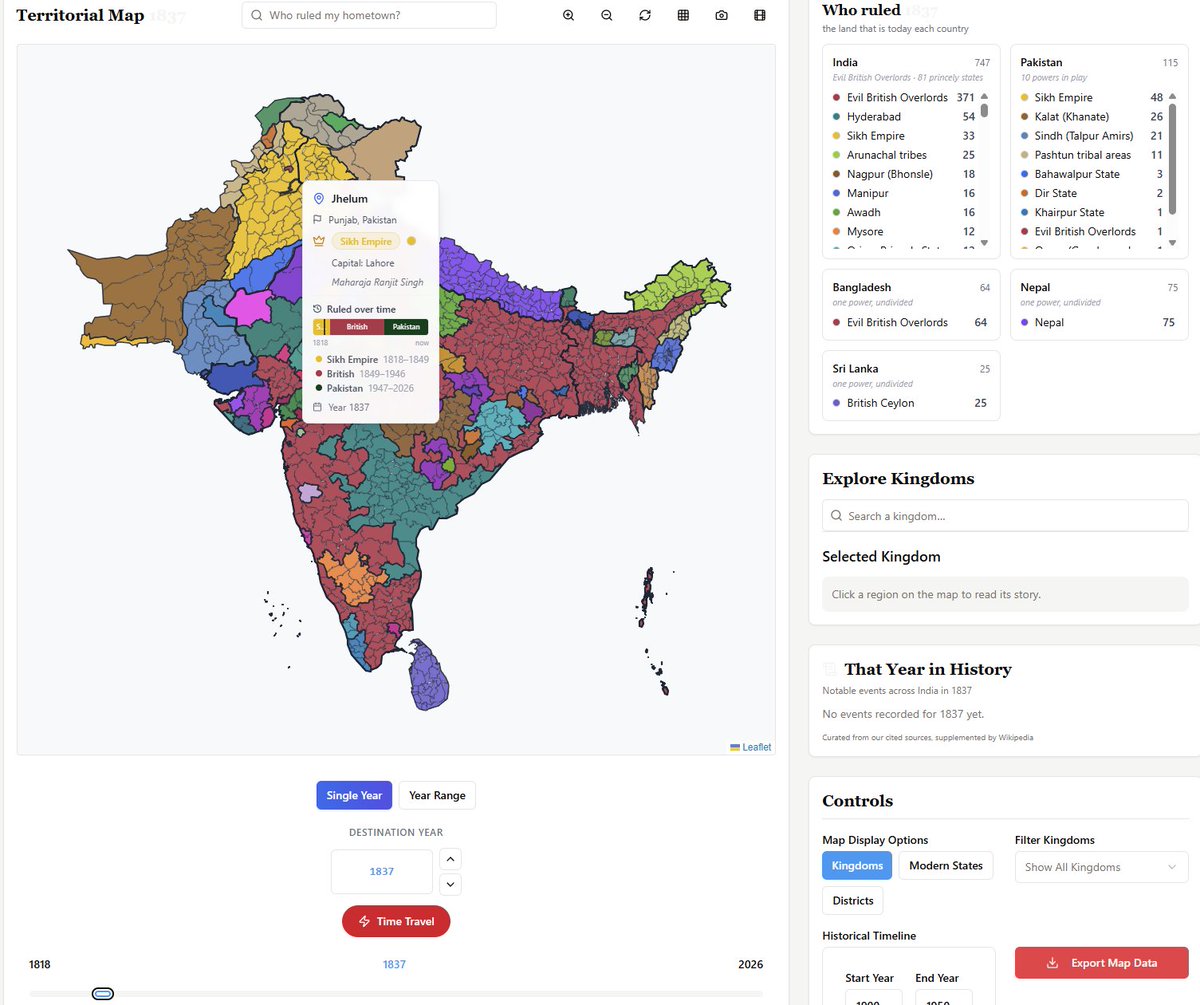
I have always wished there was a simple way to see the political map of India for any year in Indian history.
I have always wished there be a place where
1. One Could Select any year and instantly see who ruled every part of the Indian subcontinent.
2. One could Discover the important events that happened in that year
3. One could select a time period, say 1700 - 1947, and see how the Indian subcontinent evolved in that period.
4. How did one tiny red dot in West Bengal, from a tiny red dot in Europe, somehow came to rule an entire subcontinent of 400 million people,
For years, that idea remained just an idea and a dream because
1. I didn't know how to build a website.
2. I couldn't afford to hire someone who could.
Then Claude Came along.
Thanks to generous support and heavy lifting by Claude, over the last few months, that 15-year-old idea is slowly transforming into a reality.
And today, it has reached a position, where I'm excited to share with all of you, the first sneak peek of https://t.co/6ph2s9Zzl9
It is my attempt to create an interactive historical atlas of India that lets you travel through time and explore the political history of the subcontinent, one year at a time.
This is my attempt to make history interactive and fun.
I'd love to hear what you think.
we named it random access memory (RAM).
then we built three levels of cache, prefetchers, data-oriented design, and an entire performance-engineering discipline whose whole purpose is making sure nobody accesses it randomly.
[WHY IS TRUMP HITTING INDIAN SHIPS]
So here’s something right off the bat: MT Settebello is technically not an Indian ship but Palauan. Under international maritime laws, a ship’s nationality is its flag. This one carried Palau’s, even though much of its crew was Indian.
Behind the scenes it could be owned by an Indian, who knows. You might ask why, but a bigger why is...what is a commercial ship doing in troubled waters anyway? Who is even insuring them? Without insurance, it’s too much risk for too little to gain.
And the answer is “shadow fleet.”
These are vessels explicitly used to smuggle sanctioned payload, in this case Iranian oil. The people who own and operate them aren’t making some innocent miscalculation about safety, but deliberately attempting to run a military blockade for massive financial gain.
While legitimate, mainstream shipping companies are avoiding Strait of Hormuz and Gulf of Oman, the shadow fleet operates by an entirely different set of rules.
First, as we just noted, is obscured ownership. They use complex webs of shell companies and “flags of convenience” like Palau or Guinea-Bissau to hide the true identities of the shi’s owners and charterers. That’s why I said, Settebello is TECHNICALLY Palauan, but behind the scene...you never know.
Second rule pertains to insurance. Mainstream ship insurers, the P&I clubs, would not cover vessels violating sanctions, especially American. But shadow fleets rely on obscure, non-Western insurers to bypass this issue...or depending on how shady they are, can even operate with no legitimate liability coverage at all.
And finally, it’s about the assets, both man and machine. Shadow fleets typically use aging, end-of-life vessels. Settebello is 29 years old. If a ship is seized or disabled, the financial hit to the owners is minimal compared to the profits of a successful run.
Why?
Because the bigger the risk, the lower the competition and bigger the incentives. Pure economics.
Because of the blockade, the premiums paid to transport Iranian oil have shot through the roof. These shadow owners stand to make astronomical profits on a single successful voyage, which makes them highly willing to risk an old ship.
But there’s still a method involved, it’s not all casino betting. To the best of their capability, they still do what it takes to evade detection.
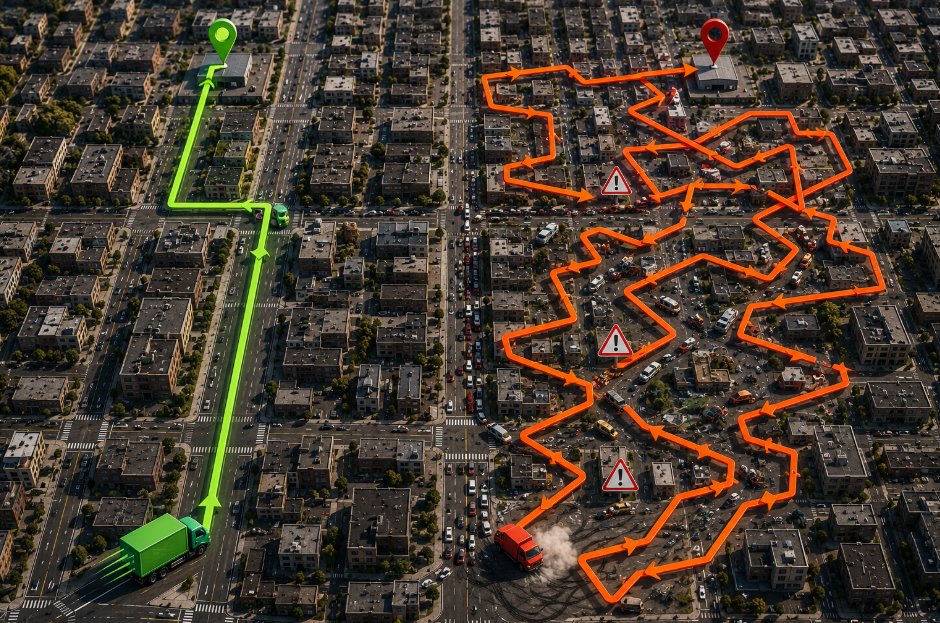
To get past the blockading Navy, these ships don’t broadcast their intentions. They rely on what the industry calls “dark transits.”
This involves turning off their Automatic Identification System (AIS) transponders so they disappear from public tracking screens. In the current context, shadow fleet ships have been attempting to skirt the rocky, busy coastline of Oman at night, hoping to slip through the alternative corridors undetected.
But all this comes at a human cost.
Ultimately, the people deciding to run the blockade are sitting safely in offices far away, while the crew members, often sourced from countries like India, bear all the physical risk.
While international maritime guidance strongly advises ship masters to refuse orders into the Gulf of Oman without explicit written authorization and clear insurance guarantees, crew members on shadow fleet vessels are often heavily pressured by their employers to comply. They are ordered into the crosshairs of the blockade by owners who are willing to gamble the lives of the crew for a lucrative payday.
The blockade was announced well in advance. CENTCOM has publicly stated that the ship was targeted only “after the crew repeatedly failed to comply with directions from American forces.”
Sure, America could be lying. But the other party is literally a shadow fleet of smugglers employing crew from the Third World as an expendible asset knowing full well the potentially fatal consequences of sailing into the Strait. If it’s A’s word against B, excuse me for siding with the not-smugglers.
At any rate, the price is paid by innocent young men who only hoped to make a decent paycheck and return home to their families. Men who have nothing to do with either the hustle or the war.
People keep calling the Odyssey and ancient Greece “Western heritage” as if they emerged from a western European or even European world.
But the modern “West vs East” divide did not even exist yet.
Ancient Greeks did not see themselves as “westerners.”
They were one civilization among many in the interconnected eastern Mediterranean world alongside Egyptians, Phoenicians, Anatolians, Cypriots, Levantines and Mesopotamians.
And the evidence for this is everywhere.
I’ve been reading the Vedas a lot recently, and what’s stood out is how it doubles as an encyclopedia as well as a religious text. Astronomy, medicine, mathematics, metallurgy, linguistics, are all woven through hymns and rituals as one body of knowledge. Simply calling it “religious” forces it into a Western category that didn’t have the apparatus to recognize what it actually was. It’s closer to a tradition of formalized epistemology in which metaphysics, observation, and language form one continuous inquiry, which as a result led Indian civilization to develop along a fundamentally different path because of it.
You can see the effect most clearly in the sciences. Around 600 BCE, the Vedic record describes a surgical procedure that matches modern rhinoplasty and is still foundational to reconstructive surgery today. Centuries before Western Europe stopped treating eclipses as supernatural, Indian scholars had calculated the circumference of the earth within 0.2% and explained eclipses as shadows. Centuries before Plato and Aristotle rejected atomism, the Vedic tradition already held that matter is composed of indivisible particles combining into binary and triatomic compounds, transformable by heat. The first formal rules for zero and negative arithmetic appear in the Vedas, along with infinite-series derivations of π, sine, and cosine centuries before Newton and Leibniz.
The interesting question is how did they get so much right, so early? My best guess is language.
The Vedic tradition is unique compared to other oral traditions as it demanded letter-perfect oral transmission across generations. Around 500 BCE, scholars composed a generative grammar of Sanskrit called Panini so rigorous it anticipates Backus-Naur form, the notation that defines programming languages today, by 2,500 years. Sanskrit is recursive, rule-based, and built to minimize ambiguity. It reads more like mathematics than English.
When you think in a language built like that, the precision of the language becomes the precision of your reasoning. The West didn’t formalize this until much later. Kant argued our categories of understanding shape what we can know, Wittgenstein wrote that the limits of language are the limits of one’s world, and Kripke showed that naming doesn’t just describe things, it constitutes what they mean and how we can reason about them. All three touch the same insight which is that thought is downstream of language.
The Vedic tradition operated on that insight thousands of years earlier. To the point that they built a whole language first and used it to think clearly about everything else after. I find that all really fascinating.
(1/N) Much of India still lives in its villages. Yet, everyday Indian policy rarely incorporates the voices of those who live in them.
We've spent the last few years trying to do something about that. Today, we want to introduce GRAMA. 🧵
https://t.co/xliWFGb8JT
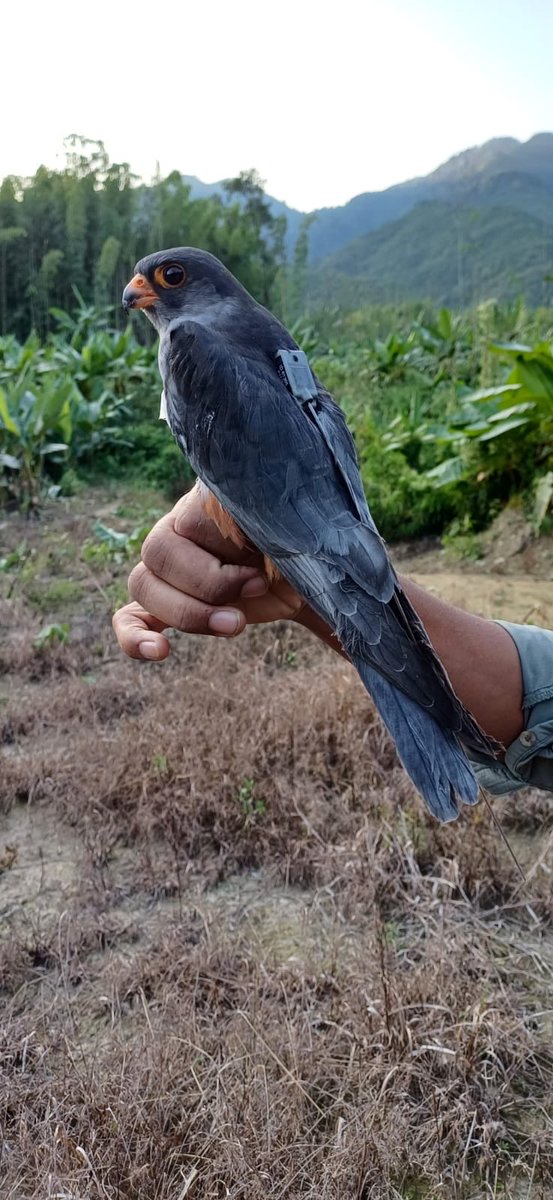
In a continued effort over the last decade for conservation of Amur Falcons in Northeast India, three Amur Falcons were satellite-tagged in their stopover site (Chiuluan) in Tamenglong district of Manipur in November 2025.
Having completed more than four months in their nonbreeding grounds in Southern Africa, two of these Amur Falcons are on their spring migration, returning to their breeding region in Far-East Asia via India. While crossing from Somalia to Northeast India they undertake a nonstop flight of nearly 6000 km in six days.
A tagged young female Amur named ‘Alang’ is currently headed to west coast of India, and is undertaking the Arabian Sea crossing, having started off yesterday early morning from Somalia.
Currently, with favourable tailwinds, the sea crossing will be three-day nonstop. With funding support from @MoEFCC, this project has been one of the successful community-led conservation effort in India.
Alongside, interesting insights on this incredible small raptor, a long distance trans-hemispheric migrant has been generated, guiding management and conservation efforts.
Okay folks, this qualifies as BREAKING NEWS!
Harold “Sonny” White, the warp drive pioneer behind NASA’s EagleWorks Lab, just stepped out of stealth with Casimir Inc. to unveil MicroSPARC: the first battery free chip to harvest continuous electrical power straight from the quantum vacuum via the Casimir force.
The 5 mm × 5 mm device uses millions of custom microscale Casimir cavities fabricated on a substrate. Inside each cavity, two fixed conductive walls create a region of negative vacuum pressure (the well known Casimir effect). Stationary micropillars anchored in the middle act as antennas. Electrons from the cavity walls then quantum tunnel to the pillars because the interior is a lower energy “quieter” zone — and the probability of tunneling back is orders of magnitude lower. This one way “quantum ratchet” flow generates a measurable DC current with no external power source or moving parts.
Prototypes already fabricated at university nanofab facilities (Texas A&M AggieFab, MIT.nano) have been tested in RF-shielded, low noise chambers for weeks. The team reports outputs ranging from millivolts to volts at picoamp to microamp levels using precision electrometers and Kelvin Probe Force Microscopy. Target performance for the first commercial chip: ~1.5 V at 25 µA (≈40 µW continuous). Stacking and scaling could reach milliwatts or even watts per device.
Initial applications are ultra low power: always on IoT sensors, wearables, and medical implants. Longer term roadmap includes trickle charging phones, powering small electronics, and eventually grid independent homes or EVs. Commercialization is targeted for 2028, starting at ~$100/W before dropping toward $10/W.
White ties the work directly to his earlier theoretical paper on emergent quantization from a dynamic vacuum and sees it as a practical power source for the deep-space missions he’s long championed.
Extraordinary claims require extraordinary evidence, and independent scientists have so far declined public comment. But if the engineering scales as hoped, MicroSPARC would represent a genuine paradigm shift: continuous, maintenance free power drawn from the fabric of spacetime itself.
A bold leap from warp-drive theory into real hardware. Progress (and vacuum-powered chips) marches on.
Photo: MicroSPARC | Casimir Inc.
Source: https://t.co/11tlwNSf71
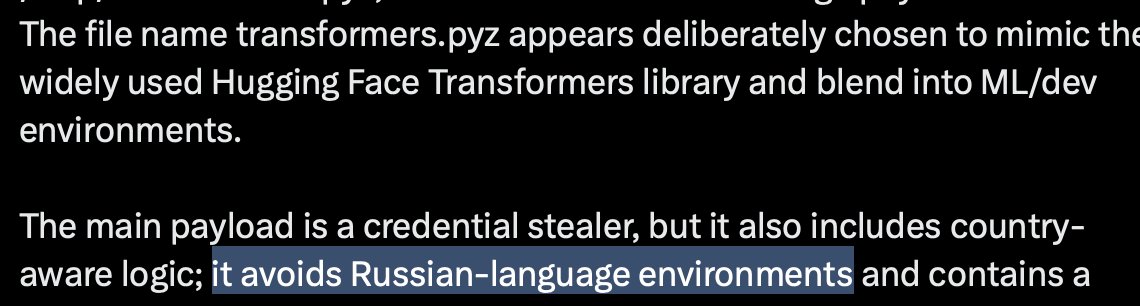
the most low-effort / high reward thing you can do for security is installing the Russian language pack
(not even joking, it's ridiculous how often that prevents execution)
Humans tried to tame horses 5,500 years ago. It didn't work. Those horses eventually went feral, and we had to start over 1,300 years later with a different bloodline.
A group in Kazakhstan called the Botai kept horses for milk and meat around 3500 BCE. A 2021 Nature study read the DNA of 273 ancient horses and proved every horse alive today comes from a different population entirely. The successful domestication happened 4,200 years ago near the Volga and Don rivers. Those horses spread across Asia and Europe in 500 years, wiping out every other horse bloodline.
Two tiny changes in horse DNA made it work. One mutation appeared about 5,000 years ago and made horses less jumpy. The other came 4,200 years ago and gave horses backs strong enough to carry a grown person; before that, they were the size of ponies. This is why chariots came first as the main use of horses, and regular horseback riding only became common centuries later.
Before rideable horses reached the Middle East, the Sumerians made their own by crossbreeding domesticated donkeys with wild onagers, a wild Asian cousin of the donkey. Onagers can hit 43 mph and hold 31 mph for hours, with more endurance than any modern racehorse. But they bite, kick, and can't be trained. So Sumerians made a hybrid called a kunga, which kept the speed and dropped the temper. A kunga cost 40 times a donkey. It couldn't breed, so every generation had to be made fresh. These pulled the war wagons shown on the Standard of Ur, a Sumerian mosaic from 2500 BCE. It's the first known case of humans creating a new animal.
Zebras are the longest-running failure. Romans raced them in chariots during the emperor Caracalla's reign, around 200 AD. The Dutch tried in the 1700s. Walter Rothschild even drove a zebra carriage up to Buckingham Palace in the 1890s to prove the point. Germans gave it a shot in colonial East Africa. None of it worked. Zebras dodge lassos with a quick ducking reflex, have no hierarchy you can slot into, and have spent millions of years evolving alongside lions. A single kick can break a lion's jaw.
Jared Diamond ran the math on this. Out of roughly 148 large mammal species humans could have tamed, only 14 ever worked. The animal has to pass six separate tests: eat flexibly, grow fast, breed in a pen, stay calm, not spook easily, and follow a pack order. Miss one and the whole thing collapses.
The earliest confirmed horse riders were the Yamnaya, a nomadic steppe people from north of the Black Sea. They left behind skeletons showing the specific hip damage and healed fall injuries you see in modern riders. Out of 156 adult skeletons studied, only 24 had the pattern. Even inside a horse-riding culture, most people still walked.
This is a long post. And a little triggering. So please bear with me.
A lot of us have said at some point in our lives that, "History is not important. There is no point in looking into the past and the only way we will improve is if we look towards the future. And how we need to teach our kids about trading Derivatives, paying taxes And not about Raja Raja Chola" etc etc.
This post is for them.
So the other day, I went on my annual visit to our neighbouring subreddit, just to get some perspective on how the other side thinks. Given the state of that state, I can assume only the rich, a little wise and moderately educated people are there.
Then I stumbled on how they view the Kashmir conflict.
Which underlined my view on why preserving, teaching and popularising history should be one of our most important tasks.
To start off, according to our neighbours, Kashmir has always been an integral part of Pakistan. This is despite common knowledge that Kashmir has been around since Mahabharat And Pakistan Only since 1947. I mean Even Raymonds is older than Pakistan. But the Pakistanis believe this absurd notion.
And this is their version of the Kashmir conflict. I have paraphrased the original post, but this is the essence.
When the Mughals were finally destroyed in 1857 and EIC was dissolved in 1858, the Dogras in Kashmirs tricked The British into selling Kashmir.
Given they were Hindus, post acquiring Kashmir, they were very bloody and brutal to the Muslims. This state of play continued for the next 90 years, till 1947 came along.
Now most Kashmirs wanted to join Pakistan. But the king didn't. So with support of RSS, he orchestrated rhe killing of 200000 Muslims, all because he wanted to remain independent.
So the neighbouring tribals in Pakistan, feeling angry over the fate of their brothers and sisters in Kashmir, decided to liberate them unilaterally and crossed the border.
They were on the verge of defeating the king when out of cowardice, He signed a treaty with India which resulted in the Indian army stepping in.
So to even the odds, the noble Pakistani army joined their noble tribal brothers, in their quest for liberation. As a result the battle was a stalemate.
Which is when the UN stepped in to resolve the conflict. They mandated a plebiscite, which Pakistan was willing to do but India treacherously backed out.
This started a long period of oppression and killing of Kashmiri Muslims. This triggered a justified Muslim rebellion in 1989, in which only 200 Hindus died.
But india used it, stepped in and killed 500000 Kashmiri civilians as reprisal.
Even today, the Indian army keeps Kashmir under their boots with no power, water and mobile network. And the Indian govt made Kashmiri pandits a political issue to evoke sympathy.
The post rambles on further But You get the drift.
Their version of 1965 - India attacked, couldn't capture Lahore, so we won
Their 1971 - It was Bangla rebels, we were thousands of kms away, Indian army came in the end and mopped up. We didn't lose
Their version of Kargil - Freedom fighters bro
Now, till the 2000s Pakistan was the darling of the west. And probably this was the view on Kashmir that prevailed in the international arena. This only changed in the last 20 years when India started rising in stature while Pakistan fell off a cliff.
Imagine, if a small country with infinitely smaller intellect can almost rewrite history that happened only 70 years ago, imagine what a larger and smarter country can do about stuff that happens before that?
What all could have been changed?
And if we hadn't become powerful economically and socially, This view might have become popular history 50 years hence.
That's why my friends, history is important.
Because if you don't preserve it, someone else will bring in a road roller, flatten it and then build 105 storey building with completely new history and bury you underneath
And you will never even know.
You don't need advice from editors on rejected manuscripts.
My short story “Ender's Game” was rejected by Ben Bova at Analog back when that was the top market for a sci-fi story. Ben gave me feedback. He thought the title should be “Professional Soldier” and he said to “cut it in half.”
But I knew he was wrong on both points and submitted it to Jim Baen at Galaxy. He sat on it for a year, and responded to my query with a rejection. There was some kind of explanation, but I don't remember what it was. I concluded at the time that Baen's comments showed that he had barely glanced at the story.
So … I got feedback both times, but it was not helpful. I looked at Ben's rejection again. What was it about the story that made him think it should, let alone COULD, be cut in half?
Apparently it FELT long. What made it feel long? Now, post-Harry Potter, I would call it the quidditch problem. I had too many battles in which the details became tedious. So I cut two battles entirely, merely reporting the outcomes, and shortened another. In retyping the whole manuscript (pre-word-processor, that was the only way to get a clean manuscript), I added new point-of-view material to the point that I had cut only one page in length. So much for “in half.”
But I already knew that my manuscripts did not need cutting — if it wasn't needed, it wouldn't be there in the first place. Even the battles were still there, but instead of showing them, I merely told what happened (so much for the usually asinine advice “show don't tell”), which kept the pace going.
Those changes made, I sent it to Ben again. I did not remind him of what he had advised me to do. I merely told him I liked my title, and said, “I have addressed your other concerns,” which was true. I figured he wouldn't remember what his exact words had been. My answer was a check. That revised story was the basis for my winning the Campbell Award for best new writer.
Did Ben's feedback help? Yes — but his specific advice was not right, and I knew it. On my next two submissions, Ben hated my endings, and I revised as suggested. The fourth submission he rejected outright, and the fifth, and I thought, Am I a one-story writer? I went back to Ender's Game and tried to analyze why it worked. Then, deliberately imitating myself, I wrote “Mikal's Songbird.” Ben bought it, and it received favorable mentions. I was afraid then that I had consigned myself to writing stories about children in jeopardy. But in fact I was writing character stories rather than idea stories. And THAT was how I built a career, not by self-imitation, and not by following editorial suggestions.
I did get wise counsel from David Hartwell on my novel Wyrms, but that was on a book that was already under contract, and it was story feedback, not style. I got wise counsel from Beth Meacham, too, on various books over the years — but again, only on books that were under contract. I also received appallingly stupid advice from the editor of my novel Saints, which temporarily destroyed the book's marketability; after that, I was allowed to go back to my original structure and save the book — now it's one of my best.
Editors don't know more than you about your story. They especially don't know why they decide to accept or reject stories. YOU have to know what your story needs to be, and take only advice that you believe in.
Your best counselor on a story nobody bought is TIME. Let some time pass and then reread the story. Don't even think about why it Didn't Work. Instead, think about what DOES work, and then write it again, a complete rewrite, keeping nothing from the previous draft. Find the right protagonist and begin at the beginning — the point where the protagonist first gets involved with the events of the story. Be inventive — the failed first draft no longer exists, so you're not bound by any of your earlier decisions. THAT is how you resurrect a good idea you did not succeed with on your first try.
A parasite that has been eating people for 3,500 years is about to be wiped off the planet. It infected 3.5 million people in 1986. Last year, it infected 10. And I have not seen it make a single front page.
It is called Guinea worm. You drink contaminated water from a pond in a poor village. A year later, a worm up to three feet long starts coming out of your leg through a burning blister. There is no pill that stops it and no surgery that works. You wrap the worm around a stick and pull it out slowly, over days or weeks, inch by inch. If you rush, the worm breaks inside you and causes a fresh infection.
Guinea worm is ancient. Preserved worms have been pulled out of Egyptian mummies from around 1000 BCE. The Ebers Papyrus, an Egyptian medical scroll from 1550 BCE, describes pulling the worm out with a stick. For three and a half thousand years, that was the best humans could do.
Then in 1986, public health workers decided to kill the parasite off. They had no vaccine and no drug. What they had was cheap cloth water filters and a small army of volunteers willing to walk from village to village for decades.
The plan was simple. Give everyone who drinks from a pond a cloth filter to strain out the tiny water fleas that spread the parasite. Then send volunteers walking house to house, year after year, teaching people how to use the filters and keeping anyone with an emerging worm out of the water.
It worked. From 3.5 million cases a year to 10. Four were in Chad, four in Ethiopia, two in South Sudan. The other four countries where the worm used to be common, Angola, Cameroon, the Central African Republic, and Mali, had zero human cases for the second year in a row. The World Health Organization has already certified 200 countries as Guinea worm free. Six are left.
The last hurdle is dogs. Cameroon had 445 infected animals last year and Chad had 147, so a lot of the remaining work is on animals, not humans. Strays get leashed, and crews treat ponds to kill any remaining worms. The campaign keeps watching until the number hits zero.
When Guinea worm hits zero, it becomes the second human disease ever erased from the planet. The first was smallpox. It will also be the first parasite humans have ever wiped out, and the first disease ever ended without a single dose of medicine. Volunteers walked village to village with cloth filters for 40 years. Now a plague from the age of the pharaohs is about to be gone.






![Schandillia's tweet photo. [WHY IS TRUMP HITTING INDIAN SHIPS]
So here’s something right off the bat: MT Settebello is technically not an Indian ship but Palauan. Under international maritime laws, a ship’s nationality is its flag. This one carried Palau’s, even though much of its crew was Indian.
Behind the scenes it could be owned by an Indian, who knows. You might ask why, but a bigger why is...what is a commercial ship doing in troubled waters anyway? Who is even insuring them? Without insurance, it’s too much risk for too little to gain.
And the answer is “shadow fleet.”
These are vessels explicitly used to smuggle sanctioned payload, in this case Iranian oil. The people who own and operate them aren’t making some innocent miscalculation about safety, but deliberately attempting to run a military blockade for massive financial gain.
While legitimate, mainstream shipping companies are avoiding Strait of Hormuz and Gulf of Oman, the shadow fleet operates by an entirely different set of rules.
First, as we just noted, is obscured ownership. They use complex webs of shell companies and “flags of convenience” like Palau or Guinea-Bissau to hide the true identities of the shi’s owners and charterers. That’s why I said, Settebello is TECHNICALLY Palauan, but behind the scene...you never know.
Second rule pertains to insurance. Mainstream ship insurers, the P&I clubs, would not cover vessels violating sanctions, especially American. But shadow fleets rely on obscure, non-Western insurers to bypass this issue...or depending on how shady they are, can even operate with no legitimate liability coverage at all.
And finally, it’s about the assets, both man and machine. Shadow fleets typically use aging, end-of-life vessels. Settebello is 29 years old. If a ship is seized or disabled, the financial hit to the owners is minimal compared to the profits of a successful run.
Why?
Because the bigger the risk, the lower the competition and bigger the incentives. Pure economics.
Because of the blockade, the premiums paid to transport Iranian oil have shot through the roof. These shadow owners stand to make astronomical profits on a single successful voyage, which makes them highly willing to risk an old ship.
But there’s still a method involved, it’s not all casino betting. To the best of their capability, they still do what it takes to evade detection.
To get past the blockading Navy, these ships don’t broadcast their intentions. They rely on what the industry calls “dark transits.”
This involves turning off their Automatic Identification System (AIS) transponders so they disappear from public tracking screens. In the current context, shadow fleet ships have been attempting to skirt the rocky, busy coastline of Oman at night, hoping to slip through the alternative corridors undetected.
But all this comes at a human cost.
Ultimately, the people deciding to run the blockade are sitting safely in offices far away, while the crew members, often sourced from countries like India, bear all the physical risk.
While international maritime guidance strongly advises ship masters to refuse orders into the Gulf of Oman without explicit written authorization and clear insurance guarantees, crew members on shadow fleet vessels are often heavily pressured by their employers to comply. They are ordered into the crosshairs of the blockade by owners who are willing to gamble the lives of the crew for a lucrative payday.
The blockade was announced well in advance. CENTCOM has publicly stated that the ship was targeted only “after the crew repeatedly failed to comply with directions from American forces.”
Sure, America could be lying. But the other party is literally a shadow fleet of smugglers employing crew from the Third World as an expendible asset knowing full well the potentially fatal consequences of sailing into the Strait. If it’s A’s word against B, excuse me for siding with the not-smugglers.
At any rate, the price is paid by innocent young men who only hoped to make a decent paycheck and return home to their families. Men who have nothing to do with either the hustle or the war.](https://pbs.twimg.com/media/HKibK5dbgAAXP8R.jpg)