Today in Bangladesh, Indigenous communities do not feel safe. Just a few days ago, an Indigenous Marma woman was raped in Khagrachhari, and today a Garo woman was raped in Mymensingh.
#It is time to stand up for justice
You've spent months on your research, only to realize you used the wrong method. Ouch. Research methods confuse most people.
I see more boring, unappealing, and standard explanations by the day.
Because it's challenging to understand them all.
It requires many skills. Like:
→ Data analysis
→ Critical thinking
→ Experimental design
→ Statistical interpretation
All part of conducting great research.
Yet, many researchers fail at choosing the right method.
Here are 5 key branches of research methods:
→ Quantitative (numbers-based analysis)
→ Qualitative (exploratory, non-numerical)
→ Mixed Methods (combining both)
→ Experimental (testing cause-effect)
→ Observational (watching without interference)
A good researcher must be able to navigate these methods.
Qualitative methods are crucial for in-depth understanding.
Here's how I would structure a qualitative study:
1. Research question (what you want to explore)
2. Data collection (interviews, observations)
3. Thematic analysis (finding patterns)
4. Interpretation (making sense of findings)
5. Conclusion (addressing the research question)
I'd aim for rich, detailed descriptions in my methodology.
And for as much depth and context as my data allows.
Here are 7 qualitative methods I love:
1. Ethnography
2. Case Study
3. Phenomenology
4. Grounded Theory
5. Content Analysis
6. Action Research
7. Historical Research
Good luck with choosing a research method that doesn't fail.
It's a challenge. I think my methods could improve as well.
Please share your favourite research method in the comments if it helped you publish a paper.
It's helpful to many new researchers to get inspiration.
What do you think makes or breaks a good research methodology?
PhD Students - How to design a research methodology?
You can use the Research Onion model to design your research methodology.
Here is a simple understanding of the different layers of the onion model.
𝟏. 𝐏𝐡𝐢𝐥𝐨𝐬𝐨𝐩𝐡𝐢𝐞𝐬
It refers to the view or stance from which the research has been conducted.
𝟐. 𝐀𝐩𝐩𝐫𝐨���𝐜𝐡𝐞𝐬
Here you will formulate your hypothesis or an observation to test.
𝟑. 𝐒𝐭𝐫𝐚𝐭𝐞𝐠𝐢𝐞𝐬
Here you will choose the concrete method such as action research, survey, interview, or case study, etc.
𝟒. 𝐂𝐡𝐨𝐢𝐜𝐞𝐬
Here you need to specify whether you used one method, two methods, or multiple methods to conduct this research.
𝟓. 𝐓𝐢𝐦𝐞 𝐡𝐨𝐫𝐢𝐳𝐨𝐧𝐬
You need to answer in what time frames the research was conducted e.g., in one go or in various different times.
𝟔. 𝐓𝐞𝐜𝐡𝐧𝐢𝐪𝐮𝐞𝐬 𝐚𝐧𝐝 𝐩𝐫𝐨𝐜𝐞𝐝𝐮𝐫𝐞𝐬
You need to specify what type of data has been collected and how the data has been collected.
Credit: The research onion model by Saunders, Lewis and Thornhill
Anything you'd like to add?
Almost 46,000 10 to 19-year-olds die from suicide each year. ⚠️
Children and young people need support. UNICEF is calling on governments to urgently increase investment in, and access to, life-saving mental health and psychosocial services.
#OnMyMind#MentalHealthMatters
Living with Oil and Coal
Resource Politics and Militarization in Northeast India by @DollyKikon that's amazing book where spectacularly excavate about ethnic interrelations and several state actors and non-state actors attitude , where colonial approach is the cornerstone .
Two #Fellowship Positions in #PoliticalEconomy available for a #DFG funded research project on economic and political self-determination in the #GlobalSouth.
Apply here:
https://t.co/oXUN5Zwsum
Applications for the 2024 Dissertation Completion Fellowship are now open for students in the later stages of their Ph.D. completion. More information on eligibility and submission details can be found here: https://t.co/rnErZezojf
Call for Papers: Urban Inequality and Rights to the City in Southeast Asia. The Southeast Asia Council (SEAC) of the Association for Asian Studies (AAS) is seeking paper proposals from up-and-coming scholars – including graduate students.
More info: https://t.co/HmbEBFb6gC
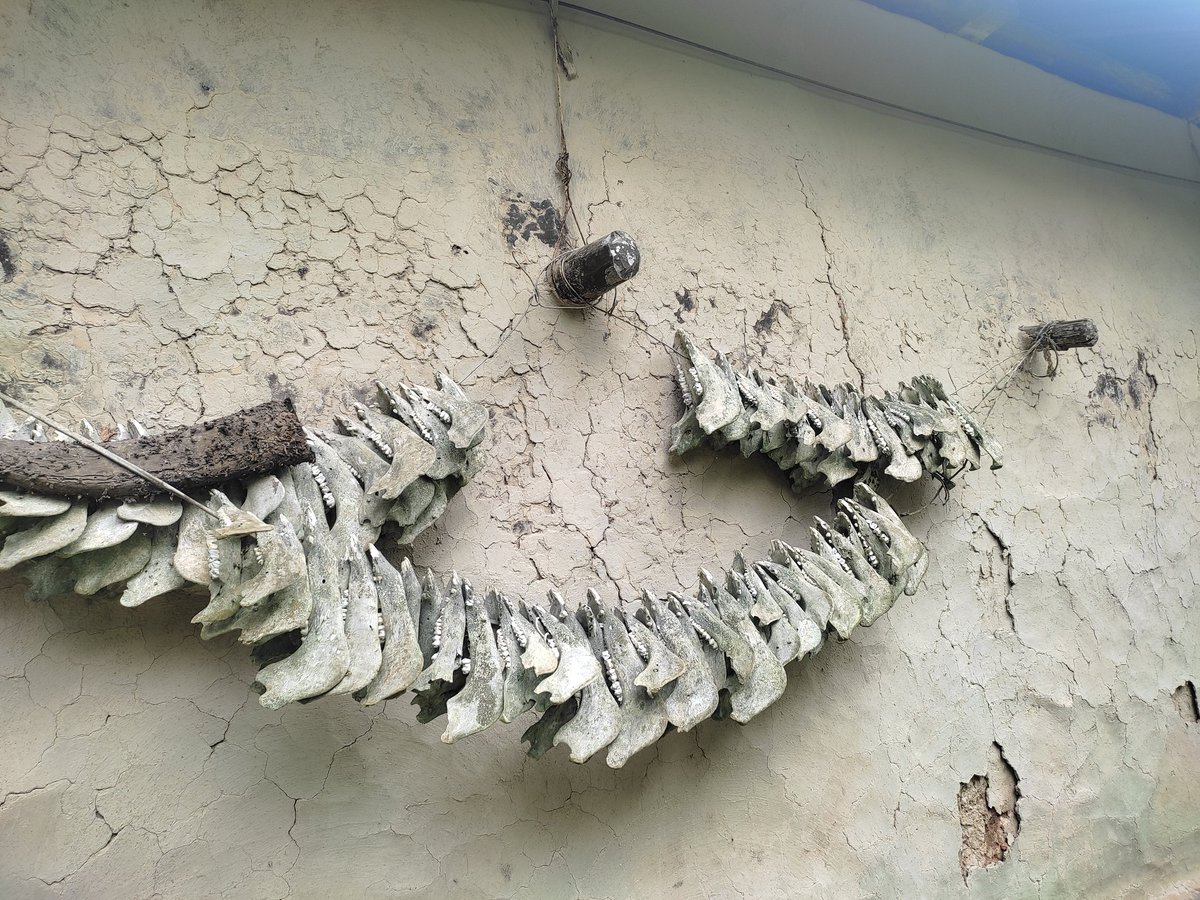
Garo people called it Wacheng (Wild boar's teeth).Amazing thing is that it's one of the most ancient symbol of Songsarek Garo 's. Hanging it on the wall makes it a Sansarek house, protecting it from evil energy.
As many as 2,379 trees are being cut down along the Tangail-Aricha #highway for the sake of #development work. Among them, many are centuries old.
#Bangladeshi#trees#NewsUpdate
https://t.co/I9jVhxjv28