Vegan/vegetarian recipe mess-maker (chill + fun) 🌱
I cook it, eat it straight from the pan, then write about it.
MBA who picked plants & words over corporate
@PaulFMcNamee I knew this was going to happen. Rather than making the line calling system better there would be ban on showing accountability for the error made.
Novak Djokovic acaba de decir que el aburrimiento es el estado más creativo que un niño puede experimentar.
Su hijo tiene 10 años y su hija 7.
Cuenta que cuando su hijo le dijo que estaba aburrido después de una mañana de ping-pong, kayak y fútbol, se sentó con él para tener una conversación que la mayoría de los padres evitan.
"Está bien aburrirse a veces. Cuando te aburres, no significa que tengas que coger un libro o una pantalla inmediatamente. También necesitas aprender a conectar con tus pensamientos".
Djokovic afirma que es en el aburrimiento cuando la creatividad finalmente aflora, y también cuando todo lo que has estado reprimiendo con el móvil sale a la superficie.
La mayoría de los padres protegen a sus hijos del único estado que los hace crecer.
What’s your absolute favorite plant-based protein powder? 🌿 Looking for some new recommendations to try!
(Drop your go-to brands in the poll or leave a comment if it's not listed! 👇)
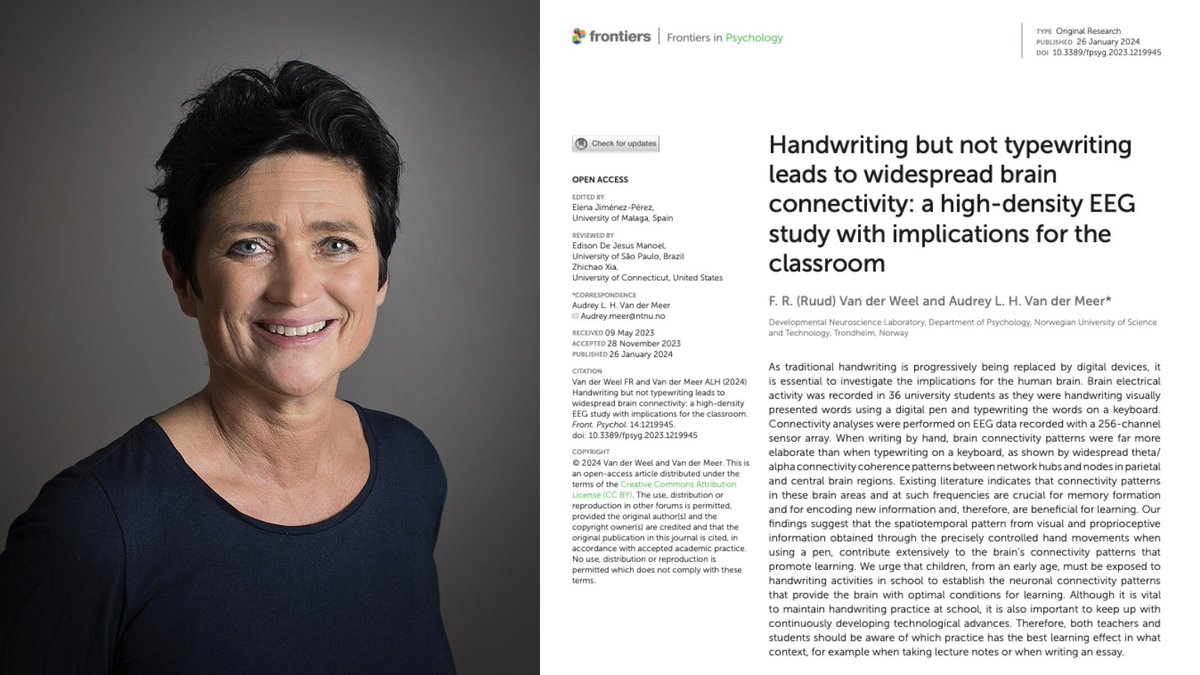
A Norwegian neuroscientist spent 20 years proving that the act of writing by hand changes the human brain in ways typing physically cannot, and almost nobody outside her field has read the paper.
Her name is Audrey van der Meer.
She runs a brain research lab in Trondheim, and the paper that closed the argument was published in 2024 in a journal called Frontiers in Psychology. The finding is brutal enough that it should have changed every classroom on Earth.
The experiment was simple. She recruited 36 university students and put each one in a cap with 256 sensors pressed against their scalp to record brain activity. Words flashed on a screen one at a time.
Sometimes the students wrote the word by hand on a touchscreen using a digital pen, and sometimes they typed the same word on a keyboard. Every neural response was recorded for the full five seconds the word stayed on screen.
Then her team looked at the part of the data most researchers had ignored for years, which is how different parts of the brain were communicating with each other during the task.
When the students wrote by hand, the brain lit up everywhere at once.
The regions responsible for memory, sensory integration, and the encoding of new information were all firing together in a coordinated pattern that spread across the entire cortex. The whole network was awake and connected.
When the same students typed the same word, that pattern collapsed almost completely.
Most of the brain went quiet, and the connections between regions that had been alive seconds earlier were nowhere to be found on the EEG.
Same word, same brain, same person, and two completely different neurological events.
The reason turned out to be something nobody had really paid attention to before her work. Writing by hand is not one motion but a sequence of thousands of tiny micro-movements coordinated with your eyes in real time, where each letter is a different shape that requires the brain to solve a slightly different spatial problem.
Your fingers, wrist, vision, and the parts of your brain that track position in space are all working together to produce one letter, then the next, then the next.
Typing throws all of that away. Every key on a keyboard requires the exact same finger motion regardless of which letter you are pressing, which means the brain has almost nothing to integrate and almost no problem to solve.
Van der Meer said it plainly in her interviews.
Pressing the same key with the same finger over and over does not stimulate the brain in any meaningful way, and she pointed out something that should scare every parent who handed their kid an iPad.
Children who learn to read and write on tablets often cannot tell letters like b and d apart, because they have never physically felt with their bodies what it takes to actually produce those letters on a page.
A decade before her, two researchers at Princeton ran the same fight using a completely different method and ended up at the same answer. Pam Mueller and Daniel Oppenheimer tested 327 students across three experiments, where half took notes on laptops with the internet disabled and half took notes by hand, before testing everyone on what they actually understood from the lectures they had watched.
The handwriting group won by a wide margin on every question that required real understanding rather than surface recall.
The reason was hiding in the transcripts of what the two groups had actually written down.
The laptop students typed almost word for word, capturing more total content but processing almost none of it as they went, while the handwriting students physically could not write fast enough to transcribe a lecture in real time, which forced them to listen carefully, decide what actually mattered, and put it in their own words on the page.
That single act of choosing what to keep was the learning itself, and the keyboard had quietly skipped the choosing and skipped the learning along with it.
Two studies. Two countries. Same answer.
Handwriting makes the brain work. Typing lets it coast.
Every note you have ever typed instead of written went into your brain through a thinner pipe. Every meeting, every book highlight, every idea you captured on your phone instead of on paper was processed at half depth.
You did not forget those things because your memory is bad. You forgot them because typing never woke the part of the brain that would have made them stick.
The fix is the thing your grandmother already knew.
Pick up a pen. Write the thing down. The slower road is the faster one.
While you slept last night, completely still in your bed, our galaxy moved millions of kilometers through the cosmos. You woke up in the same room, on the same planet, yet unimaginably far from where you were the night before.
The Milky Way is not drifting quietly through the universe. It is racing through space at around 600 kilometers per second, carrying billions of stars, planets, and everything on them along for the ride.
It is a good reminder that even when life feels motionless, you are always in motion.
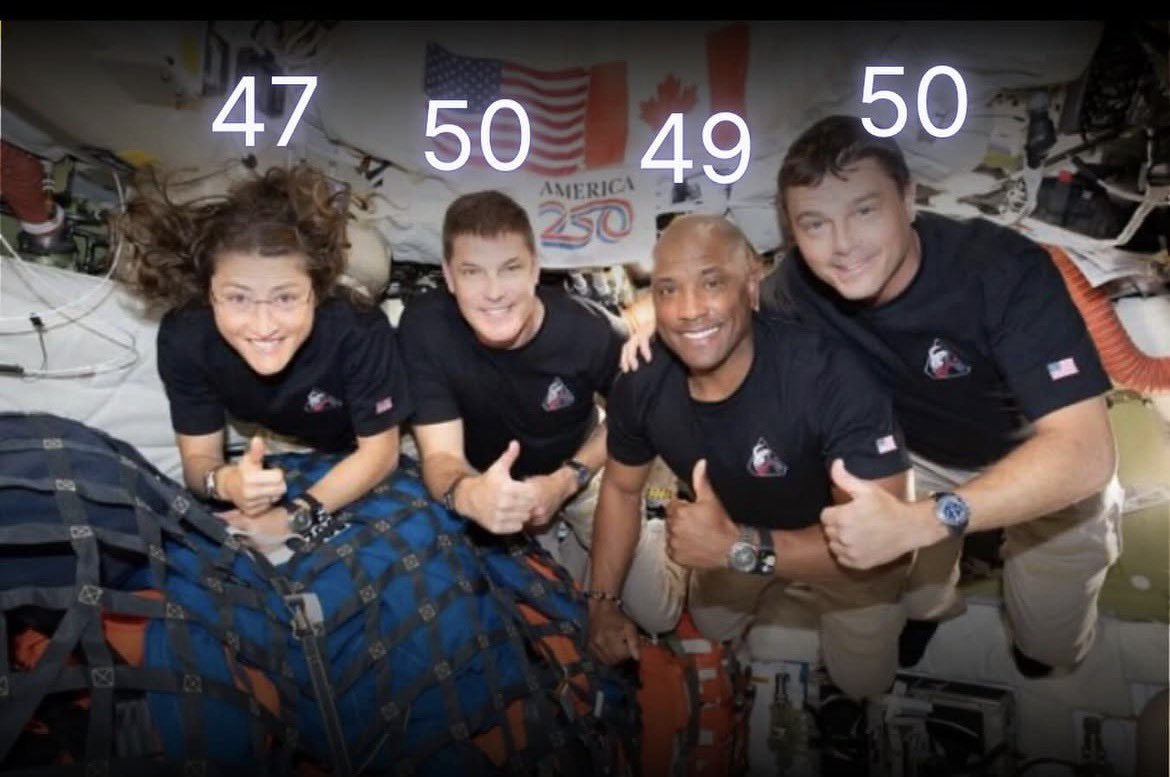
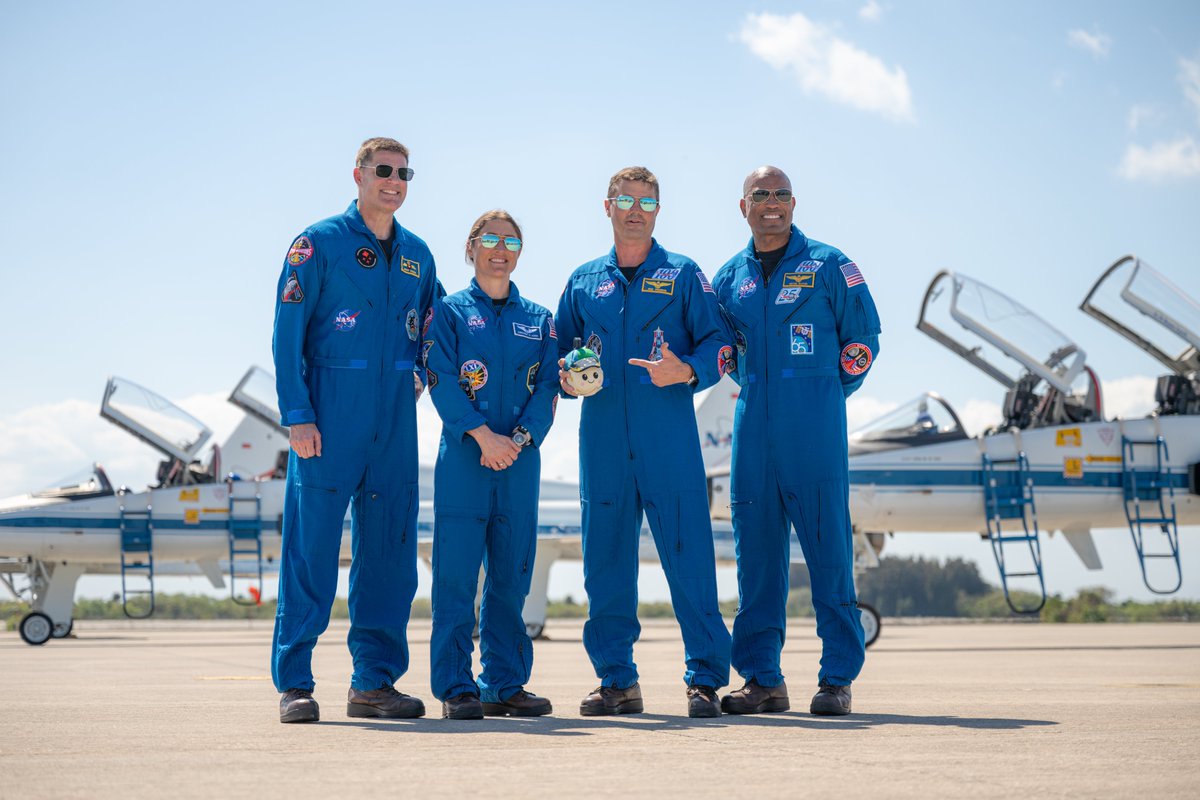
I'm honestly SHOCKED at how the general public has NO IDEA Artemis II is taking humans out to the moon and will be the furthest humans have ever flown. Every non-space nerd I've talked to has no idea. WE GOTTA GET PEOPLE STOKED!!!! THESE FOUR HUMANS ARE FLYING TO THE MOON!!!
The constant pumping of music into every public space, every idle second of sport, every supermarket and café, speaks to an underlying sickness, a kind of cultural mental illness. As a society we are allergic to silence, terrified of spending even one second with our own thoughts
The research behind this is wild. Your brain can’t flip from full alert to sleep like a light switch. It needs a runway. And reading builds it faster than almost anything else.
A University of Sussex study found that just 6 minutes of reading cut stress by 68%, more than music (61%), tea (54%), walking (42%), or video games (21%).
The effect is surprisingly physical. When you read, your nervous system shifts from fight-or-flight into rest-and-digest mode. Heart rate slows, breathing deepens, muscles release tension. The neuropsychologist who ran the study, Dr. David Lewis, described it as entering “an altered state of consciousness,” where focused imagination activates the part of your brain that tells your stress response to stand down.
A 2021 randomized trial tested this directly. Researchers split nearly 1,000 people into two groups: read a book in bed for seven nights, or don’t. After one week, 42% of readers reported better sleep versus 28% of non-readers. Nothing else changed.
Now compare that with what 86% of Americans actually do before bed: scroll their phones for an average of 38 minutes a night. A 2025 Norwegian study of 45,000 university students found that every additional hour of screen time in bed raised insomnia risk by 59% and cut sleep by 24 minutes. A separate American Cancer Society study of 122,000 adults found daily screen use before bed was tied to 50 fewer minutes of sleep per week.
Screens hit you with two sleep-blockers at once. Blue light suppresses melatonin, the hormone that tells your body it’s time to sleep, by about 50% according to a Harvard study. But the bigger problem is the content itself. News, social media, work emails, all of it fires up your brain’s threat-detection mode and spikes your stress hormones right when they’re supposed to be at their lowest point of the day. A physical book sidesteps both problems entirely.
The long game matters too. A Yale study tracked 3,635 adults over 12 years and found that people who read 3.5+ hours per week were 23% less likely to die during the study. That worked out to living roughly 2 years longer, regardless of gender, wealth, or education. Books beat newspapers and magazines. The researchers pointed to deep, sustained reading creating a kind of workout for the brain that protects it as it ages.
So the 5-10 minutes he’s describing? The science says 6 minutes is the threshold where your body starts winding down. His brain is switching off its stress response and easing into a state where sleep becomes almost automatic.
🍫 5 minutes from now you could be eating dessert.
These 5-minute vegan desserts are fast,, cozy, and perfect for when cravings hit hard.
If you need emergency dessert ideas, tap the link!
https://t.co/85Gqdzdm8i
#namelymarly#5minutedessert#quickvegandessert#easydessert
Let me explain exactly why every new subdivision in America looks like the top photo, because the math is wild.
A mature tree increases a home's value by 7 to 19 percent. On a $400,000 house, that's $28,000 to $76,000. A single shade tree produces the cooling equivalent of ten room-size air conditioners running 20 hours a day. One tree on the west side of a house cuts energy bills by 12 percent within 15 years. The bottom photo is worth more, costs less to live in, and sells faster. This has been documented by the University of Washington, Clemson, Michigan State, and the USDA. The data is not in dispute.
Removing those trees saves the builder roughly $5,000 per lot. Concrete trucks need twice the dripline radius of every standing tree. Utility trenches need flat ground. A bulldozer flattens 200 lots in an afternoon. Preserving trees adds weeks and thousands per home.
So the developer pockets $5,000 in savings and the buyer eats $50,000 in lost value for the next two decades. The person making the decision and the person paying for it have never been in the same room.
The Woodlands, Texas is the proof of what happens when they are. George Mitchell bought 28,000 acres of Houston timberland in 1974 and preserved 28% as permanent green space. He forced McDonald's to build behind the tree canopy. That McDonald's became one of the highest-volume locations in Texas. The first office building, designed to reflect the surrounding forest so you couldn't see it from the street, leased completely.
The Woodlands median home price today: $615,000. Katy, a comparable Houston suburb that clear-cut: $375,000. Named #1 community to live in America two years running.
Fifty years of data. The trees are worth more than removing them saves. Developers clear-cut anyway because they sell the house once and leave. You live in it for 30 years.
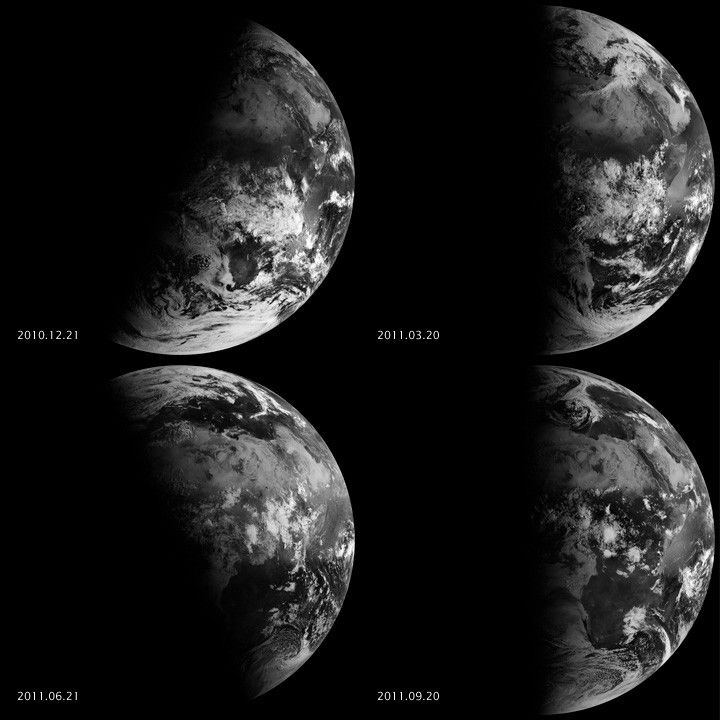
Happy vernal equinox! 🍀
Today marks the first day of spring in the Northern Hemisphere and the first day of autumn in the Southern Hemisphere.
After today, the Sun will shine more directly on the Northern Hemisphere than on the Southern Hemisphere until the autumnal equinox.
For one day the whole world turns green 💚
From the Empire State Building in New York
to Niagara Falls in Canada
to the Leaning Tower of Pisa in Italy
to Madrid, Brussels, Auckland & beyond ☘️☘️
Iconic landmarks across the globe light up for Ireland 🇮🇪
#StPatricks2026#Ireland