ای دل غمدیده حالت به شود دل بد مکن
وین سر شوریده باز آید به سامان غم مخور
...
دور گردون گر دو روزی بر مراد ما نرفت
دائما یکسان نباشد حال دوران غم مخور
هان مشو نومید چون واقف نهای از سر غیب
باشد اندر پرده بازیهای پنهان غم مخور
...
دیاسپورای شریف و ایراندوست، داره از مارپیچ سکوت درباره #میناب و جنایتهای جنگی آمریکا بیرون میاد و از #ویرانیطلبان دیاسپورا انتقاد میکنه و این خیلی ارزش داره.
آهنگ جدید گروه عجم در لندن، به بچههای میناب تقدیم شده.
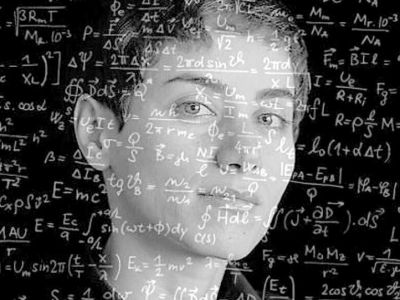
May 12th is International Women in Mathematics Day, in honor of Maryam Mirzakhani, the first woman to receive the prestigious Fields Medal.
Proudly Iranian
Marjan Yeshayayi, a member of the Tehran Jewish community, asked rescue workers not to use machinery [to clear the rubble] in order to preserve the scriptures.
“When I made the request, I did not believe they would accept it, but instead they said, ‘OK, we will remove it manually,’ and they really did. Each brick was removed by hand, and the scrolls came out safely and were handed over to the Jewish community.
https://t.co/FXoP1NZaxi
A Persian scholar finished a single math book in 9th century Baghdad that quietly became the foundation for every line of code running on Earth today.
I started reading about him at midnight and could not believe how many things in my daily life trace back to one man.
His name was Muhammad ibn Musa al-Khwarizmi. The book is called The Compendious Book on Calculation by Completion and Balancing.
Every time you say the word algebra, you are saying his book title. Every time someone says the word algorithm, they are saying his name. Both English words come from him. Both are Latin transliterations of Arabic and of his own identity. The man did not just contribute to mathematics. He named it.
Here is the part almost nobody tells you.
Al-Khwarizmi was born around 780 CE in Khwarazm, in what is now Uzbekistan. He moved to Baghdad and worked at a research institution called the House of Wisdom, which during the Islamic Golden Age was the single most important center of learning on the planet. The caliph al-Mamun hired the best mathematicians, astronomers, and philosophers from across three continents and put them in one building with one job. Translate, study, and produce new knowledge.
Al-Khwarizmi finished his book on algebra around 820 CE. The Arabic title contained the word al-jabr, which referred to one of the two operations he used to solve equations. When the book was translated into Latin in the 12th century, the Latin world did not have a word for what he had built. So they kept his Arabic word. Al-jabr became algebra. The discipline was named after a single Arabic word in the title of a single book by a single man.
The deeper insight is what he actually changed about how humans think.
Before al-Khwarizmi, mathematical problems were solved geometrically. You drew shapes. You measured them. You compared areas. The Greeks had built an entire mathematical tradition on visual proofs and physical constructions. It was beautiful and limited. You could not solve a problem you could not draw.
Al-Khwarizmi did something nobody had done before him at this scale. He said you could solve any problem using abstract symbols and rules. You did not need a shape. You needed a procedure. You moved terms across the equation. You cancelled like terms on both sides. You isolated the unknown. He invented the idea that mathematics is a manipulation of symbols according to rules, not a study of physical figures.
That single shift made everything that came afterward possible. Calculus. Differential equations. Linear algebra. Quantum mechanics. None of it works if math is locked inside geometry. He pulled it out.
The second thing he did is the one that changed how the world counted forever. He took the Hindu numeral system from Indian mathematics, refined it, and wrote a book introducing it to the Arab world. That system included the concept of zero as a placeholder, and a positional notation where the value of a digit depends on its location. Roman numerals could not do complex calculation. Hindu-Arabic numerals could.
When his book on numerals was translated into Latin as Algoritmi de numero Indorum, the word Algoritmi was just the Latin spelling of his own name. Europeans started calling the new method "doing algorism," then "running an algorithm." The word for the most important concept in computer science is literally his name in Latin.
The third thing he did is the part that should haunt anyone who works in tech.
His method of solving problems was systematic. Step one, do this. Step two, check that. Step three, if condition A, then do X, otherwise do Y. He wrote down procedures that could be followed by anyone, anywhere, who knew how to read. The procedure did not depend on intuition or genius. It worked because the steps worked.
That is exactly what an algorithm is. A finite, deterministic procedure for solving a problem. He did not just give us the word. He gave us the entire concept of programming a thousand years before there was anything to program.
When Alan Turing built the first abstract model of computation in 1936, when John von Neumann designed the first stored-program computer in 1945, when every engineer at Google, OpenAI, Anthropic, and DeepMind writes code in 2026, they are working in a paradigm that started with one man in Baghdad twelve centuries ago.
The strangest part is what happens when you walk into any tech office in San Francisco or Bangalore or Lahore today. Engineers say the words algebra and algorithm hundreds of times a day. They do not know whose name they are saying. Almost nobody can spell al-Khwarizmi correctly on the first try.
His original Arabic manuscript is preserved at Oxford. His book on Hindu numerals survives only in Latin translation. The Latin version was the textbook that taught medieval Europe how to count.
The man who built the foundation of the AI revolution did not live to see a calculator. He died around 850 CE, a thousand years before the first electric current was sent through a wire. The civilization he built mathematics for collapsed. The library he wrote in burned. His own grave is unmarked.
But every algorithm running on every machine on Earth right now still answers to his name.
even without us, countless generations will pass, roses will flourish, and in the new year they will bloom.
Saadi’s poetry is inscribed on a tombstone from the Safavid era on Qeshm Island, Strait of Hormuz in the Persian Gulf.
Boston has free Wi-Fi
“Wicked Free WiFi” is a public outdoor network you can use with no login, username, or password
Check the map to find locations across the city.
https://t.co/7gnl2A7TSx
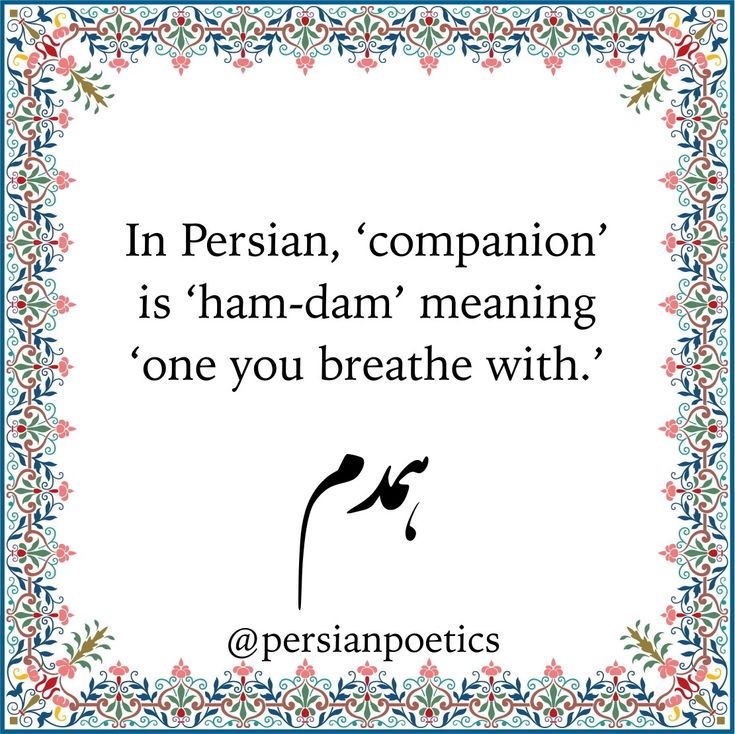
Did you know Persian is a gender-neutral language?
Possibly the only one still widely spoken this way today.
It’s the language we (Iranians) think in, which has shaped our way of thinking.
I was thirty-something years old when Iranian students dragged me into a room and told me I wasn't going anywhere. Four hundred and forty-four days later, I walked out. I've spent the decades since trying to make sense of what happened — and what keeps happening — between our two countries.
So don't talk to me about Iran like it's an abstraction. I lived inside that confrontation. I felt it.
Which is why I'm not ready to write off this ceasefire, even though everything about it is maddening.
Negotiations in Pakistan may produce nothing. The talks could collapse before they get started. I've seen American diplomacy with Iran fail more times than I can count, and usually for the same reasons — too much pride, too little patience, and Israel holding a match in the corner of the room.
But here's what I know in my bones: another war won't break Iran. We just tried. It didn't work. Iran doesn't break — it absorbs, it adapts, and it waits. I watched that stubbornness up close for 444 days.
What bothers me most isn't that Iran is winning this moment — it's that we handed it to them. Tehran's framework is running these negotiations. Iran still controls the Strait of Hormuz. Still collecting tolls. Trump looked at their proposal and called it workable. I never thought I'd see the day, but here we are.
Iran wants everything on the table — sanctions, enrichment rights, American troops out, and a deal that covers what's happening in Lebanon and Gaza too. That's a lot to swallow. And Israel, which wasn't invited to this conversation, is already making clear it has no intention of being constrained by it.
That's the part that worries me the most. Because if Israel keeps bombing and Washington can't or won't stop it, none of this holds.
And yet — and I say this as someone who has every reason to distrust Tehran — I don't think we go back to all-out war. Not because anyone has suddenly gotten wise, but because the math doesn't work. A second round ends the same way. Iran still controls the Strait. The global economy still flinches when Tehran flexes.
What we're heading toward isn't peace. It's something smaller and more precarious — two countries silently agreeing not to destroy each other today, with no paperwork and no guarantees.
I know what it's like to survive on something that fragile. For 444 days, that's all I had.












![timand2037's tweet photo. Marjan Yeshayayi, a member of the Tehran Jewish community, asked rescue workers not to use machinery [to clear the rubble] in order to preserve the scriptures.
“When I made the request, I did not believe they would accept it, but instead they said, ‘OK, we will remove it manually,’ and they really did. Each brick was removed by hand, and the scrolls came out safely and were handed over to the Jewish community.
https://t.co/FXoP1NZaxi](https://pbs.twimg.com/media/HHfbKC6XMAAVURj.jpg)