Why do so many English towns and villages end in "-by"?
It comes from the Old Norse word "býr", meaning a farmstead or settlement.
During the 9th and 10th centuries, Scandinavian settlers established communities across the Danelaw in northern and eastern England and their language became woven into the landscape.
They used practical names, often describing a local landmark, a natural feature or the person associated with the settlement.
Grimsby - From the Old Norse personal name "Grímr" and "býr", meaning Grim's settlement.
Whitby - Traditionally interpreted as the "white settlement", from Old Norse "hvítr" (white) and "býr".
Derby - From Old Norse "djúr" (deer) and "býr", meaning a settlement associated with deer.
Selby - A settlement among willow trees, from Old Norse "selja" (willow) and "býr".
Kirkby - From Old Norse "kirkja" (church) and "býr", meaning a settlement with a church.
The ending "-by" is especially common in Lincolnshire, Yorkshire and parts of the East Midlands, reflecting the areas where Scandinavian influence was strongest.
More than a thousand years later, an ordinary English road sign can still preserve a fragment of the Viking Age.
Is there a village or town ending in "-by" near you?
Follow @OaksAndLions for more on England’s history, heritage and culture. 🏴
Here's your chance to get my new biography of #EstherInglis for 50% off! @EdinburghUP announced their sale on books published through the end of 2026. Sale days 27th thru 30th November. https://t.co/n47jQjw2LS
Popular in the Middle Ages, bestiaries (or 'books of beasts') provided illustrations of animals, both real and imaginary, with a moral lesson about each one. This 13th-century bestiary was made in York and has been at the Abbey since the 1700s. Inside are many charming illustrations including:
- Elephant
- Walrus
- Dragon
#Museum30 #Charm
Private Mary Spencer-Churchill (1922-2014) joined the Auxiliary Territorial Service (ATS) in 1941.
She was the youngest daughter of Winston & Clementine Churchill, and she served with anti-aircraft batteries in London, eventually rising to the rank of Junior Commander by 1946.
Goathland really is something special.
It's got that classic North York Moors village look.
The stone houses, the wide village green and the way the moors roll right up to the doorstep.
It’s one of those places that still looks like it belongs in a different era, especially when the steam trains pull in.
Quiet, pretty and completely itself.
#OTD 1589 James VI of Scotland m. Anne, daughter of Frederick II of Denmark and Sophia of Mecklenburg-Güstrow at the Bishop’s Palace at Oslo. Anne became was a great patron of arts, supporting painters, playwrights and architects, including Inigo Jones. https://t.co/dqz5CmHEPN
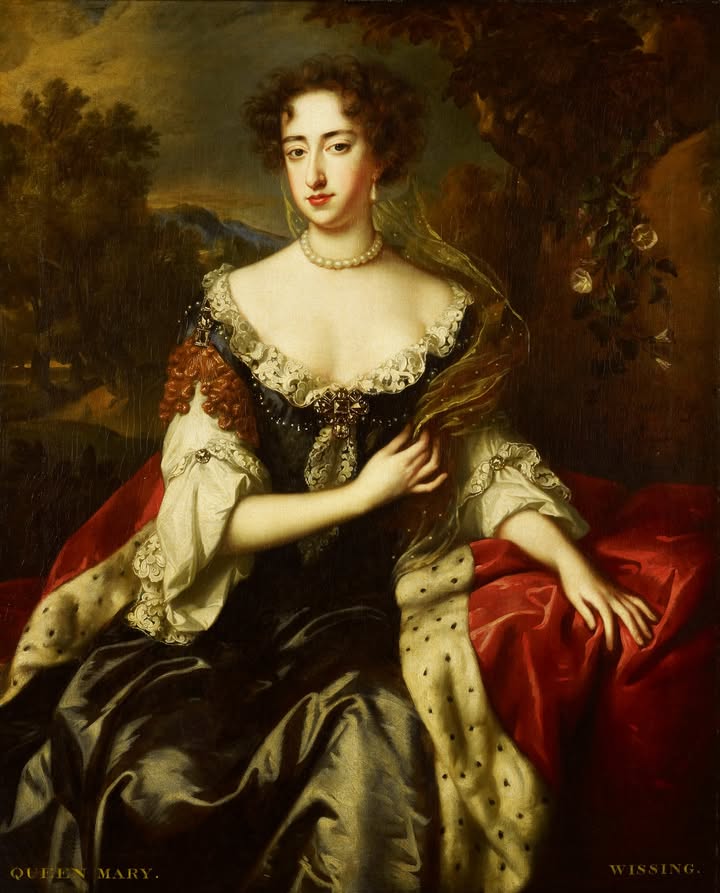
✨ New display coming to Kensington Palace: Meet Mary 👑
Discover the story of Queen Mary II, a young woman who ascended her deposed father's throne and changed the rules of the monarchy forever.
📆 Opening 25 March 2027
📍 Kensington Palace
Saltburn Cliff Railway in North Yorkshire has been carrying passengers between the town and the beach since 1884.
Remarkably, it still operates using water.
By filling a tank beneath the upper carriage with water, its increased weight allows it to descend, pulling the other carriage uphill.
A wonderful example of Victorian engineering, still working perfectly after more than 140 years.
'The spring, the summer, the childing autumn, angry winter, change their wonted liveries'
- Midsummer Night’s Dream (II, 1)
The Abbey's Dean's Yard through the changing seasons
#ShakespeareSunday
A smiling Queen Victoria with her daughter Princess Beatrice, her granddaughter Princess Victoria of Hesse and by Rhine, and her great-granddaughter Princess Alice of Battenberg (Prince Philip's Mother), 1886.
The complex coat of arms of Richard Neville, 16th Earl of Warwick, was a visual map of his immense wealth and power. Its four grand quadrants reflect the strategic marriages and inheritances that made the “Kingmaker” one of England’s most formidable magnates.
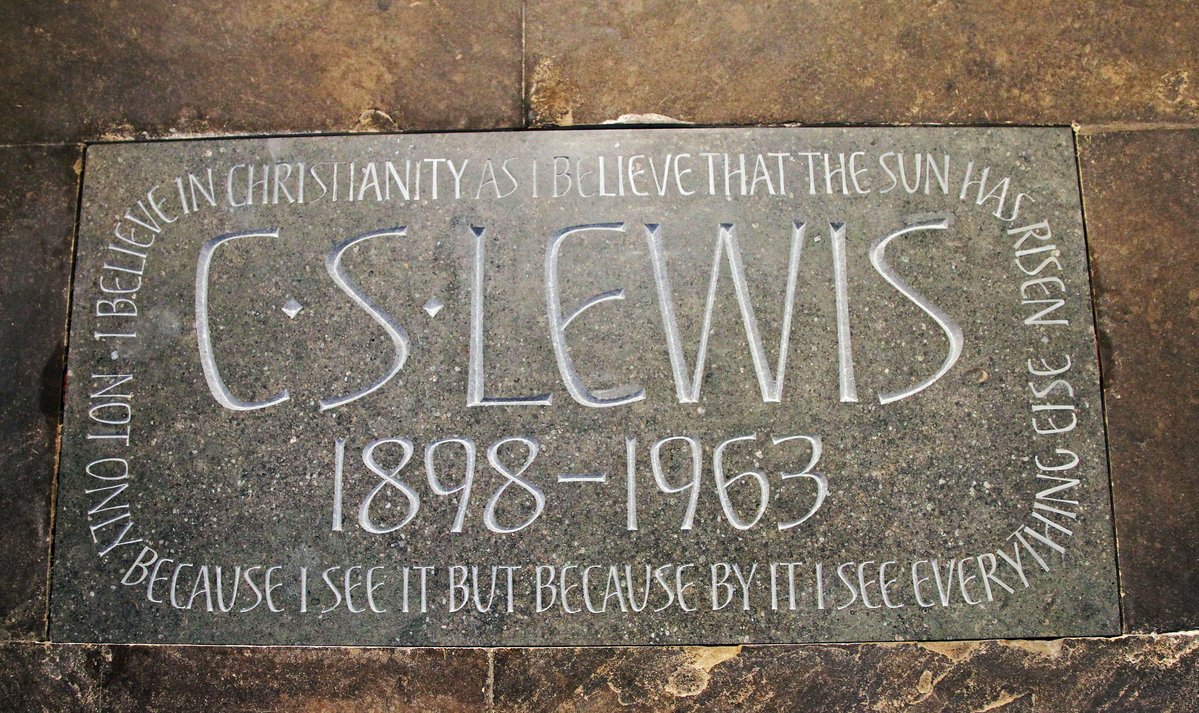
C.S. Lewis died #onthisday in 1963. Best known for his Chronicles of Narnia series, Lewis' faith strongly shaped his work, with themes of salvation and redemption. On the fiftieth anniversary of his death, a memorial was unveiled in Poets' Corner which reads: 'I believe in Christianity as I believe that the Sun has risen, not only because I see it but because by it, I see everything else.'
Built around AD 675, St John’s Church at Escomb, County Durham, is one of England’s oldest and best-preserved Anglo-Saxon churches.
Its builders reused stone from the nearby Roman fort at Binchester. One block, still visible in the north wall, bears the inscription ‘LEG VI’, referring to Rome’s Sixth Legion.
High on the south wall is a 7th or early 8th-century sundial, believed to be the oldest in England still in its original position. Its markings may have helped monks observe their daily times of prayer.
The church even retains its original Anglo-Saxon windows and much of its ancient stonework.
What began as a Roman fortress helped build a Christian church that has endured for more than thirteen centuries.
Follow @OaksAndLions for more on England’s history and heritage. 🏴
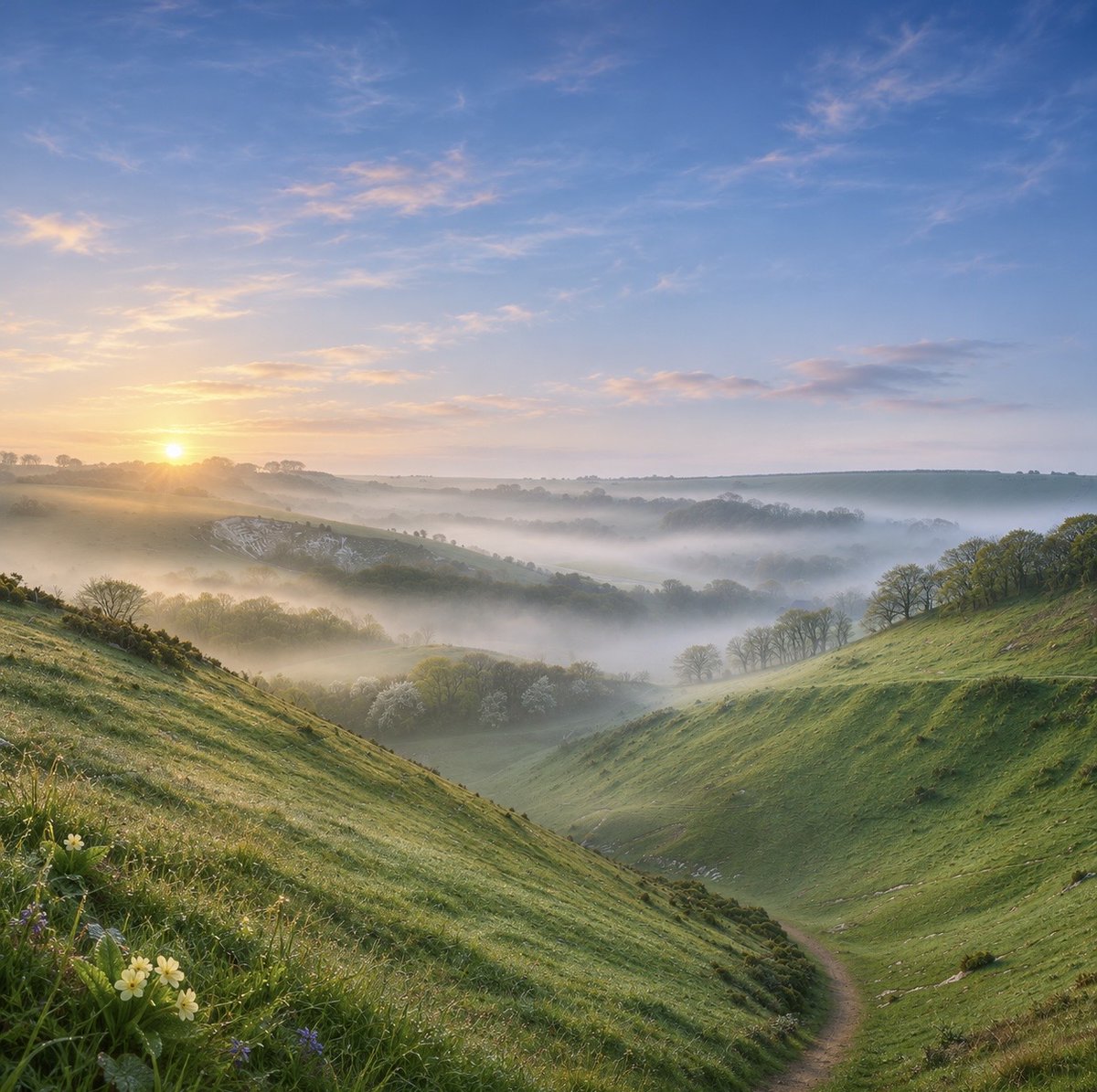
Devil’s Dyke, West Sussex.
Carved into the South Downs by meltwater during the last Ice Age, this spectacular valley is one of England’s finest natural landmarks. 🏴