The fuck is wrong with our ruling class lately?
Every channel is 'prepare for war, stockpile water, living standards will fall' and now we've reached 'have you tried eating out of bins'.
"I don't understand why they're pushing AI so hard when we can all see it's making everything worse."
That's because it's not being marketed to you; it's being marketed to governments and plutocrats. They're the real target audience for these products, not you.
You are not receiving the real sales pitch for AI, because the real sales pitch would not appeal to your sensibilities. The real sales pitch for AI isn't "Hey check out this product, it makes some web searches slightly easier and it can maybe write your emails for you." The real sales pitch for AI is "This product allows you to surveil the entire population of your country. It can be built into autonomous surveillance drones and killing machines. It can allow you to monitor and control every aspect of your society. It can reverse the decentralization of information brought on by the internet age. It can take away the collective bargaining power of workers and give you the skilled services your company requires. It can nullify strikes, civil disobedience, and even full-scale revolutions, and lock humanity into your capitalist dystopia forever."
That's the real sales pitch. It doesn't sound appealing to any normal person, but it makes sense when you remember who these technologies are really being sold to, and why.
Elon Musk is without a doubt the most grotesque example of extreme wealth being mistaken for virtuous genius that I’ve ever seen, no contest.
A dude whose business empire has had the exceptional luxury of upwards of $38 BILLlON in government contracts, loans, subsidies, and tax credits that lectures us on government waste, fraud, and abuse.
He takes a literal fucking chainsaw to government aid, while hundreds of thousands die from the lack of access, and simultaneously engorges himself at the public pig trough of endless money.
He then takes the grift cash to buy elections, outright rig them, gains extraordinary access to the backrooms and convinces panting sycophants that he’s “fighting the establishment.”
He IS the establishment.
Years and years of missed deadlines, self driving promises just around the corner. Spectacular theatrical marketing presentations presented as new technology, with an army of ball riding zombies to explain why his latest failure is actually evidence of 5D chess wizardry.
All in line to be the friend he doesn’t have.
He was emailing Epstein to find about the “wildest parties” on child rape island, and you people still clamber.
Speaking of mouth breathing followers, the cult surrounding him is even more disturbingly dangerous.
Every glaring contradiction becomes an insult worthy misunderstanding.
Every dumb comment is a masterpiece. Every legitimate totally fair criticism becomes proof that the questioner is stupid, jealous, or secretly working against humanity itself.
It’s so blatantly a cult.
At what point does this bizarre admiration become deliberately and completely giving up independent thought?
You can acknowledge the success of his companies and the remarkable engineering feats without cosplaying that he’s some infallible prophet.
And give his employees some credit.
He’s a trillionaire with huge political influence, a pretty pathetic appetite for public attention indicative of someone that’s insecure, and a documented history of promise after promise that he doesn’t deliver on.
Please, don’t confuse money with intelligence.
They rarely go hand in hand.
Also, realize that proximity to great power is not synonymous with moral authority. The truth is historically the opposite.
And for fucks sake, stop worshipping people who wouldn’t piss on you if you were on fire.
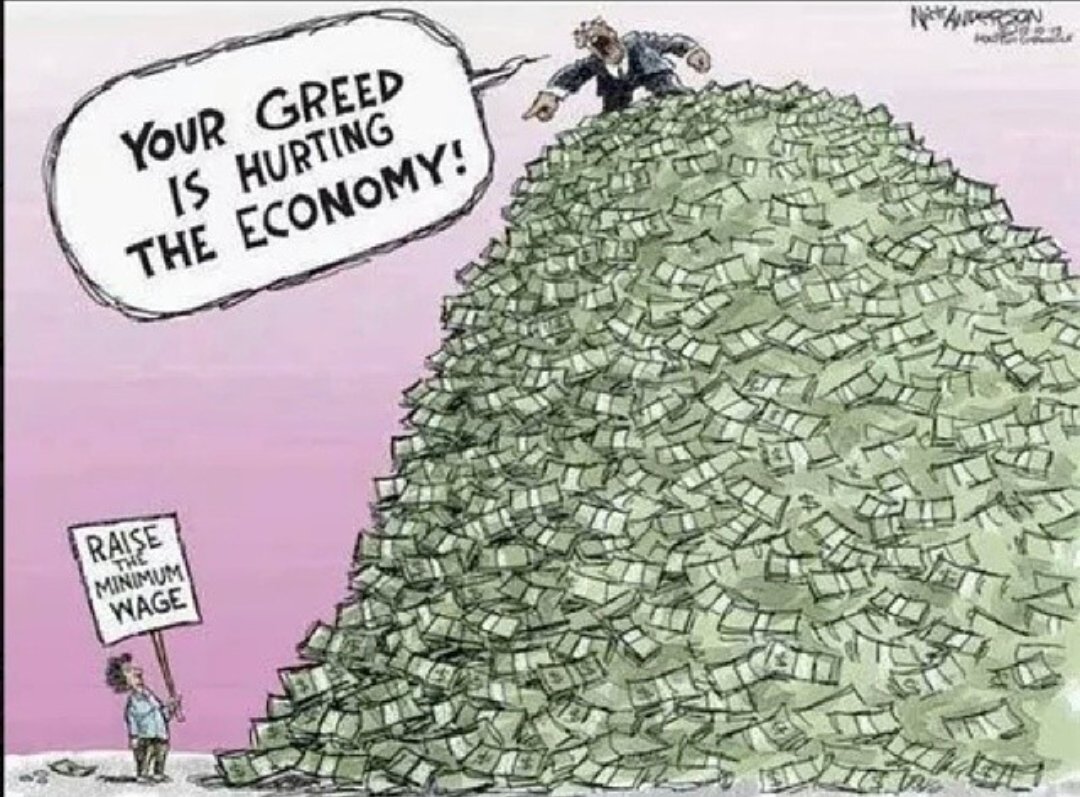
Yes, The minimum wage is meant to be the lowest wage you can live on and afford housing. So, for everyone saying “it's not meant to be that,” yes, it is. That's why it's called the minimum wage.
I saw a post on Reddit that said, “When you walk through a museum, you’re not just looking at art. You’re moving through centuries of people trying to explain love, grief, power, beauty, and belonging.” I don’t think I’ve ever seen a museum described so beautifully.
I am a member of the Norwegian Nobel Committee.
You may have read my letter yesterday.
A great many people did, which is its own small Norwegian tragedy, because we are a people raised under Janteloven, the unwritten law that says you are not to think you are anything special, and now I have been noticed, and my sister has sent me a text with an exclamation mark in it, and I have had to lie down with a cold cloth.
It is the next morning. The rain has not improved. Same tram, same wet shoes, failing the same daily inspection the sky conducts on all of us. No bun today. I ate the bun. Under Janteloven I am required to add that it was not a very good bun and I did not enjoy it, which is a lie, but a patriotic one.
I have been watching the television, because today, it turns out, is an anniversary.
One year ago, on this exact wet day, the man across the ocean stood on a stage in Egypt in front of a green folder and asked, out loud, into a live microphone, “Can we get the documents, please?”, as though the peace he had come to sign might have wandered off to get a coffee. One year ago he announced it had taken three thousand years to reach that moment, a figure he revised, in the same breath, to somewhere between five hundred and six thousand, settling nothing, insulting all of the intervening millennia equally. And a year ago, twenty people came home. Children’s fathers. Somebody’s son, walking into his mother’s arms on a hospital floor. I said it then and the law of my land will have to forgive me for saying it plainly again: that part was good. That part was the only part a dead Swede’s will was ever about.
And here is the thing I have learned in thirty years of this, the thing that separates my committee from every excitable capital on earth: we do not grade the homework on the day it is handed in, glowing, for the cameras. We grade it a year later. In the cold. When the folder is in a drawer and the crowd has gone home and we can finally see whether the thing was a peace or a press release with a long enough shelf life to reach the next awards season.
So. One year later. The verdict.
It mostly held.
I want you to understand what it costs a Norwegian to say even that much. “It mostly held” is, in my dialect, delirious praise. It is the most enthusiasm the climate permits before November. There were strikes. There were violations, theirs and his and everyone’s. It wobbled, it cracked, it was patched, it is still, this morning, more or less a peace, and twenty people who were in the dark are, a year on, still in the light. By the standards of the thing we actually measure, that is not nothing. We noted it. We are, despite the rumors, not made entirely of frost.
But I was watching for the other thing, because I am built to watch the thing beside the thing, and the thing beside the thing has not stopped for one single day in twelve months.
The campaign.
He did not, you see, end a war and then move on with the quiet satisfaction of a man who has done a good turn. He ended a war and immediately entered it into evidence. For a year he has been submitting it. Re-signing it. Re-announcing it. Holding it up to the light at every available podium like a child who has brought the same drawing back to the refrigerator three hundred times. And I know exactly what it is, because it is addressed to me. To the five of us. It is an appeal, lodged the morning after we told him no, against a verdict he received four days ago when the prize went instead to an eighty-five-year-old woman who never once asked for it.
We call this, in Norwegian, when something becomes loud and chaotic and completely out of proportion, helt Texas. Totally Texas. It is real slang, I promise you, we say it about blizzards and traffic and weddings that got out of hand. And I sat on my tram this morning, watching a year of footage from a man who is, himself, quite near Texas, and I thought: there is no more precise word in my language. The whole performance is helt Texas. A year of it. An anniversary of it.
Now, honesty, because it is apparently the only product I am now known for.
It might still work.
That is the sentence the audience cannot bear from me, and it is the only one worth your time. We are not pure. We handed the medal once to a man nine months into a presidency for things he had not yet done, and we have been quietly nauseous about it for fifteen years; his portrait situation is, let us say, under review. We are five vain, wrong, weather-beaten pensioners administering a dead dynamite salesman’s guilty conscience out of a building on a street named after Henrik Ibsen, who wrote almost exclusively about respectable men discovering they are frauds, and who would have found all of this unbearably funny and then written a four-hour play about it.
So I will not tell you the man can never win it. I will tell you what my entire nation says instead, the most devastating phrase in the Norwegian language, deployed at the end of a long cold silence: vi får se. We’ll see.
Because the trouble, the genuine trouble, is that this year he did not merely want it. He learned. He learned to chase the medal with his hands full, and a man chasing it with twenty freed hostages in his arms is much harder to look away from than a man merely phoning to say he deserves it. It is, I will grant him, and it costs me to grant it, cleverer than anything we have had to ignore in a hundred and twenty-five years.
But he has broken the one law older than ours. Not Janteloven, though he breaks that one so completely that Norwegian schoolchildren could study him as the photographic negative of a well-raised person. The older law. The only rule the medal has never once gotten wrong in its whole history: it finds the ones who do not chase it, and it flees the ones who do. He has spent a year running after it, at the top of his lungs, holding up the drawing. And every day he runs, he proves the one thing that disqualifies him, which is that he does not understand what it is for.
The old woman in Nuremberg understood. She sat in courtroom 600, the actual room, and did not phone anyone, and the medal walked across the water and found her. That is not a system we designed. It is just the only pattern that has survived a century of our mistakes.
The tram is slowing. My stop. The rain is still hanging there, auditing me, and I have failed again, and somewhere across the ocean a year-old green folder is being photographed, for the thousandth time, for a submission that closed in January and reopens, in his mind, every morning of his life.
Vi får se. We’ll see.
Kristin thinks he gets it next year. She didn’t say so. She said “well,” on a falling tone, while looking out the window, which is how a Norwegian screams a prediction. I have learned to read her the way sailors read the sky, and that particular “well” meant: brace yourself, it’s coming, and we’re going to have to live with it.
I hope she’s wrong. Under Janteloven I’m not permitted to think my hope matters more than hers.
I have to change trams.
I am a member of the Norwegian Nobel Committee.
There are five of us. Five people, appointed by a parliament most of the planet could not find on a map, who decide, once a year, which human being the world has agreed to call good.
I know. I know. I think about it on the tram.
We meet in a building on Henrik Ibsens gate, a street named after a man who wrote almost exclusively about people discovering they are frauds, which nobody on the committee finds funny except me. There is a room with a long table and the portraits of the dead laureates looking down, Mandela, the Dalai Lama, a great many earnest men in spectacles, and one portrait we do not discuss, which is Kissinger, 1973, awarded while the bombs were still falling, after which two of our predecessors resigned and the satirist Tom Lehrer said political satire was now obsolete. We keep him on the wall. A reminder. Every family has the uncle.
It is October in Oslo, which means the sun gives up around four in the afternoon like a civil servant, and it rains the particular Norwegian rain that isn’t quite falling, just hanging there, judging you. I arrive with wet shoes. I always arrive with wet shoes. There is coffee, because this is Norway and there is always coffee, we drink more of it per person than almost anyone alive, and someone’s wife has sent kanelboller, the cinnamon buns, and we sit, five Norwegians, damp, caffeinated, sugared, and we decide the moral standing of the entire species.
Let me tell you how it actually works, because the world imagines a cathedral and it is, I promise you, a book club with a mandate.
287 nominations this year. 208 people, 79 organizations. Anyone can nominate, that’s the secret nobody understands: a professor, a parliamentarian, a former laureate, so the “nominee” list is meaningless, it’s a suggestion box, and every autumn some congressman nominates his own golden retriever and the press writes “SHORTLISTED.” Nobody is shortlisted. There is no short list the public ever sees. There is us, and the coffee, and the rain, and the portraits, and a Norwegian stubbornness that is older than the prize itself.
We read reports. The institute’s advisers write them, thick dull documents, and we argue. Our chairman told the BBC once that in the final meeting “there is a high temperature.” High temperature, for a Norwegian, means someone slightly raised an eyebrow and then apologized for it. We don’t do high temperature. We do a long silence, and then Kristin says “well,” and everyone knows exactly what “well” meant, and it’s settled. That’s our shouting. “Well.” You’d have to be raised here to hear the violence in it.
Now. This year. I will not say the name, because we never say the name, but you know the name.
A certain head of state wanted this prize the way a child wants a thing in a shop window, which is to say loudly, and in public, and with the full belief that wanting it was itself the argument. He said he deserved it. He said he’d ended eight wars, a number that grew most times he said it, like a fish. He had other heads of state phone us. Israel’s prime minister posted it on the internet, “Give him the Nobel.” The leaders of Cambodia and Pakistan announced they’d nominated him, as though announcing it were part of it, as though we tally mentions. A man flew around the globe collecting endorsements for a Norwegian committee the way you’d collect signatures for a petition to the council about a noisy dog.
And here, uff da, is the detail I treasure, the one that makes me smile into my coffee. The nomination deadline is the 31st of January. He took office on the 20th. So for all the phone calls, all the posts, all the gilded lobbying, the only nominations that could possibly count for this year’s prize were filed in the first eleven days of his term, before he had, by his own arithmetic, ended a single one of the eight wars. He campaigned all year for a prize whose window had shut while he was still hanging up his coat. We didn’t have to reject him. The calendar did. We just watched. Norwegians are very good at watching. We have long winters.
People think we sit there weighing his deeds. We don’t. That’s the thing I can’t make the world understand. We’re not grading his homework. We don’t owe anyone the prize for a ceasefire, however real, however loud the announcement. “He made peace” is not a sentence that ends in a medal, the way he believes it does, the way he believes every good thing ends in his name on it. The will of a dead Swede says the prize goes to whoever did the most for fraternity between nations. A dead Swede, I should add, who made his entire fortune inventing dynamite and selling arms, and spent his last years horrified at his own obituary, which called him a merchant of death, and so bought his way to immortality as a man of peace. The whole prize is one guilty arms dealer’s attempt to launder his name. We are, all of us, administering a dead man’s public relations. I find this clarifying. It keeps me humble. It should keep everyone humble, and it keeps, by my count, no one humble at all.
So who did we give it to?
An eighty-five-year-old woman. A judge. Born in Durban, under apartheid, granddaughter of a Tamil man who came to South Africa as indentured labor, a bus driver’s daughter from the poor Indian quarter, who became the first non-white woman to run a law practice in her province, who defended Mandela’s people when defending them was dangerous, who sat on the Rwanda tribunal and the court at the Hague, and who, at eighty-five, is right now a judge weighing whether a genocide is a genocide. When we told the world, our chairman said the rule of law “underpins the system we have set up to ensure peace,” and that “peace requires justice.” She wasn’t even in Oslo. She was in Nuremberg. In courtroom 600. The actual room where they tried the Nazis. You cannot stage that. God staged that, and God, it turns out, is a better satirist than any of us.
She did not phone us. She did not post. No prime minister demanded it for her on the internet. She had, as far as our deliberations are concerned, the one qualification the loud man could never manufacture, which is that she wanted the work and not the medal. The medal finds those people. It flees the ones who chase it. This is not a rule we wrote. It’s just the only pattern the hundred-odd years of our mistakes has ever shown.
The reaction from across the ocean was immediate. His spokesman posted that we “place politics over peace.” Ja. Perhaps. We’re five damp pensioners in a rainy city; of course it’s political, it was always political, it was political when we gave it to a sitting American president nine months into his first term for the promise of things he had not yet done, and we have been quietly embarrassed about that one for fifteen years, so believe me, we had a particular reason this year to prefer a woman with fifty years of verdicts behind her over a man with eight wars in front of him and a deadline already behind him.
Here is what he will never understand, the thing I’d tell him on the tram if he ever took one. We are the one prize he cannot buy, cannot post his way to, cannot have a friendly dictator phone in for him. Not because we’re incorruptible, nei, we’re as vain and wrong and human as the portraits on our wall. But because the entire point of the thing, the only power a small cold country’s book club has ever held, is that it goes to the person not performing the wanting. The moment you demand it, you’ve proven you don’t understand what it’s for, and proving that is itself the disqualification. He ran the most expensive campaign in the history of the prize and the campaign was the reason. He was never losing to Navi Pillay. He was losing to the concept.
It’s dark now. Four o’clock dark. The buns are gone. Kristin said “well” an hour ago and we all went home. I’m on the tram with my wet shoes, and somewhere across the water a very powerful man is explaining to a camera that the prize is rigged, that we’re corrupt, that he’ll win it next year, and he genuinely might, we’re only five idiots and we’ve been wrong before, Kissinger is still on the wall.
But not this year. This year an old woman in Nuremberg, in the room where the law once stared down the exact kind of man who thinks wanting a thing loudly enough should make it his, got a phone call she didn’t ask for.
That’s the job. We don’t reward the man who ends the war and announces it.
We reward the woman who spent fifty years deciding what a war was.
He’ll never see the difference. That’s rather the whole point of him.
Takk for i dag. I have to change trams.
Now imagine that these buildings harbor dissident artists, novelists, poets, playwrights, musicians, journalists, historians, librarians, nurses, doctors, civil rights jurists, teachers, pro-democracy activists, community organizers. That's what robodogs "leading the way" means.
JON STEWART: “So in the FUTURE we WILL use A.I. to cure diseases… but right now it’s mostly murder, surveillance, and surge pricing for the McRib — What a trade! I’m getting the sense you guys might be full of shit.”