Today, we’re excited to introduce Miso One, the most emotive voice model in the world.
Miso One is an 8-billion-parameter text-to-speech model for highly expressive speech generation. It emotes like a human and responds faster than a human, with just 110 milliseconds of latency.
We’ve open-sourced the model weights, with API access coming soon.
Hear how Miso One sounds in the thread below.
JUST IN: Scientists say AI has decoded communication patterns in mice, dolphins, apes, birds, whales, & cuttlefish — could eventually lead to humans communicating directly with animals.
@elonmusk Elon, please give #Grok Build full firehose access to https://t.co/dBg55EkDCB so it can run massive Boolean searches and deliver complete CSV exports of every relevant mention in real time.
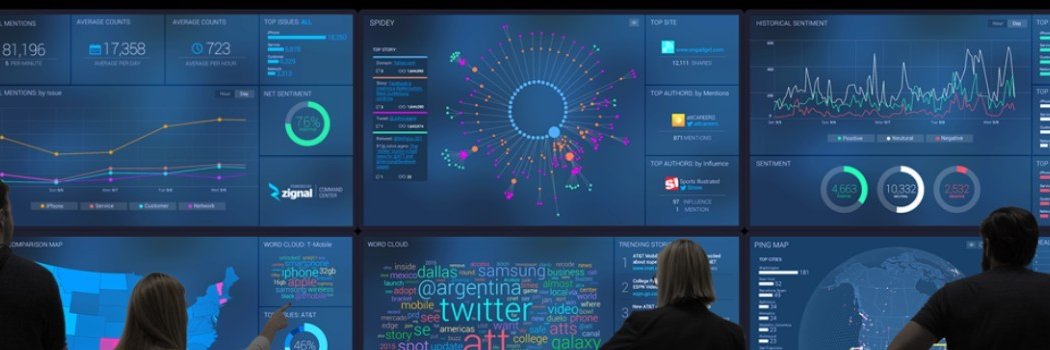
This guy has five million AI agents tracking everything publicly available about three billion people!
He spent half a million bucks doing that.
Be scared? Or be educated?
@michaelfanous1 runs https://t.co/adzyhReHSV and I have a lengthy conversation about what he's doing and why it could lead to a new kind of social network.
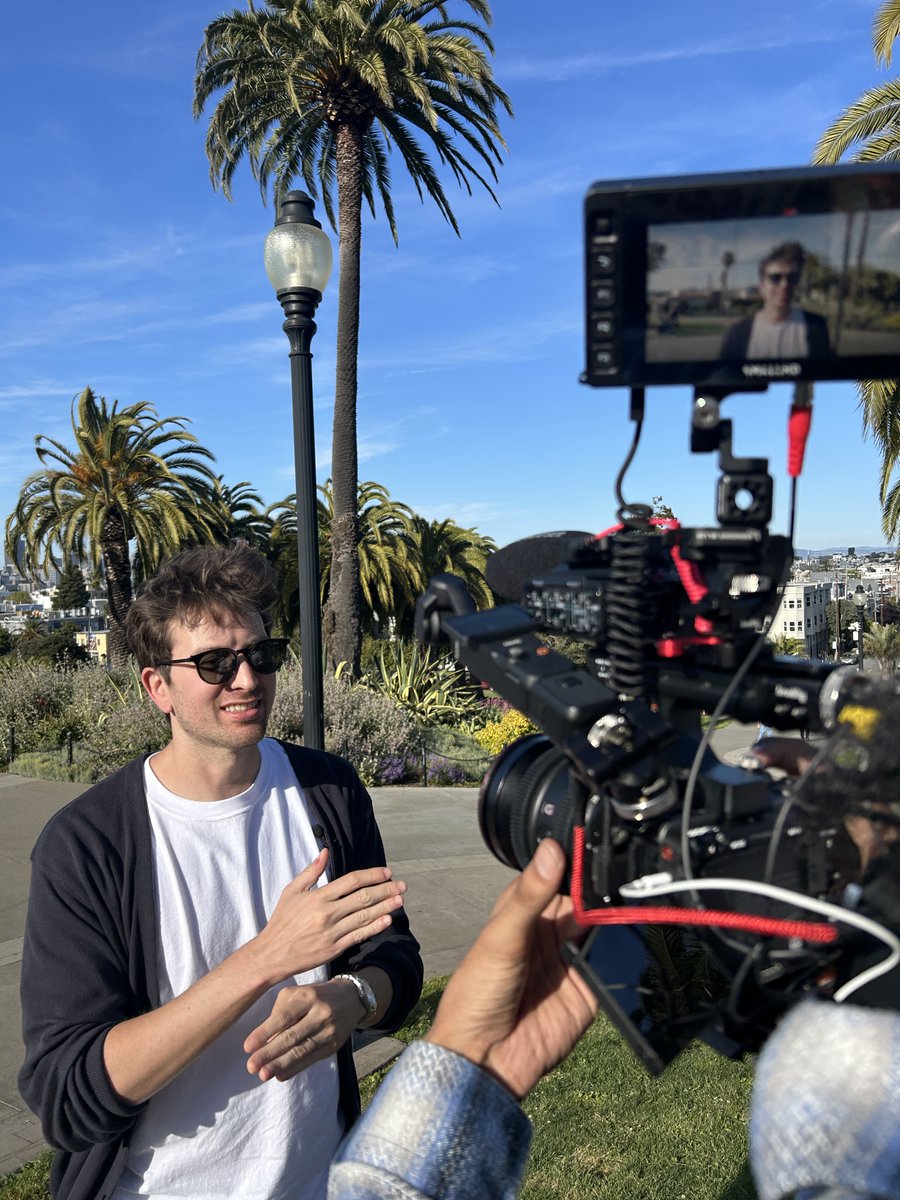
I just got back from SF and I FEEL INSPIRED.
I spent 5 days with frontier AI model teams, AI startup founders, and 3 billionaires.
My takeaways:
1. I had lunch with 3 billionaires. All of them are buying SaaS companies and rebuilding them agent-first. They were deeply inspired by Bending Spoons and Ryan Cohen's eBay deal. Buy the company, cut the headcount, rebuild the tech, add agents, add features, make more valuable experience, raise prices.
2. The frontier model companies are hungry for usage data from the field. They can see API calls and token counts. They can't see the actual workflows. If you're deep in a niche using these models in ways the model companies haven't seen, that understanding is incredibly valuable. Usage intelligence is the new alpha.
3. Consumer AI is massively underbuilt. Every billboard in SF is either B2B inference infrastructure or vertical agent companies. The entire city is optimized for enterprise. Meanwhile you have companies like Cal AI doing $50M ARR in 18 months as a consumer app. I met with a cool few teams doing consumer AI (@paulscherer / @ekuyda)
4. MCP came up in literally every conversation. The companies exposing their product as MCP endpoints are getting pulled into deals they never pitched for. The ones that aren't are becoming invisible to agents. This is the new SEO. If agents can't find you, you don't exist. Building products for agents is the new zeitgeist in general.
5. Not uncommon for hot seed rounds to be $25-50 million valuations. I saw a Series A at $450 million
6. If I had a dollar every time someone mentioned "forward-deployed engineer" this trip I could have funded a seed round. It's the hottest role in SF right now. The person who sits between the agent and the customer, making sure everything actually works.
7. The mood around open source shifted. A year ago it felt like open source was chasing the frontier models. Now founders are telling me Gemma and DeepSeek are good enough for 80% of what they need at a fraction of the cost. The "which model do you use" conversation is being replaced by "which model for which task." Model loyalty kinda feels dead.
8. Voice agents came up more than I expected. Multiple founders told me voice is the interface for the next billion users. The billion people who will never type a prompt will absolutely talk to one.
9. The Obsidian community in SF is weirdly intense. Multiple founders showed me their vaults unprompted. Like showing someone your home gym. It's a flex now. The quality of your knowledge base (second brain?) is becoming a status symbol among builders.
10. Maybe it was just the people I met but the age of the founders is shifting. I met more founders over 40 this trip than any trip before and more founders under age 21 than ever before. Founders getting older and younger at the same time.
11. I spoke to a lot of fast-growing startups, VCs and frontier models who are hiring content creators right now.
12. The restaurant scene in SF is actually better than it's been in years. Founders are going out more. Alcohol is out, not surprisingly.
13. SF doesn't feel like the only place anymore. We all have access to the same frontier models. We all read the same X feed. A founder in NYC or Lagos is calling the same APIs as a founder in SoMa. So in the past it felt like SF was always lightyears ahead, doesn't feel that way anymore. It's okay not to live in SF and have BIG DREAMS.
14. The coworking spaces in SF are half empty but the coffee shops are packed. People want to be around people. I had a few startup ideas here....
15. Walking around the Mission I noticed something: the street-level businesses, the taquerias, the barbershops, the laundromats, none of them use any AI at all.
16. I heard the phrase "agent debt" for the first time. Like technical debt but for agents. When you hack together an agent workflow fast and never clean it up, the system prompts conflict, the memory gets polluted, the tools overlap. 6 months later the agent is doing weird things and nobody knows why lol.
17. Met a few people who carry two phones now. One for personal. One that's basically an agent terminal running Telegram or iMessage connections to their agent fleet.
It's always amazing to get that dose of inspiration in SF. I FEEL INSPIRED.
But I'm so happy to be back home, locked in and building.
We're 12-18 months into a shift that will take 15 years to play out. The urgency in every conversation was real.
What an incredible time to be building.
three of the things we are most excited about:
1. AGI accelerating research
2. AGI accelerating companies
3. personal AGI accelerating everyone in achieving their goals
today it was great to announce the unit distance result.
yesterday it was great to announce that we are offering to invest $2M in openai credits into every YC company.
now we need to increase our efforts on the third!
I don't know why more people aren't buying dead SaaS companies and turning them into AI agent companies.
1. Use OpenClaw, Hermes, Perplexity Computer etc to build an automation that scans Product Hunt, Acquire, and app stores for dead SaaS products. Filter for ones that launched 2019-2024, had real customers, and went quiet.
2. Reach out to the founder on X. Most of them will respond within a day because they've been wanting to sell for a year and nobody asked.
3. Buy it. $5-30k. Sometimes less.
4. Export the database. Feed it to Claude or GPT. Map every workflow their customers were trying to do.
5. Read the support tickets. This is the goldmine. 200 strangers already told the last founder exactly what they needed and he couldn't deliver it.
6. Build an agent-native version that actually does those workflows instead of giving people a dashboard to do them manually.
7. Upload the old email list to Meta. Build a lookalike audience. Those old customers have moved on. You're not selling to them (realistically). You're using their data to find the next them.
8. Run $20/day ads targeting people who look exactly like the customers who already validated this market for you.
9. Build content around the exact pain points you found in the support tickets. Post on X. Post on YT. You already know what to say.
10. You now have the customer profile, the pain points, the pricing sensitivity, the churn reasons, and a lookalike audience. Your competitor who's starting from scratch has a landing page and a guess.
The dead SaaS acquisition playbook is going to be one of the biggest quiet wealth builders of the next 5 years.
Most SaaS products are a collection of workflows that can be rewritten as agent skills. Many will die. The top ones will pivot to agent companies.
Build agent companies.
this OpenClaw bot finds restaurants with ugly menus, rebuilds them as live web menus, and mails the owner a postcard...on autopilot.
here's how agencies can land recurring contracts with this system:
- scrapes every restaurant in a city in real time
- filters by review count + rating + last menu update + photo quality
- pulls the real menu items from the official site, PDF, or Google reviews
- samples the brand palette from the restaurant's own visual identity
- renders a 9:16 brand-matched menu, hosted live at a QR-accessible URL
- writes a personalized postcard referencing a real reviewer and a real dish
- mails it to the registered office addressed to the owner by first name
every step from discovery to brand-matching to outreach is automated.
reply "MENU" + RT and i'll send you a free guide so you can build this too
The rise of AI Native Companies.
@IrenaCronin and I write this newsletter every week.
AI native companies are businesses designed around AI from the beginning rather than adding AI to old workflows.
They use smaller teams, automated processes, and AI agents to move faster, reduce manual work, and scale output without growing headcount at the same pace.
The strongest companies will combine this speed with human judgment, strong governance, clear oversight, and accountability.
Read and subscribe: https://t.co/HHwYy7NoAl
There’s $1T up for grabs for agent-first startups and this window is WIDE open. Probably 10,000+ niches.
How it plays out:
1. Every SaaS company follows salesforce and goes headless within 18 months
2. a new category of "agent-native" startups emerges that treat salesforce, HubSpot, workday etc as dumb backends. the startup IS the agent. the SaaS is just the database.
3. the entire consulting/services industry around enterprise SaaS gets compressed into software. the agent replaces the implementation team.
4. outcome-based pricing becomes default. nobody pays per seat when the "seat" is an agent making 10,000 API calls a minute. you pay when revenue hits your account.
5. the winning founders are ex-operators who understand a vertical workflow cold. the code is the easy part. knowing that a property manager spends 14 hours a week on lease renewals? that's the insight worth $100M.
6. distribution becomes the moat. when anyone can wire agents to APIs, the company with the audience and the brand wins. media + agents is the new SaaS. There’s a rush to incubate live/short form shows.
7. Silicon Valley goes all influencer. Roy lee gets this. Pat Walls gets this. Sam Parr gets this.
8. the first $1B agent-native company in each vertical will look nothing like the SaaS it replaced. smaller team, higher margins, no implementation cost, no churn from bad UX because there is no UX.
the fastest path to wealth right now: find an industry that still runs on dashboards, phone calls, and spreadsheets. build the agent-native version. charge per outcome. own the workflow end-to-end.
someone reading this right now is going to build a $100M company off this exact shift. tell me about it on the @startupideaspod when you do. Im rooting for you.
Less reading, less bookmarking, more building.
the last wave rewarded people who built pretty interfaces on top of ugly data.
I think this wave rewards people who build smart agents on top of exposed APIs.
Or who just build the APIs themselves
Here we go
Veilwatch. AI that monitors your competitors while you sleep and wakes you up with what matters. Enterprise CI costs $20K/year. This doesn't. https://t.co/xUdlRxkdqy