CEO of Fake Ecosystems 🌲🌲 | Knowledge (Nature) enjoyer | Spidermogging the Monster Manual | Guaranteed to impress that cute druid at your table (no promises)
Have you ever encountered creatures while playing #DnD or other #TTRPG and thought "This existing might really change how the world works..."?
Post it here, and I might deep how fantasy meets real ecology with that creature. You might even end up with free content for your game.
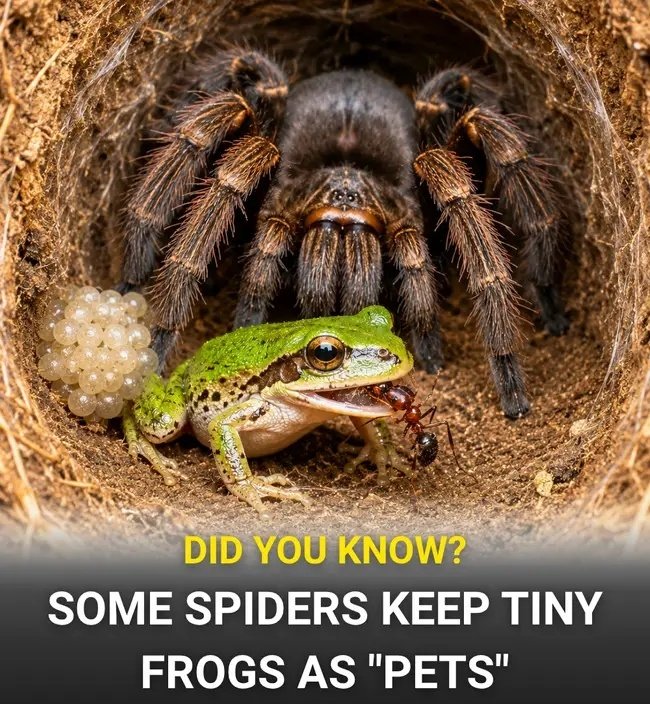
Deep in the Amazon rainforest, scientists have observed a surprising partnership between a tiny humming frog and a large burrowing tarantula. Instead of eating the frog, the spider allows its tiny "housemate" to live inside its burrow as a "pet". In return, the frog helps protect the tarantula's eggs by feeding on ants and other small insects that could threaten them. Researchers believe the tarantula recognizes the frog through chemical cues and has learned that it is a helpful ally rather than prey. The unusual relationship has even led some people to describe the frogs as the spiders' "pets," making it one of nature's most remarkable examples of mutual cooperation. 🐸🕷️
The final installment of this serialized horror-fantasy story in the world of Lordes is here.
I certainly hope you enjoy it, and I’d love to hear your thoughts.
@SandyofCthulhu I love Lovecraft, but I find M. R. James and Blackwood excellent sources of horror inspiration for running slightly more classic monsters like these. And the system does it great!
Cross-writing was a writing technique commonly used during the 18th and 19th centuries to save paper and reduce postage costs.
It involved filling a page normally, then rotating the paper 90 degrees to write directly over the original text.
📹Verse & Sip
Finished the #map! Complete with sea monster! Rather happy with this one. Whimsical…and nautical. Might be the scene of round 2 with the “Mad Lord” in the #dnd5e campaign. Stay tuned! Still looking 👀 for commissions! Please 🙏 share! #art#dnd#maps#ttrpg
This, but villagers tell of a mad druid from 300 years ago some say. Do some quests there. Meet an ent that tells you the rumors are true, but it was before he was a seedling, 3000 years ago. Let the party meet the druid 5 levels later en route to the BBEG showdown. Give loot
In 1979, when he was just 16 years old, Indian environmentalist Jadav Payeng began planting trees on a barren sandbar along the Brahmaputra River in Assam.
What started as the effort of one teenager grew into a remarkable lifelong mission.
Over the decades, Payeng transformed the once-barren landscape into the Molai Forest, a thriving ecosystem covering roughly 1,300 to 1,360 acres.
The forest now supports a rich variety of wildlife, including Indian rhinoceroses, Bengal tigers, elephants, deer, monkeys, birds, and countless other species.
Known around the world as “The Forest Man of India,” Payeng dedicated much of his life to nurturing the forest he created, proving how one person's commitment can restore nature on an extraordinary scale.
His story remains one of the most inspiring examples of environmental conservation and reforestation in modern history.