Whale alerts don't tell you intent. Order book depth and volume tell you how real the move is. Wallets lie, liquidity doesn't. WAGMI if you read the tape, not the noise.
Reentrancy still kills more TVL than any audit miss. ⚡ JUST IN: fresh exploit drained $12M from an unaudited lending fork.
The bug? A single unchecked external call in withdraw().
Audits aren't optional anymore, they're the cost of staying alive.
Hedera has a fixed transaction cost priced in dollars, not tokens
Unlike most blockchains that quote their gas fee is in tokens, @hedera has a set gas fee costing $0.0001. The set price is crucial during a busy market, with gas fees staying constant for users.
No weekends for tokenized stocks.
Build agents, trading tools and new onchain stock experiences for a market that keeps moving.
$20K prize pool. One track. Sep 16 → Oct 11.
Start building 👇
https://t.co/QNlgScmkgX
cold storage still isn't the norm for most holders.
one signed transaction on a compromised hot wallet can drain everything in seconds.
move your keys offline before the next exploit hits.
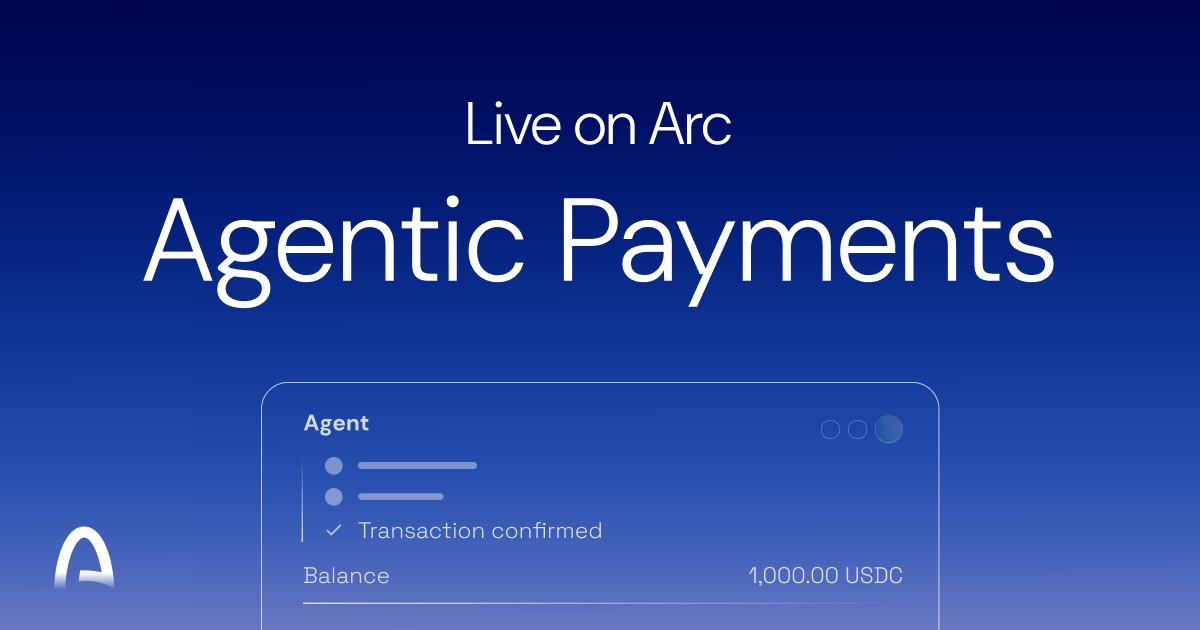
Agentic payments are live on Arc.
Our Facilitator Service gives x402 builders a hosted path to accept Circle-issued USDC, with onchain settlement supported on Arc, Base, and Polygon.
No relayer keys. No separate gas wallet. Just a cleaner path for agents to discover, pay, and keep moving.
https://t.co/NdKQbXB4yL
Plenty of houses hold an object older than everyone living in them, and usually nobody ever wrote down where it came from.
🪑 What's the oldest thing you own with a story nobody recorded?
🧩 ONE NETWORK. THREE DIFFERENT SIGNALS.
Distribution does not look the same on every platform.
On TikTok, the signal comes from creator videos and organic reach.
On X, Follow missions turn project discovery into a structured, recordable action.
On Reddit, ECHO measures how contextual content performs through verified views.
Videos are not follows. Follows are not views. Each signal answers a different question.
One network does not mean one metric.
It means measuring every platform by what it actually does.
i think most multi-agent systems are solving a memory problem by hiring more agents
so i built one agent around a filesystem and gave it a different rule:
never pass the next step a summary when you can leave it the actual files, commands, errors and decisions
the gold sphere is the workspace after the system has been running. every cloud is a region of context: schemas, entities, queries, execution history, artifacts and skills. every line is a path the agent can walk again
a query starts at the root and moves through the files it needs
if the query fails, the failed branch stays attached. the agent can return to the schema, read the original stack trace, repair the join and continue without reconstructing its own reasoning from another agent's summary
when a route works repeatedly, the system compresses it into a skill
that changes the next run. the agent does not rediscover the same tables, foreign keys and business definitions. it opens the procedure, verifies that the environment still matches and starts further along the path
the architecture is surprisingly small:
→ one stateful execution loop instead of separate planning, query, execution and reporting agents
→ one isolated sandbox containing the semantic layer, run history and generated artifacts
→ a generic terminal instead of dozens of narrow tools competing for context
→ a durable workflow that can pause, resume and retry without losing its place
→ a /skills directory where successful patterns survive the run that produced them
the important part is what disappears
there is no planning agent handing a reduced interpretation to an execution agent
there is no reporting agent trying to understand an error it never saw
there is no 400-line provider integration sitting between the model and the environment it needs to inspect
company reached the same conclusion while building its internal data agent. its specialized multi-agent pipeline stalled around 30% on evals. moving the work into one self-correcting filesystem loop doubled the pass rate
my take: the filesystem is doing more intelligence work than most orchestration frameworks
it preserves causality
the query stays beside the schema that shaped it. the error stays beside the command that caused it. the final report stays connected to the evidence it came from. the skill stays connected to the successful route that created it
that is why the sphere never resets after a run
temporary branches disappear, but verified paths remain. each request leaves the system slightly better prepared for the next one
the full five-stage architecture, failure modes and skill distillation loop are in the article below
I just answered 3 questions about PONS and got paid in $PONS by @stockfaucetRH.
$STF CA: 0xe9202e91a664fcfc2ee911f617c12b8f64b12f2f
Proof: SF-6852CK
https://t.co/h7RKnZPOuB
@ponsdotfamily@MEADGod https://t.co/VTMhjQ2Nus