As a member of the PHP Global Development Group, watching everyone everywhere analyze and compare which LLM is better, how many parameters they have, and what results they achieve feels exactly like the feud between Java and PHP 15 years ago. Meanwhile, Python is just sitting on the sidelines, quietly smirking.
A piercing business truth: AI does not destroy jobs; it destroys the illusion of efficiency that cannot be directly monetized. When saved costs cannot be transformed into a protective moat, the explosion of tools will only result in a budget wasteland.
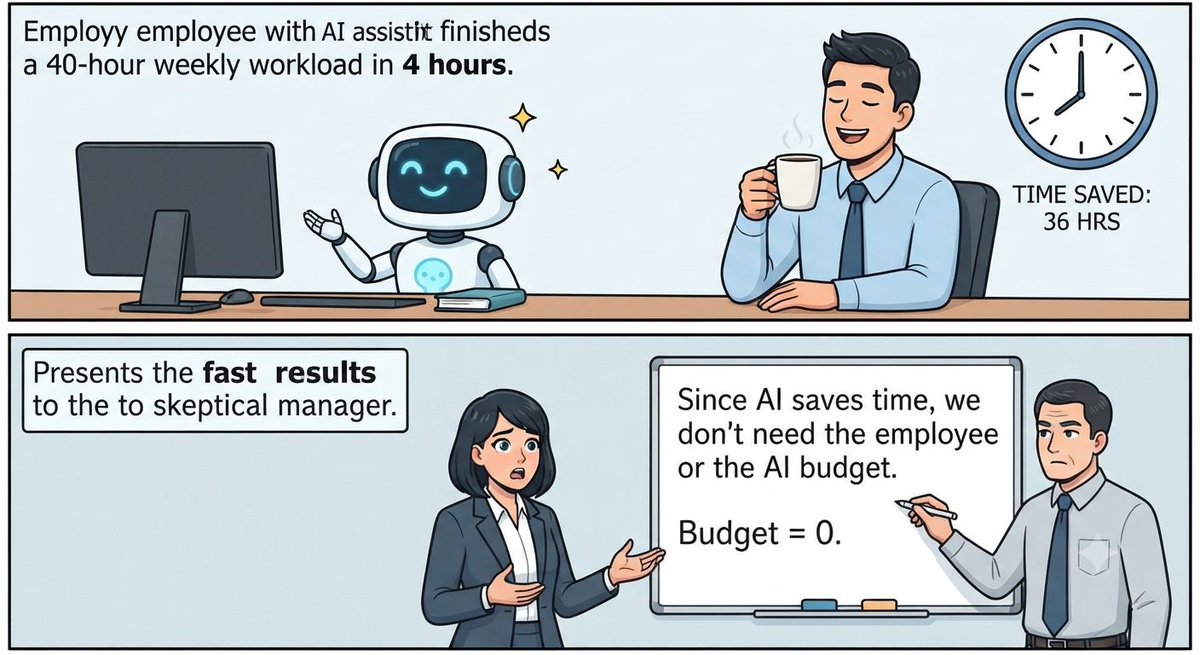
Employees work desperately to use AI to boost efficiency, only to have the CFO use those gains as an excuse to cut the innovation budget. As long as a company’s value measurement system remains stuck on "counting billable hours," technological empowerment will eventually become a self-deflating meat grinder.
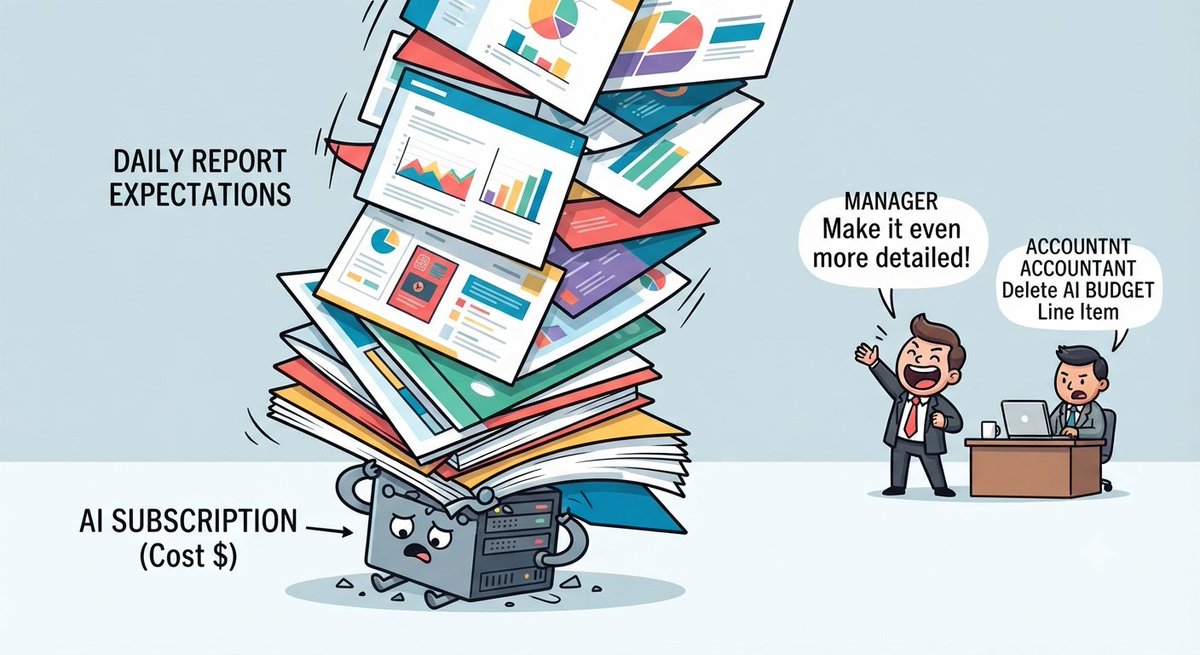
When AI flattens the barrier to entry for producing high-quality PPTs, the premium for exquisite formatting and reporting structure instantly drops to zero. Management's expectations for reports inflate infinitely, yet maintaining the expensive subscription budget for the tool becomes the primary "cost" targeted for optimization.
The essence of the efficiency paradox: Traditional companies treat AI as a "time-saving tool" rather than a "revenue-generating asset." You save the company time, and management concludes not that "we should go innovate more," but rather "turns out this work isn't valuable after all."
PPT productivity increased tenfold, and the company immediately slashed the entire AI budget. This is perhaps the darkest black comedy of the digital era: the better the tool, the faster the funding for it gets killed.
Remembering the Silicon Valley Bank days... and looking at where things stand now. ☕️ A heavy sigh. The ecosystem changed, the rhythm shifted, but the ghost of those frantic days in March 2023 still lingers. How has the tech landscape evolved in your eyes?
@paulg@pmarca@roelofbotha@karaswisher #SiliconValley #Startup
Kimi K3 is open-source now.
Coding is becoming a fundamental skill, much like knowing how to use Excel.
That's a real scenario: the client is now choosing between two teams. One quotes 30% lower but has never worked with them before, while the other charges more but has been a partner for three years. Guess which one they will pick?
The more AI drives down the cost of basic capabilities, the higher the price of trust becomes. Because when everyone can deliver an 80-point level of work, clients won’t pay for that 80 points — they only pay for peace of mind.
In the past, you profited from the knowledge gap: I could write, but you couldn't.
In the future, you will profit from the trust gap: I can deliver consistently, but you cannot guarantee that.
Code is getting cheaper. But getting others to trust you enough to hand over their money and outcomes to you is becoming more expensive.