Dear @AshwiniVaishna, @RailMinIndia and @GMSRailway, my friend Aneesh peter @aneesh_pet23433 , a person with 100% visual impairment and a Phd scholar @HydUniv supposed to be attending an interview day after in Kerala, is unfortunately travelling by a general class bogie 1/n
For the first time a Western academic institution was forced to transform Palestine from an exception to one of the core questions at the center of its investigations into the legacies of colonialism and imperialism in academic institutions. We hope more institutions will follow.
You know, the killing is so relentless that you almost get used to it. A classroom of children killed every single day. You write about it, you read about it. Someone’s mother digs herself up from the rubble. Someone’s father is split in half. There was a video of wounded man using his arms to crawl across the road. Another man is so hungry he weeps. You read the stories. Each one is more brutal than the next and somehow the brutality is banal. You are numb, for better or for worse. But there are moments in the day, maybe just a singular moment, when you actually contend with the magnitude of the tragedy, when you are able to quantify the loss and in those moments you feel crushed—there are no adjectives. There are people mourning their lovers. Students missing their teachers. Orphans. Widowers. Grandmothers who look just like your own. I cry when I think about the people who were martyred just hours before they could apologize for something, or confess to something, or have something to eat. Or the slain who believed they would survive. And as the rancid rotten people of the world pontificate and debate the definition of genocide, you are at war with yourself, trying desperately to ignore the material meaning of the word. You read the news and you read the news and it is so hard to accept that the dead, the thousands of people they are slaughtering, they are your loved ones and your loved ones’ loved ones. This isn’t just a bad dream.
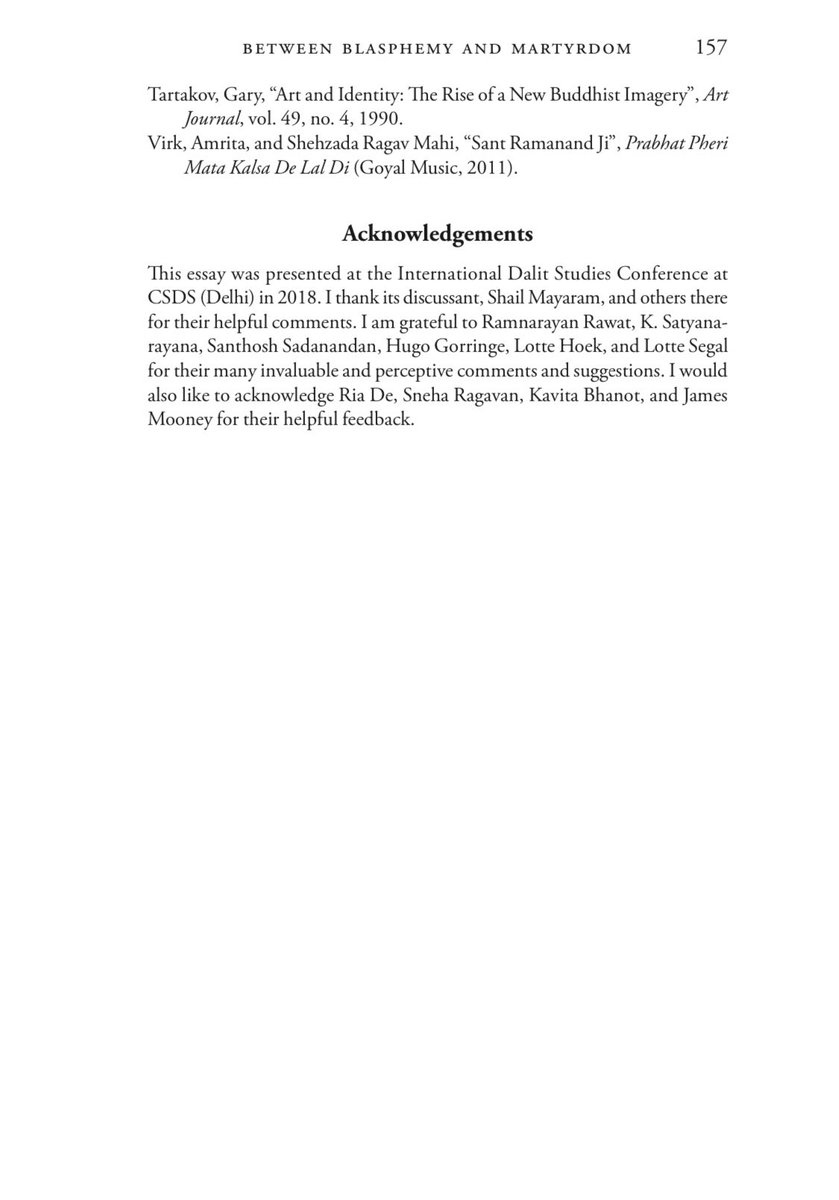
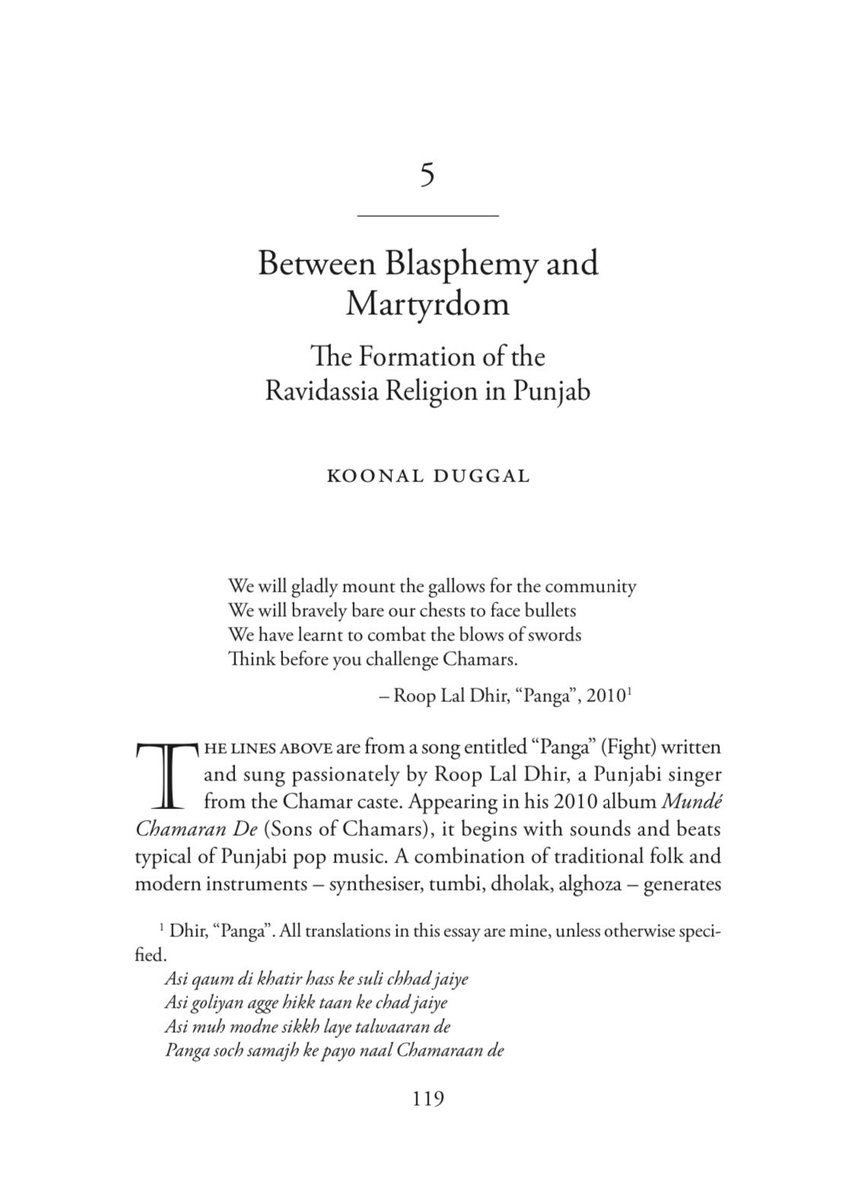
On the eve of Ambedkar Jayanti, I am delighted to share my essay “Between Blasphemy and Martyrdom: The Formation of Ravidassia Religion in Punjab,” which has been published in Dalit Studies Volume Two “Dalit Journeys for Dignity: Religion, Freedom, and Caste”
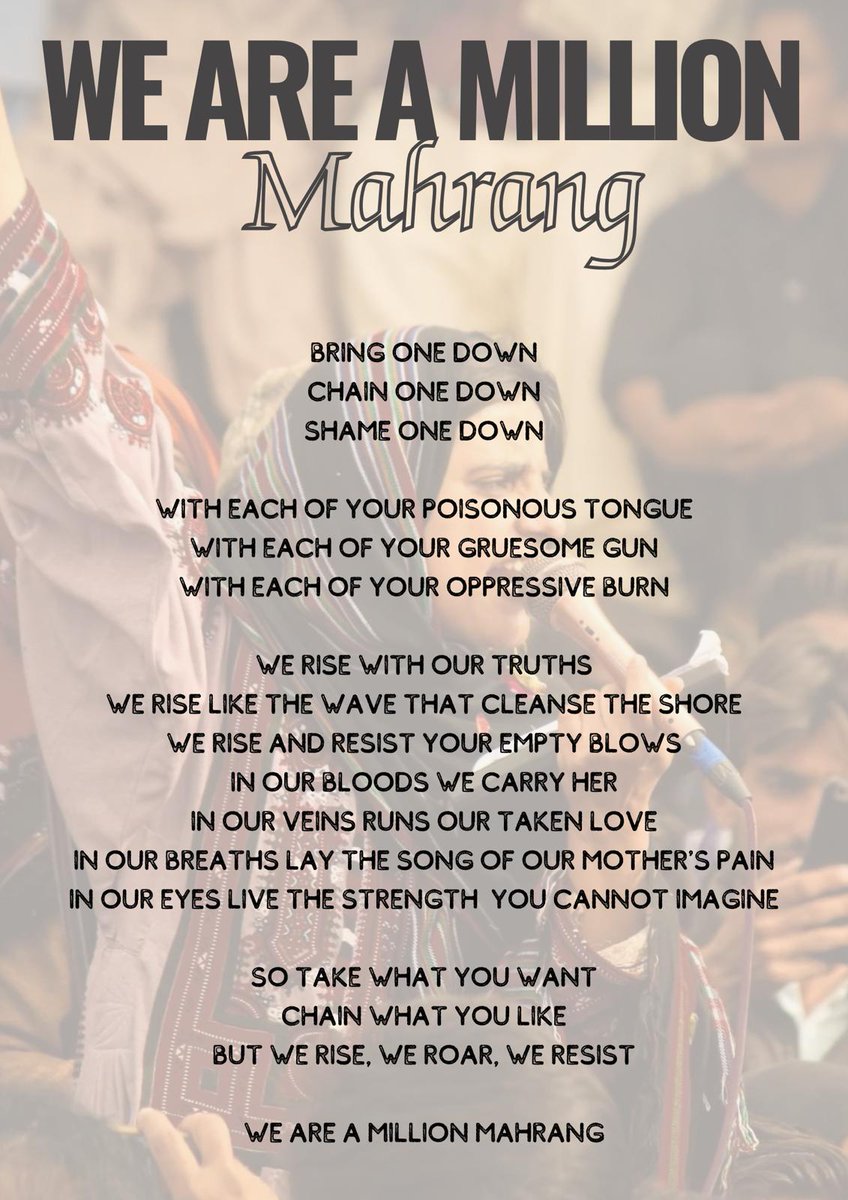
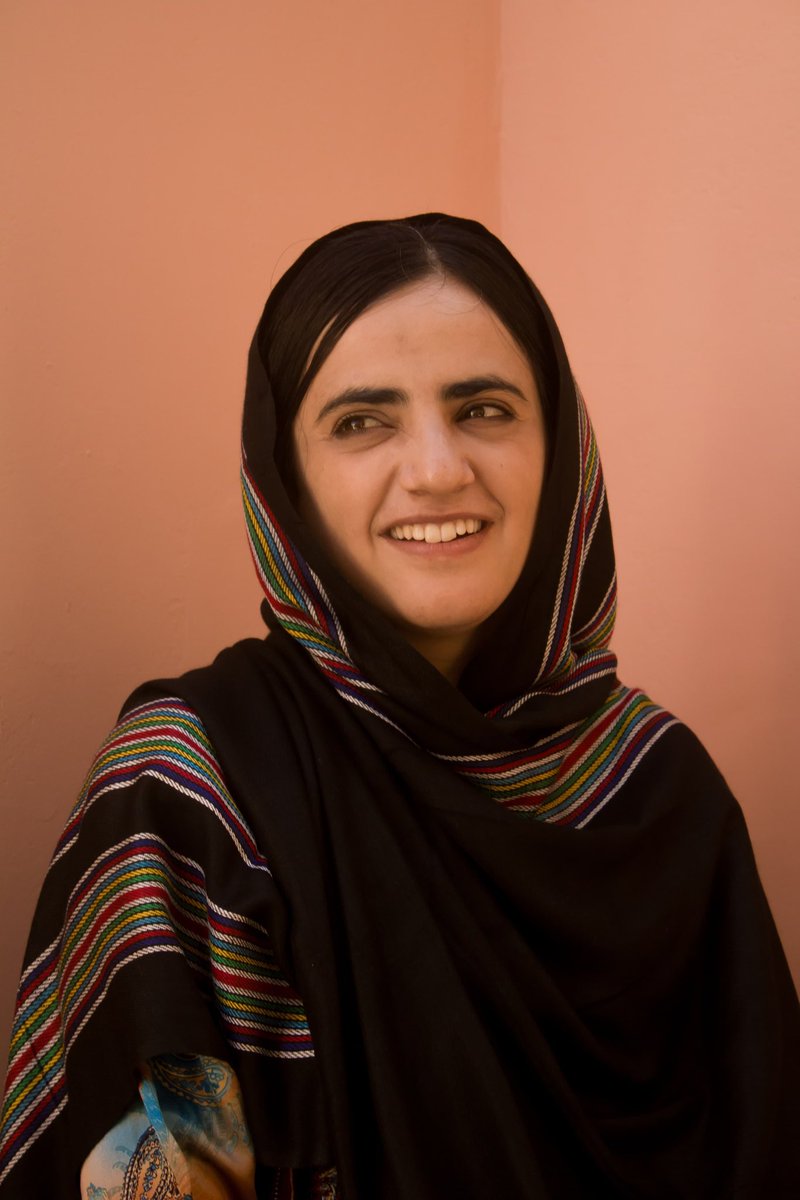
Dr. Mahrang Baloch’s Letter to Her Family from Prison
My Dearest Sisters and My Only Brother, Nasir Jan,
I am aware of the challenges I have brought upon you and how I have put you all through a tough time again at an early age. Since 2011, we have faced difficult times, but this is the story of every Baloch household today. Whenever you feel weak, look at your surroundings.
I know I have carried the weight of responsibility for you all, hoping that this burden would never fall upon your shoulders. But living in Balochistan, this can happen and even worse can happen. Be mentally prepared for it.
During our first meeting in prison, for the first time, I saw myself in you. The same restlessness, the same anxiety, the same desperate struggle to make things right again. This is what it means to be bound by blood. But what can we do? This, too, is written in our fate. This is every Baloch’s fate.
I am writing this letter from my prison cell because there are things I could not express in prison when we met. This life is a new experience for me, and I have yet to learn the art of speaking to my siblings from a prison cell. I wanted to give you courage, but I lacked the words. Now, I am finding that courage, and you will too, as time passes. Remember how we all found the courage when our father was martyred?
I had wished that despite growing up as orphans, your lives would be filled with peace and happiness. I had hoped that you would never have to face police raids and visit prison again. But what can we do? These trials are the harshest reality of a life lived in resistance. We cannot shape our lives according to our wishes in Balochistan. It may become harder, but it is never easy.
Our father made the decision for us when he dedicated himself to Baloch rights. And after him, we all embraced his philosophy and committed ourselves to this struggle. Now, in these difficult times, you must take care of one another and be each other’s support.
Never forget: True strength is not just physical; it is mental and ideological. Strengthen yourselves mentally and ideologically. Be each other’s support. Never allow yourselves to break. And always remember, your sister is not weak. Weakness is not something we inherited.
This is the time to be strong, to remain committed, and to stand with your Baloch brothers and sisters.
May Allah protect you all. May Allah protect Balochistan. I don’t know the exact date of Eid when I am writing this letter, but I wish you and my nation an early Eid Mubarak.
Best wishes,
Mahrang Baloch
Written from my prison cell
Thursday, 27 March
Dear Civil Society Friends and Media,
I am writing with deep concern about my sister, who is under immense psychological pressure in prison. Her health has deteriorated dramatically, and she has been sick for the past three days without access to proper medical care.
Last night, she became severely unwell and experienced repeated vomiting. A doctor was finally called this morning, but the delay in medical attention is unacceptable. I fear that she is being deliberately kept in conditions that are worsening her health, and I am deeply concerned that her food may be contaminated.
This morning, I visited the jail to meet her. My sister iqra wasn’t allowed to meet her. I meet her only for a couple of minutes. She looked extremely weak, sick and fragile.
Beside that, Mahrang has repeatedly complained about surveillance cameras, the lack of proper beds, food, and the violation of her rights as a political prisoner.
Despite these hardships, she remains strong in her spirit. But she is sick and we fear for her life. Internet services were shutdown in Quetta today so that we can’t amplify her voice.
I urge you all to continue raising your voices for her and all detained Baloch prisoners.
kind regards,
Nadia, sister of Mahrang
#ReleaseMahrangBaloch
#SaveMahrangBaloch
In Balochistan, silence is complicity. Neutrality aids oppression. As families grieve and lives are torn apart, the choice is stark: stand with the oppressed or stand with the oppressor. There is no middle ground.
#ReleaseMahrangBaloch#ReleaseSammiDeenBaloch