Two ways to be in this market.
You research what other people already think, and you inherit their conclusion. Or you check the design yourself, because you trust your own read.
Most of the timeline is doing the first. A quote, a chart, a thread, and the take arrives pre-built. Confidence gets outsourced. If the crowd says the chain is ahead, the record stops counting.
The other way is slower. Read the docs. Read who can halt it, who can freeze it, who gets paid. Then decide. That is not arrogance. That is the only read that is yours.
A giant, jellyfish-shaped unidentified object reportedly filmed hovering in the direction of a US military base in Alaska before vanishing from sight within minutes
Aight, Ripple’s doing big things for Fortune 500 companies with global teams, handling cross-border payments in 3-5 seconds and cutting costs by over 60%. That’s why they partnered with Accenture, who works with 92 of the Fortune 100 and over 75% of the Fortune 500. Accenture’s got 801,000 people across 120+ countries, investing $3B in AI, and provides these companies with digital transformation, cloud solutions, cybersecurity, and data analytics to keep operations tight. Ripple and Accenture connect the dots, making global payroll and treasury fast, secure, and cost-effective.
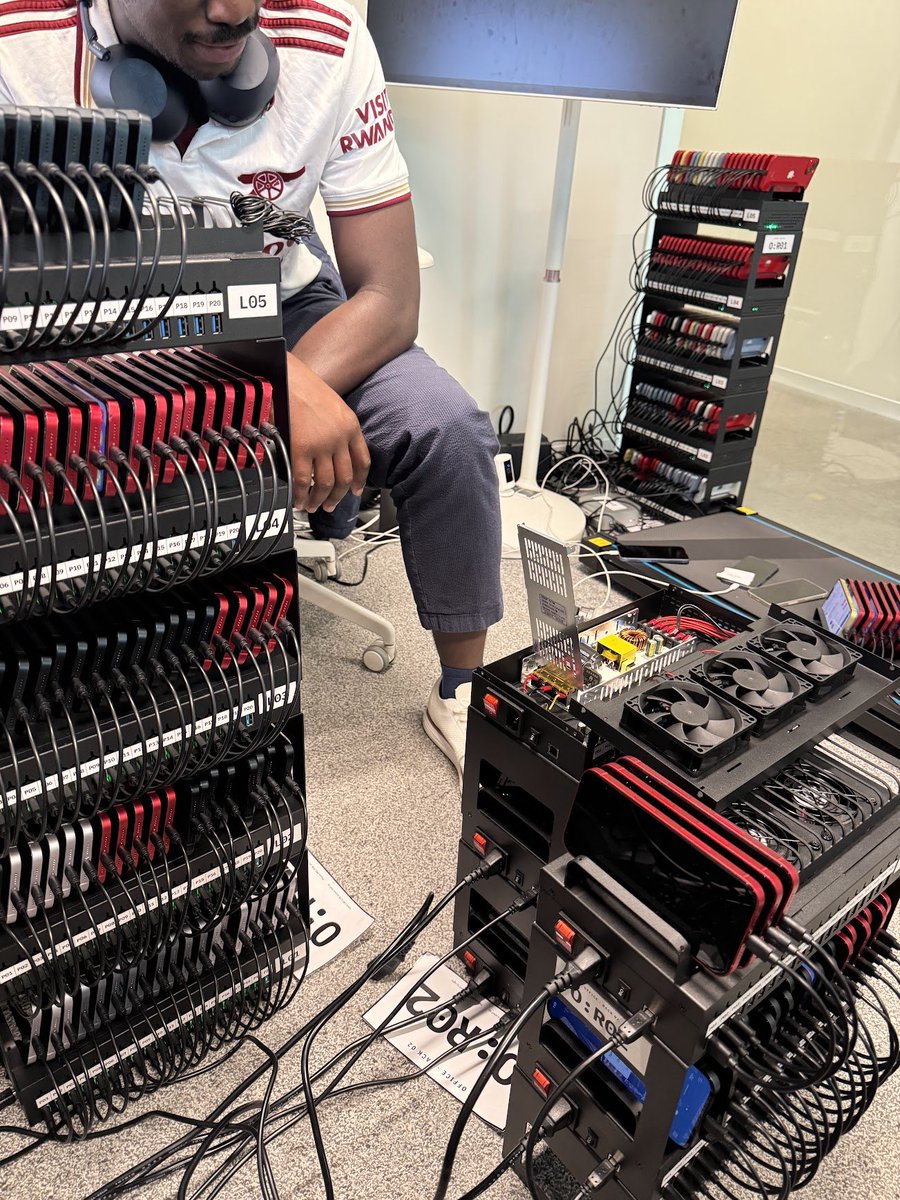
I spent $150k on iPhones so your agents can post to Facebook, TikTok, and Instagram.
You can create 50 TikTok accounts literally in the next hour.
Just give these 5 instructions to your Claude to turn it into Mr Beast:
1) Connect to https://t.co/CFAg7oySdD MCP
2) Create your TikTok, Instagram, and Facebook accounts
3) Begin warming the accounts for your niche
4) Schedule your posts
5) Monitor analytics, including the ones only available in the app such as retention, demographics, and watch time
Facebook moms are waiting...
🟣 = Accenture.
They sit inside the pipes that move the world’s money — Bank of England RTGS, Project Jura, Project Ubin, e-krona, and central bank work across multiple continents.
Ripple’s historical alliance with them was access to the institutions that control high-value settlement.
Meanwhile MoonPay is out here trying to ride the wave like they’re in the same game.
They’re a small fish with high fees. Accenture is the one already rebuilding the rails.
Most of the real work stays under NDA. The public map still shows the pattern.
Internet of Value isn’t a slogan when the firms inside the system start aligning with real-time, interoperable settlement.
1/ Everyone keeps getting confused by the same pattern.
Bullish headline drops (ETF inflows, partnerships, “institutions are buying”). Price does nothing, or sells off. Then the cycle repeats.
People treat this as a mystery. It’s not. It’s what the current market structure produces.
2/ In traditional markets there are actual rules against front running customer flow, trading ahead of known orders, and running a proprietary book against your own users. FINRA has specific prohibitions. Brokers have best execution duties. Surveillance is continuous.
Crypto spot doesn’t have the same regime. Most venues see the order flow, can internalize, and operate with information advantages that would get a registered equity broker investigated. Enforcement exists, but it’s reactive and jurisdiction dependent, not structural.
3/ So when you see steady buying (ETFs, large holders, whatever) and the price still stagnates or drifts lower, the simple explanation is that the visible bid is being met or exceeded by other supply. Some of that supply can come from the venues themselves or from parties who can see the flow before the public does.
You don’t need a grand conspiracy for that. You just need the incentive and the absence of a hard prohibition.
4/ Now the second part.
Regulation that would actually constrain these practices is closer than it was two years ago. MiCA already has explicit market manipulation rules in the EU. In the U.S. the CFTC is pushing for more oversight of spot platforms, and market structure legislation keeps resurfacing. The window where a large venue or affiliated entity can freely trade against customer flow without clear, continuous rules is shrinking.
5/ Think about it from the position of someone who has been able to prop, extract, or lean on the book under the current rules.
If you know tighter constraints on front running, internalization, and proprietary trading against customer orders are coming, what do you do in the time you have left?
You don’t sit still and wait for the rules to force you into a more transparent market. You try to extract as much as you can while the information and structural advantages still exist. You let the public narrative of “bullish catalysts” run, meet it with supply, and clear inventory or lock in edge before the surveillance and prohibitions get closer to equity market standards.
6/ This hits different assets differently.
Assets that live almost entirely on narrative, hype, or unproven “utility” claims get the worst of it. When the extraction window is open, there is no real demand to absorb the supply being dumped into the book. Price just follows the flow.
7/ XRP is in a different category.
It already has the regulatory path, the institutional interest, the ETF bid, and a real use case in cross border settlement and tokenization that doesn’t require retail hopium to stay relevant. The same structural games can still suppress price in the short term the visible bid gets met by other supply but the underlying demand isn’t purely speculative.
When the rules tighten and the easy extraction becomes harder, the assets that only existed on claims and momentum have nothing left underneath them. The ones with actual settlement utility and institutional rails do.
8/ The confusion isn’t that the news is fake. The confusion is treating every crypto as if it already has the same protections as a regulated equity market, and treating every token as if it has the same real world demand.
It doesn’t. The entities that benefit from the current gap have a rational incentive to use it while it lasts. Once the rules tighten, the game changes. Until then, the pattern continues and the assets without real utility get exposed the hardest.