1. Ever kissed someone? ❌
2. Currently in a relationship? ❌
3. Ever dated someone you met on Twitter (X)?❌
4. Ever had a crush on a friend?✅
5. Ever confessed your feelings and got rejected?✅
6. Ever been in a talking stage that went nowhere?✅
7. Ever gone back to an ex?❌
1. Ever kissed someone? ❌
2. Currently in a relationship? ❌
3. Ever dated someone you met on Twitter (X)?❌
4. Ever had a crush on a friend?❌
5. Ever confessed your feelings and got rejected?❌
6. Ever been in a talking stage that went nowhere?❌
7. Ever gone back to an ex?❌
Pages of the Glorious Qur’ān today
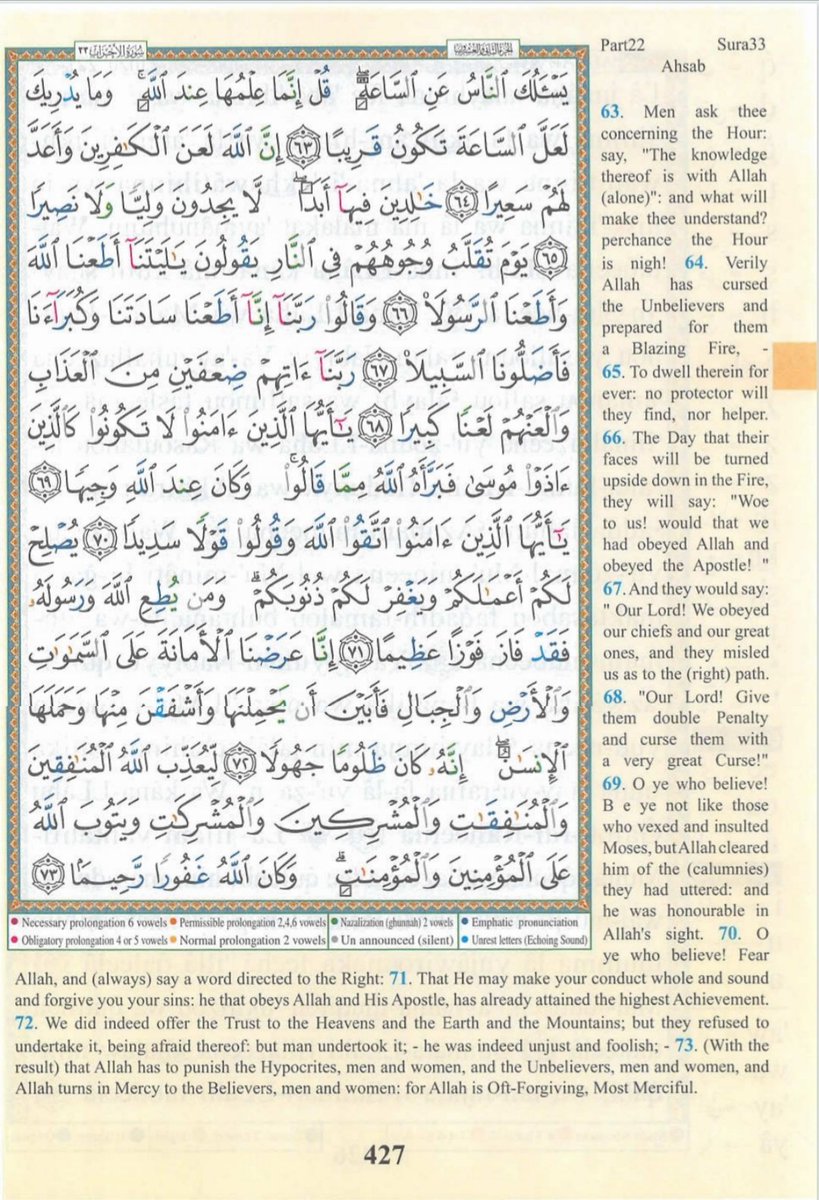
Friday 23/10/26, Sūrah alAḥzāb (33): 63-73 and Saba'i (34): 1-7, tafakkur verse 33: 70-71
Theme: Be conscious of Allah and be honest, gentle and kind in your speeches
یَـٰۤأَیُّهَا ٱلَّذِینَ ءَامَنُوا۟ ٱتَّقُوا۟ ٱللَّهَ وَقُولُوا۟ قَوۡلࣰا سَدِیدࣰا (70) یُصۡلِحۡ لَكُمۡ أَعۡمَـٰلَكُمۡ وَیَغۡفِرۡ لَكُمۡ ذُنُوبَكُمۡۗ وَمَن یُطِعِ ٱللَّهَ وَرَسُولَهُۥ ف��قَدۡ فَازَ فَوۡزًا عَظِیمًا (71)
"O you who have believed, fear Allāh and speak words of appropriate justice.
He will [then] amend for you your deeds and forgive you your sins. And whoever obeys Allāh and His Messenger has certainly attained a great attainment."
LESSONS:
1. Allah begins with the command to fear Him, reminding believers that consciousness of Allah must shape their intentions, decisions, relationships, public conduct, and private affairs. True righteousness is not merely a religious appearance; it is a life governed by accountability to Allah.
2. The expression qawlan sadīdan refers to speech that is truthful, upright, accurate, and appropriate. A believer must avoid lies, slander, false accusations, deceptive statements, and words that mislead others. Our tongues should be instruments of truth, justice, reconciliation, and goodness.
3. Allah promises, “He will amend for you your deeds.” This teaches us that obedience, sincerity, and upright speech are connected to the improvement of our conduct. What we say can strengthen our righteousness or undermine it. Therefore, we must ensure that our words and actions reflect the same moral principles.
4. The verse promises forgiveness of sins to those who observe taqwā and speak uprightly. This is a reminder that believers should never despair of Allah’s mercy. Rather, they should repent sincerely, correct their mistakes, fulfil their obligations, and continually seek His forgiveness.
5. Allah concludes by declaring that whoever obeys Him and His Messenger has attained fawzan ‘azīmā, a tremendous success. This success is greater than wealth, fame, academic distinction, political power, or public recognition. Such worldly achievements are temporary; the ultimate triumph is to earn Allah’s pleasure and attain salvation in the Hereafter.
Before speaking, ask yourself:
* Is what I am about to say true?
* Is it fair and free from deception?
* Is it necessary and appropriate?
* Could it unjustly harm another person?
* Will I be comfortable answering to Allah for these words?
In an age when misinformation spreads rapidly, public accusations are easily made, and people sometimes sacrifice truth for popularity or personal advantage, these verses provide a timeless ethical standard.
A believer's integrity is demonstrated not only by what they worship, but also by what they say, how they act, and how faithfully they obey Allah.
O Allah, make us among the righteous and truthful. Rectify our deeds, forgive our sins, and purify our tongues from lies, false accusations, and backbiting. Grant us the ability to obey You and Your Messenger, and bless us with tremendous success in this world and the Hereafter. Āmīn.