One Unified Execution Layer for trading and settling any asset type across any public or private chain. Designed and built for market-makers, issuers, banks, funds, payment providers, treasuries, and exchanges.
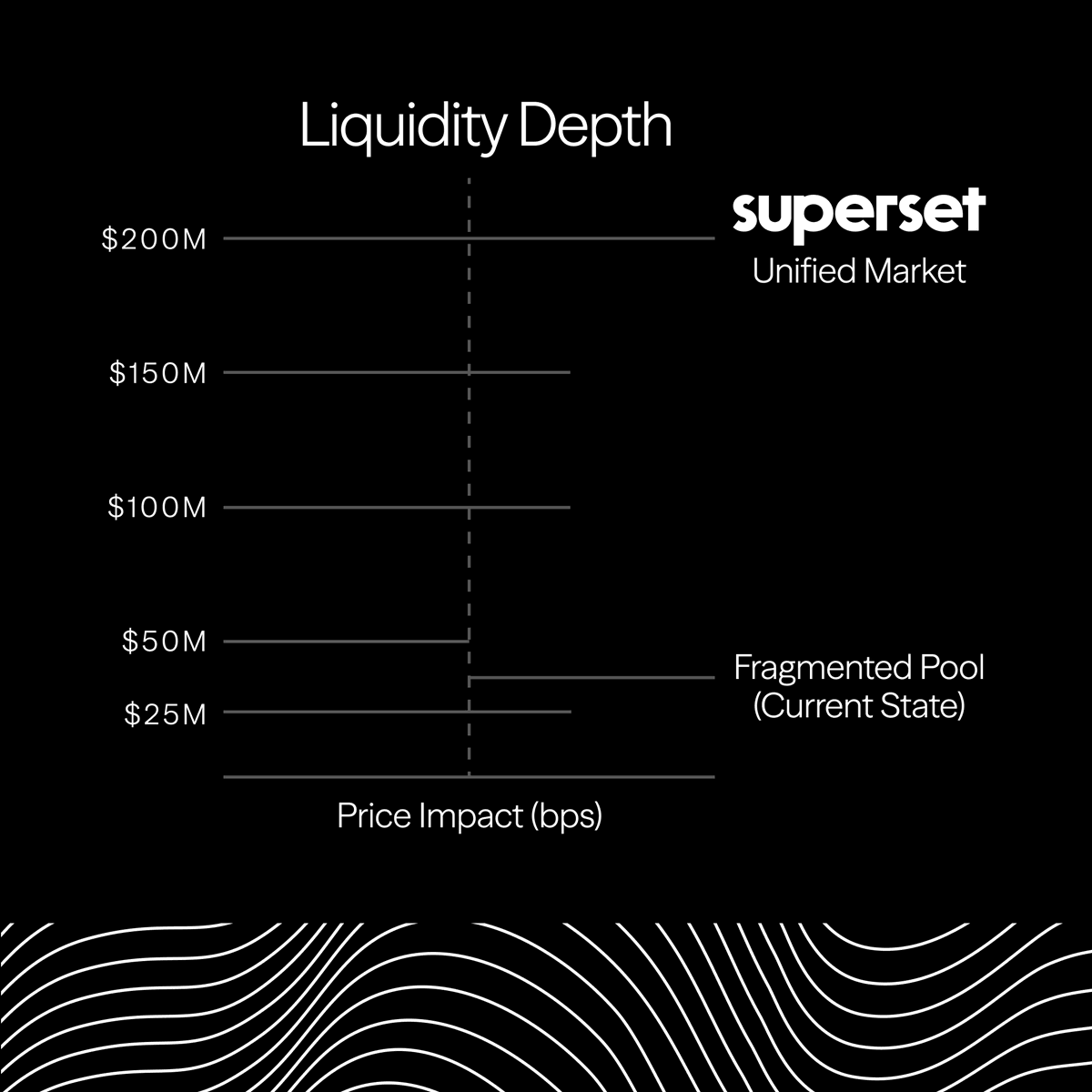
Hundreds of chains. Fragmented liquidity. Inconsistent pricing across networks.
This is what’s kept institutional volume from moving onchain.
Superset solves this with virtualization, turning fragmented pools into a unified market, with bank-grade execution standards.
One, unified liquidity execution layer for stablecoins across Canton + EVM chains, enabling the greatest capital & operational efficiency from one single integration, one multi-layered security, and designed for market-makers, LPs, payment processors, trading funds & treasuries.
The @CantonNetwork is where institutions are building.
EVM chains are where stablecoin liquidity already lives at scale. This integration connects both under one execution surface. @ZenithFdn gives Superset the spoke.
Let’s break down how this works.
@OkCapy2036@arbitrum@SupersetFinance It's a new architecture for the next decade. We've solved the liquidity fragmentation problem through consolidation into a global, virtual pool to create one tradable market that is accessible across chains.
Introducing @Arbitrum as the Superset hub chain.
This is the logical choice to align security, speed, cost and liquidity, and ensure unified stablecoin execution infrastructure works.
It's time FX came onchain 🤝
This flywheel works in unified markets.
It breaks in fragmented ones where depth can't compound. Network effects require infrastructure that lets liquidity behave as one market.
"The real risk is policymakers read these warnings, get spooked, and slow down the very infrastructure buildout that would deliver the stability outcome the report calls for."
Superset CEO @NeilStaunton in @decryptmedia today via @0x_exitnode:
Identical swaps will always get different prices depending on which chain you're on.
Superset's hub-and-spoke architecture fixes this: hub maintains the global liquidity state & runs swap math. Spokes hold local balances on each chain.
Consistent pricing logic, local execution.
When the treasury holds deposit tokens but needs stablecoins for operations, where does that exchange happen?
Our latest on why the real value sits with the layer that gives all tokenized money a liquid market - not whoever issues the next instrument.
"Liquidity would need to become deep enough for institutions to move substantial amounts without a fragmentation penalty."
This is the execution infrastructure challenge.
@NeilStaunton on the three conditions non-USD stablecoins would need to displace the dollar: https://t.co/6UzhKVmIpM
🔔 @Visa joins Canton as a Super Validator.
Banks and financial institutions can scale payments, settlement, and treasury workflows onchain within existing risk and compliance frameworks.
Full PR: https://t.co/o22YKA1dGe
In traditional markets, participants can see total available depth before executing.
In crypto, depth is scattered and opaque. You don't know what liquidity exists across all venues until after you've tried to access it.
Transparency matters for institutional execution.