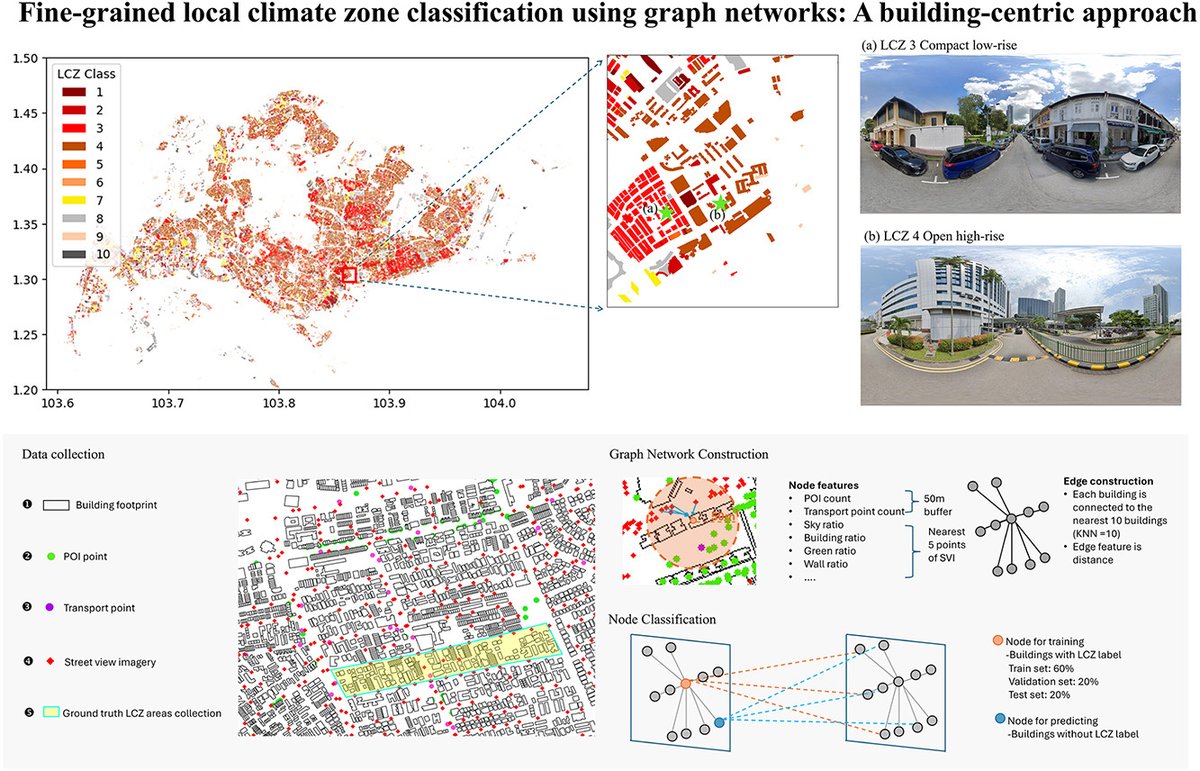
Happy to share our new paper Fine-grained local climate zone classification using graph networks: A building-centric approach, which is online now in Building and Environment: https://t.co/CKvTx5nd1s.
The building-centric graph network approach offers a more precise tool for LCZ mapping at the building level, prompting urban climate assessment and aiding in designing climate-resilient cities in the face of rapid urbanization and climate change.
If you're passionate about animals and cartoons, check out "U Don't Know Us" by my amazingly talented wife, @ZYi_Ling, on the Webtoon 😃. This delightful cartoon features all the cats and dogs from our home. Enjoy the adventure here: https://t.co/npXFWNdN4E 😊#petlovers#cartoon
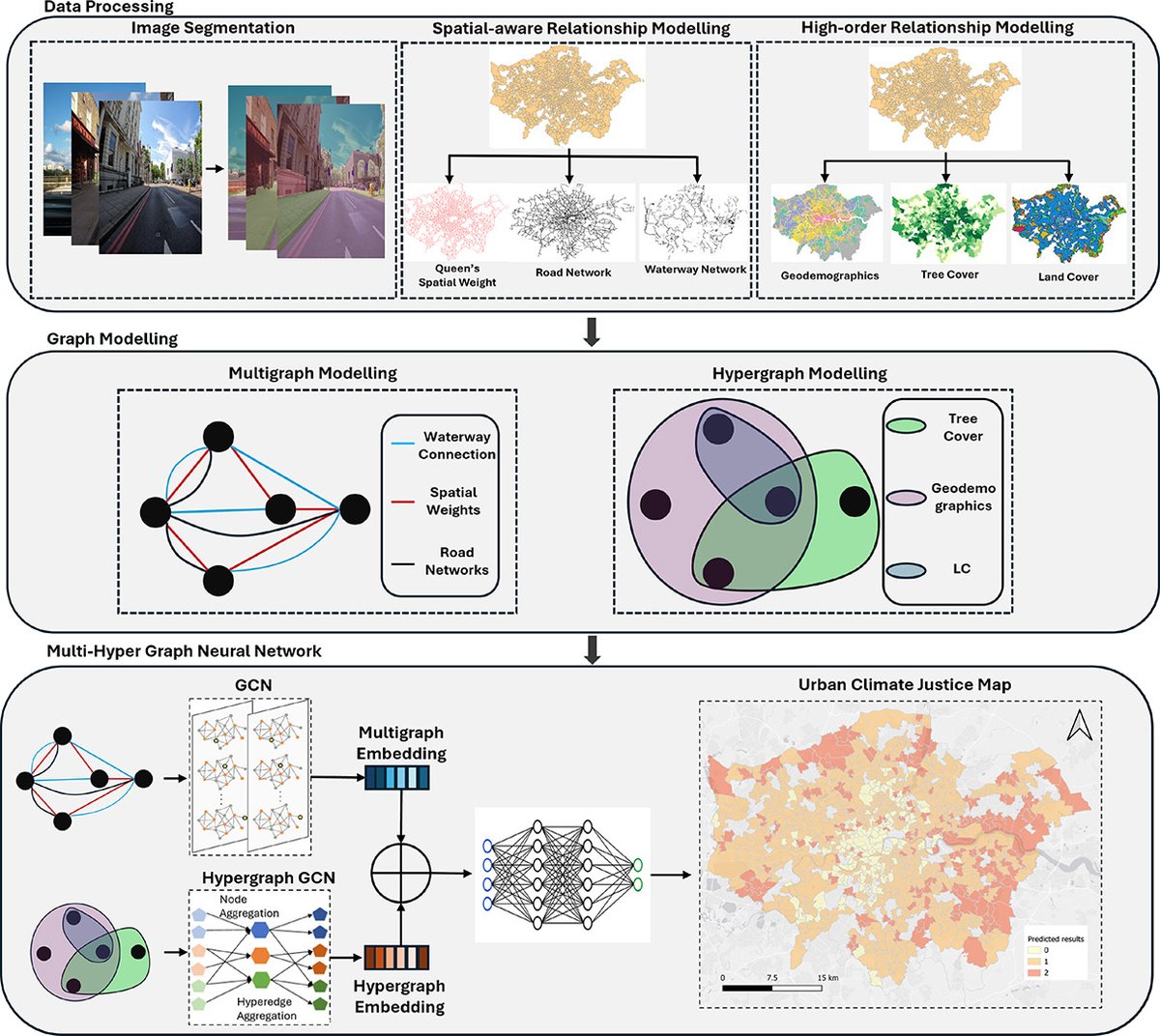
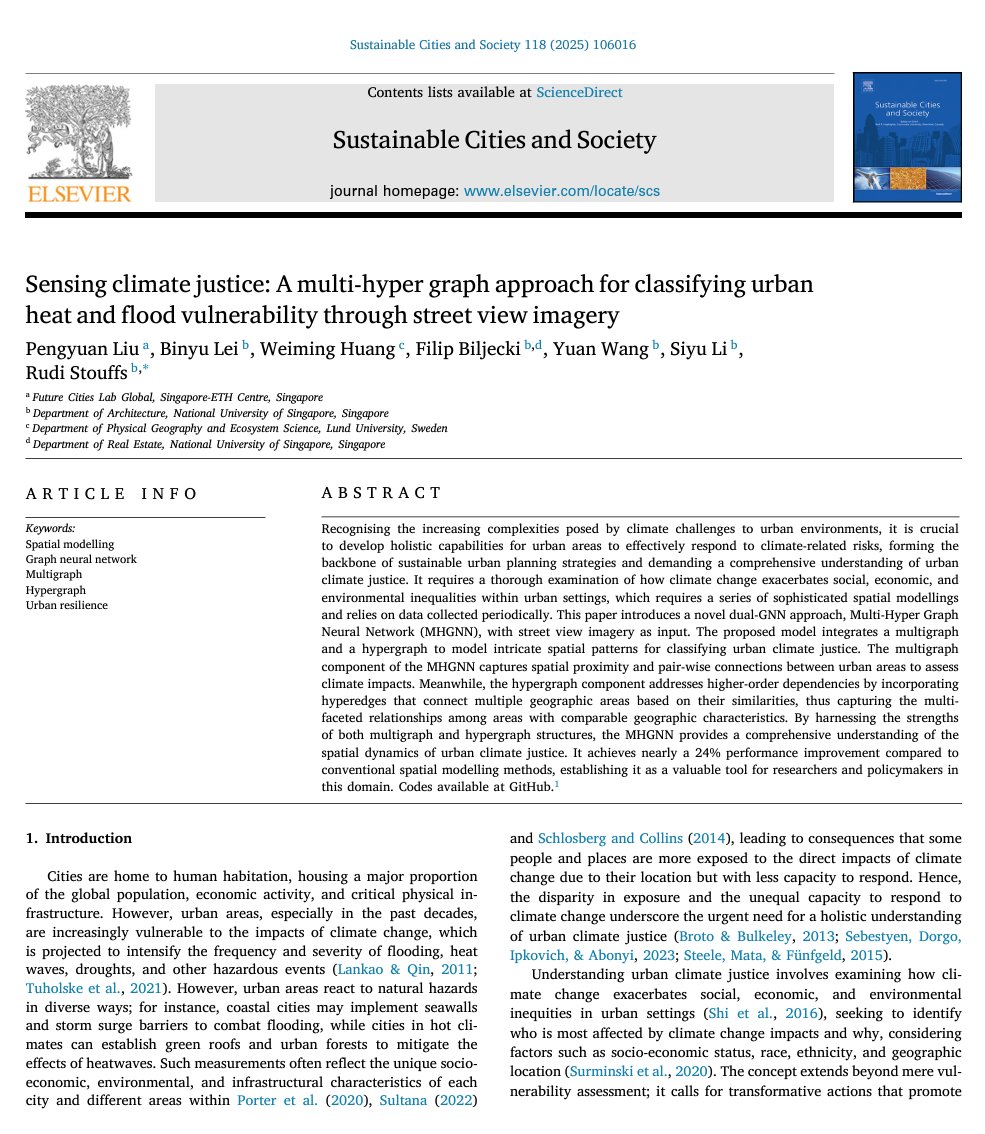
In this paper, we propose a novel model that integrates a multigraph and a hypergraph to model intricate spatial patterns for classifying urban climate justice.
Check our new paper: Sensing climate justice: A multi-hyper graph approach for classifying urban heat and flood vulnerability through street view imagery, published in Sustainable Cities and Society: https://t.co/gGGKmRz4oE
This method and implementation strives to enhance citizen participation and collaboration. More details are available in a paper that was just published in Cities: https://t.co/ttNlmriTUZ
co-authored w/ @Neil_Liu_2017, Wenhui Xu, and @Tianhong_zhao. Thanks for the collaboration!
We're developing urban digital twins that give more attention to human aspects. @JunjieLuo21 has built a prototype that integrates visual perception and sets the scene for automatically predicting the perception of various scenarios of new buildings before they are built.
Happy to share that a book chapter of mine on Spatial Analysis in The Encyclopedia of Human Geography has been published 😃: https://t.co/5RDdYbt8dd. This entry provides a comprehensive overview of spatial analysis as a collection of contemporary techniques within Human Geography
It reviews the theoretical foundations of location theory and traces the evolution from traditional statistical approaches to advanced Artificial Intelligence (AI)-assisted studies.
Doing so aims to achieve a broader understanding of various use cases, the diverse types of data employed, and the numerous challenges and opportunities that arise in this ever-evolving field. Please feel free to have a look.
I am delighted to see the proceedings 📃 of the first #OSMScience out, but even more delighted to have had the opportunity to work with such excellent #OpenStreetMap scholars 🗺️🎓 such as the other editors!
Looking forward to OSM Science 2024, updates are coming soon.