🥇 ¡Enhorabuena a la Dra. Esther González por recibir uno de los 'Premios Jóvenes Investigadores' de @FundacionAZ!
🔬 Su proyecto empleará IA para analizar electros y favorecer la detección temprana de la amiloidosis por transtirretina.
🔗: https://t.co/OoYM2JGuBS
1/ New paper in Circ Genom Precis Med 🧬
Why do two people with the same MYBPC3 variant have such different hypertrophic cardiomyopathy?
Part of the answer: what else they carry in their genome. 🧵
🏆 En el área de de Cardiovascular, Renal y Metabolismo de los #XPremiosJóvenesInvestigadores recibió el premio el equipo coordinado por Esther González López del @HospiPtaHierro, junto a Jesús Piqueras de @HUnivCR y Nerea Mora de @IdisNA, de la mano de Laura Colón (@LauraColonMd), presidenta de Fundación AstraZeneca, y Carmen Encinas (@CarmenEncinas), de @SanidadCLM.
🤝Un proyecto que cuenta con el apoyo de la Organización de Pacientes de @amiloidosis_org ¡Enhorabuena!
🔬 Hoy celebramos la gala de los #XPremiosJóvenesInvestigadores, una edición especialmente significativa que coincide con el 25.º aniversario de #FundaciónAZ
Bajo el lema 'Ciencia se escribe con compromiso' celebramos una década reconociendo el talento científico con la colaboración, un año más, del @Salud_ISCIII para la evaluación de los proyectos.
“Do what you can, with what you have, where you are.”
EACTS President Rafael Sádaba delivered this powerful message during his Presidential Address at the 40th EACTS Annual Meeting.
Reflecting on the importance of making the most of what we have, he reminded us not to let our limitations define what we can achieve.
Surrounded by family, friends and colleagues, it was a special moment to share, bringing together personal reflections and a message that resonates far beyond cardiothoracic surgery.
💫 “Don’t justify your limitations.” A reminder to keep moving forward, embrace opportunities and make a difference wherever we are.
#EACTS2026 #40YearsofEACTS
✨🫀 Un nuevo estudio permite identificar pacientes con riesgo de #MuerteSúbita y #arritmias.
El trabajo, liderado por @dr_pavia, investigador del @CNIC_CARDIO y cardiólogo del @HospiPtaHierro y el #CIBERCV (@ciberisciii), identifica nuevos marcadores que mejoran de forma significativa la estratificación del riesgo de arritmias ventriculares graves en pacientes con #miocardiopatía dilatada no isquémica, una de las principales causas de #InsuficienciaCardiaca y muerte súbita.
🔗DOI: https://t.co/ucGyDGbmn1 #OpenAccess en @CircAHA
📰 Lee más aquí: https://t.co/LPs8ZJcxCt
#CNIC #InvestigaciónCardiovascular #Ciencia #Cardiología
Why It Matters:
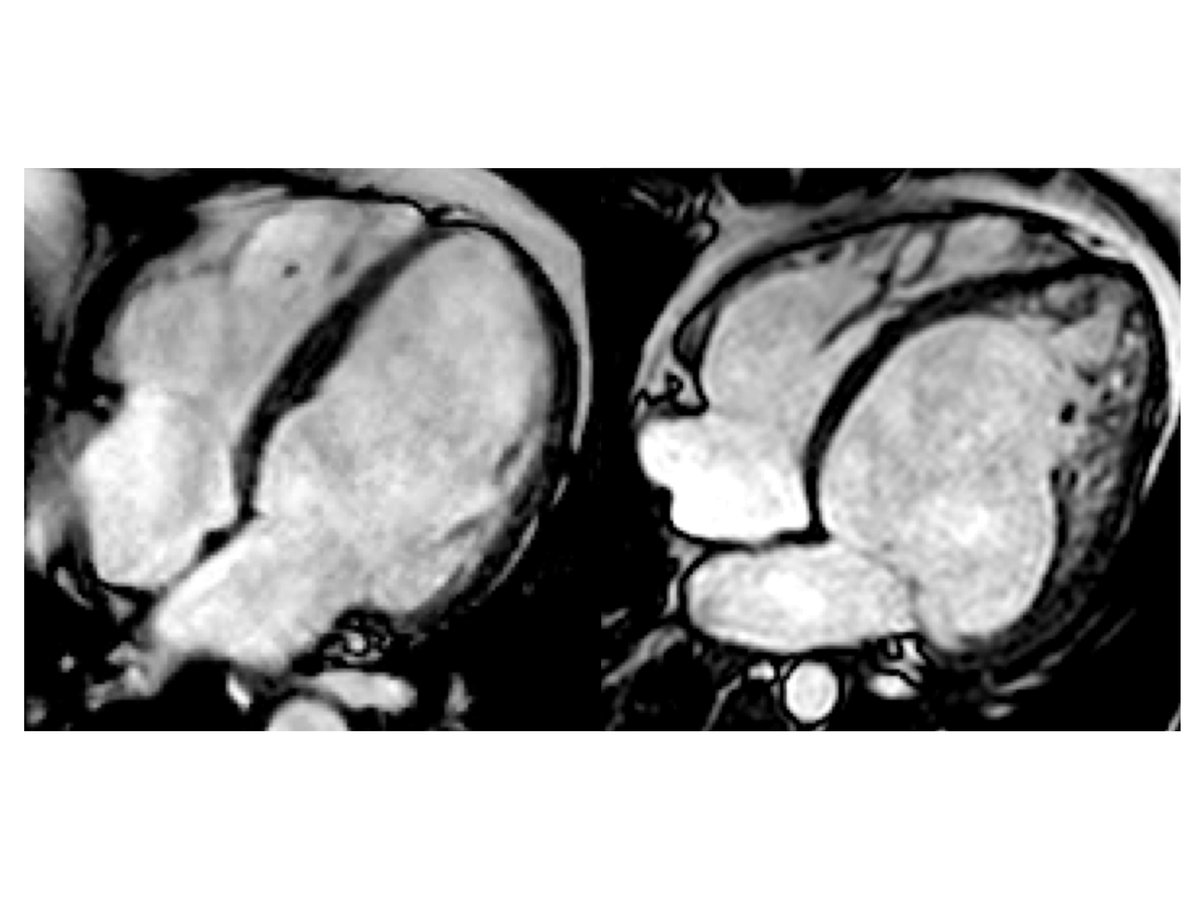
LV hypertrabeculation is observed on cardiac imaging more often than you'd expect — but its actual clinical risk in dilated cardiomyopathy has never been clear.
This week, @NereMA, @dr_pavia, and colleagues report findings from a 22-center international study: LV trabeculation affected roughly 30% of dilated cardiomyopathy patients, shaped in part by genetic context — but with no increased risk of embolic stroke or other major clinical events.
The takeaway is that these findings don't support prophylactic anticoagulation in dilated cardiomyopathy patients based on hypertrabeculation alone.
Read the study in this week’s @CircAHA: https://t.co/cknd7MObsZ
@American_Heart | #Cardiology #Circulation
🔥 Is left ventricular hypertrabeculation really a risk marker in dilated cardiomyopathy - or have we been overdiagnosing and overtreating an imaging finding?
🚨 We are thrilled to share our study, now published in @CircAHA !
🤝 This work was only possible thanks to an outstanding collaboration between investigators from 22 European centers.
This study reflects the leadership of @dr_pavia and the extraordinary work of Noemí and Jesús Mirelis from @cardiopdh, who reviewed all 1,160 CMR studies.
🫀 🧬 El mayor estudio genético y de #ResonanciaMagnética realizado hasta la fecha descarta la existencia de una enfermedad del corazón: la hipertrabeculación ventricular izquierda, que no se asocia a un peor pronóstico en pacientes con #miocardiopatía dilatada.
Este trabajo lo ha desarrollado un equipo del @CNIC_CARDIO junto a una amplia red internacional de hospitales y centros de investigación, liderados por @dr_pavia, jefe del grupo de miocardiopatías hereditarias del CNIC y cardiólogo del @HospiPtaHierro y el CIBERCV (@ciberisciii).
🔗 DOI: doi:10.1161/CIRCULATIONAHA.125.078536. #OpenAccess en @CircAHA
📰 Lee aquí la noticia completa: https://t.co/bZt0p0ShMw
#CNIC #InvestigaciónCardiovascular #Ciencia
🫀 🧬 The largest genetic and #MRI study carried out to date rules out the existence of a heart condition: left ventricular hypertrabeculation, which is not associated with a poorer prognosis in patients with #dilated cardiomyopathy.
This research was carried out by a team from @CNIC_CARDIO in collaboration with a wide-ranging international network of hospitals and research centres, led by @dr_pavia, head of the CNIC’s hereditary cardiomyopathies group and a cardiologist at @HospiPtaHierro and the CIBERCV (@ciberisciii).
🔗 DOI: doi:10.1161/CIRCULATIONAHA.125.078536. #OpenAccess in @CircAHA
📰 Read the full news article here: https://t.co/MJEsaXpkOd
#CNIC #CardiovascularResearch #Science
🫀 El apellido genético de las miocardiopatías dilatadas importa mucho.
Nos lo cuenta la Dra. @maria_valgom, nuestra responsable de Cardiología en esta @cardioteca ⬇️
Si conocemos la genética de las miocardiopatías, podremos abordar mejor cada caso✅
https://t.co/Bz3HOE39Zc