This is Nethold Strategy.
We study digital assets the way long-term investors study any market: structure first, noise last.
Here's what you'll find here, and what you won't. 🧵
Most people ask which force drives the next cycle.
ETFs bring access.
Stablecoins move dollars 24/7.
Tokenization puts old assets on new rails.
Regulation decides who can use all three.
They aren't competing. They're one system, built in parts. That's the long-term story.
The headline is the chain. The story is the structure.
A bank money fund now lives on more than one public network, where its clients already are.
The asset doesn't change. Where it can move does.
Access is still gated: qualified U.S. investors, one platform.
#Tokenization
BREAKING: @JPMorganAM's tokenized money market funds are live on Solana.
MONY and JLTXX are both available to qualified U.S. investors through Morgan Money, with subscriptions, redemptions and token balances handled on one platform.
6/ The prices of 2022 are history. The lesson isn't.
Before trusting any venue, ask: Who holds the assets? Are they segregated? What backs the balance sheet?
Long-term thinking starts with counterparty risk.
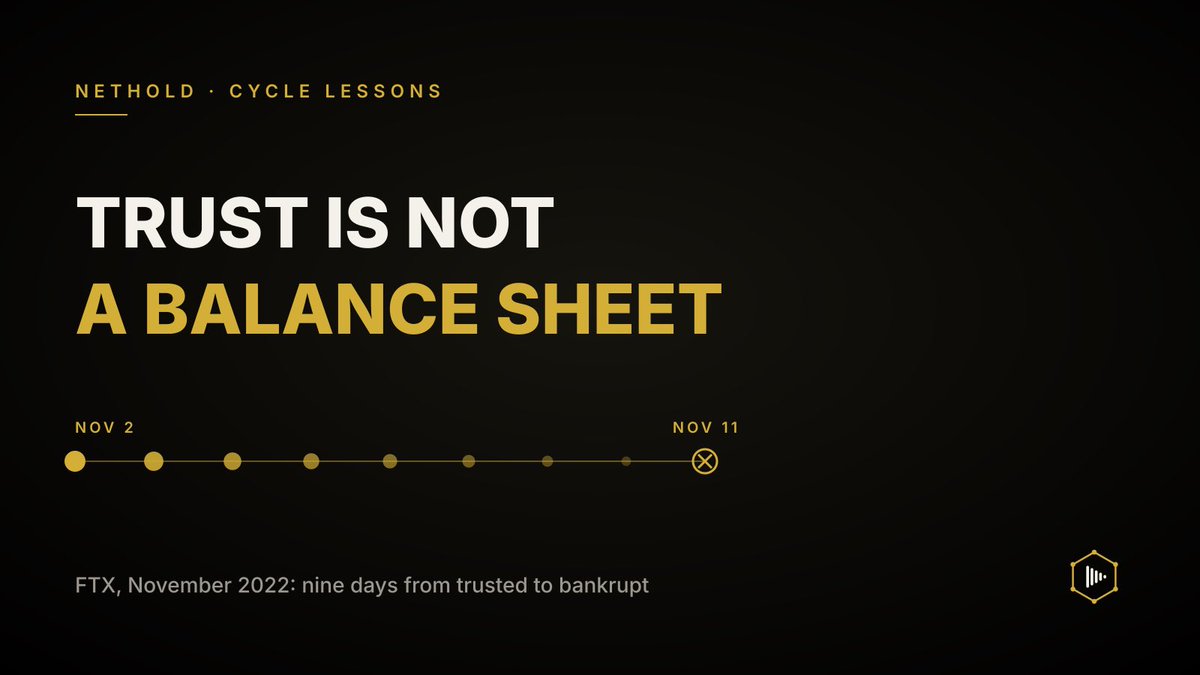
November 2022: FTX, one of the world's largest crypto exchanges, went from trusted to bankrupt in nine days.
It wasn't a market crash. It was a balance-sheet problem nobody could see.
What the FTX collapse still teaches, in a short thread:
5/ Lesson three: solvency is tested on the worst day, not the average one.
Every venue looks liquid until everyone asks at once. Proof of reserves means little without proof of liabilities.
3/ The frictions are still real.
The IMF and ISDA point to legal certainty, custody and segregation, and fragmented platforms.
Technology moved first. The rules and the plumbing still have to catch up. That gap is where the risk lives.
PERSPECTIVE | Collateral that stays invested
Normally, a fund has to be sold for cash before it can secure a trade.
BlackRock's tokenized funds are already used as collateral in digital-asset markets. No redemption. The fund keeps working the whole time.
2/ That's the real shift in tokenization.
Not a new asset. The same fund, moving at the speed of the market around it.
Capital that never has to stop working is capital that compounds.
3/ The hard part is traditional finance. Banks must accept it, and the gaps are real.
IMF: fragmented platforms, legal uncertainty.
ISDA: custody and segregation, cross-border recognition, legal certainty.
Adoption will follow the plumbing, not the headlines.
2/ That is the real shift: capital efficiency. Same asset, same risk. Money that never has to stop working.
BlackRock's BUIDL is about $2.3B (Bloomberg). Its tokenized cash funds span the US and Europe; Hong Kong's SFC authorised an HKD version in September.
Infrastructure rarely wins by announcement. It wins by becoming the default.
Cross-chain and compliance are now built into the toolkit institutions already use.
That's not noise. That's structure.
#Chainlink#Tokenization
NEW: @OpenZeppelin, which S&P Global agreed to acquire, embeds Chainlink into its tooling standard used by the vast majority of the industry, including BlackRock, WisdomTree, Franklin Templeton, and more.
Chainlink CCIP, CRE, & ACE are now built into the tools behind $38+ trillion in transferred value.
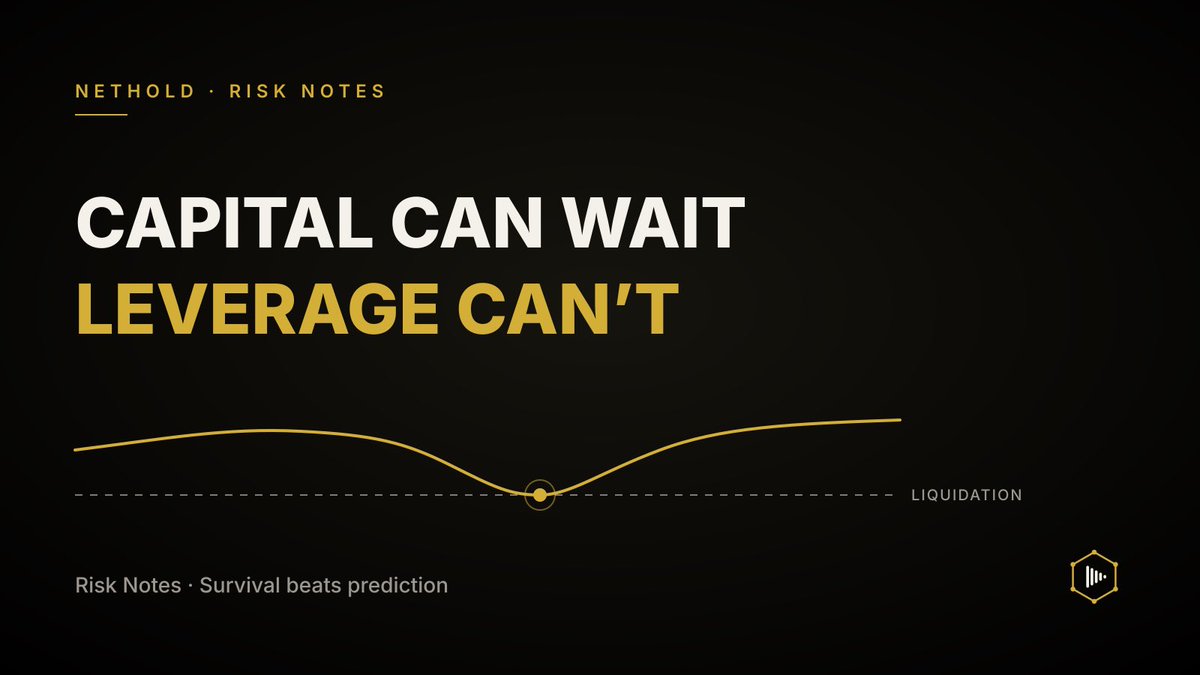
Permanent capital can wait. Leverage can't.
A 10x position doesn't need the thesis to be wrong. It only needs the price to move 10% the wrong way, once.
Time is the edge. Leverage sells it.
#Crypto#RiskManagement
Liquidity comes and goes. Permanent capital stays.
Onchain finance doesn't just need buyers. It needs balance sheets willing to commit for years, not quarters.
#Ethereum#Onchain
Anyone can own $ETH. We know how to put it to work.
Over the last year, Sharplink has done roughly $500M worth of deals to put ETH to work across the ecosystem.
These include staking deployments, a dedicated onchain yield fund, and investments for the teams leading Ethereum’s next decade.
Here’s how it fits together 👇
6/ Note: Chainlink also has a token, LINK. This thread is not about it.
Infrastructure adoption and token value are separate questions. Here we only look at the plumbing and who is testing it.
Not financial advice.
Blockchains can't see the outside world. They don't know a price, a rate, or whether a payment cleared.
That gap is why oracles exist. Chainlink is the best-known example, and banks are now testing it as plumbing.
A thread on the infrastructure, not the token.
5/ The long-term point: tokenized assets are only as good as the data and messaging behind them.
Oracles and interoperability are quiet layers. They rarely make headlines, but on-chain funds, bonds and collateral all depend on them.