Bookmark this tweet.
Starship will never work.
It's all a scam on stupid people.
Uneducated space enthusiasts mostly.
Nobody does iterative design on full size prototypes for a reason.
Especially when it's the world's biggest rocket.
Complete dumbfucks are in charge.
Interesting perspective from Dr. Huberman on the tech giants and their interest in the brain.
Neuralink paired directly with Grok and Optimus is an inevitable future outcome.
If they don't already, each tech giant should have an interest in building a neural foundation model. Imo, Neuralink is in the lead and will continue to be in the lead in this regard.
@TheLeakySpigot@bridgeneurotech@neuralink One of the big cultural shifts will be exactly that: able-bodied people opting for implantation of items that were first focused on disabilities and injured bodies. improving the bandwidth between their bodies and computers understood as a form of latent "disability".
@bridgeneurotech, founded by one of the pillars of the BCI sector, is pursuing ultrasound and non-invasive means for connecting the brain to computers.
@TheLeakySpigot@bridgeneurotech@neuralink It’s certainly a wild future worth dreaming about! It’s comforting to see many different technical approaches being pursued. Some will be all in like you. Others might need near/on-body products before they go to in-body.
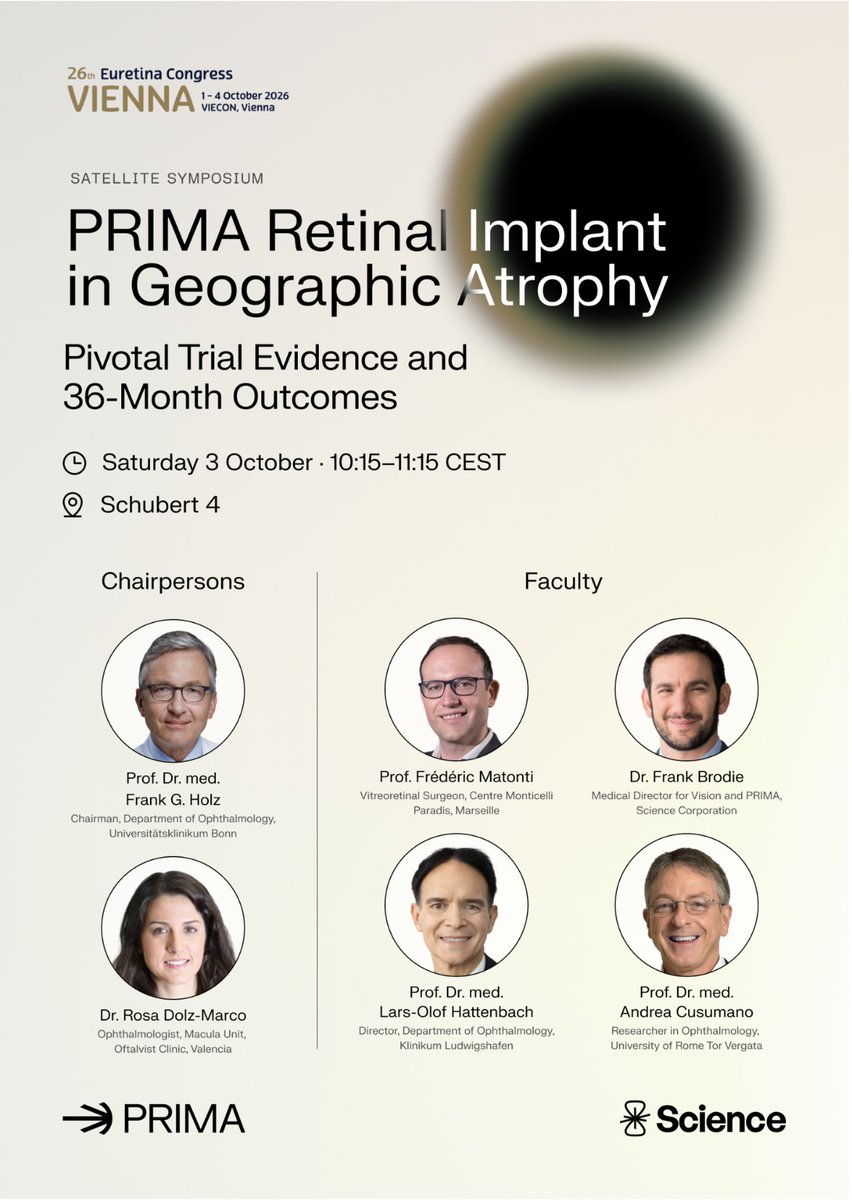
Last week at @EURETINA 2026 in Vienna, researchers and clinicians behind the PRIMA clinical program shared the latest research and clinical developments across nine scientific sessions.
Thank you to everyone who joined us in Vienna.
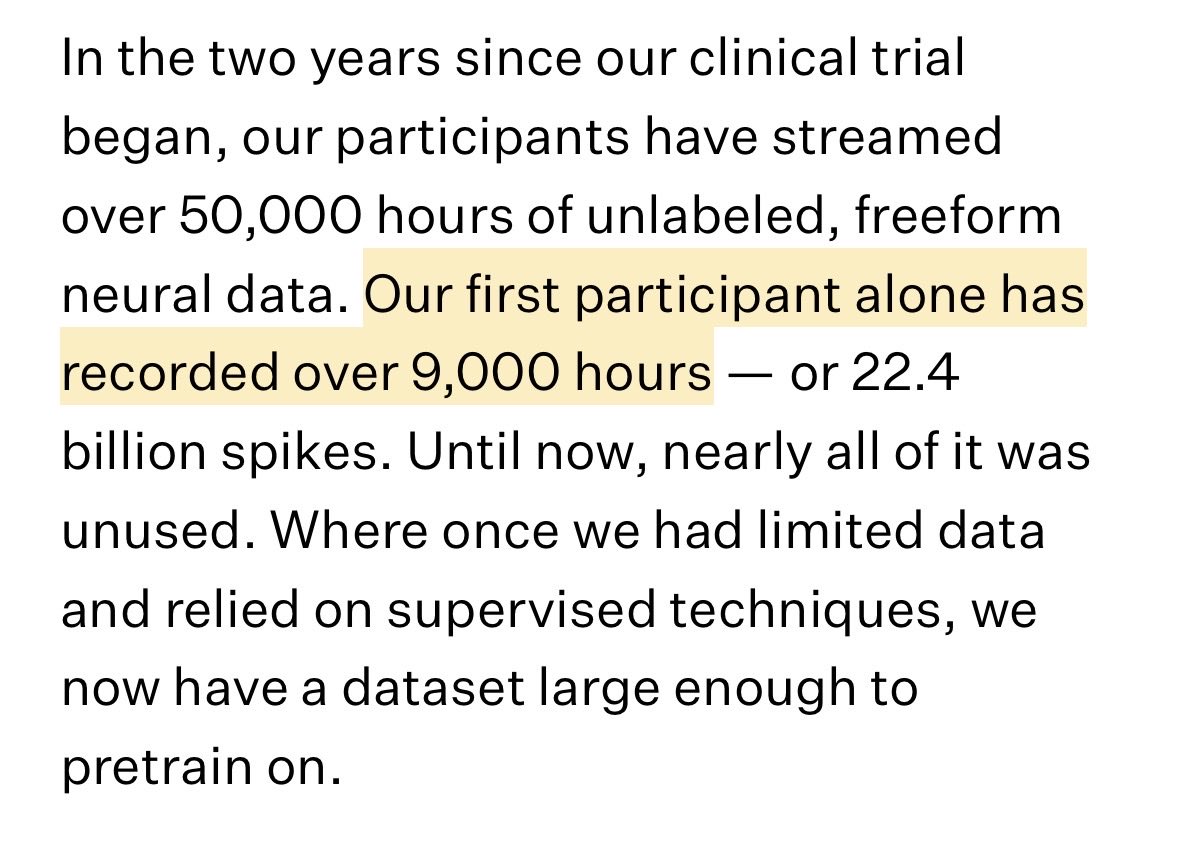
Our clinical trial participants have now used their Neuralink implants for over 50,000 hours, building one of the largest datasets of intracortical neural activity ever.
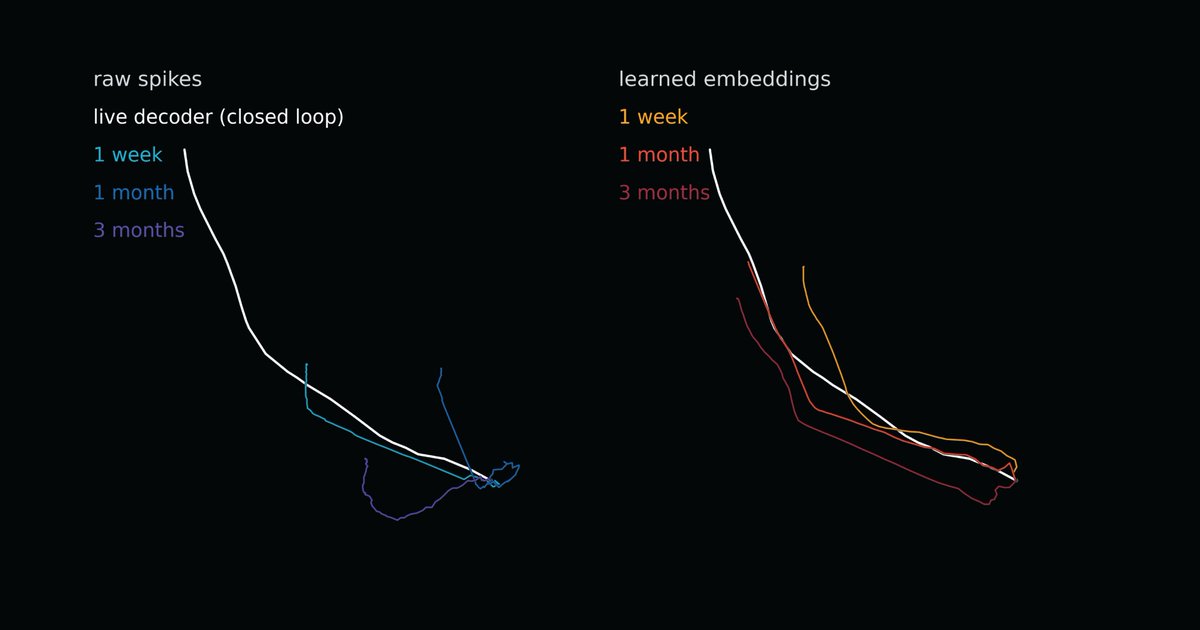
We used it to pretrain a foundation model for BCI: self-supervised neural encoders that turn noisy, drifting spikes into stable representations.
Some initial results:
• Decoders that keep working for weeks instead of days. For some users, calibration dropped from 10 min/day to 10 min/week
• Teleporting cursors that jump straight to the intended target
• A new cursor-control record of 11.32 bits per second (exceeding the performance of most able-bodied people)
We’re just getting started. Future directions include pooling data across participants, one-shot (or zero-shot) calibration, and an API for the motor cortex.
Read more:
https://t.co/sIQXFUI7pc
Our clinical trial participants have now used their Neuralink implants for over 50,000 hours, building one of the largest datasets of intracortical neural activity ever.
We used it to pretrain a foundation model for BCI: self-supervised neural encoders that turn noisy, drifting spikes into stable representations.
Some initial results:
• Decoders that keep working for weeks instead of days. For some users, calibration dropped from 10 min/day to 10 min/week
• Teleporting cursors that jump straight to the intended target
• A new cursor-control record of 11.32 bits per second (exceeding the performance of most able-bodied people)
We’re just getting started. Future directions include pooling data across participants, one-shot (or zero-shot) calibration, and an API for the motor cortex.
Read more:
https://t.co/sIQXFUI7pc
Neuralink cuts some implant users' calibration from 10 minutes a day to 10 minutes a week https://t.co/aaHBL1NGi9
#BCI#Neurotech#BrainComputerInterface
Today at @EURETINA 2026, the latest PRIMA clinical trial data will be presented during the Industry Symposium “PRIMA Retinal Implant in Geographic Atrophy: Pivotal Trial Evidence and 36-Month Outcomes.”
@wholemars The FSD/Dojo approach to neural data.
Have enough of it and the capabilities that come from it begin to look like magic mind-reading, increasing exponentially with adoption!
Neuralink is now pretraining AI on 50,000+ hours of neural recordings.
Instead of training a new decoder from scratch for every person, they’re building a foundation model that learns from many brains and can then be adapted to yours.
This could create an enormous flywheel where the more patients they have, the more data they generate, and the better the model gets.
Neuralink’s moat may ultimately be as much about the neural dataset as the implant itself.
https://t.co/2bK8kDRNdp