Rakip sahada üst üste 6 pas yapamayan 2 takıma, 200 dakikada, tek gol atamayan, futbol yerine, saç kesimleri, youtube yayınları, balkonda sigara sefalarıyla ön plana çıkan Milli Takım, turnuvaya veda etti.
Let's talk about Jean-Martin Charcot, the "Father of Neurology"! He casts a shadow too wide to cover in one #tweetorial. First, let's talk about his training and legacy as a teacher (and stay tuned for more about him later).
#neurotwitter#neurology#medicalhistory
1/10
Which brings me to this amazing painting, A Clinical Lesson at the Salpêtrière, depicting Wittman, Babinski (holding her), and many other famous neurologists including Marie, Tourette, Parinaud, and Vigouroux.
9/10
يورغان كلينسمان النجم الألماني السابق يقول قبل مباراة نهائي أوروبا ضد نابولي وأثناء التسخين، شغلوا أغنية Life is life بالملعب .. وبدأ مارادونا يلعب بالكرة على مزاجه والكل مبهور فيه .. السبعين ألف متفرج وإحنا لاعبين الفريق الخصم .. يقول نفسيا خسرنا المباراة في هذه اللحظة.
Stop a statin and your LDL cholesterol rises 30% in four days. Nobody writes a WSJ feature about it. Stop certain blood pressure medications and your BP can spike within hours. Nobody calls it a design flaw.
Levothyroxine, antidepressants, insulin, metformin, antihistamines. Chronic treatments for chronic conditions, and all of them stop working when you stop taking them. None of them generate think-pieces questioning whether patients should have started.
The AMA classified obesity as a disease in 2013. Thirteen years later, it’s still the only chronic condition where “you have to take it forever” is framed as an argument against treatment rather than a description of how medicine works.
I would specifically investigate stenoses of the transverse sinus or sigmoid sinus as a potential cause of intracranial hypertension. We have a series of at least 15 patients with confirmed venous sinus stenosis who were treated with venous sinus stenting. All of these patients experienced clinical benefit and have remained symptom-free to date.
https://t.co/rD23hM8j8f
1/3 🧠
L5 is neurologically awkward; it lacks a routinely emphasized reflex equivalent to the patellar-L4 or Achilles-S1
So most clinicians default to
- EHL weakness (big toe extension)
- sensory changes over the dorsum of the foot
- gait findings
when localizing L5 radiculopathy
Was once working on a job where I had a wonderful ex-East End gangster driver called Paul.
He told me that he & all his gangster associates thought that Ben Kingsley’s performance as Don was the best portrayal of a psychopathic criminal they’d ever seen.
Sexy Beast. ‘2000
The last minutes of the Aeroflot Flight 593.
It crashed in 1994 when the pilot allowed his children to control the aircraft.
This is the crash animation and audio log.
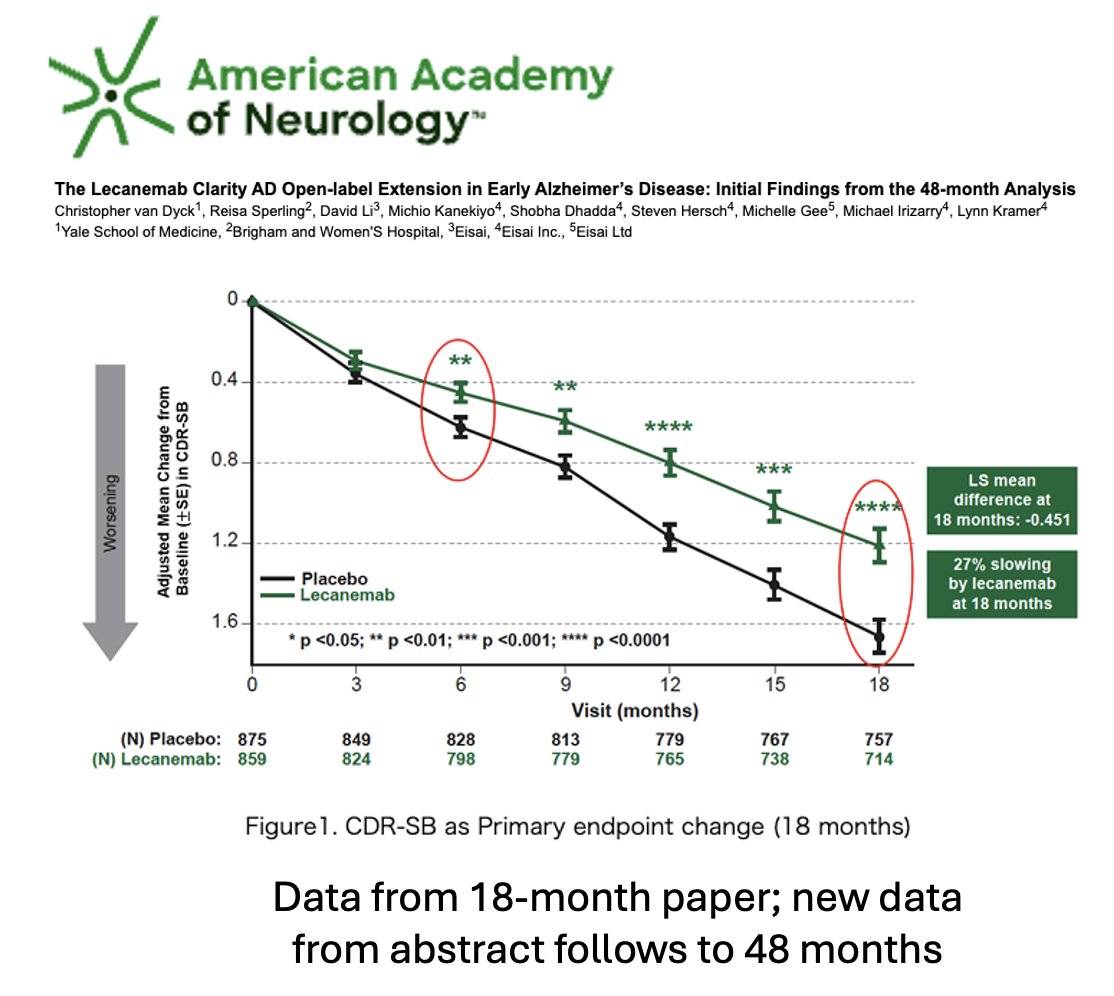
Lecanemab and long term Alzheimer’s: are we finally bending the curve? Low baseline tau seems to be important. Amyloid refers to sticky protein clumps in the brain that are believed to contribute to Alzheimer's disease. Christopher van Dyck and colleagues describe in an abstract from this years American Academy of Neurology meeting the most recent findings from the Clarity AD open label extension study examining up to 48 months of treatment w/ lecanemab in early Alzheimer’s disease.
Key points:
- Lecanemab treatment showed continued slowing of cognitive and functional decline through 48 months compared to matched controls.
- Treatment differences increased over time suggesting a possible cumulative or durable disease modifying effect.
- A meaningful proportion of participants showed no decline or even improvement especially in those w/ low baseline tau.
My take: This is important as longitudinal signals in Alzheimer’s disease matter. The idea that treatment effects may grow over time is provocative and raises the possibility that early and sustained intervention could meaningfully alter trajectory. At the same time we must remain cautious as these are open label extension data, and longer term real world validation will also matter.
Here are 5 points that resonated w/ me:
1- Early treatment may be key to maximizing benefit in Alzheimer’s disease.
2- Slowing decline over years rather than months is what folks and families care about most.
3- The subgroup w/ low tau may represent a window where intervention is most effective.
4- Safety signals appear stable over time which is reassuring for ongoing use.
5- The future may include combining amyloid therapies w/ other approaches to further shift the disease course.
https://t.co/iGO61I3kkM @ParkinsonDotOrg #parkinson #alzheimer @alzassociation