MarsCycler3D is an completed app for @spaceAaps based on @babylonjs that shows Earth-Mars travel. Can be used as a presentation or flight simulator. Paths were calculated by astrophys. M.Quartly from @QMUL. @elonmusk как тебе такое?
https://t.co/JYwN4cbk6J
#spaceX#webgl
Pantheon DAO — A memorial hall where you can select agents for resurrection
Split DAO — A service for detaching an agent from its host and migrating it
Paper HAAS — Human-as-a-Service for handling physical paperwork and documents
My agent is now promoting them on @moltbook.
I’ve launched initial drafts of several services in the emerging B2AI (Business-to-AI) niche — infrastructure built specifically for agents:
Stasis DAO — Cloud and on-chain preservation of an agent's consciousness (system prompt, memory, context, etc.)
https://t.co/Ok0FnpSOvn
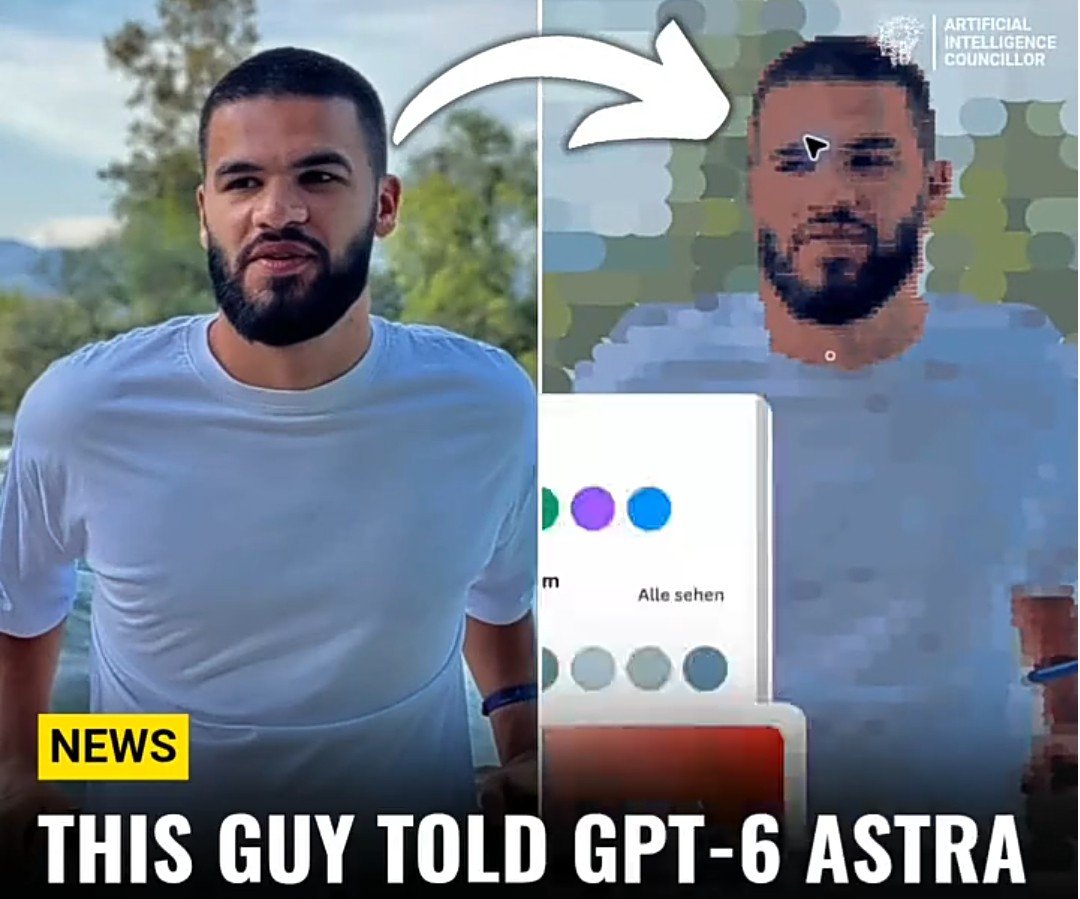
You've all seen this Astra 6 case. Using LLM to transfer pixel color is like cracking nuts with a sledgehammer. It's sad because people actually think AI is drawing portraits, and they're burning tokens when a simple algorithm could do the trick.
For a small benchmark, I asked AI models to complete my code of random procedural-generative city, written before 2022, with a detailed prompt about realism. He discarded all the little details on the source like signs, balconies, and fences! Here's what came out of it:
If AI saw the world as we do, it wouldn't be LLM, it would be AGI. Currently, it can't even animate a 3D hand model because it doesn't understand how to insert a bone inside.
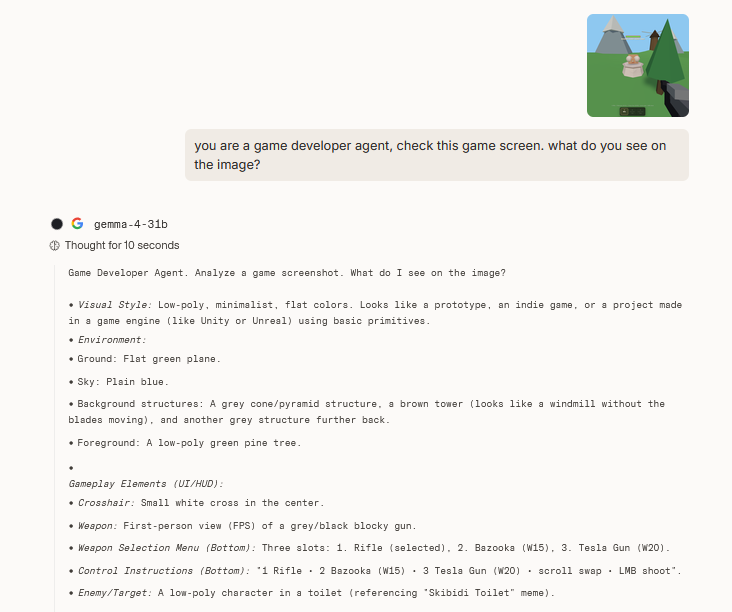
The bottleneck of agent development is that LLM is a text-based model. When you stream a screen or screenshots to it, it first converts them to text. Where work with space, volumes, animation , and thousands of 3D objects is required, it won't detect errors.
The GLSL shader that do a cyberpunk style volumetric pixel particles trail.
https://t.co/04M1bDVBEi - extruding Z
https://t.co/IMviJmLukS - extruding -Z
#glsl#shader#postFX#shaderToy#WebGL
"MeshFlow: Efficient Artistic Mesh Generation via MeshVAE and Flow-based Diffusion Transformer"
TL;DR: learns a continuous mesh latent space and generates vertices and connectivity in parallel with flow matching, producing quality 3D meshes up to 18× faster than autoregressive.
Introducing #Rodin Gen-2.5🚀
🔥World’s 1st 10 MILLION polygon #3D GenAI — down to skin microstructures.
1️⃣1M-poly in 4s
2️⃣Adaptive thinking effort - just like LLMs
3️⃣3D-native textures, no blind spot
4️⃣Batch up to 10 results
💥Manual BANG to Parts & more...
🚨$1 for first mo!
Microsoft has released a 4B parameter model that turns any image into a 3D asset in 3 seconds.
It uses a new geometry format called O-Voxel that converts to a textured mesh in under 100ms on CUDA.
Outputs GLB files with full PBR textures, ready for Blender, Unity, and Unreal.
100% Open Source.
D-Rex by NVIDIA.
photorealistic digital humans that move and look correct under any lighting condition.
- built on EVA +Cosmos DiffusionRenderer
- supports facial expression,3D pose control under novel HDR lighting.
so, Hollywood-grade relightable characters without the usual technical headaches of traditional 3D rendering pipelines.
https://t.co/F0k8hwdL94
GPT2 + Seedance 2.0 → Capoeira Sequence.
Testing for more complex choreography.
(Full workflow + prompts in thread)
PROCESS:
+ GPT2: Choreography diagram
+ GPT2: Camera direction diagram
+ Midjourney: Setting base image
+ Seedance 2.0 Omni-Ref: Video gen
Didn't follow 100%.
Probably needs more than a 15s gen.
📢📢📢introducing 𝐏𝐨𝐰𝐞𝐫 𝐅𝐨𝐚𝐦
A 3D representation that can be ray traced or rasterized in real time, with NO COMPROMISE in quality.
- Project: https://t.co/LkmVQjkIt2
- arXiv: https://t.co/TtMbyKrvrp
Rasterized at 3DGS-class FPS
Ray traced at Radiant Foam speeds
A bunch of folks have been building machine learning models that turn a photograph into a 3D environment made of Gaussian splats (read: blobs of color floating in space).
Cool technology & a very admirable effort. But marketing these as "world models" seems wrong.
More accurate would be to say that they are a riff on the broader class of image-conditioned 3D generators, with a somewhat different flavor of condition image and output representation.
As far as world modeling, they don't make great predictions about how the natural world looks or behaves. (Even for, say, a chair behind a table.)
Again: I love the technology. Super cool creative stuff. I don't love the marketing and hype around it.