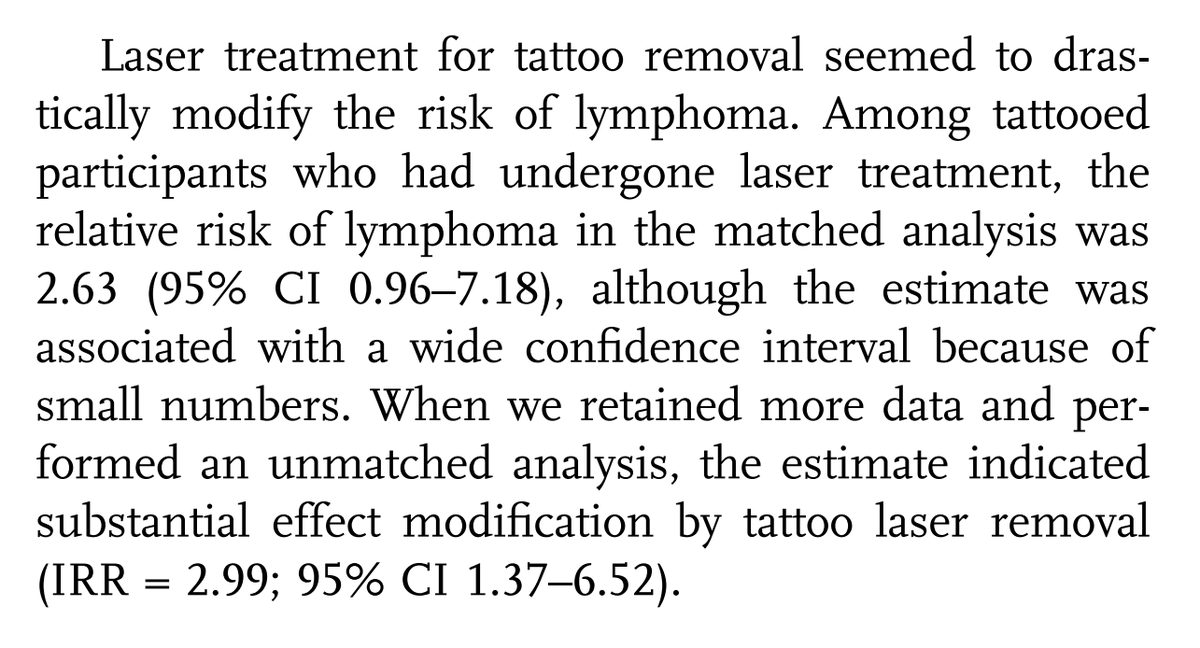
Tener tatuajes se asocia a un 29% más de riesgo de melanoma y a un 21% más de riesgo de linfoma maligno.
Y eliminarlos con láser se asocia a un aumento del 200% del riesgo de linfoma maligno, probablemente por la fragmentación de los compuestos tóxicos de la tinta.
If you own a car made after 2020, you need to read this right now.
Your car knows how fast you brake. Where you drive. What time you get home. And depending on the brand, it may be recording your conversations, your weight, and even your facial expressions.
Mozilla reviewed 25 major car brands for privacy. Every single one failed. Cars are officially the worst product category Mozilla has ever tested, worse than smart speakers, worse than doorbell cameras.
Here are 6 moves to lock your car down 🧵
Did I hear that correctly? Lindsay Clancy requested a DNR, and it was not followed.
That raises an important question: under what circumstances can a DNR be denied or ignored?
Generally, providers may decline to enter or follow a DNR for a limited set of reasons — primarily lack of decision-making capacity, incomplete or invalid documentation, or narrow determinations of medical futility (with transfer obligations if the facility objects). It is not something that can be set aside lightly.
If capacity was the issue here, what impaired it? Was it postpartum psychosis, ICU delirium, the effects of her injuries and medical interventions, or something else? Timing also matters. When exactly did she make the request relative to her suicide attempt, hospitalization, sedation, and the reported code blue?
It’s also worth noting that a DNR is a higher-stakes decision than designating a healthcare proxy. The latter transfers authority; the former directly withholds potentially life-saving intervention. Today’s testimony about her transferring decision-making authority from her husband to her parents makes the capacity and timing questions even more relevant.
This will be worth watching as more details emerge.
@texasrunnerDFW Rehydration solutions didn’t exist until the early 1970s— before that they thought water was best. When they started adding electrolytes they first passed right through patient’s body until they realized a little sugar had to be included to get electrolytes into the cells.
Your ultimate supermarket translation guide:
"Fat free" means we pulled the fat out and poured sugar in so it still tastes of something.
"Sugar free" means sweetened with a chemical that ends in -ol and empties you by lunchtime.
"Low fat" means high sugar. Always. Check the back.
"No added sugar" means the sugar was already in there, we just didn't top it up.
"Heart healthy" means we paid for the little tick and fried it in seed oil.
"Cholesterol free" means it's a plant, plants never had any, well done for reading nothing.
"High in fibre" means we bulked it with something you cannot digest so chewing it feels like an achievement.
"Made with real fruit" means one grape attended the factory.
"Baked not fried" means same seed oil, different machine.
"Wholegrain" means beige, milled to dust, and it spikes you like the white loaf standing next to it.
"Plant based" means assembled in a factory from things a vegetable once stood near.
"Natural flavourings" means made in a laboratory, legally.
"Beef" means beef.
The front of the packet is written by the marketing department.
The back is written by the legal department, and only one of them is allowed to lie.
rosemary oil is the only natural oil with a head-to-head clinical trial showing it matches minoxidil for hair regrowth after 6 months. let that sink in. a $6 bottle produced statistically equivalent results to the most prescribed hair loss drug on earth
a 2015 randomized controlled trial directly compared rosemary oil against 2% minoxidil over 6 months. both groups showed significant increases in hair count from baseline. at the 6-month mark the difference between groups was not statistically significant. the rosemary group also reported significantly less scalp itching
the mechanism is dual. rosmarinic acid and carnosic acid in rosemary oil inhibit DHT binding to androgen receptors at the follicle. the same target finasteride hits but topically and without systemic hormonal effects. simultaneously it dilates scalp blood vessels increasing nutrient delivery to follicles that were slowly being strangled by restricted blood flow
- a 2025 clinical trial showed 57.7% increase in hair growth rate and 68.7% improvement in thickness with rosemary-lavender oil over 90 days. hair fall reduced by over 40%
- 82% of participants in that study reported satisfaction with results. the satisfaction rate for minoxidil in comparable studies is significantly lower partly due to the dread shed phase that rosemary oil doesn't cause
- unlike minoxidil there is no dependency. when you stop using rosemary oil you don't experience the accelerated shedding that minoxidil cessation triggers. minoxidil maintains hair only while you use it. stop and it falls out faster than before you started
- the anti-inflammatory properties address the perifollicular inflammation that accelerates miniaturization. rosemary oil treats a root cause that minoxidil doesn't even target
- it increases local IGF-1 expression in dermal papilla cells which directly stimulates hair growth phase extension. longer growth phase means longer thicker hair before natural shedding occurs
- the cost comparison is absurd. minoxidil: $20-40/month for life with dependency. rosemary oil: $6 per bottle lasting 2-3 months with no dependency. over 10 years that's $2,400-4,800 versus $120
3-5 drops mixed with jojoba or coconut oil as a carrier. massage into the scalp for 3-5 minutes. leave for minimum 30 minutes or overnight. 3-4 times per week. results visible in 8-12 weeks. the massage itself compounds the effect by adding blood flow stimulation on top of the topical benefits
the most researched natural hair regrowth compound available costs less per year than one month of the pharmaceutical alternative it matches in clinical trials