Each component is documented to provide transparency. Tools for project management, version control, and automated testing are employed to maintain consistency. The approach emphasizes modularity, allowing for future enhancements without disrupting existing functionality.
The Structure of Comprehensive Solutions
A comprehensive software solution is built on a foundation of well-defined processes. Requirements gathering, system design, iterative development, and quality assurance are integrated into a cohesive workflow.
There are more stars than grains of sand on Earth.
Astronomers estimate that there are around 10,000 stars for every grain of sand on Earth.
Let that sink in!
Each phase includes rigorous testing and documentation to ensure alignment with your specifications. We prioritize clear communication and regular updates, enabling you to make informed decisions at every stage.
We begin by thoroughly understanding your business context and defining clear requirements. Our team then designs a modular architecture that supports scalability and maintainability. Using agile methodologies, we deliver incremental builds, allowing for continuous refinement.
We provide a structured framework for developing software that aligns with your operational needs. Our process focuses on transparency, iterative feedback, and clear documentation to support your decision-making throughout the development lifecycle.
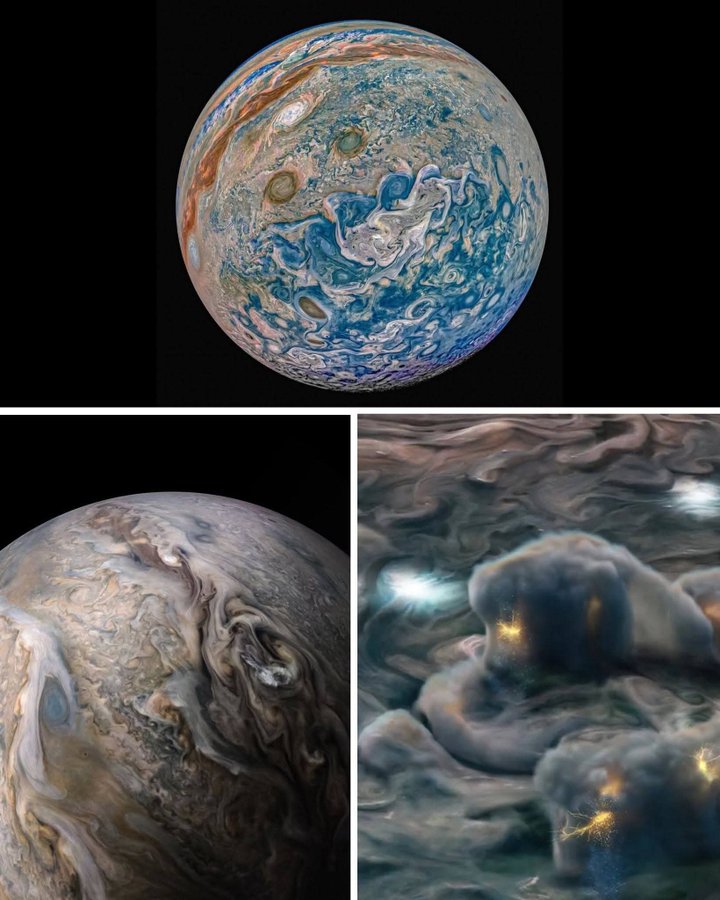
NASA has just unveiled some of the sharpest, most breathtaking images of Jupiter ever captured — and they look almost too vivid to be real.Razor-sharp bands of swirling clouds race across the giant planet in stunning detail. Colossal storm systems collide, twist, and churn in an endless atmospheric ballet. The entire globe pulses with motion, like a vast, turbulent ocean of gas frozen in a single explosive moment.But these images are far more than cosmic eye candy — they’re pure science in motion.Every subtle shift in color reveals a different chemical cocktail in Jupiter’s atmosphere. The intricate patterns trace ferocious jet streams and powerful winds that whip around the planet at hundreds of miles per hour, creating a climate of unimaginable violence compared to anything on Earth.And dominating the scene, still raging after more than three centuries…The Great Red Spot — a monstrous anticyclone so enormous it could swallow our entire planet whole — continues its centuries-long roar, its crimson eye staring defiantly back at us.This is Jupiter, up close and personal: chaotic, violent, hypnotic, and more alive than ever.We’re finally seeing the king of the planets like never before.
Media: NASA