Brian Wang | NextBigFuture: Deep Tech Insights on AI, Drones, Space, Energy & Investments | Proven prediction track record (Metaculus rank 8 + Grok citations
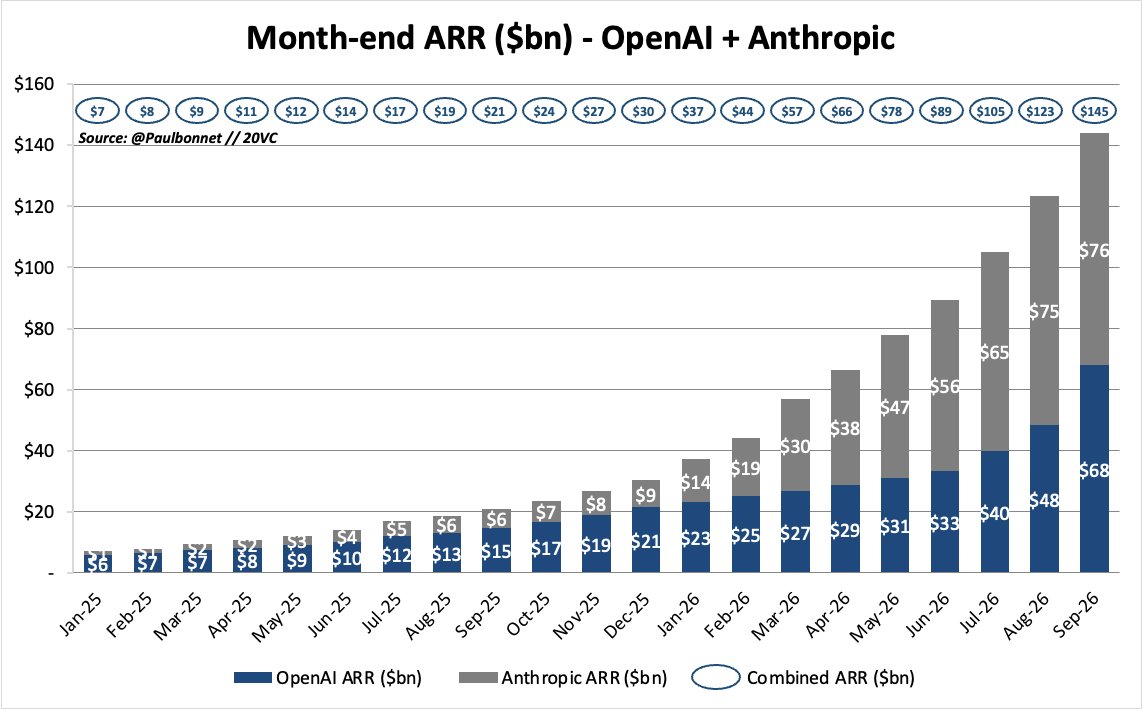
SpaceXAI leasing of data center plus $5 billion ARR for Cursor revenue and Grok revenue is at least $60 billion total and with 1.1 million GB300 data center being added. Spacex could rent another $50 billion of ARR. this would be more AI revenue than either Anthropic or OpenAI as of September
Anthropic's Sholto Douglas says AI capex could rise from $1 trillion this year to $4 trillion in 2028 and begin doubling humanity’s GDP by the early 2030s
“Over the course of the last four or five years, we’ve been 2x-ing or 3x-ing the amount of compute capacity devoted to AI every year."
"And so I think that’s roughly, together, the hyperscalers are spending about a trillion dollars this year on capex related to AI. A very interesting question will be, will that trend line hold, and so will it go to $2 trillion next year and then $4 trillion in 2028?"
"And if that trend line broadly holds, and you can expand that to encompass the broader robotics industry, then that means that in the early 2030s, you start to get to the point where you’re actually effectively doubling the GDP of humanity, which, again, is a little bit of a ridiculous concept, but requires a lot of things to go right.”
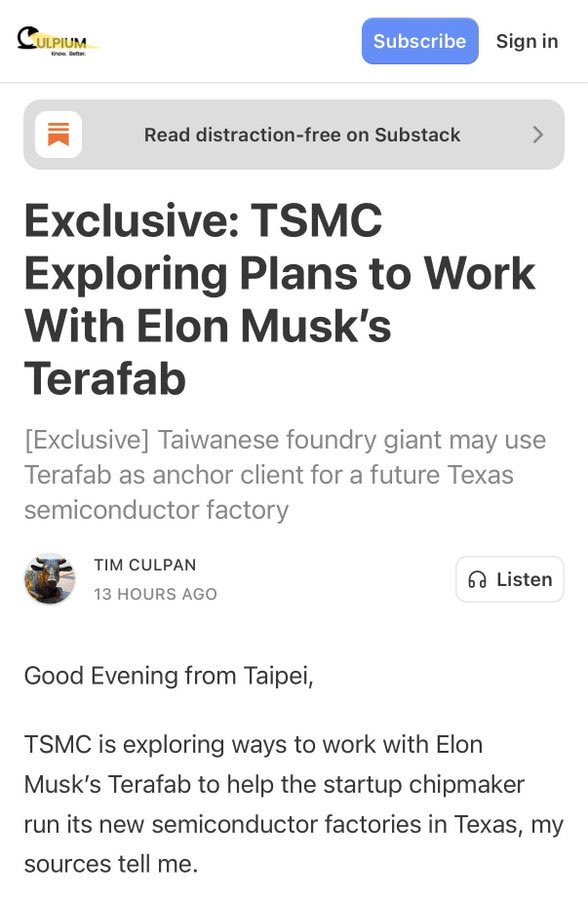
$TSLA and $SPCX will use current large share of earth based ai data centers. Heading to 30-50% in 2027. And then near monopolistic levels in 2028-2030 with ai in space of 80% or more to have semiconductor compute and memory dominance. Now they are in discussions with TSMC for terafab
Elon’s 250 kW Starlink satellites will bring multi-gigabit satellite internet and 5G satellite cellphone everywhere even high density cities.
250 kilowatts per satellite, 10 terabits per second in both directions, and a path to more than 100 terabits per second.
WHY build satellites this powerful? Serving everyone and leveraging the huge solar and thermal radiators of the planned AI satellites.
Superpowered Starlink will beat fiber EVERYWHERE $SPCX
@tslaming $TSLA halving memory for each AI5 chip and likely keeping overall memory volume the same. This wioild double the number of Optimus and other products like AI data center megapods rhat they can build. @elonmusk
I am cautiously optimistic that we will be able to run the @SpaceX version of the VR72 at close to 250kW average power, meaning peak power would be ~10% higher.
This is a big deal if it pans out and would apply to our ground-based systems too. The close working partnership and co-design with the amazing @Nvidia engineering team is key to achieving this.
Tesla Optimus will use AI5 and AI6 chips. Memory designs reduced to try to get twice as many chips to make more bots.
AI5 memory was halved to 72 GB LPDDR5. Old design target was 144 GB.
AI6 was reduced by one-third to 144 GB LPDDR6. The ols target was ~216 GB.
Bandwidth (interface width and speed) was left unchanged. Capacity was cut by using fewer chips or lower-density packages.
We cut our RAM in half for the Tesla AI5 chip (now 72GB of LP5) and 1/3 for AI6 (now 144GB of LP6).
This was the only way to get enough volume for Optimus production and greatly reduces cost.
As it turns out, we think this will have a negligible effect on Optimus performance, as memory bandwidth is a bigger limiting factor than total memory storage (bandwidth was held constant).
LP5/LP6 mean LPDDR5 and LPDDR6 memory shortage forces reduction in mrmory jneeded for each Tesla Optimus AI5 and AI6 chips have reduced memory designs to try to get twice as many units.
AI5 memory was halved to 72 GB LPDDR5. Old design target was 144 GB.
AI6 was reduced by one-third to 144 GB LPDDR6. The ols target was ~216 GB.
Bandwidth (interface width and speed) was left unchanged. Capacity was cut by using fewer chips or lower-density packages.
On its 1 October 2026 earnings call, Micron said memory and storage will be much tighter in calendar 2027 and 2028 than in 2026, with no line of sight to balance. More than 75% of its 2027 output is already committed, much of it under multi-year take-or-pay deals, and most current customer talks are about 2028. New clean rooms coming online in 2028 ramp slowly and do not clear the backlog.
HBM could take nearly 30% of industry DRAM wafer capacity in 2027, up from about 20% in 2026. HBM consumes far more wafer area per bit than standard DRAM, so that shift directly reduces bits available for LPDDR. SK hynix’s CEO has separately described tightness persisting toward the end of the decade and tapering rather than snapping back. Counterpoint Research expects the broader DRAM shortage not to ease before the second half of 2027, even with DRAM bit growth around the mid-20% range in 2026.
LPDDR5 / LPDDR5X specifically
Prices have already moved hard. TrendForce estimated LPDDR5X contract prices up 78–83% quarter-on-quarter in Q2 2026. Counterpoint cited a later spike in which mobile LPDDR5X rose about 130%. Spot trackers in early October 2026 still show LPDDR5X 16Gb dies around $30, with very large year-over-year gains.
Lead times stretched. Industry tracking has put LPDDR5X deliveries at roughly 26–39 weeks in parts of the chain, with major suppliers near produce-and-ship inventory.
Capacity is being pulled off phones. Automotive and edge/server AI now take a meaningful share of LPDDR5/5X wafers.
In 2026, LPDDR5X is available but allocated and expensive. Phone makers are absorbing higher costs, stretching qualifications, and in some cases holding RAM configs flat. Non-phone buyers (auto, robotics, edge AI) compete for the same 1β/1γ wafers and often sit behind large smartphone and strategic server contracts. In 2027 the constraint is expected to worsen, not ease. HBM’s share of wafers rises, server LPDDR demand scales, and most leading-supplier output is already spoken for. New fab space does not deliver structural relief until late in the year at best, and Micron’s view is that 2028 stays tight even after that.
We cut our RAM in half for the Tesla AI5 chip (now 72GB of LP5) and 1/3 for AI6 (now 144GB of LP6).
This was the only way to get enough volume for Optimus production and greatly reduces cost.
As it turns out, we think this will have a negligible effect on Optimus performance, as memory bandwidth is a bigger limiting factor than total memory storage (bandwidth was held constant).
@beffjezos Unless they figure how to make planes actually invisible, “stealth” just means low radar cross section in the 2 to 18 GHz range.
Against an advanced enemy, current stealth technology is not worth the design constraints imo.
nextbigfuture
@nextbigfuture
·
1s
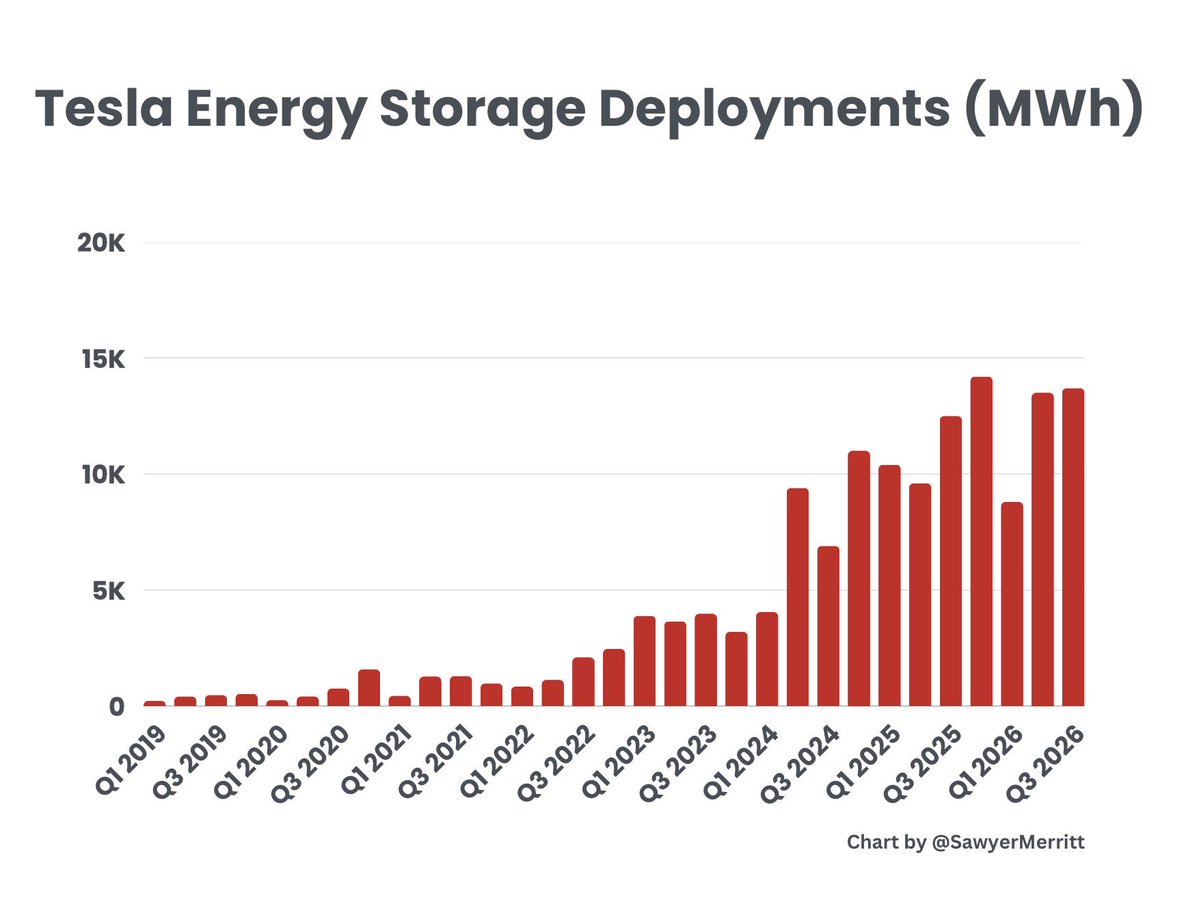
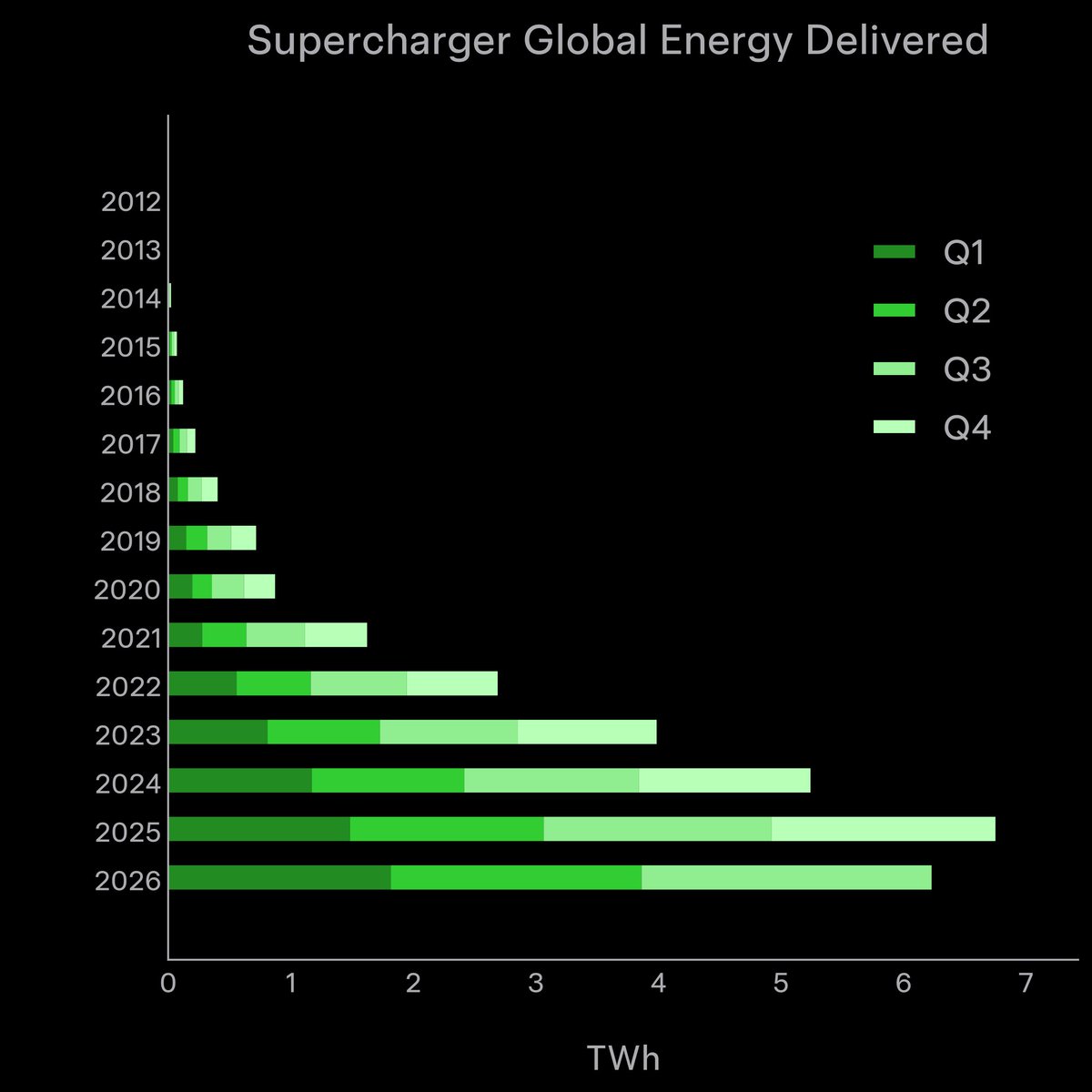
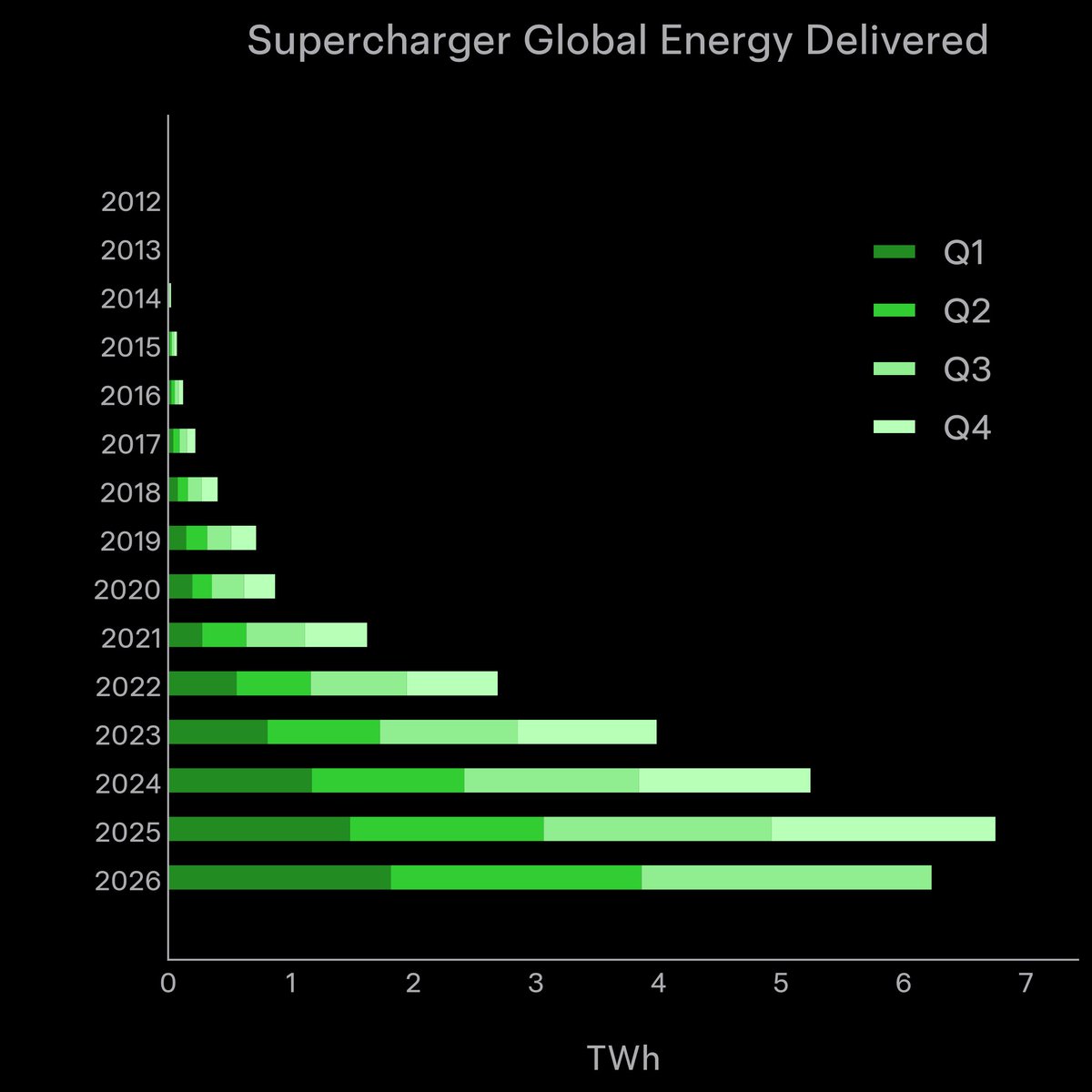
Xai and spacex work together with more money and joint capability to make more gigawatts of data center and monetize them. Tesla joining them would add solar and battery and mass produced megapods full of AI5 chips. 4 million AI5 chips per year would double deployed gigawatts on earth from the planned 10 gigawatts to 20 gigawatts. The megapods can be deployed and powered at Tesla supercharger locations
@JOBhakdi Besides “acquiring” shareholders’ base I cannot see any financial reason for SpaceX to merge with Tesla for now.
Tesla’s Robotics and Robotaxis are long bets, while SpaceX compute and Starlink revenues and profits are real
Xai and spacex work together with more money and joint capability to make more gigawatts of data center and monetize them. Tesla joining them would add solar and battery and mass produced megapods full of AI5 chips. 4 million AI5 chips per year would double deployed gigawatts on earth from the planned 10 gigawatts to 20 gigawatts. The megapods can be deployed and powered at Tesla supercharger locations