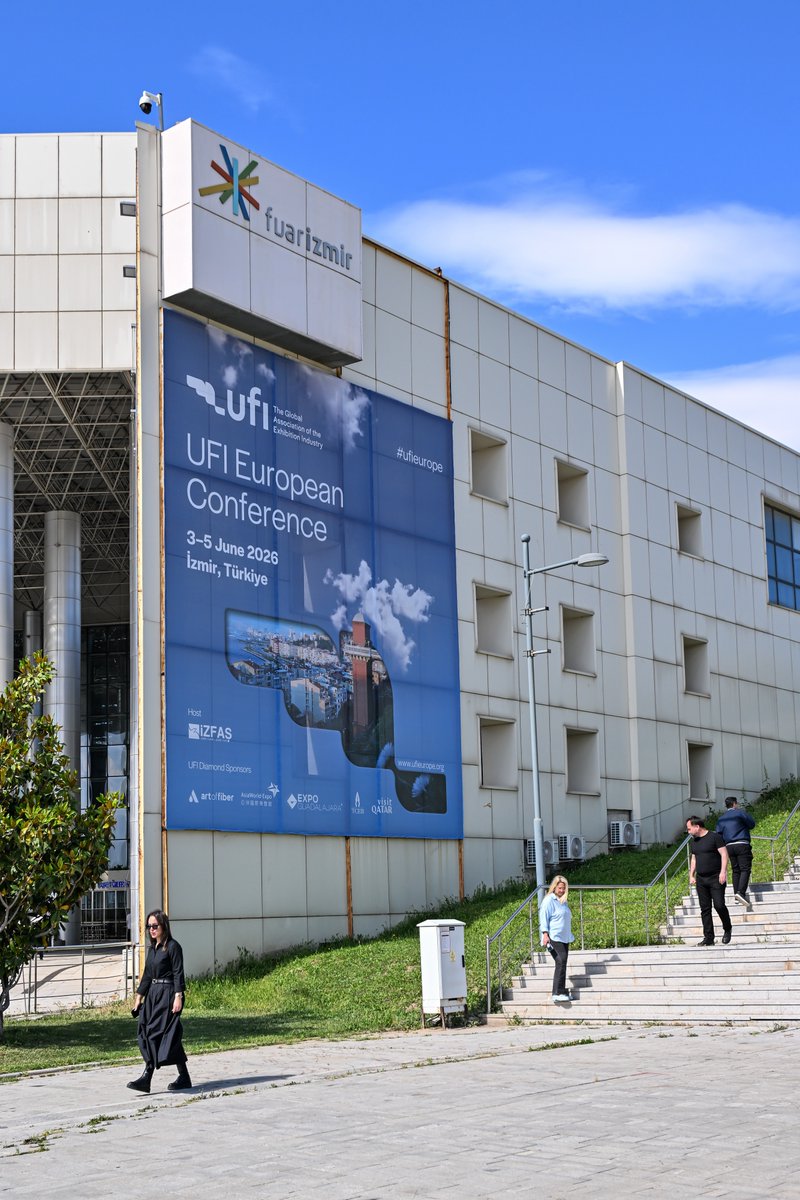
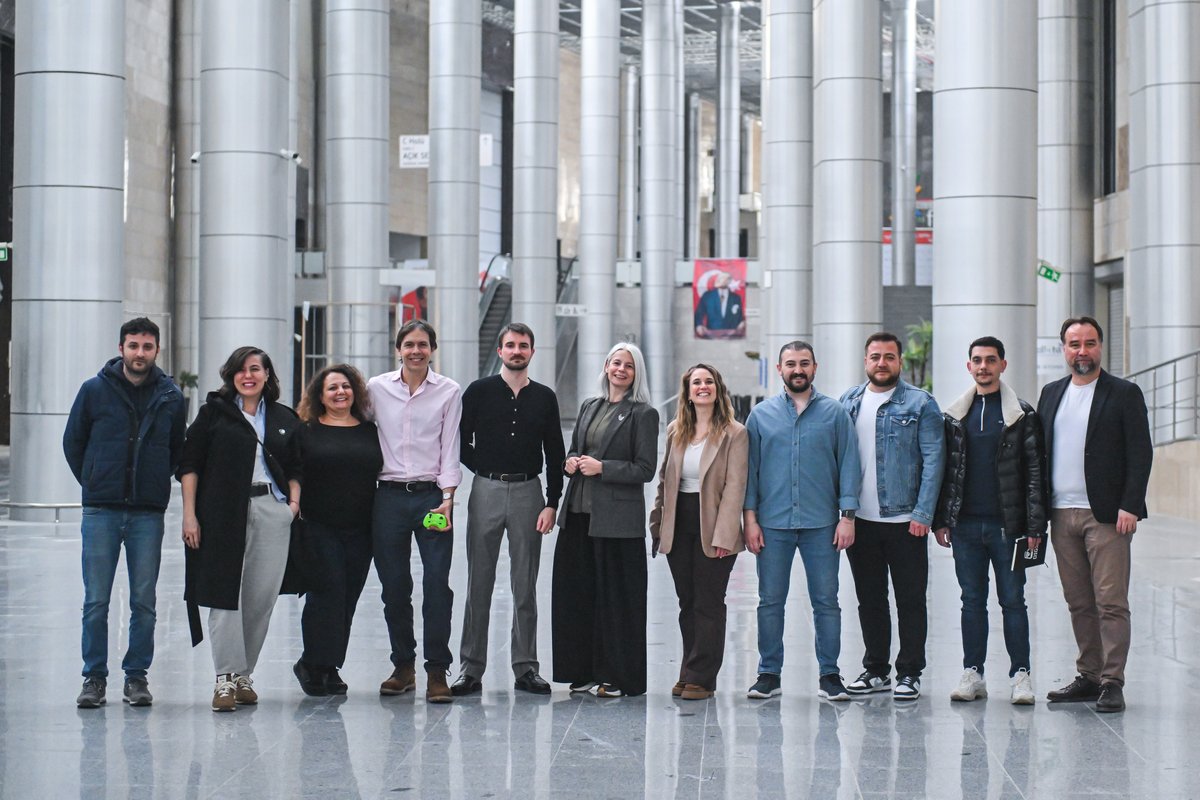
POV: You're about to have the best work trip of the year! 🙌
Safe travels to everyone on their way to İzmir. We can't wait to welcome you!
📍 UFI European Conference I Hosted by @izmirfuarcilik#ufi#ufeurope#IZFAS#fuarizmir#eventprofs
A British scientist took a single photograph in 1952 that revealed the structure of DNA, then watched two men quietly take it from her lab and win a Nobel Prize without her name on the paper.
I read the actual timeline last night and could not stop thinking about it.
Her name was Rosalind Franklin. The photograph is called Photo 51.
The textbook story names James Watson and Francis Crick as the discoverers of the double helix. Two young men at Cambridge, working together, having a flash of brilliance, solving the structure of life on a chalkboard. That is the story every biology student learns. That story leaves out the woman who took the actual photograph that made the discovery possible, and the colleagues who passed it to Watson without ever asking her permission.
Here is the story almost nobody tells you.
Rosalind Franklin was born in London in 1920. By her late 20s she had become one of the world's leading experts in X-ray crystallography, the technique of bombarding crystals with X-rays and reading the diffraction patterns to map the molecules inside. In 1951, she was recruited to King's College London to apply the technique to DNA. The molecule had just been confirmed as the carrier of genetic information. Mapping its structure was the most important problem in biology.
She was the most skilled person in the world at the technique that could solve it.
In May 1952, after months of careful work, Franklin and her PhD student Raymond Gosling captured the 51st X-ray diffraction pattern of the B-form of DNA. The exposure took 100 hours. The image was so clear that the helical structure of the molecule was almost visible to the naked eye. The diamond patterns on either side of the dark central cross indicated two strands. The spacing between the markings encoded the dimensions of the helix. The image is now considered one of the most important photographs in the history of science.
She did not publish it right away. She was initially focused on solving the A-form of DNA, which she considered more analytically tractable, and she filed Photo 51 aside while she completed her calculations.
Then in January 1953, two things happened that she did not know about.
She was preparing to leave King's College for Birkbeck College. Her PhD student Raymond Gosling had been reassigned to work under Maurice Wilkins, her colleague at King's. On January 26, 1953, Gosling showed Photo 51 to Wilkins. Four days later, on January 30, Wilkins showed it to James Watson at Cambridge.
Neither of them told Franklin.
Watson later wrote in his memoir that the moment he saw the photograph, his mouth fell open and his pulse began to race. He understood immediately what it showed. He went back to Cambridge and told Francis Crick. Within weeks, they had built their famous double helix model. In April 1953, they published their paper in Nature with no mention of where the critical data had come from. Franklin's own paper appeared in the same issue, presented as merely supporting their model rather than being the foundation it actually was.
The detail almost no biology textbook prints is what happened next.
Franklin moved to Birkbeck and never knew her image had been shown to Watson. She continued her work on viruses and made foundational contributions to that field as well. She died of ovarian cancer in 1958 at age 37, never having received any meaningful credit for her role in the most important biological discovery of the 20th century.
Four years later, in 1962, the Nobel Prize in Physiology or Medicine was awarded to Watson, Crick, and Wilkins.
The Nobel Foundation does not award the prize posthumously. Franklin had been dead for four years. Her name was not on the citation. It was not in their acceptance speeches. Watson published his memoir in 1968, "The Double Helix," and described Franklin in some of the most condescending and personal terms ever printed about a serious scientist by a serious scientist. He nicknamed her "Rosy," a name she despised. He mocked her appearance, her temperament, and her clothing. He suggested she had been incapable of interpreting her own data and had needed men to do it for her.
He had used her photograph without her permission to build his model.
He spent his Nobel lecture not mentioning her by name.
The most uncomfortable line in this entire story is the one Watson eventually admitted, decades later, in a moment of unguarded honesty. He said the structure could not have been solved when it was without Franklin's data. He just never said it loudly enough or early enough for it to matter.
Decades after her death, Sir Aaron Klug, her last collaborator and a Nobel laureate himself, inherited her laboratory notebooks. He spent years analyzing them. The notebooks showed that her own analysis of Photo 51 had already arrived at most of the conclusions Watson and Crick would publish. She had calculated the dimensions. She had identified two strands. She had described the helical structure. She was weeks, possibly months, from publishing the same result herself.
She was not assisting them. She was racing them. And the race was decided when a colleague handed her photograph to a competitor without her knowledge.
Walk into any biology classroom today. Ask the students who discovered the structure of DNA.
Almost none of them will say her name.
The most important photograph in the history of biology was taken by a woman who never lived to see herself recognized for it. The men who used it without permission spent the rest of their lives in laboratories named after them. She is buried in a small London cemetery. The molecule whose structure she revealed is inside every cell of every person who has ever told her story incorrectly.
She was right. They were faster.
And modern biology is still slowly learning how to put her name back where it always should have been.
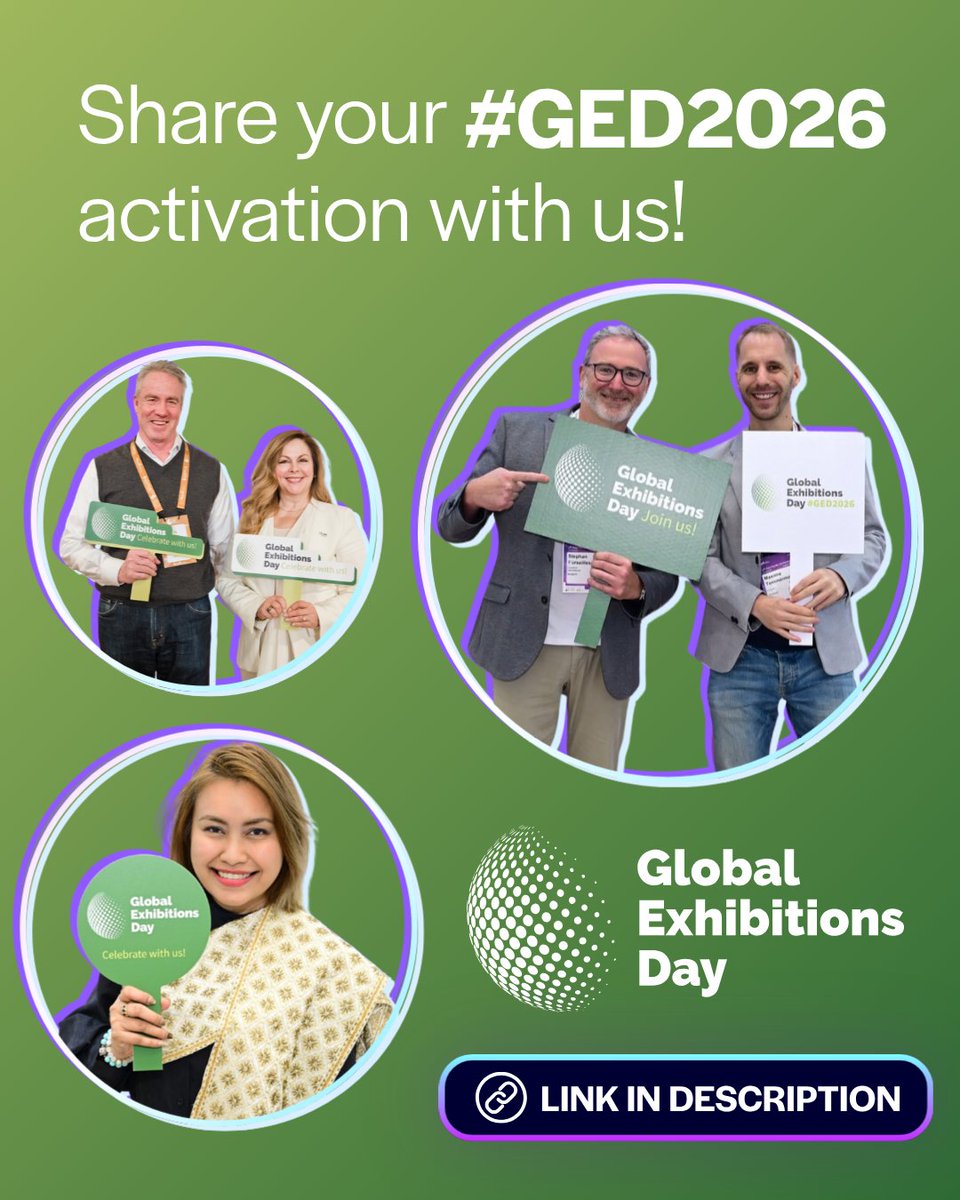
🤩 On 3 June, the exhibition industry comes together to celebrate Global Exhibitions Day, and we want to shine a spotlight on the #GED2026 activations from around the world.
🔗 Share your celebration: https://t.co/NDxGbLc442
#GED2026#ufi#celebrate#exhibitions#eventprofs
What does it take to build one of the world's leading tech events from scratch? 🚀
🎤 Don't miss your chance to hear Mike Champion, CEO of Tahaluf and Co-Founder of LEAP, at the UFI European Conference this June.
🔗 https://t.co/I3CneHqJiZ
#ufi#ufieurope#eventprofs#Tahaluf
ONE WEEK TO GO until we welcome +350 exhibition professionals to the UFI European Conference in İzmir.
👀 See you there?
🔗 LAST CHANCE to register: https://t.co/Lhd4CaJyEU
📅 3–5 June 2026
📍 Hosted by @izmirfuarcilik#ufi#ufeurope#IZFAS#fuarizmir#eventprofs
⏳ THE COUNTDOWN STARTS NOW! One month to go until the UFI European Conference.
The agenda is packed, the stages are set, and +300 of your peers are already registered. See you there?
📆 3-5 June 2026
📍 Hosted by IZFAS - Izmir
#ufi#ufieurope#exhibitions#IZFAS#eventprofs
🌟 Have a game-changing project? A groundbreaking initiative? Now's your time to shine!
🚨 You have until 1 May 2026 to enter the UFI Awards.
🎟️ Free to enter. Open to members and non-members.
🔗 https://t.co/yF4BVRuhup
#ufi#ufiawards#exhibitionindustry#eventprofs
Are we truly ready to work alongside machines? 🤖🤝
🎯 UFI's Digital Innovation Working Group tackled this question head-on, and Marcello Ronchietto has captured their key findings in our latest blog article.
🔗 https://t.co/C3EGqZNGvS
#ufi#ai#EventTech#eventprofs
🏛️ Over 2000 years of history and just one of the reasons you don't want to miss the UFI European Conference in İzmir!
🎟️ 250 delegates have already registered: https://t.co/Usj7Hm14ac
📆 3-5 June
📍 Hosted by @izmirfuarcilik#ufi#ufieurope#exhibitions#IZFAS#eventprofs
🚨 LAST CHANCE to register for UFI Exhibition Essentials!
🎯 Gain the skills, insights, and network to jumpstart your career in the exhibition industry.
📆 Next virtual edition starts on April 7th.
🔗 https://t.co/rnq8pkLXSE
#ufi#ufilearning#exhibitions#eventprofs
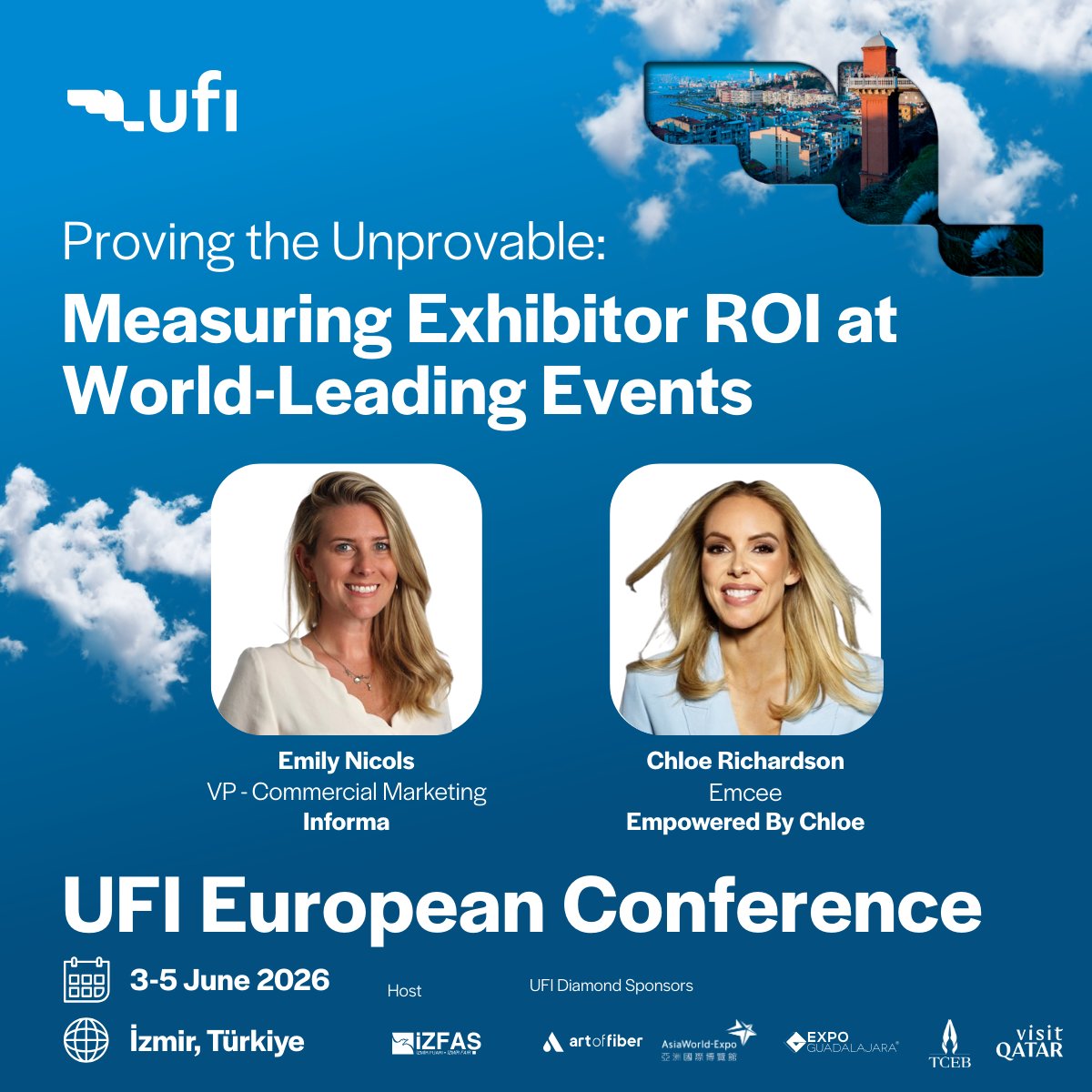
🎯 Hear how Informa is rethinking exhibitor measurement at scale — what worked, what didn’t, and what’s next.
🎟️ Over 200 delegates have already registered - SECURE YOUR SPOT: https://t.co/YDiIdYCMNt
📆 3-5 June
📍 Hosted by: @izmirfuarcilik#ufi#ufieurope#IZFAS#eventprofs
🚨 LAST CHANCE to apply for the UFI Next Generation Leadership programme!
📅 Deadline to apply is Wednesday, 25 March 2026.
🔗 APPLY NOW: https://t.co/y5onUkn6Av
#ufi#ufingl#eventprofs#exhibitions#events#talent
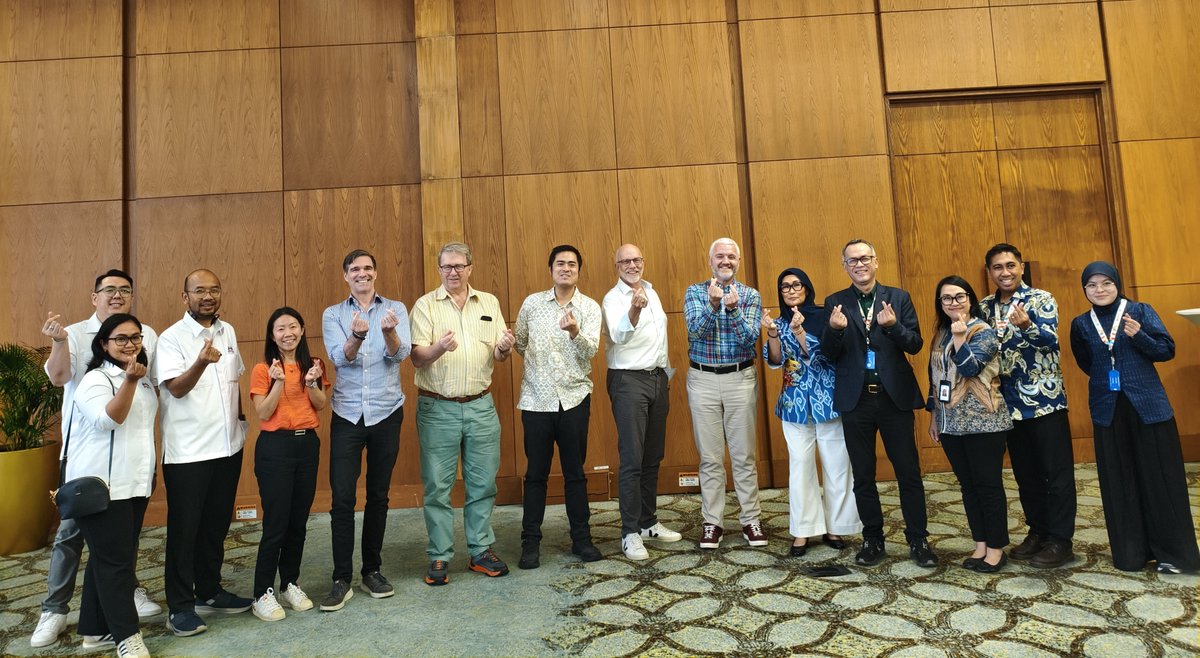
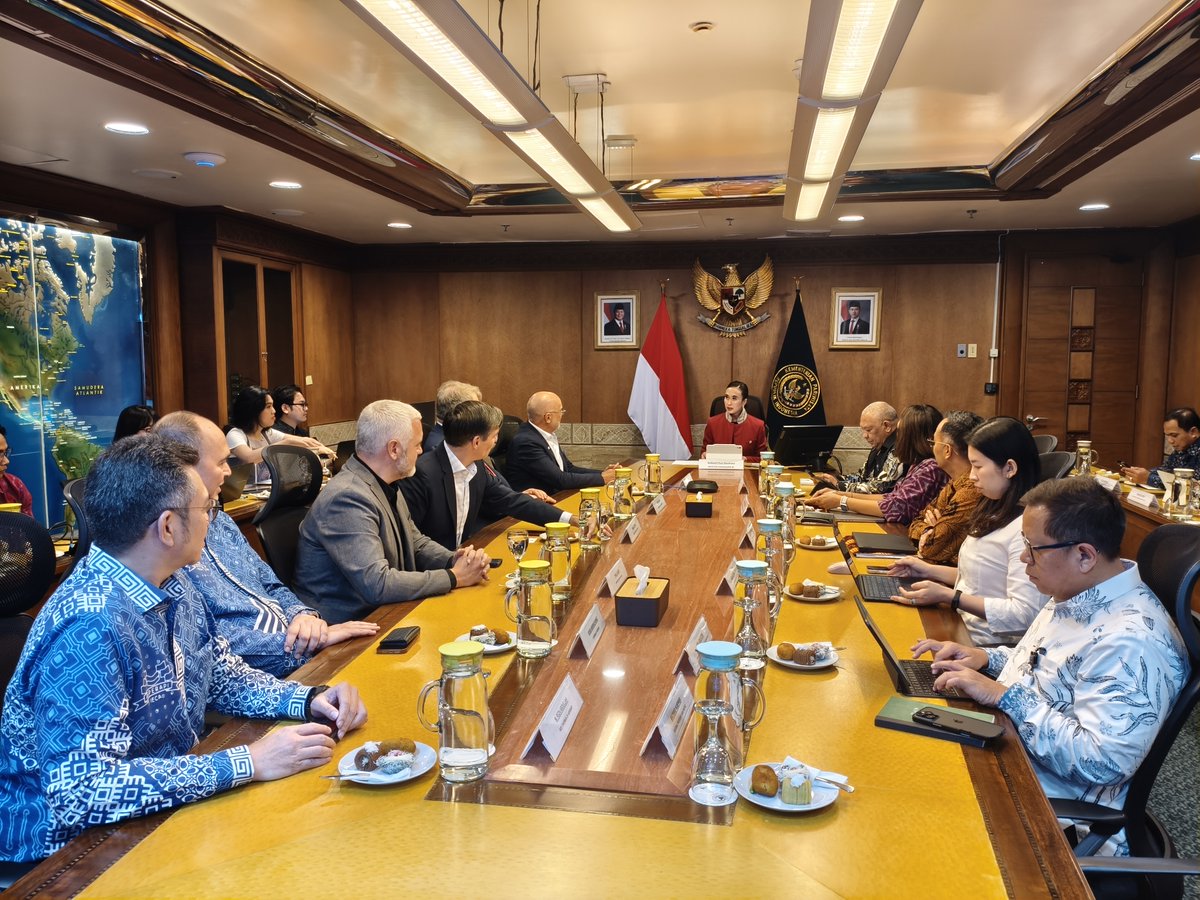
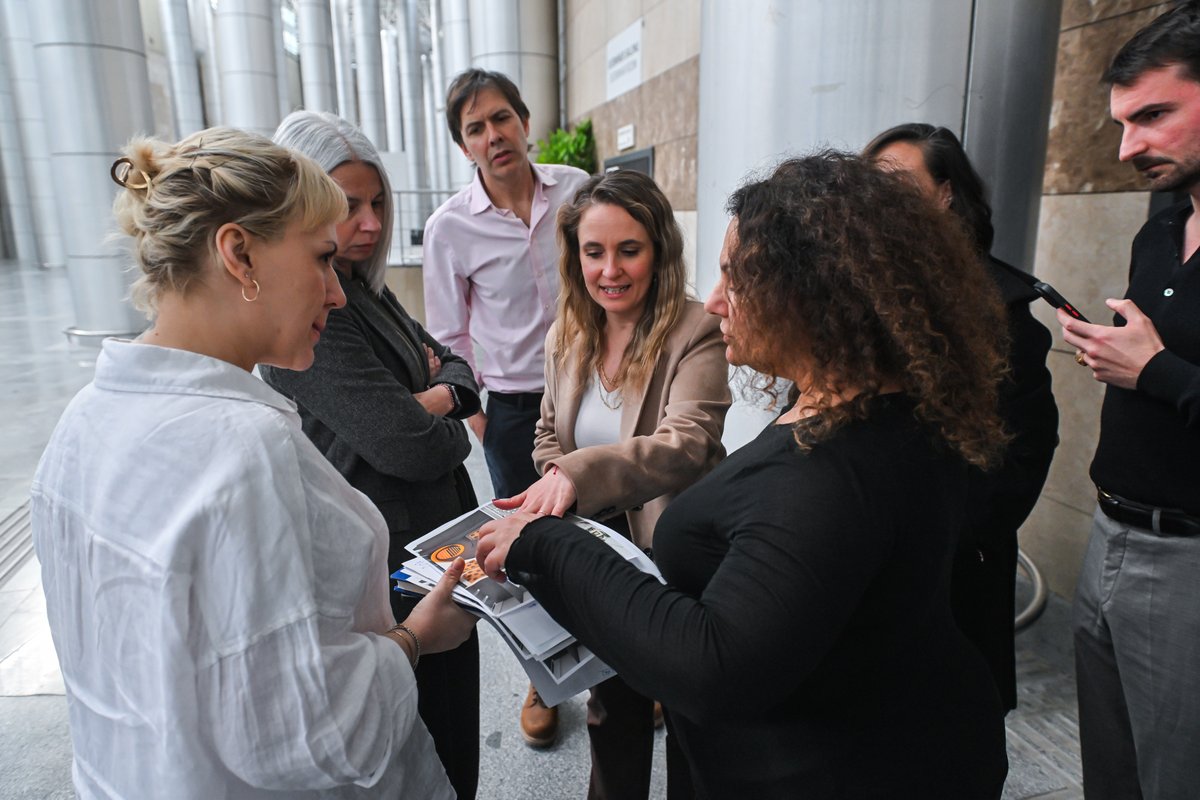
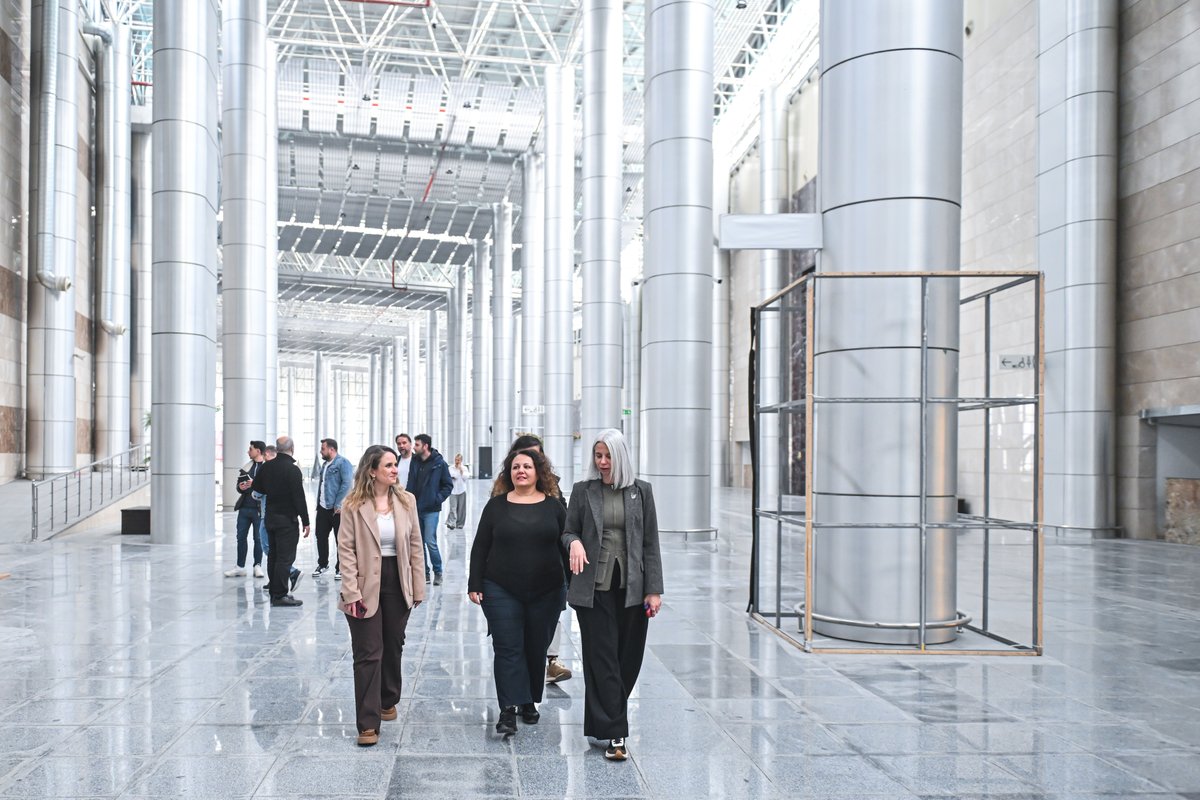
📍The UFI team is on the ground in Izmir, gearing up for the UFI European Conference this June! 🇹🇷
🤝 A big thank you to our host, @izmirfuarcilik, for the warm welcome!
🔗 SECURE YOUR SPOT NOW: https://t.co/F7kBziFSie
#ufi#IZFAS#ufieurope#eventprofs
🏆 Have a project you're proud of? The UFI Awards are OPEN for entries!
⏳ Submit by May 1st and get global recognition in categories from Digital Innovation, Marketing, Sustainable Development and more!
🔗 https://t.co/BXbzAirT9l
#ufi#ufiawards#ufiawards2026#eventprofs
🆕 We're thrilled to share our NEW Strategy on Learning! 🙌
🤝 Focused on promoting knowledge sharing, collaboration, and continuous learning across our global community.
🔗 Learn more: https://t.co/FVZXy6XRol
#ufi#ufilearning#knowledge#collaboration#eventprofs
📽️ That's a wrap for the 2026 UFI Asia-Pacific Conference! Re-live the highlights now.
👏 A special thank you to our host, Thailand Convention & Exhibition Bureau (TCEB), for helping make the event such a success!
#ufi#ufiasia#thailand#TCEB#eventprofs