Out today in @ScienceAdvances. We trace the evolutionary history of a trait under sexual selection in a genus of dancing manakins. Co-led with @hawchuan. https://t.co/iJp2V9rkjz
I’m excited to share that our article with Dr. Cassie Stoddard @B_G_Hogan and @Geoffrey_E_Hill on ornamentation and speciation in the stunning Painted Buntings🌈🐦is now published! Check it out: https://t.co/q7d2IK8WNP
Photo credit: G.E. Hill
@NCN_PL#Etiuda#ornithology#color
I helped with pigment analyses of bills, with @NickJustyn and @Geoffrey_E_Hill, adding to a mountain of cool genetics by @SimonGriffith4, @pandolfatto, Callum McDiarmid, Frank Chan, Marek Kučka, and Nathan Hart. Here's some bts photos of yellow and red bill carotenoid extracts!
So excited to have our paper “Spread of yellow-bill-color alleles favored by selection in the long-tailed finch hybrid system” out now in @CurrentBiology ! Check it out: https://t.co/jcYghCyH9a
📢Intrigued by how color patterns drive speciation in birds? 🐦Join our team at @SMNS Dive into DFG-funded PhD research on hybrid zone dynamics and the role of color patterns in species formation using black-headed & red-headed buntings https://t.co/QX7Ru2ldGm
Deadline: 15 Oct
New preprint! We examine the carotenoid composition, genetic architecture, and evolutionary history of bill color evolution in an Australian songbird called the long-tailed finch with two hybridizing subspecies that differ prominently in this trait. https://t.co/S0S73j7R2t
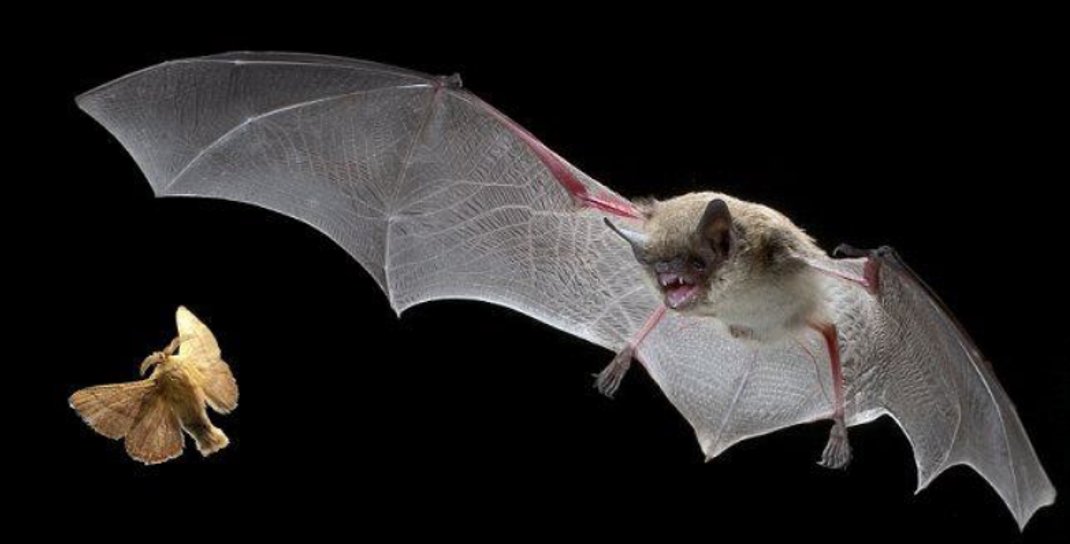
Two fully-funded interdisciplinary PhD positions available in our lab! One on mechanisms of color production in diverse animals (🐦⬛🕷️🐟), one on acoustic camouflage in moths. Please RT or apply here:
https://t.co/H6IHGxc8AV
Application for a three-year post-doc position studying how moths camouflage themselves against bat sonar is now open! Deadline 15 December.
In collaboration @WHalfwerk at @VUamsterdam and Liliana D'Alba @museumnaturalis. Inquiries welcome.
Please RT
https://t.co/lewrFqYmLp
We are hiring! Postdoc based at Exeter with @ljnbrent, co-mentored by me & @SMack_Lab, to work on the impacts of hurricanes and social buffering on the aging process in the Cayo Santiago macaques. Apply!
I'm currently recruiting 1 or 2 graduate students to join a growing research group at the University of Florida. Funded positions at potentially a Masters or PhD level — within the realm of global change ecology. More about what we do: https://t.co/h1qRoNnXH3
Just published in Biological Reviews! @Geoffrey_E_Hill, @ryanjweaver_, and I argue that carotenoid ornaments aren’t condition dependent because of sexual selection. 🔄 They are sexual selected because they are inherently condition-dependent.
https://t.co/BwjHuD5z8o
I’m thrilled to announce that I will soon be starting a postdoc with @wl_allen to work on a project centered around primate coloration! I can’t wait to get started once I move my new family across the pond!
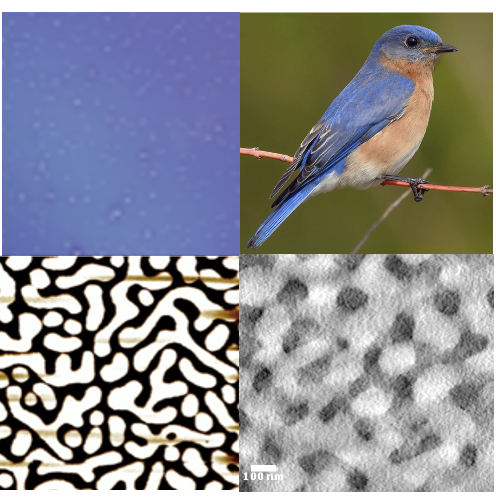
Many iridescent feathers contain ~100nm thick layers of keratin, but how do they affect color? In our new paper, led by Deok-Jin Jeon, we use "nano-surgery" to trim them by 20-50nm and show that feather color shifts from 🔵➡️🟣, as predicted by models!
https://t.co/clglFfddAg
New paper out in @avianres! In this collab, led by @NickJustyn, and with @Geoffrey_E_Hill from Auburn, Kayla Alexander, Scott Rush, and @goajiroblanco from Miss State, we looked at the mechanisms of color in the head skin of Black and Turkey Vultures. https://t.co/h0xquCvvLA
Originally proposed by Völker in 1957, ⬆️ metabolic rate 🟰 ⬆️ carotenoid coloration. Völker formed this idea by studying common crossbills. In our study in @J_Exp_Biol, @Geoffrey_E_Hill and I found evidence of this exact relationship in copepods. https://t.co/YdjSCCDDgh
New paper by @PowersPods linking production of red carotenoid pigments to mitochondrial function. #mitonuclear#carotenoids
Chemical manipulation of mitochondrial function affects metabolism of red carotenoids in a marine copepod (Tigriopus californicus) https://t.co/EbpLg9PfQR