"It is important that public discussion and policy relating to fertility levels is founded on an understanding of the interrelationships between fertility and population growth ... that considers potential effects of non-zero levels of migration"
My paper
https://t.co/6fUzGOsORD
@ONS It UK’s low birth rate and such low net migration continue near term population growth will be followed by longer term population decrease.
Time for a national conversation on whether growth is preferable to decline?
Long-term international net migration was provisionally estimated at 77,000 in year ending (YE) June 2026.
It has more than halved from YE June 2025 (updated to 204,000), the lowest recorded net migration estimated since 1997 (excl. the pandemic).
➡️ https://t.co/no8euEQAy1
In "high fertility" (TFR GT 3.0) areas of New South Wales women with no religion have significantly lower average family sizes than Anglican and Catholic women.
Average family sizes of Anglicans and Catholics are similar in most of these areas.
#religion#demography
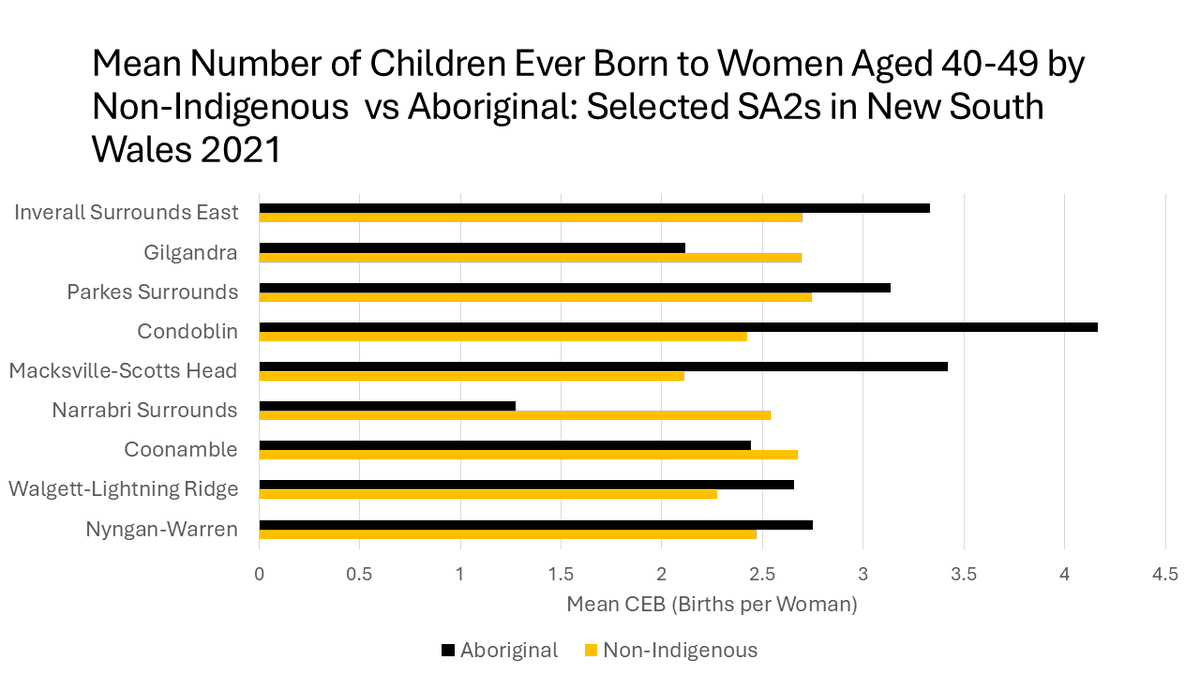
In the areas of New South Wales with the highest fertility rates (TFR GT 3.0 in 2025) average completed family size for Aboriginal women is generally (but not always) greater than that for Non-Indigenous women.
#demography
@stats_feed Since kids generally don’t produce much you could turn this round as Thailand has a GDP per capita of $8,057 despite having a TFR of only 0.86.
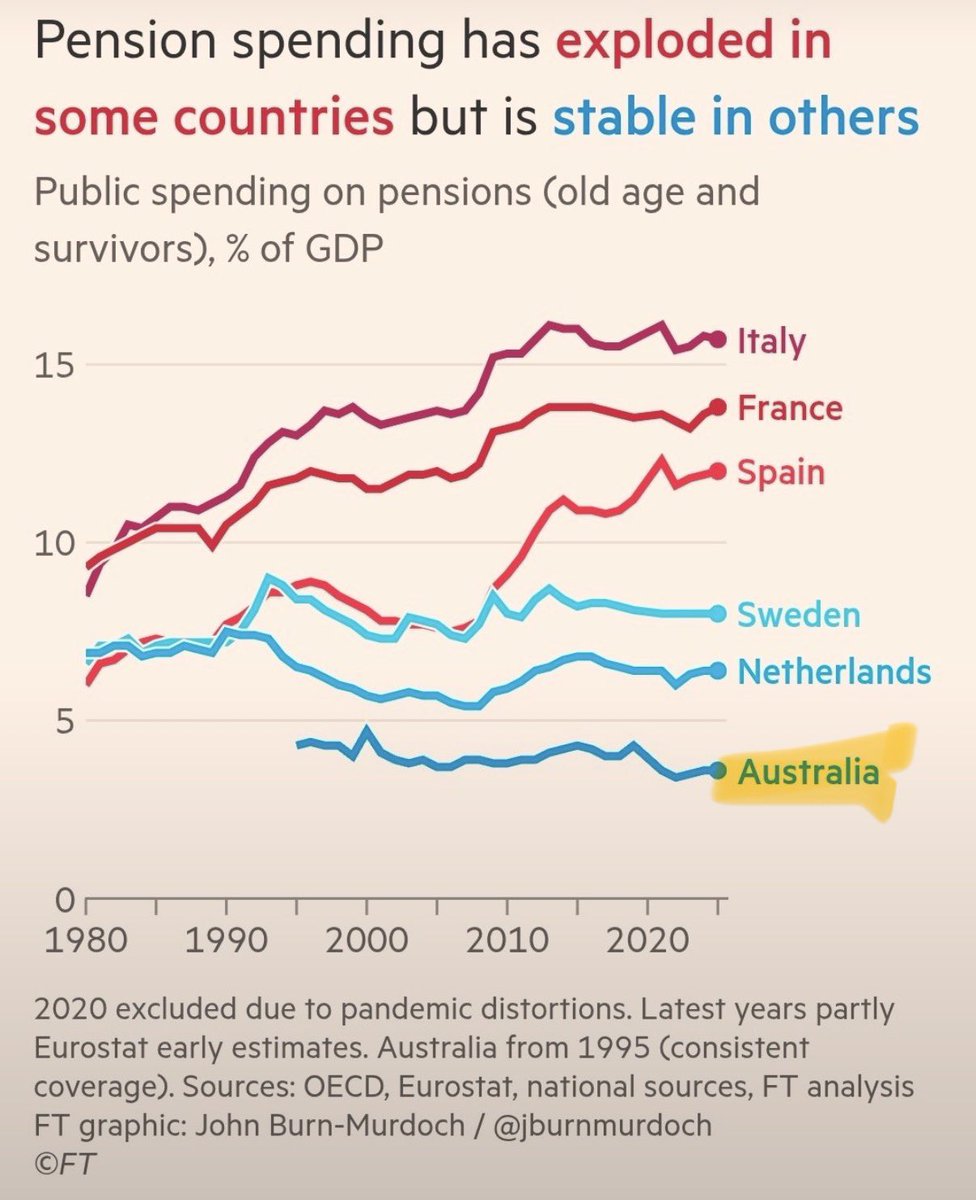
@StefanFSchubert Australia’s the lower shares of GDP on pensions are due to:
1. Compulsory savings contributions when working coupled with means tested eligibility for pensions
And
2. Population is younger than other high income nations due to high immigration and history of higher birth rates.
Underrated how low Australia’s pension spending remains. Superannuation has its problems, but at least our ageing population hasn’t got us trapped in a spending doom spiral.
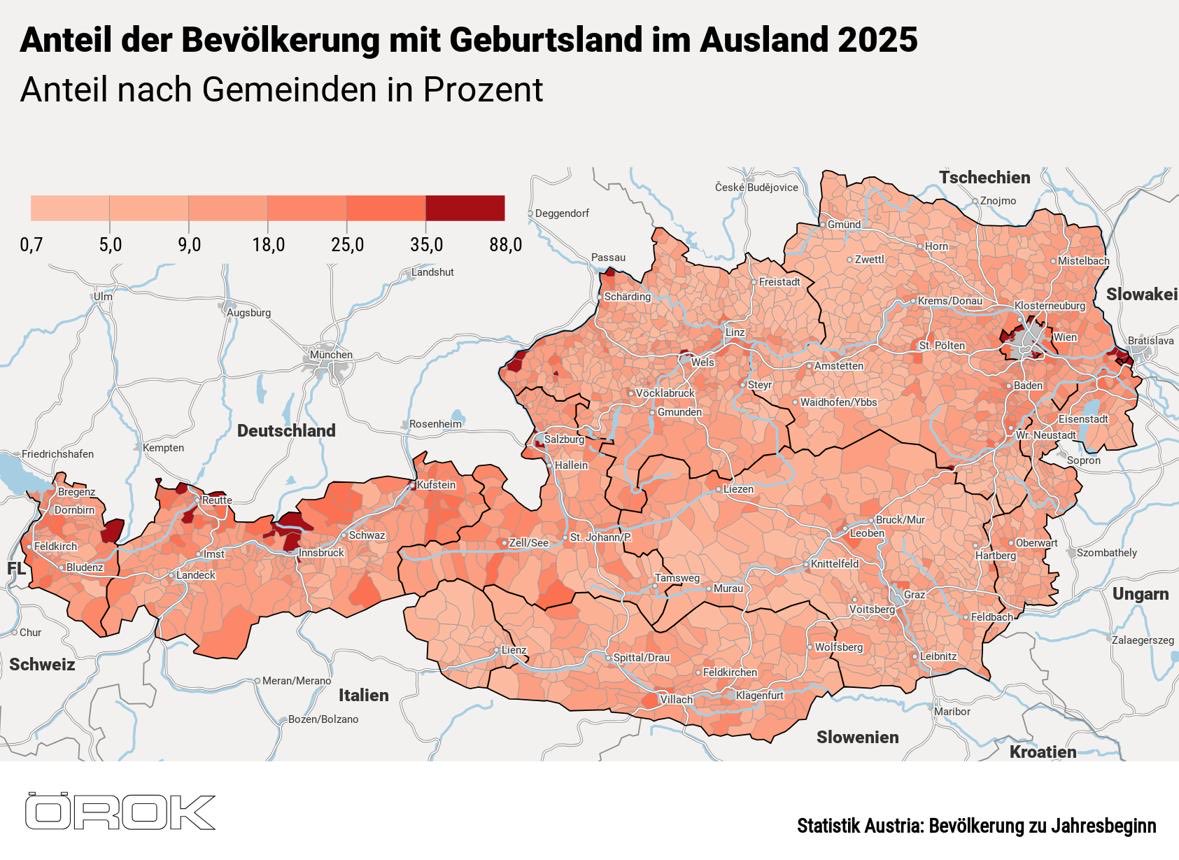
22.9% of Austria’s Population Was Born Abroad: The Numbers Behind an International Society
Living in Austria, I find the latest demographic statistics from Statistics Austria and the Austrian Integration Fund (ÖIF) particularly interesting.
As of January 1, 2026, Austria had 9,215,956 residents, with approximately 2.113 million (22.9%) born abroad.
Over the past decade, the share of foreign-born residents increased by 4.6 percentage points.
The picture across Austria’s nine federal states:
• Vienna — 841,900 (41.3%)
• Vorarlberg — 97,800 (23.7%)
• Salzburg — 127,300 (22.2%)
• Tyrol — 167,300 (21.5%)
• Upper Austria — 283,200 (18.4%)
• Styria — 204,000 (16.0%)
• Carinthia — 89,100 (15.6%)
• Lower Austria — 260,500 (15.1%)
• Burgenland — 41,900 (13.9%)
Vienna alone is home to approximately 39.8% of Austria’s foreign-born population.
The largest communities by country of birth:
• Germany — 275,684
• Bosnia and Herzegovina — 181,243
• Türkiye — 166,608
• Romania — 148,731
• Serbia — 141,785
• Syria — 101,786
• Hungary — 100,588
• Ukraine — 95,327
International migration in 2025:
• Arrivals — 161,932
• Departures — 131,190
• Net migration — +30,742
Among the largest groups of new arrivals were citizens of Germany (18,619), Ukraine (15,624) and Hungary (11,807).
Labour market in 2025:
• Overall employment rate — 74.3%
• Austrian citizens — 76.2%
• Foreign nationals — 68.3%
Employment among foreign nationals was particularly high in Tyrol (76.5%) and Salzburg (75.1%).
Austria’s population increased by 18,743 people in 2025, with international migration making an important contribution to demographic development.
These figures offer a fascinating picture of an increasingly international Austria, where people from different countries contribute to the country’s economic, cultural and social life.
#Austria #Demographics #Migration
As demographic change accelerates, this event provides a leading forum to share research, analyse emerging trends, and discuss strategies for strengthening population wellbeing, equity, and sustainability.
Find out more: https://t.co/d77tcg9N7g
Migration nerds
12/11 the OECD Int'l Migration Outlook is released. 400+ pages of stats and analysis
Global launch with @COMPAS_oxford (link below) with @M_Sumption
🇮🇹 Presento dal vivo a Roma e zoom @CeSPI_Roma, with Istat, Banca d'Italia, MinLavoro. https://t.co/LMZy9VrKSk
Australia's total fertility rate was 1.5 babies per woman in 2025 - the second lowest on record (but up a little from 2024).
New Zealand's rate has actually been higher than 🇦🇺 for most of the past 100 years, partly reflecting higher fertility rates among Māori & Pacific women.
Australia’s Total #Fertility rate rose slightly to 1.497 in 2025.
The increase was due to increases in Age-Specific Fertility Rates between aged 25 and 40. This represents a slight younging of mother’s age.
Most of the increase in Australia’s number of births was in the state of New South Wales. Some of the change for NSW may be an artefact of improved processing speed for birth registrations.
Total #Fertility Rate by mother’s country of birth #Australia 2025
Australia 1.61
All Overseas 1.25
UK 1.34
New Zealand 1.61
India 1.41
China 0.78
Philippines 1.05
Note: TFRs of some overseas-born groups reduced by large no of temporary visa holders in population denominator.