I wrote another blog post about writing style devices. We're discussing climax from a research paper on resilience (Masten, 2014).
If you have been following along with parallelism, you should enjoy this short article:
https://t.co/kQMaU8jfK0
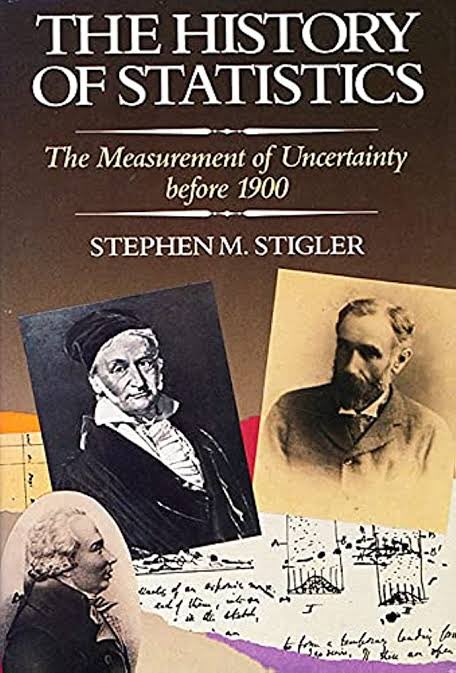
From Quills to Quantum: The Evolution of Modern Statistics 🌟
Embarking on a journey through time, we'll uncover how statistics, once the tool of gamblers and astronomers, became the lifeblood of today's data-driven world.
🔴 Early Beginnings:
From ancient civilizations like Egypt (for censuses) to the Greeks (probability), the seeds of statistics were sown long ago.
📌 The word "statistics" originates from the Latin word 'status', meaning a political state. It was initially about statecraft!
🔴 Renaissance & The Age of Exploration:
As trade flourished, so did the need for better record-keeping. Mercantilists began using data for better economic policies.
📌 Tools like the mean, median, and mode became crucial for understanding trade patterns.
🔴 The 18th & 19th Centuries:
Enter the giants - Gauss, Laplace, and Galton. From the normal distribution to regression, foundational stones of statistics were laid.
📌 Galton's study of heredity led to the concept of regression, now a statistical staple!
🔴 Sir Ronald A. Fisher:
In the early 20th century, Fisher brought forth the framework for hypothesis testing and experimental design, spurred by practical needs in agriculture.
📌 Fisher's tea tasting experiment is an iconic anecdote in statistical lore.
🔴 Post World War Era:
The advent of computers transformed statistical computations. Monte Carlo simulations, bootstrapping, and other techniques became feasible.
📌 The era also saw the rise of Bayesian statistics, blending data with prior beliefs.
🔴 Late 20th & 21st Centuries:
The explosion of data, thanks to the internet & digitization, led to 'Big Data' and the era of Data Science. Machine Learning & AI are now pushing the boundaries of traditional statistics.
📌 Modern tools like R and Python's libraries have democratized statistical analysis, making it accessible to many!
🔴 Conclusion:
From rudimentary tallies on ancient tablets to complex neural networks on powerful machines, statistics has evolved dramatically. It's more than just numbers; it's the art and science of understanding our world through data. 📊🌟
#Statistics #DataEvolution #DataScience
Reporting Regression Results Beautifully Using R 📈✨
💎 Intro:
Making Beautiful Reports in RSo, you've run a regression in R and now you're staring at a wall of numbers? Let's transform that data mountain into a readable, pretty format!
#RStats#DataScience
@Gregory_Boldt Or perhaps, are you referring to analogical thinking and the like? Dr Anna Abraham discusses these in her book “The Neuroscience of Creativity”, but that may not be what you are looking for:)
@Gregory_Boldt Hello,
I find your question intriguing :) What would you mean by “spontaneous use of creative sub processes”? Higher odds to scores high on measurements of flexibility, fluency, elaboration etc…?
:)
I did a thing this term where I told my students they were allowed to use ChatGPT. The catch was, they had to tell me about it in a reflection when they handed in their paper. This is a thread about how it all went.
@jacasiegel You can do it! (It feels weird to encourage someone one has never met. But I guess that’s the reality of social media. Anyway. From a human being to another, hang in there and much power to you!)
Isn't it time that the minimum standard for publication became "Two people, working independently, ran all the regression models, and resolved discrepancies by pointing out the bugs in each other's code"? /3 /end
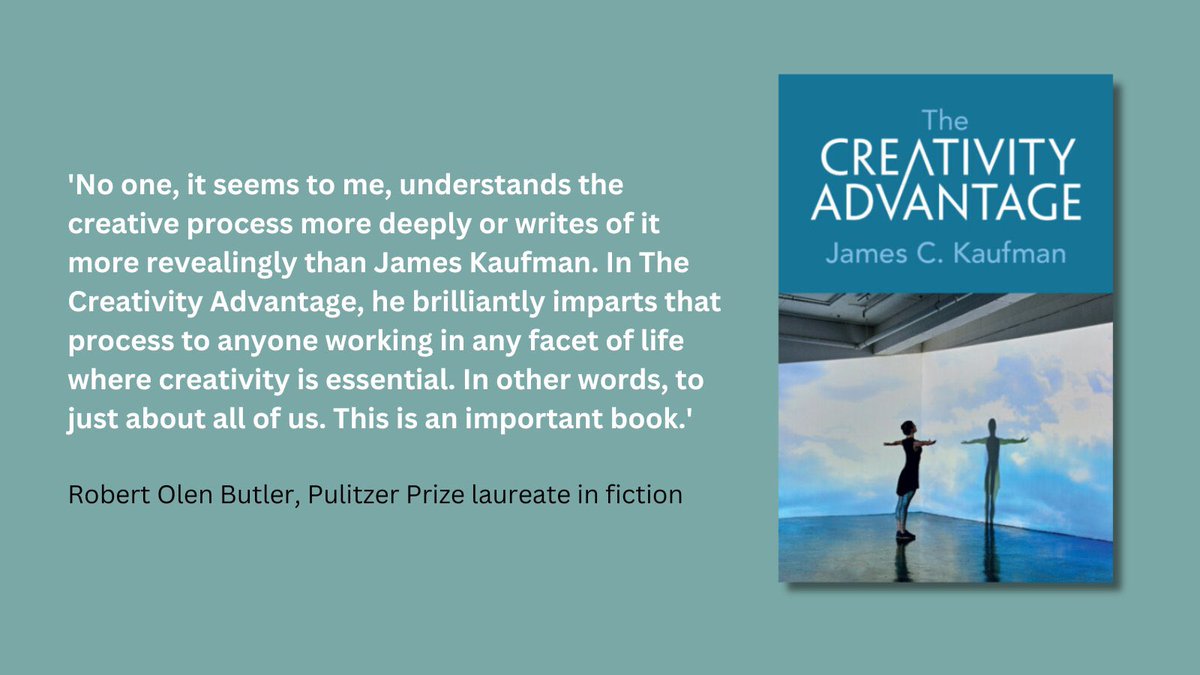
So excited for The Creativity Advantage to come out! I am notably bad at self-promotion but this my favorite book I’ve done — like Creativity 101, it is in “my voice” but it also emphasizes the aspects and possibilities of creativity I care about the most!
Just a little explanatory thread on my latest preprint:
https://t.co/f59uI2jrIg
The focus is on paper mills: the commercial operations that sell authorship/articles/citations at scale, polluting the lilterature with fake or low-quality articles. /1
How to write a Lot (Paul Silvia) is about to get published in French! I have just received approval for this translation project from French/Belgian publisher De Boeck!!
What a wonderful way to end a PhD training! @drkazmac@DrT_LEARN @janey_guiller