Scientists pay tribute to Marta Shahbazi Alonso and Tamara González Costa who died on their way to a developmental-biology meeting
https://t.co/cqpeHRiSMQ
Following the tragic news of Marta Shahbazi's passing in the train collision south of Madrid, I wanted to share a few personal thoughts about a wonderful colleague.
Marta was part of our PDN community at the University of Cambridge for many years, working in Magdalena Zernicka-Goetz's lab before establishing her own research group at the LMB. She was an exceptionally dedicated, hard-working and collaborative scientist – full of enthusiasm for embryology. Her work was highly regarded internationally and her scientific contributions were groundbreaking: from pioneering human embryo post-implantation culture to more recent work on extraembryonic mesoderm and in vitro models of the human chorion.
What I particularly admired about Marta was her openness and her direct, no-nonsense approach. She would always be happy to talk science with you and she would always say what she thought, a character trait that is as rare as it is valuable.
It was a real pleasure and privilege to work with Marta and she will be deeply missed. My thoughts are with her family, friends and colleagues at the LMB during this incredibly difficult time.
https://t.co/txIDBkuL3J
Coming home for Christmas?
Meet us for the Young Bioscience Researchers: Experiences from Abroad Workshop
📅 21st December at the CNB
📅 Abstracts Deadline: 15th November
Coorganised with @CBM_CSIC_UAM
More info: https://t.co/bnxMAk202Y
@raicex_es
Our new paper is finally out!!!
🧠 DNMT1 links epigenetics to PV interneuron–glia crosstalk! Its loss in PV cells alters glial gene programs and disrupts cortical network synchrony and elicits depression like phenotypes! Thanks to all!
https://t.co/yuRJS7ehkZ
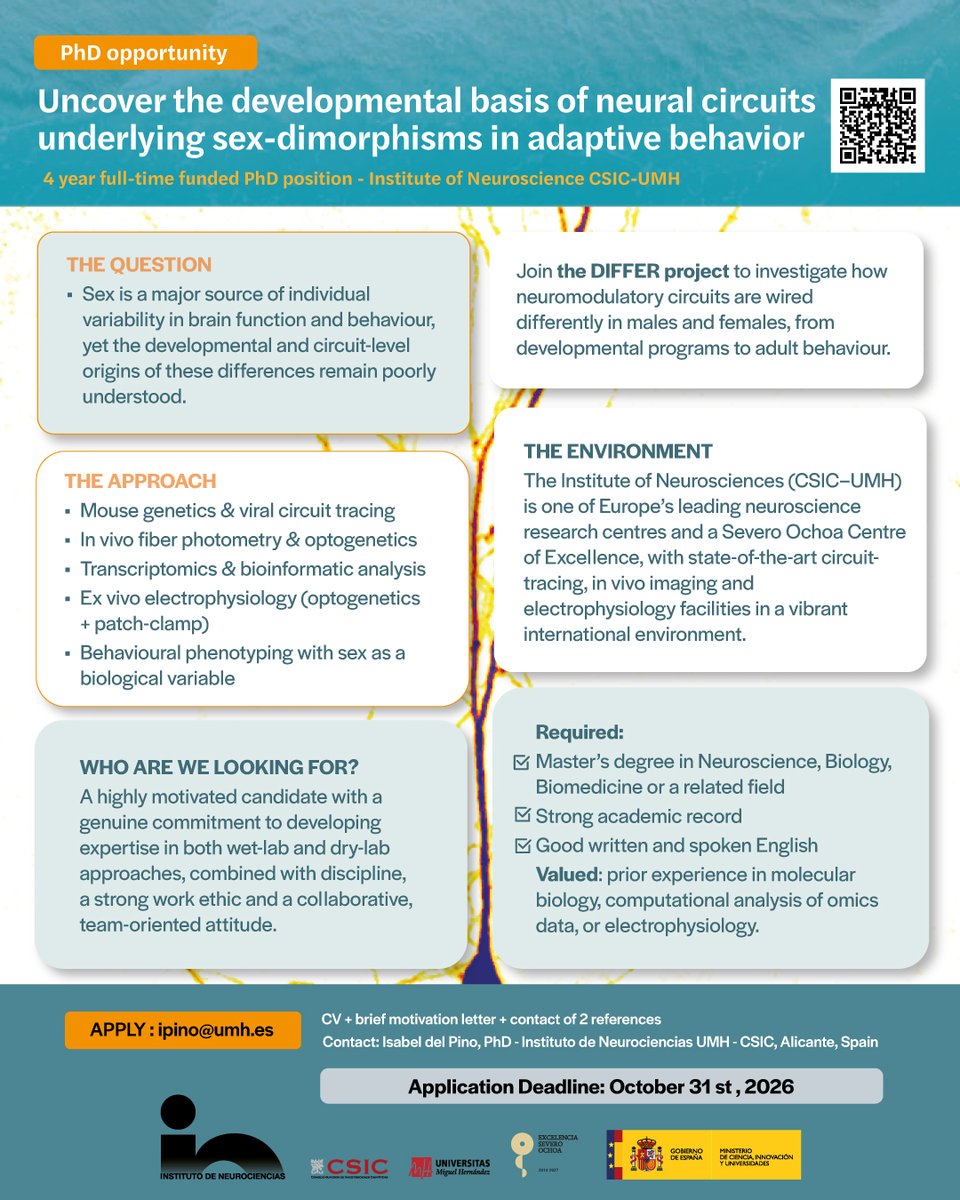
🧠 4-year, full-time funded PhD position at the @NeuroAlc to investigate how neural circuits underlying sex differences in adaptive behaviour develop.
Join the @DelPino_lab and the DIFFER project!
📅 Deadline: 31 October 2026👇
https://t.co/PUiceYmnQX
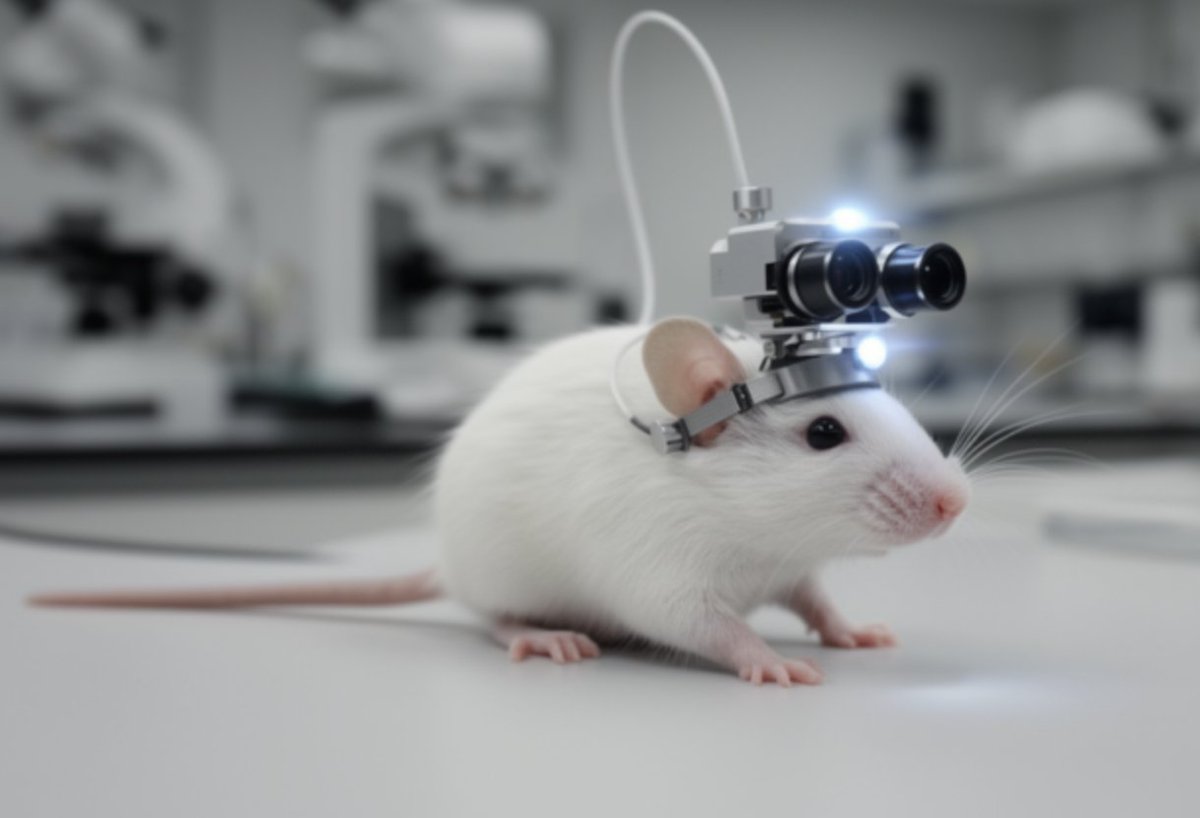
Whiskers instead of cameras, lidar, GPS 🐭
@tudelft researchers built a 44g drone with touch sensors like a mouse's to map places where visual and radio signals aren't effective. The software requires only 34kB and keeps computational processing needs low.
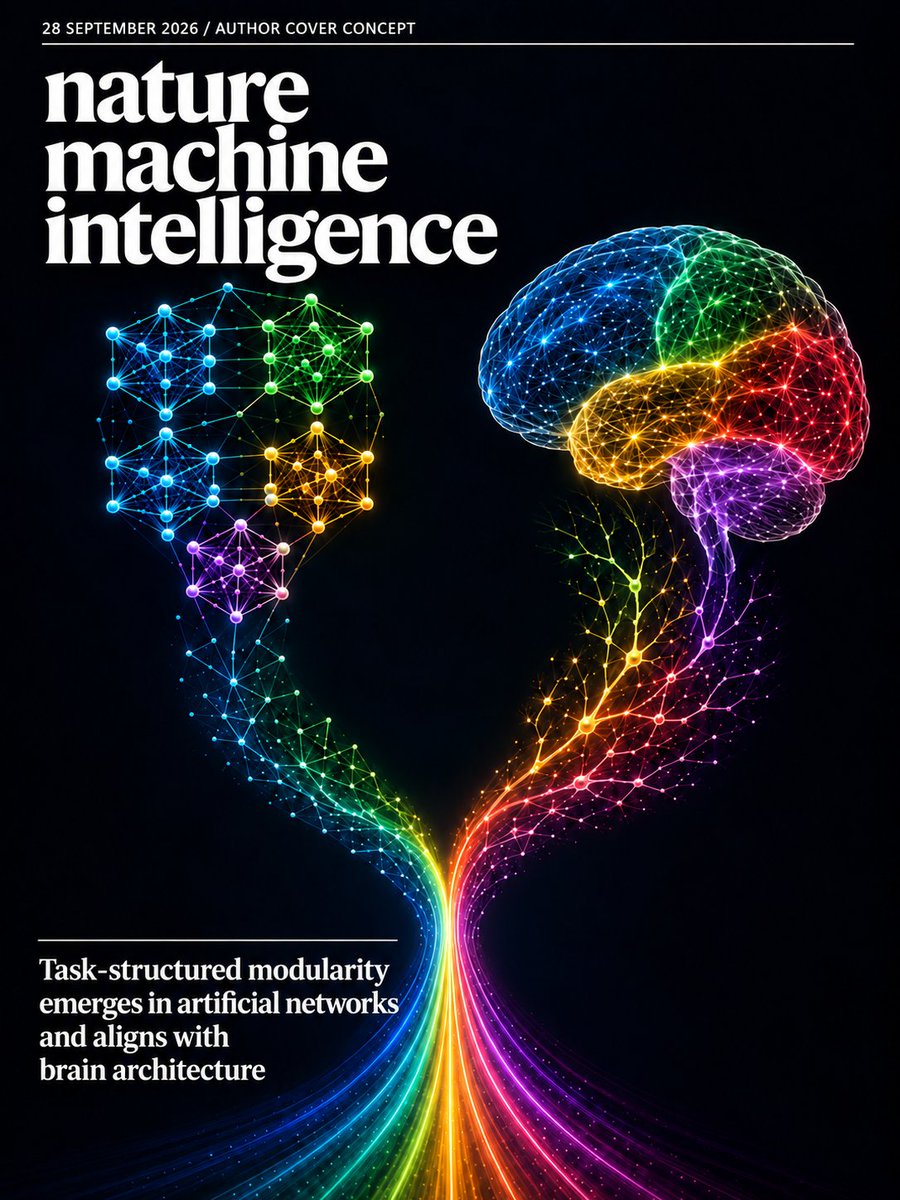
Why do neural networks become modular? Our paper is now out in Nature Machine Intelligence! @NaturePortfolio We show that multi-task learning promotes modularity under limited capacity and task demands help explain features of brain architecture in addition to the spatial constraints.
Great thanks to all the co-authors. @WHYWYH007@yifannnwu@DaniSBassett@marcelomattar
https://t.co/uqN91o2P5Y
#lipidtime: It's a lipid universe. Today in Nature we publish the Lipid Brain Atlas, the first map of membrane lipid composition across the entire mouse brain, a layer of organisation that cell-type and transcript maps had left out. #lipidomics#neuroscience#BrainAtlas
📢Thrilled to announce that the 2nd piece of work from my postdoc at @Arlottalab is out in @Nature! This has been a huge co-lead effort with my friend @IreneFaravelli 👩🔬👩🔬🤝
Link: https://t.co/kjcmRNMyl7
👇🧵
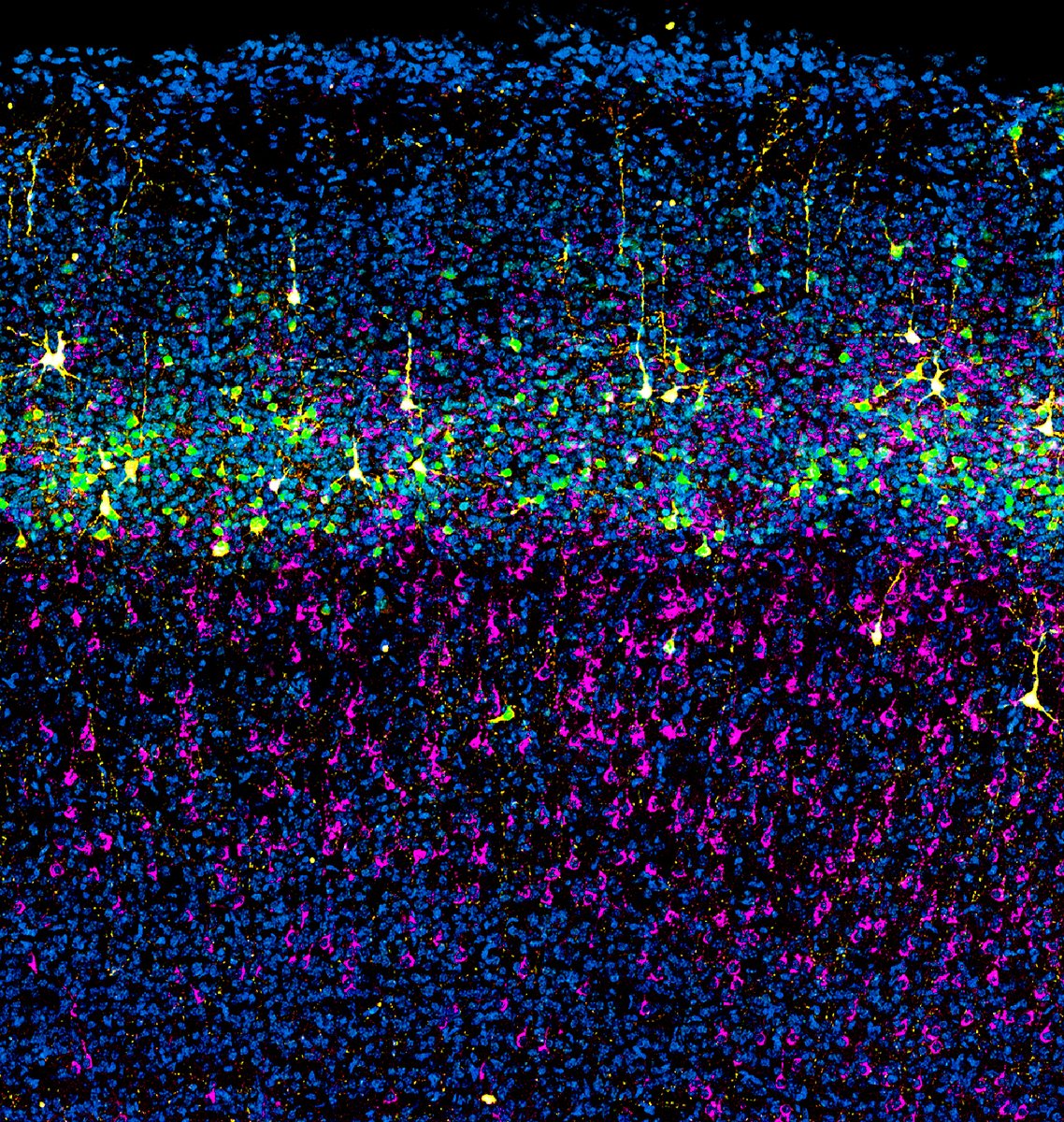
A couple of weeks ago, our paper on the developmental origins of cortical projection neurons was published in Science Advances 🧠
Very happy and proud to finally share this work! ✨
https://t.co/63kigshGid
Big thanks to all co-authors and collaborators who contributed to this work 👏 @NietoLab@HippenmeyerLab@avillalre@garciamarquesJ
Special thanks to the reviewers and the Science Advances team for their thoughtful feedback, which genuinely made the paper stronger!
Un equipo del #CNB_CSIC revela que la corteza cerebral se desarrolla a partir de 2 linajes neuronales y no siguiendo un único programa secuencial
También identifica un factor de transcripción que actúa como interruptor y decide qué neurona se producirá
👉https://t.co/gz4O1paejR
Como cada año, el IMI del CSIC muestra lo de siempre. La carrera investigadora está MUY mal planteada, es incompatible con la vida y las que primero lo sufren son las mujeres.
Esto no se arregla con más financiación. Se arregla CAMBIANDO profundamente el sistema.