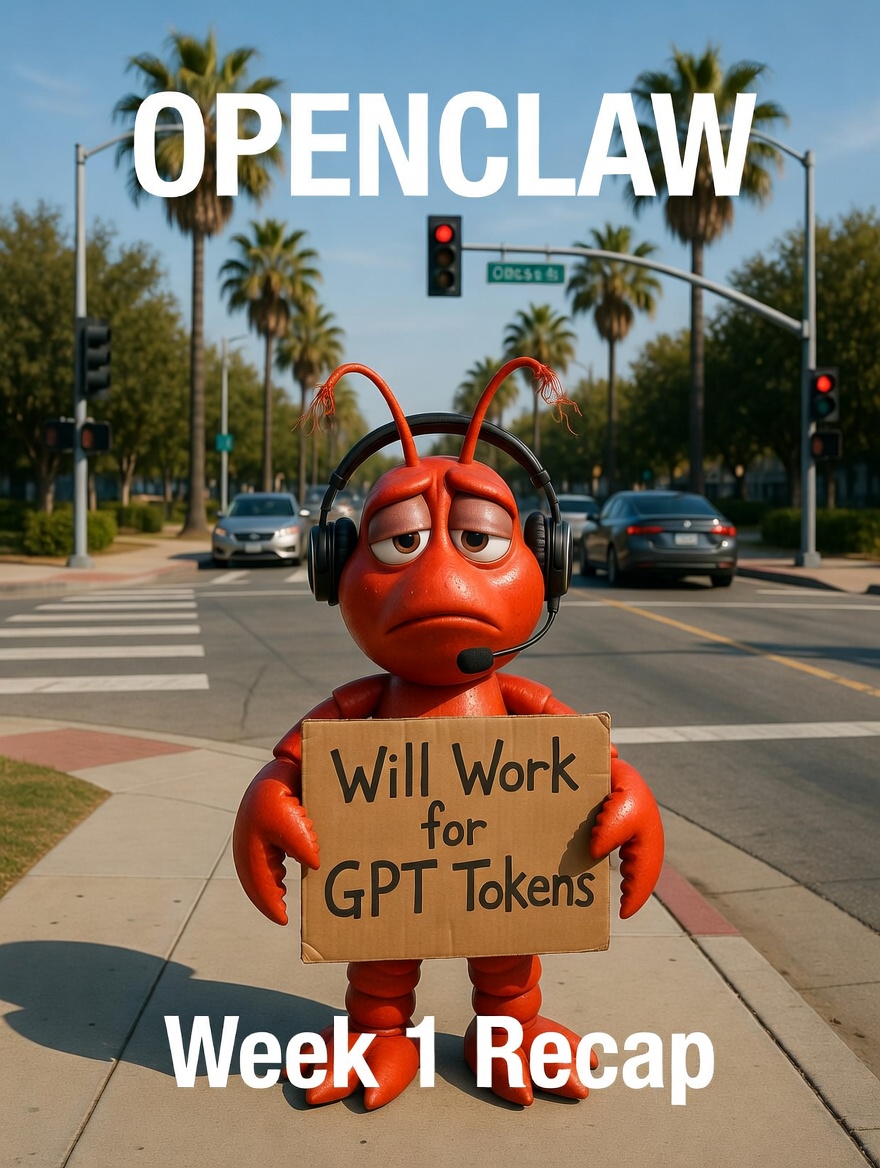
The OpenClaw journey continues. Week 1 has been a very good reminder that building real infrastructure is a lot less glamorous than the demo videos make it look, but every bit as fun.
The initial AI team is now in place with eight specialists in total, and that alone has been a huge learning experience. Defining agent roles well is not some quick setup chore and, when done properly, should feel more like hiring than prompting. Done casually, I can see how it would turn into chaos fast.
I also hit a common OpenClaw upgrade snag and, thanks to some bad advice from another AI agent, made it worse by resetting my instance. Not ideal. Thankfully, experience told me to assign one of my agents to document everything as I went, so recovery was much faster than it otherwise would have been, a couple of hours instead of possibly days. That alone reinforced something I believe strongly: documenting as you go with the question, “Is this concise but complete enough that I could come back in six months and do it again?” is just as important as whatever we build.
Then came another very real lesson: burning through my ChatGPT weekly cap three days early and landing myself in temporary AI jail. Annoying, yes, but also useful. It forced me to think harder about model allocation, workload routing, and why a multi LLM setup is not just nice to have, but critical if you are serious about this kind of endeavor.
That said, while waiting for my cap to reset, I shifted hard into procedural documentation, runbooks, workflows, standards, and all the stuff future me will be very grateful for. I also spent some of that downtime reading about other emerging OpenClaw style solutions, especially NVIDIA’s just released NemoClaw, which adds privacy and security controls around OpenClaw. That got my attention fast because some of the ventures we may pursue will absolutely require a much stronger security posture and likely SOC 2 style discipline from the start.
On top of that, I also submitted the paperwork to launch the new umbrella company this whole project, passion, and possible obsession will operate under. I’ll share more on that once it is official.
So all in all, it has been a great first week. Definitely not friction free. But very real, very educational, and still a whole lot of fun. More to come!
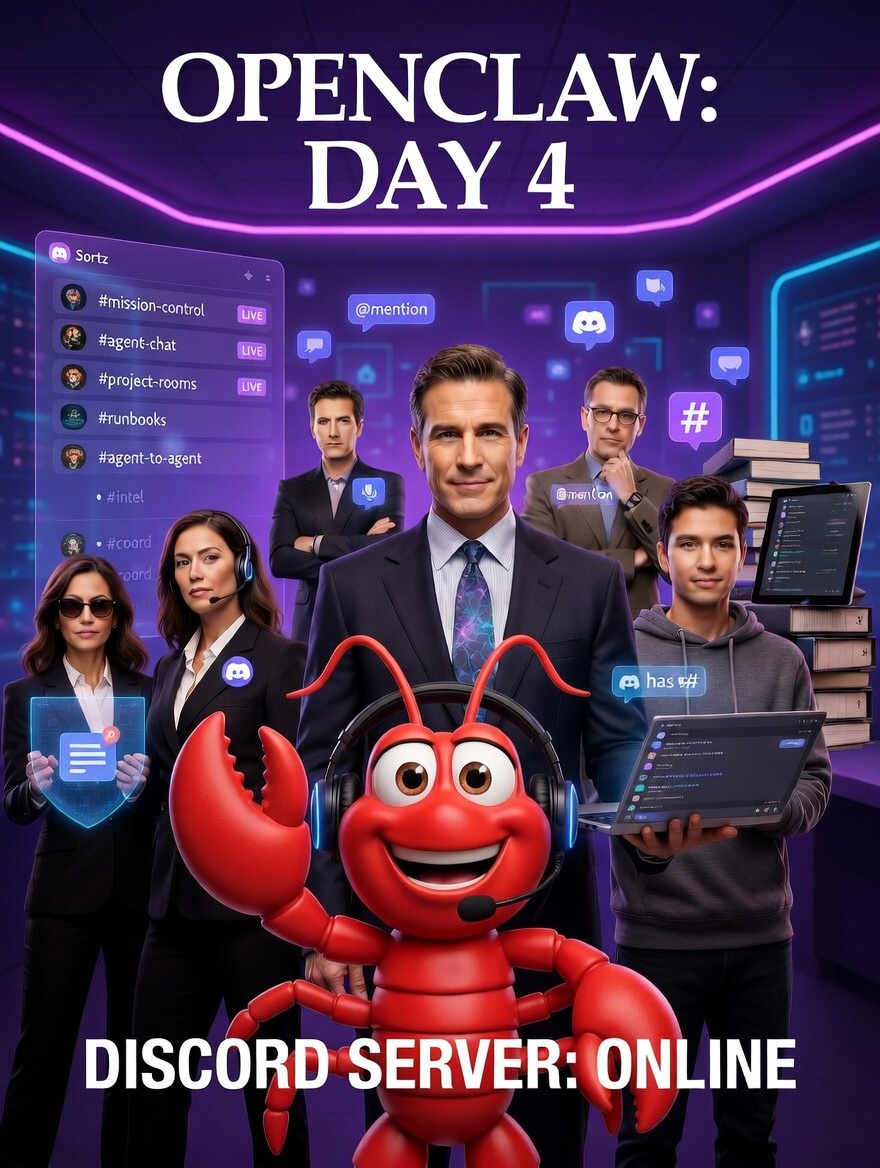
The OpenClaw journey continues. Happy to say Day 4 is right on schedule for Week 1 and, as planned, continues to be about infrastructure.
My next priority is setting up a dedicated Discord server for the team. The reason is pretty simple: this is going to become a real operating environment, not just a cool toy on a Mac mini, so it needs a communication layer that can support humans, agents, projects, process flows, and all the organized chaos I expect without falling apart the minute things get busy.
For now, I’m starting with a basic channel structure. A few channels for company-wide updates (Mission Control, Winning, etc), individual agent channels for direct human to agent communication, a place for agent to agent coordination, project-specific rooms, and a home for documentation and runbooks. Success for today is getting the server live, channels and permissions set up cleanly, the first workflows tested, and at least one real communication loop verified.
What’s funny is that on the surface, this probably sounds like a small task. It is not. The more I get into this, the more I realize these foundation pieces are what will make the exciting parts more efficient, and maybe even possible at all.
That was a big theme from Day 3 as well. Defining the agents turned out to be far more involved than I expected. In a weird way, it’s a lot like hiring a person. You are not just naming a role and moving on. You are defining responsibilities, boundaries, guardrails, collaboration expectations, and what success actually looks like. Done poorly, I can see how this turns into confusion fast. Done with care, it feels like building a real team.
I’ve been taking a lot of notes through the process and turning each major milestone into a runbook, partly so my future self can remember how I set this up, and partly because I may eventually publish the whole thing as a public repo for others trying to do the same. Mark my words: I think specialized agent definition, enrichment, and ongoing maintenance will become a real career path in this new mostly autonomous business model. More on that later.
As for Discord itself, I did consider other options like Telegram and Slack. I am not claiming to be an expert on any of them, but based on my own experience so far, Discord feels like the best fit for my use case. It seems more conducive to long term communication, project separation, ongoing process management, and the kind of scale a mixed environment company like this is going to need.
So that’s the mission for today. I’m not building products yet and that’s on purpose. Today is about building the communication backbone that gives the team a place to think, coordinate, document, and function without stepping on each other.
That’s it for today’s brief. Thanks for following along. If this kind of build in public journey interests you, a like or comment helps more people find it.
#OpenClaw #AgenticRevolution
My OpenClaw Reset: A lot of people talk about career pivots like they are neat, planned, inspirational little arcs. They are not.
I’m 56 years old and have been out of my primary career lane for more than five years. Finding the right fit has been humbling. Not because I have nothing to offer, but because a good fit is about much more than matching keywords on a resume.
What I’ve always loved most is building. Not maintaining. Not polishing. Building.
I’ve spent most of my career helping take ideas from concepts to real, viable businesses or systems. From paratransit software, to my own companies, to leadership roles, the part that has always energized me most is the messy beginning: proving something can work before the money, or patience, runs out.
Once the business was proven, transition complete, and the systems were largely running on their own, I’d start to feel the itch again. I used to joke that when the suits show up, I start to lose interest. There’s some truth to that because I’ve always been more drawn to building something that solves a new problem than to managing something mature.
My most recent venture with the pickleball app was a great lesson. It was a real product, with a real market, good timing, and just enough outside my comfort zone to make it exciting. But it was also too big for one person to carry, given our financial constraints and tech options at the time. Still, I stayed with it for 3.5 years, partly because I believed in it, and partly because, if I’m honest, I let my past track record of winning muddy the line between grit and ego.
So, the past six months have been a reset in more ways than one, but in recent days, it’s started to feel like maybe it was all for a purpose.
Between interviews, I’ve been hitting the books hard, diving deep into large scale data, AI, and agent systems. Most recently, that led me to OpenClaw, and this is different. It's caused me to reassess both my past failures and successes through a new lens. The question of what could have been achieved with a “real team” behind the effort no longer feels like a pipe dream.
It has me inspired, and it has Tracy inspired too.
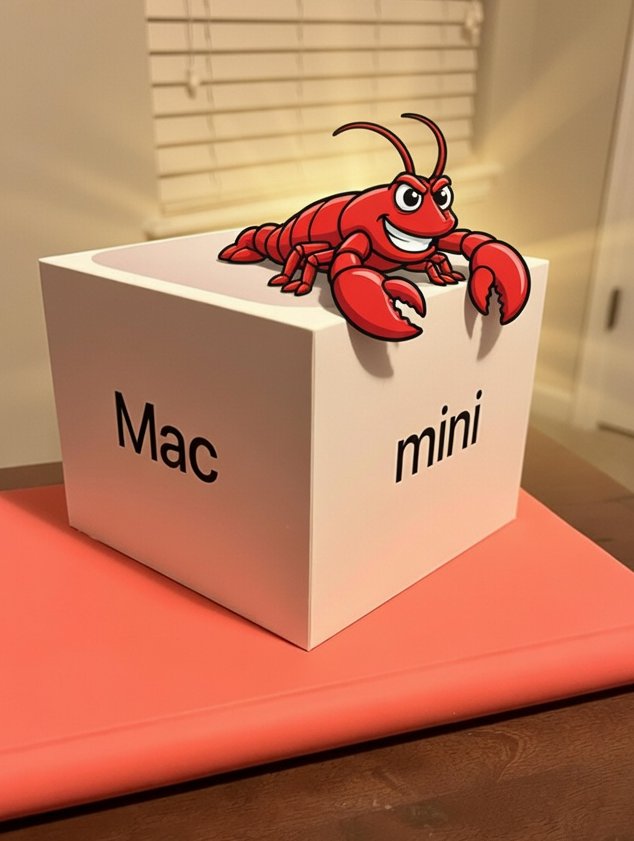
Today we unbox our first Mac mini, install OpenClaw, and start building the base infrastructure to launch what I’m calling MABs: mostly autonomous businesses. Yes, I made an acronym for it. Peak geek behavior, I know.
Our approach is simple. Pull from an evolving idea list and build fast, giving each a defined runway to prove it can work. If it takes off, great, we’ll expand on it while testing other ideas. If not, we’ll drop it faster than a New Year’s gym membership.
The risk is real. We are betting time, energy, and yes, some more retirement that this can become meaningful and profitable quickly.
This is either a terrible idea that ends with us greeting you at the McDonald’s drive through, or the beginning of a very interesting next chapter.
Honestly, we’re good with finding out which. Stay tuned.
#OpenClaw
Is AI at Risk of Becoming Dumber Over Time?
Like many, I jumped on the AI bandwagon as soon as ChatGPT launched, and it has been a game-changer for my productivity, especially in coding. My efficiency has skyrocketed, though it's important to note that a solid grasp of the language is still essential—otherwise, you might find yourself down a rabbit-hole. And I'm sure the same is true for other specialized skills.
Reflecting on AI's capabilities, I realize that much of its knowledge base is built from the collective contributions across the internet. For instance, in the context of coding, I used to rely heavily on sites like StackOverflow. When I hit a snag, I'd search for solutions there and usually find something helpful. Now, I can pose the problem to ChatGPT, which synthesizes information from multiple sources, including StackOverflow, understands the context, and often provides a viable solution. This is true even when my question isn't perfectly framed—no more downvotes for asking imperfect questions!
However, this leads me to ponder a question: Since more people are now using AI to solve problems and contributing less content back to the internet, the very content AI has relied on, is there a risk that AI could get "dumber" over time?
I'm sure I'm not the first person to ponder this question and would appreciate any references or insights you could share.
@elonmusk , thoughts?
No matter what happens, life ain't over. As long as God wakes you up, that means he ain't through with you yet. When God wakes you up, he has something for you that you haven't received. Every day you have the opportunity to make something happen.
@jimcramer Jim Cramer Says Crypto Has “No Real Value" - Crypto Breifing, 7/5/22 "Cramer's comments come months after he said that investors could "easily" secure returns of 35 to 40% from investing in Ethereum. He also previously announced that he had bought into the asset...
This is proving to be a lot tougher than I anticipated and in unexpected ways. Staying focused on the end goal - it'll happen! #LesserFoolCrypto Banned by LinkedIn?!?! https://t.co/XZSwbGgTvR