🚀 Release of tinygym: RL in tinygrad 🚀
It learns Pong in 5 minutes on a 3090!
Like in flashrl you can
✅ Play against your RL agent ⚔️
✅ Add your env by adding one .pyx file!
Hopefully leads to another RL stream from @realGeorgeHotz@__tinygrad__
https://t.co/P1oigKwaPG
📢 Publication Alert 📢
Check out my new article introducing GateNet: A novel neural net architecture that enables automatic cytometry gating with human-level performance using <10 training samples 🚀
🔗 Paper: https://t.co/gWsMbH9vVN
🔗 GitHub: https://t.co/bHWfxlRHtV
Our latest paper on Machine Learning-based biomarkers for Major Depressive Disorder is out now in @JAMAPsych! https://t.co/yF5N4Zal6f A huge thanks to everyone involved, especially everyone at @TraPLabMS including @TheRealTimHahn1 & Udo Dannlowski who supervised this project!
Exploring the quest for biomarkers in Major Depressive Disorder: Check out the new paper published in @JAMAPsych by @NilsRWinter implementing four million machine learning models
https://t.co/X2WsY2qB2N
Interview with @NilsRWinter, MSc, author of "A Systematic Evaluation of Machine Learning–Based Biomarkers for Major Depressive Disorder," hosted by @JohnTorousMD, MD, MBI. https://t.co/QxJm8dYSCu
Can machine learning uncover the multivariate neural signature of major depressive disorder in individual patients? This large-scale study including 1,801 patients and controls finds no robust multivariate depression markers. https://t.co/h0VprWgKBJ
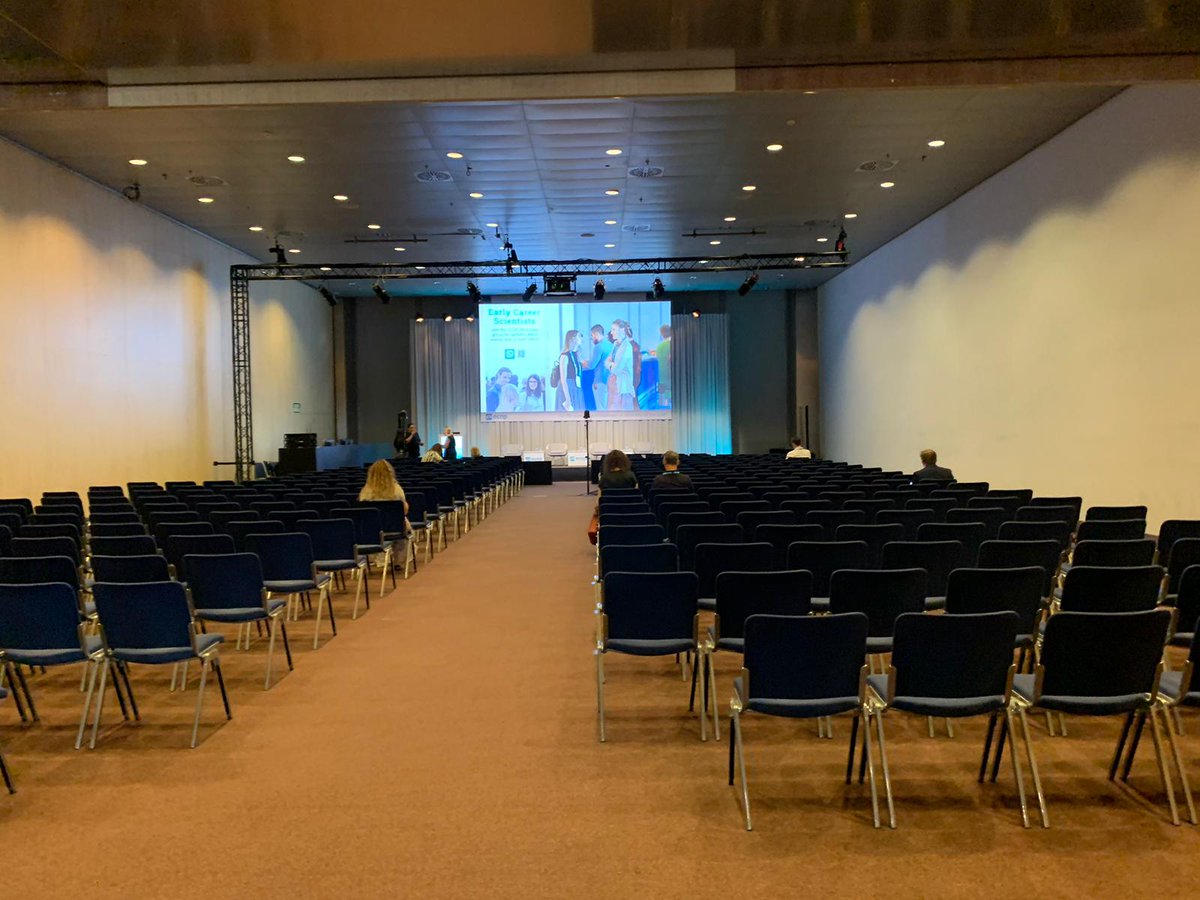
Two adjacent rooms @ECNPtweets right now.
Left: "New Frontiers in Psychedelics" (great session btw!)
Right: "Best Negative Data Prize in Clinical Neuroscience"
Something is very wrong with the system when people just stop caring about what's wrong with the system.
For anyone interested in aligning MRI images efficiently! This repo uses just a few lines of code to align images using #PyTorch, so it gets really fast on a GPU. Also check out this blog post https://t.co/rZ7JeV7dXO
🔥 Exciting news for the #neuroimaging community! Introducing #torchreg a lightweight #PyTorch library for 2D and 3D image registration📸
🔗 GitHub: codingfisch/torchreg
Install via
```
pip install torchreg
```
for fast image registration on your GPU🚀
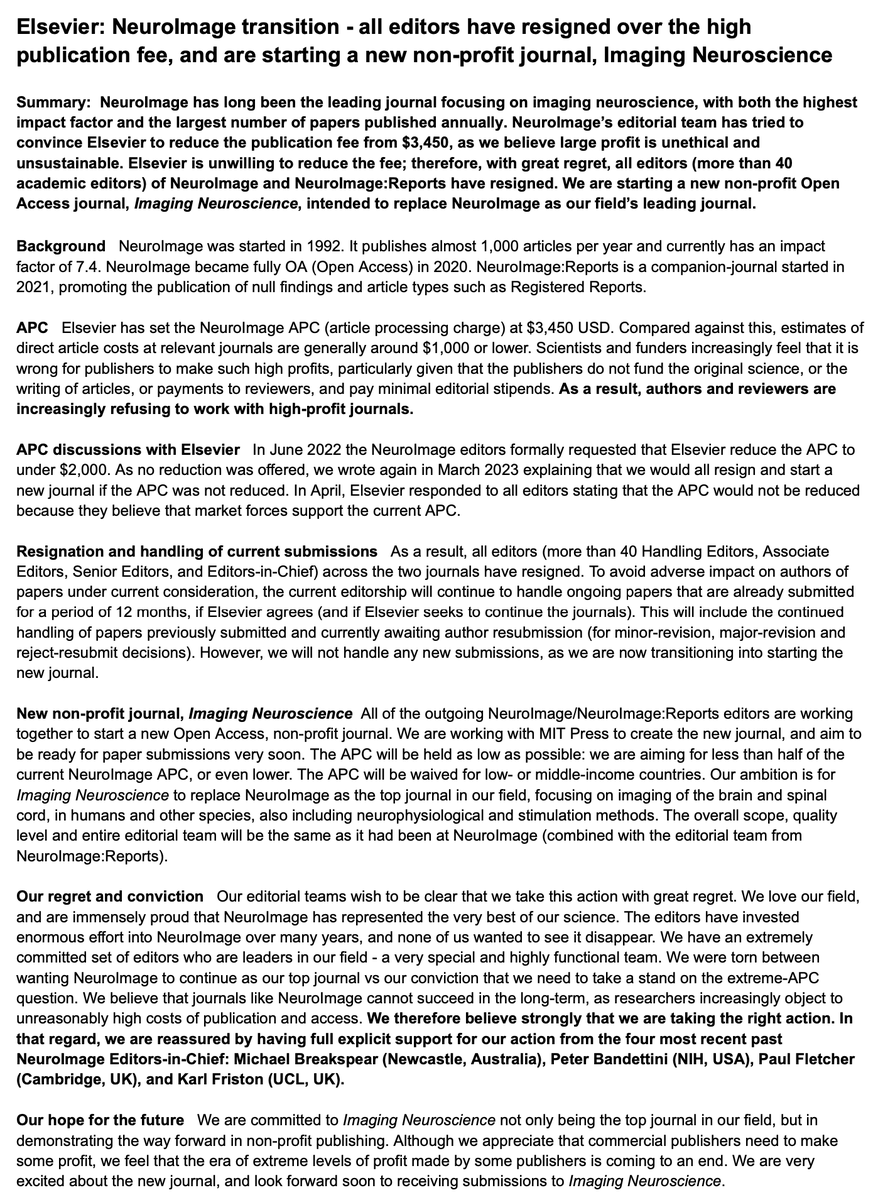
All NeuroImage and NeuroImage:Reports editors have resigned over the high publication fee, and are starting a new non-profit journal
https://t.co/DmnwDKVCK7
This comes with great regret, and a huge amount of thought and discussion- please read announcement to get more details.
@anilpsori Thanks! I would have assumed that at least fMRI should show this effect. However, we didn't really see any improvement when looking at acutely depressed only. What we could see is that patients with stronger current symptoms were less likely to be (falsely) classified as healthy
Biomarkers of Major Depression? Well, not really...and not for lack of trying...
Happy to share our latest preprint on the subject ->
https://t.co/BIqal0Ptl4
We realize, of course, that predicting diagnosis is neither the most useful nor the most interesting goal. However,...
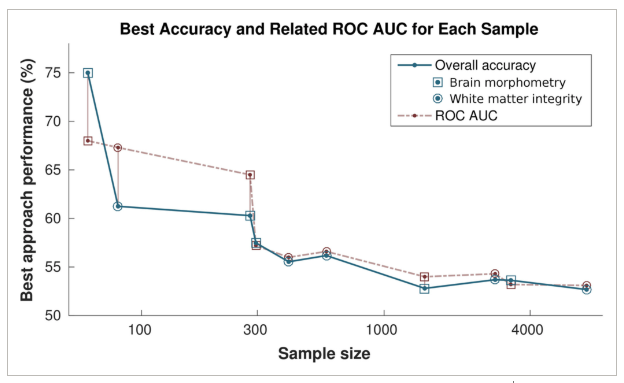
@bttyeo We didn't so far, but I like the idea! Although with a different goal, we did something remotely similar in this paper https://t.co/ol9OIRtB9A At least there we could see a saturation quite quickly (but only VBM, SVM and partly different sample)...
but could also imply moving away from traditional diagnostic categories and more toward alternative conceptualizations such as RDoC or the network theory of psychopathology. Yet, whether these approaches will get us closer to personalized psychiatry is still an open question.
As a field, we need to find ways of modeling the behavioral and neurobiological complexity of MDD. This can include normative modeling approaches, identification of MDD subtypes, modeling intraindividual variation in longitudinal designs, clinically relevant outcomes,...