It's World Book Day, this is a story of how one of the greatest works of 20th century literature came to be.
Composer Michael Brown and his wife, Joy once gave a 30 year old girl a gift of a year's wages with a note: "You have one year off from your job to write whatever you please. Merry Christmas."
Harper Lee, an Alabama native who had moved to New York to write was then somehow making ends meet with various jobs, first in a bookstore and then as an airlines reservation agent.
She used that year to write the first draft of 'To Kill a Mockingbird,' first published July 11th, 1960.
It has never been out of print since!
Write it on your heart
by Ralph Waldo Emerson
Write it on your heart
that every day is the best day in the year.
He is rich who owns the day, and no one owns the day
who allows it to be invaded with fret and anxiety.
Finish every day and be done with it.
You have done what you could.
Some blunders and absurdities, no doubt crept in.
Forget them as soon as you can, tomorrow is a new day;
begin it well and serenely, with too high a spirit
to be cumbered with your old nonsense.
This new day is too dear,
with its hopes and invitations,
to waste a moment on the yesterdays.
Lionel Messi is one of those rare athletes whose story transcends sport. His journey from a child fighting physical odds to a footballer who redefined excellence has moved millions across the world. As someone who has lived the life of an athlete, I hold profound respect and admiration for what he represents perseverance humility and an uncompromising pursuit of greatness.
Yet as his recent visit to India unfolded parts of it felt chaotic and left me quietly uneasy. It compelled me to pause and reflect not in judgment but in genuine concern about what we were really trying to achieve.
I fully understand the economics of sport. I understand commercial realities global branding and the magnetism of icons. I do not fault Messi in any way. He has earned every opportunity that comes his way and admiration for greatness is natural even beautiful.
But admiration must also invite introspection.
As a society are we building a culture of sport or are we simply celebrating individuals from afar.
Millions were spent for moments of proximity photographs and fleeting access to a legend. And yes it is people’s money earned honestly and theirs to spend as they choose. Still I can’t help but feel a quiet sadness wondering what might have been possible if even a fraction of that energy and investment had been directed toward the foundations of sport in our country.
Playgrounds where children can run freely. Coaches who can guide young talent. Grassroots programmes that give opportunity to those who may never otherwise be seen. Spaces where sport is not a spectacle but a daily habit a teacher and a source of dignity.
Great sporting nations are not built by moments they are built by systems. By patience. By belief in the ordinary child with an extraordinary dream.
Icons like Messi inspire us and that inspiration matters deeply. But inspiration must be met with intent. With long term commitment. With choices that reflect not just what excites us today but what will strengthen us tomorrow.
If we truly wish to honour legends like Messi the most meaningful way to do so is not through grand gestures but by ensuring that somewhere in India a young child has a field to play on a coach to believe in them and a chance to dream.
That is how sporting cultures are born. And that is how legacies endure.
*Why don't Japanese people invite Indians to their homes*
An Indian who had been living in Japan for more than a year noticed something strange: his Japanese friends were polite and helpful, yet none of them ever invited him to their home, not even for a cup of tea.
Confused and hurt, he finally asked one Japanese friend why this was so.
After a long silence, the friend replied, "We are taught Indian history… not for inspiration, but as a warning."
The Indian, astonished, asked, "A warning? Indian history is taught as a warning? Please explain why."
The Japanese friend asked, "How many English ruled India?"
The Indian replied, "Maybe… about 10,000?"
The Japanese person nodded seriously and asked, "At that time, weren’t there over 300 million Indians?"
"So who committed the atrocities on your people? Who followed the orders to whip, torture, and shoot them?"
He asked emphatically, "When General Dyer ordered the firing at Jallianwala Bagh, who pulled the trigger? Was it the English soldiers? No, it was Indians."
"Why didn’t anyone point their rifle at General Dyer, not a single person?" He continued, "The slavery you talk about—this was your real slavery. Not of the body, but of the soul."*
The Indian stood motionless, silent, and ashamed.
The Japanese friend continued, "How many Mughals came from Central Asia? Maybe a few thousand? And yet they ruled you for centuries."
"The Mughals did not rule India through their numbers; it was your own people who bowed to them, obeyed them, betrayed their own, and showed loyalty to the Mughals. Either to survive or for silver coins."
"Your own people converted religions. They gave their sisters and daughters to the Mughals in marriage."
"Your own people betrayed your heroes to the English. Who betrayed Chandrashekhar Azad? Who informed the English about his hiding place in Alfred Park?"
"Bhagat Singh was easily executed without the permission of those people (Gandhi-Nehrus) who called themselves patriots."
"You Indians do not need foreign enemies. Your own people repeatedly betray you for power, position, and personal gain. That is why we keep distance from Indians."
"When the English came to Hong Kong and Singapore, not a single local joined their army. But in India, you did not just join the enemy’s army—you served them. You worshipped them. You killed your own people to please them."
"Even today, you have not changed. You have learned no lessons from history. Even for a little free electricity, a bottle of alcohol, or a blanket—you sell your vote, your conscience, and your voice without thinking."
"You chant slogans, protest, but when the country needs your sacrifice, where are you? Your first loyalty is still to your home, family, wife, children, and wealth. The rest—country and religion—can go to hell."
After saying this, the Japanese left, and the Indian stood there, head bowed, frozen in shame
👆this WhatsApp forward is hurting me so much and I can’t take it out of my mind.
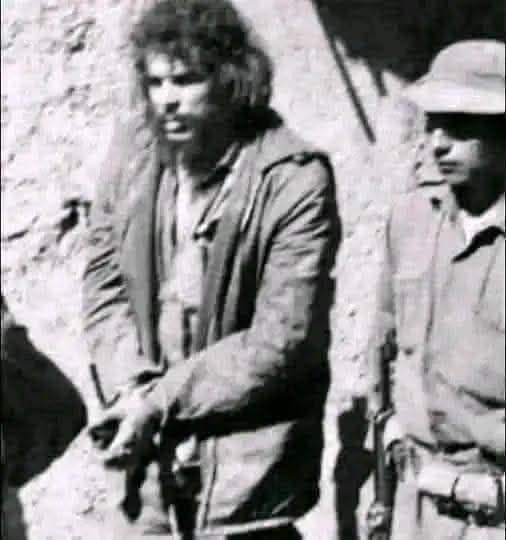
When Che Guevara was captured in his hiding place, after being betrayed by a shepherd, one of the soldiers asked him surprisingly: How can you betray a man who has spent his whole life defending you, you and your rights? The shepherd replied calmly: His fight against the enemy frightened my sheep!
Many years ago, in Egypt, the Grand Commander Mohamed Karim had led the resistance against Napoleon's total military campaign. When he was captured, the court sentenced him to death. But Napoleon called him and told him: I regret having to kill a man who bravely defended his country. I don't want history to remember me as a hero assassin. I will forgive you if you pay 10,000 gold coins for the losses suffered by my army. Mohamed Karim laughs and replies: I don't have that much money, but the merchants owe me more than 100,000 gold coins. Napoleon gave him a break. Karim went to the market, chained up and surrounded by soldiers guarding him, hoping that those he had sacrificed himself for would help him. But no merchants responded. On the contrary, they accused him of being the cause of the destruction of Alexandria and their crisis. He went back to Napoleon, morally broken. Napoleon then said to him: - I will not kill you because you fought against us, but because you sacrificed your life for a cowardly people, who prefer trade to freedom. Mohamed Rashid Rida summarized this way: "He who fights for an ignorant people is like one who immolates himself by fire to light the way for the blind."
Underrated life hack: Being boring in the right ways. Go to bed early. Wake up early. Eat simple foods. Save money. Exercise. Read old books. Avoid drama. These aren’t flashy, but the ordinary will compound into a life that feels extraordinary. Boring is seriously underrated.
Used to spend 4-6 hours reading DRHPs during IPOs post-COVID, but thanks to Gemini/AI, you can get 80-90% of the job done
Here's the prompt -
Use Gemini 2.5 pro
- Explain the business model to me like a 5-year-old, state the key inputs, outputs, and factors affecting the same
- Are the sales, operating profit (USE EBITDA and Not EBIT) and PAT increasing
- Are the Operating profit margins (EBITDA) and net profit margins increasing? Show a breakdown of how they are increasing and why they are increasing
- calculate free cash flow for the given financials
- calculate EBITDA to Cash flow from operation conversion % and tell me if it's increasing
- Is the balance sheet of the company healthy? Are there any signs of stress?
- Identify the red flags in the company
- Tell me more about the related party transactions in the RHP
- Tell me the growth plans of the company, and if there is visible government intervention in the business and the sector
- Who are the listed peers of the company, and how are they performing? - Create a table with peers showing valuations, growth, financials, and their positive triggers and red flags
- What are the valuations of the company (use PE, PS, EV/EBITDA, PEG)
- Check the quality of the promoter - have they done well during good and bad times, and do they have a history of delivering on their promises (if possible, create a matrix and show what they promised and what they delivered)
Competitive & regulatory landscape
• Named competitors; share/pricing behavior if cited.
• Regulatory updates, compliance costs, licenses, litigation, scheme/subsidy benefits, and sunset risks.
• Management's Industry View (Structural vs. Cyclical): Summarize any explicit commentary from management on whether they view current industry trends as structural or cyclical.
• Customer Health Read-Through: Note any commentary on the health, demand, or inventory cycles of key customer industries.
Conclusion -
• End with five firm takeaways.
Formatting -
- Easy to read language
- Use bullet points
If possible, upload credit rating reports and old financials and old annual reports also as RHP data is only 3 years old and too short-term to draw proper conclusions!
Share your prompts and let's learn together!
Please note - AI is only good for data retrieval and a bit of data crunching, after it gives u a result, u need to delve more deeper to draw conclusions!
Netaji's speech to the INA, 1943
..You have voluntarily accepted a mission that is the noblest that the human mind can conceive of. For the fulfillment of such a mission no sacrifice is too great, not even the sacrifice of one's life. You are today the custodians of India's national honour and the embodiment of India's hopes and aspirations. So conduct yourself that your countrymen may bless you and posterity may be proud of you.
I have said that today is the proudest day of my life. For an enslaved people, there can be no greater pride, no higher honor, than to be the first soldier in the army of liberation. But this honor carries with it a corresponding responsibility and I am deeply conscious of it. I assure you that I shall be with you in darkness and in sunshine, in sorrow and in joy, in suffering and in victory. For the present, I can offer you nothing except hunger, thirst, privation, forced marches and death. But if you follow me in life and in death, as I am confident you will, I shall lead you to victory and freedom. It does not matter who among us will live to see India free. It is enough that India shall be free and that we shall give our all to make her free. May God now bless our Army and grant us victory in the coming fight !
Inqualab Zindabad ! Azad Hind Zindabad !
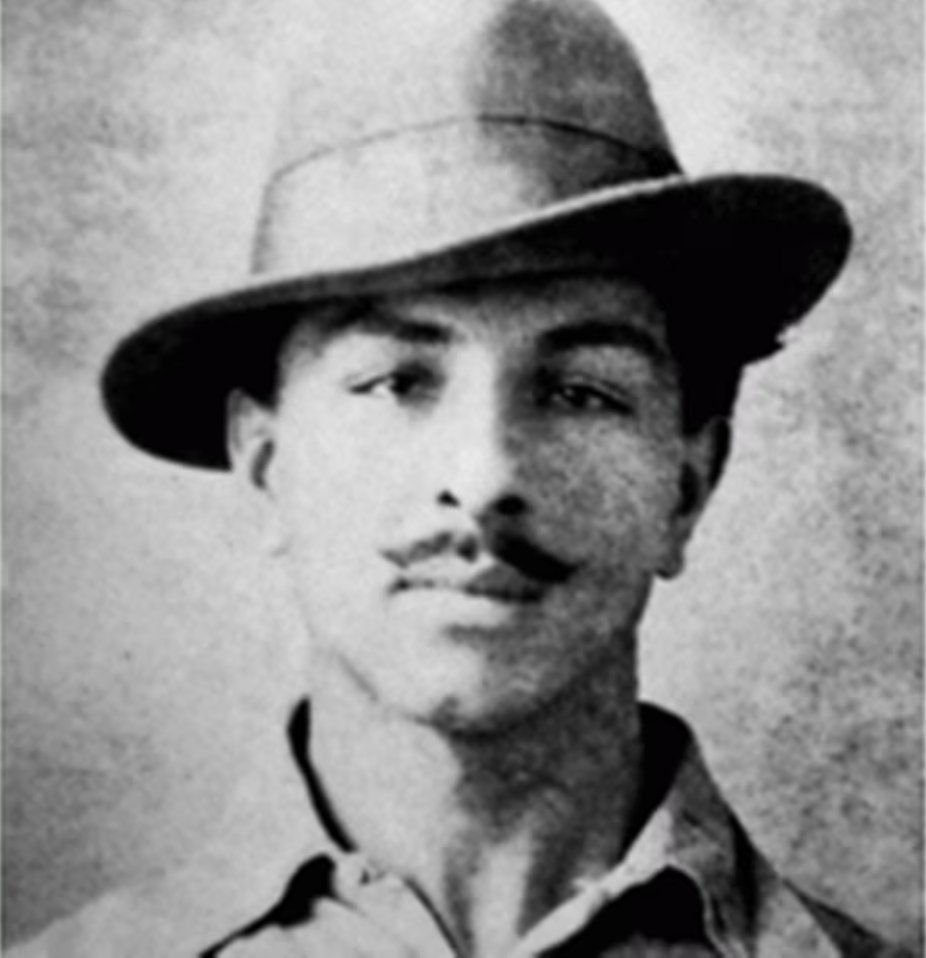
Bhagat Singh's last petition.
To:
The Punjab Governor
Sir,
With due respect we beg to bring to your kind notice the following:
That we were sentenced to death on 7th October 1930 by a British Court, L.C.C Tribunal, constituted under the Sp. Lahore Conspiracy Case Ordinance, promulgated by the H.E. The Viceroy, the Head of the British Government of India, and that the main charge against us was that of having waged war against H.M. King George, the King of England...
..The war neither began with us nor is it going to end with our lives. It is the inevitable consequence of the historic events and the existing environments. Our humble sacrifices shall be only a link in the chain that has very accurately been beautified by the unparalleled sacrifice of Mr. Das and most tragic but noblest sacrifice of Comrade Bhagawati Charan and the glorious death of our dear warrior Azad...
......We wanted to point out that according to the verdict of your court we had waged war and were therefore war prisoners. And we claim to be treated as such, i.e., we claim to be shot dead instead of to be hanged. It rests with you to prove that you really meant what your court has said.
We request and hope that you will very kindly order the military department to send its detachment to perform our execution.
Yours,
BHAGAT SINGH
78 years ago, a country was partitioned. One part chose to become a religious theocracy, the other promised every citizen a fair chance, irrespective of religion, caste or financial status.
Where these two nations stand 78 years later tell you which approach worked better!
On this day, a hundred years ago, the courage shown by patriotic Indians at Kakori highlighted the resentment among people against colonial rule. They were angry at the manner in which people’s money was being used to further colonial exploitation. Their valour will always be remembered by the people of India. We will keep working to fulfil their dreams for a strong and prosperous India.