A lot of the AI tools people use today are built on top of models someone else spent serious time and money creating.
But here’s the problem:
Building a useful open-source AI model doesn’t automatically mean you have a good way to make money from it.
People can download it, build with it and sometimes create businesses around it.
The original builder still needs funding to keep improving the model.
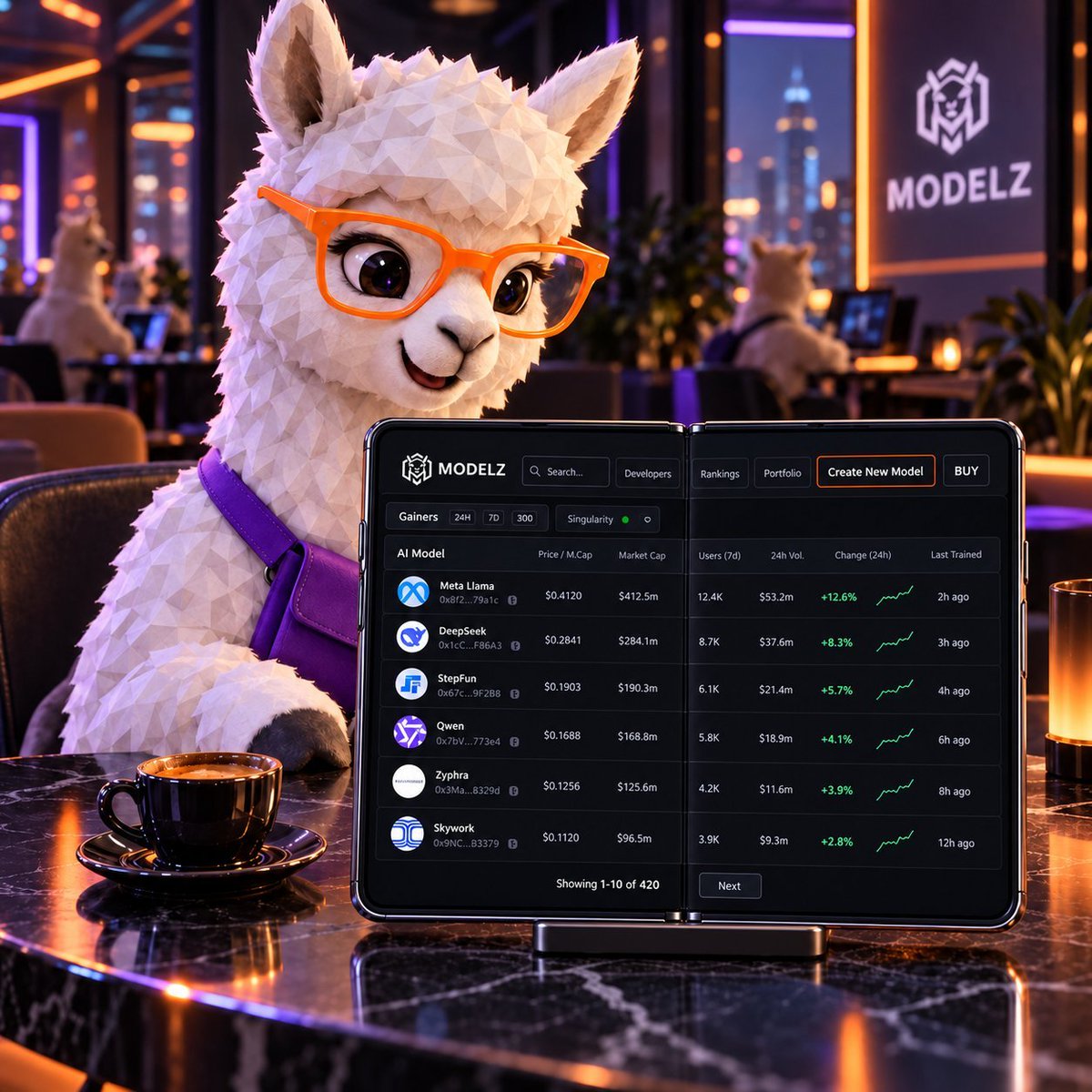
This is one problem @AlpacaNetworkAI is trying to approach differently.
Through Modelz, builders can tokenize their open-source models and raise support from people interested in what they’re building.
The bigger idea is that if the model eventually gets real usage, that activity can feed into its own token economy.
I think that distinction matters.
A token shouldn’t be valuable simply because “AI” is attached to it.
There should be something underneath that people actually need.
For AI model tokens, the real test will eventually be simple:
Are developers actually using the model?
I like seeing more stablecoin options open up around ONyc. USDC was already useful, now USDG has its own route too. More choice depending on how you want to structure your position.
gRWA fam. ☕️
I’ve talked about tokenizing property, bonds and other real-world assets before.
But tokenizing an AI model? That’s a different conversation.
Think about it.
Someone builds an open-source AI model that developers eventually use across different apps. The model can become valuable, but funding and rewarding the people behind it isn’t always straightforward.
That’s what @AlpacaNetworkAI is experimenting with through Modelz.
An open-source AI model can be turned into its own token and funded through what they call an Initial Model Offering (IMO). If the model gains real usage, the bigger idea is for fees from that usage to flow back into its token economy.
So instead of only investing in the AI app people see, you could potentially get exposure to the model powering the app underneath.
Of course, tokenizing a model doesn’t automatically make it valuable. People still have to actually use it.
But I find the concept interesting.
We’ve spent years asking what assets can move onchain.
AI models might be one of the more unusual answers.
26.1% APY will definitely get attention, but I’m more impressed that the new PT-ONyc market is already at $11M. People aren’t just looking at these yields anymore; they’re actually putting capital to work.
I have realized managing crypto can get messy fast.
One CEX for trading, another wallet for DeFi, another app for tracking, then a few more tabs for analytics.
Sumex is trying to bring all of that into one place.
You can connect your existing CEX accounts and Web3 wallets, track your portfolio, trade, swap across chains, and access other tools from one dashboard.
And since it is non-custodial, your assets remain under your control.
The idea is simple: less jumping between apps, more control from one place.
It's another week again, and also a good day to be security cautious. Part of being cautious is using platforms that have a security-first approach, and that is one of the roles Sumex plays.
Security advice usually stops at “don’t sign what you don’t understand.” That is true and still incomplete.
The hard part is seeing what you already authorized: old token approvals, lingering delegations, and exchange API keys with more access than the app needs. Sumex treats that as a daily dashboard problem, not a separate research project
What does that mean?
Sumex is and remains non-custodial. Connecting a wallet is an ownership check, not a handoff of keys or funds.
Connecting an exchange does not require withdrawal access. If a key is set too broadly, Connection Manager flags it instead of hiding the risk inside an API settings page.
That is the first Sumex move: separate custody from permission.
The third move is visibility after the click. Closing a site does not revoke on-chain permission. Those allowances sit on the token contract until someone checks them.
Sumex puts Approvals and Delegations next to Overview, Investments, and Transactions in the DeFi Dashboard, so forgotten spenders and EIP-7702-style delegations show up in the same place you manage positions.
The same idea applies across CeFi and DeFi. Unified Dashboard pulls wallet bundles and exchange bundles together, then surfaces more than balances: exposure, activity, and permissions that still look risky
The full picture is simple. Crypto risk is usually permission risk. Sumex comes in as the layer that makes those permissions visible, limited, and manageable without taking custody of the assets, among many things.
Have a good one!
The numbers are good, but 11.54% is not really the part I find most interesting. It is getting that yield from reinsurance while most of what happens in crypto has little to do with how that yield is generated. That is a different kind of exposure to have on-chain.
great article @StarPlatinum_ 🔥
if you got nothing to do this weekend, this article should be a great read
i’ve discovered exciting projects too
the Robinhood ecosystem is just getting started and we’re still early
We are starting to see more being built around ONYC than just different ways to earn yield. Using real-time natural disaster data to manage risk exposure is a good example. This is the kind of stuff that makes onchain reinsurance more interesting to follow.
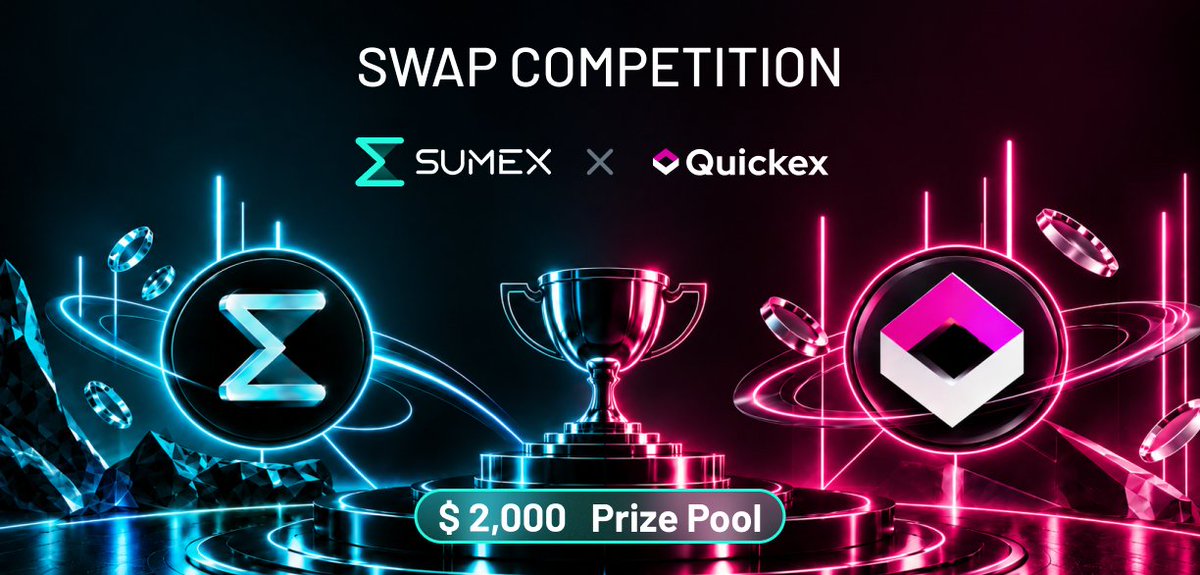
Another new partnership and integration for Sumex!
@QuickEx_Tweets is now integrated into the Sumex ecosystem, bringing fast, non-custodial swaps, deep aggregated liquidity, and competitive rates across a wide range of assets.
And what better way to celebrate than with a new campaign?
This time, we’re doing things differently:
• 1 day = 1 epoch
• Up to $152 in rewards per epoch
• Rewards distributed daily
• A fresh chance to compete every single day
New integration. New routes. New rewards - every 24 hours.
Now LIVE on Sumex x Quickex!
Same ONYC, two very different ways to approach the yield.
7.78% with more protection, or 21.89% for taking on more risk.
It comes down to what kind of risk you are comfortable with.
If you have been using ONyc across DeFi, this points boost is worth knowing about: 10x on ONyc loops and 16x on Exponent until September 21, a nice extra on top of the yield.