What is the advice you would give to future #Cyber912 competitors?
Read what advice our Cyber 9/12 alumni @francesschroe, @grantversfeld, @NitanshaBansal, Gabriel Cajiga, and Tionge Mughogho have for you. https://t.co/TK9HwTG9ov
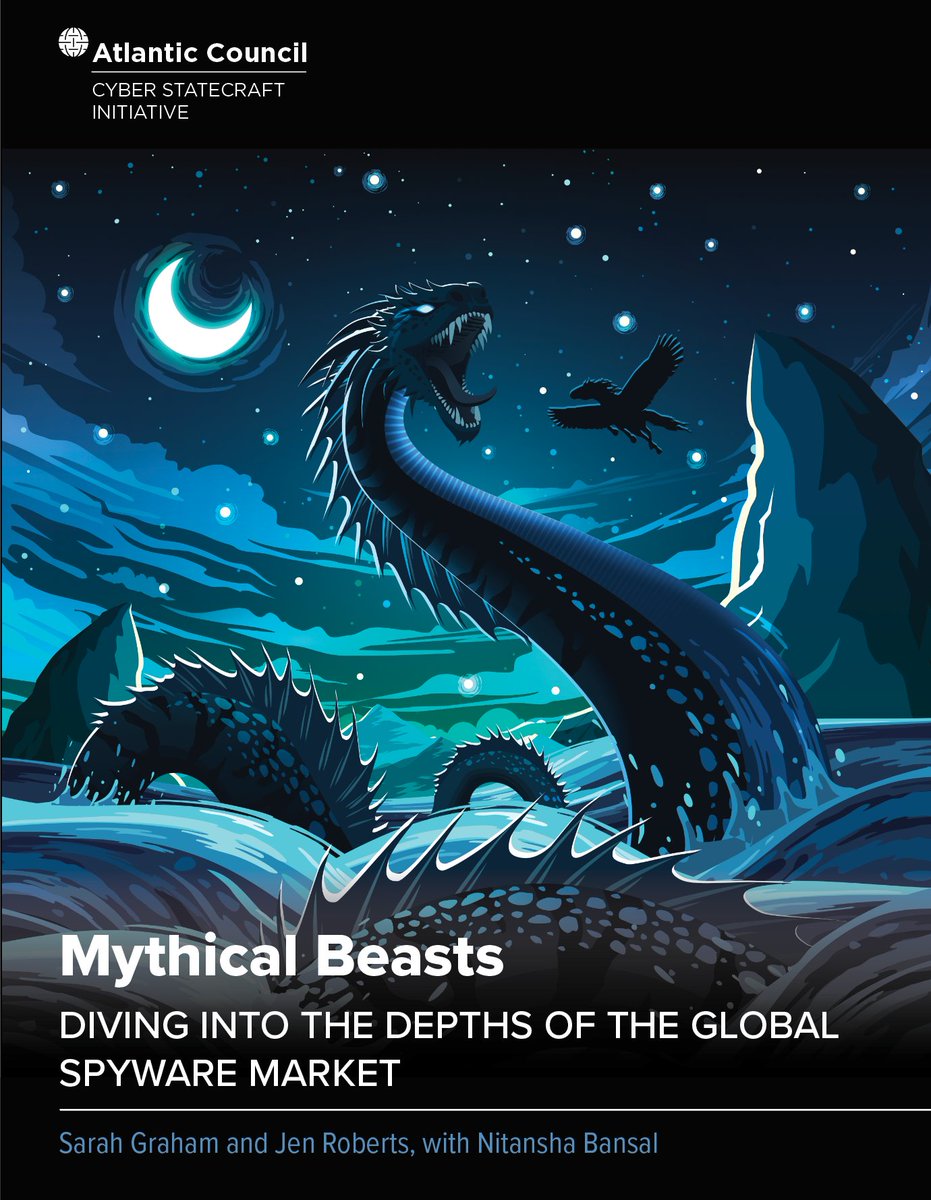
Boost transparency, limit jurisdictional loopholes, and scrutinize supplier & investor ties in the spyware market. Read on for more policy recommendations @CSI_Jen, Trey Herr, and @NitanshaBansal have for the spyware market in their report here: https://t.co/vV6SWJy8wf
⚠️A new @CyberStatecraft report warns that the number of 🇺🇸-based investors in #spyware has risen sharply in 2024, fuelling an opaque global market that is growing and evolving, & highlights new countries linked to the technology.
My exclusive for @WIRED.
https://t.co/R7lT3w8Pws
🌐 Spyware isn't just a tech issue; it's also a human rights and national security concern. @CSI_Jen, Trey Herr, and @NitanshaBansal’s report highlights how repressive states use spyware to harm their own citizens and other states. https://t.co/FKFE4LKrLC
🚨NEW ISSUE BRIEF🚨 In “Securing data in the AI Supply Chain,” CSI fellow @jshermcyber writes about the seven data components powering AI and the risks they face. Read it here: https://t.co/GXRC2Kgd82
The plan is a step forward for the AI supply chain
The AI Action Plan’s focus on the full AI stack—from energy infrastructure, data centers, semiconductors, and the talent pipeline to acknowledging associated risks and cybersecurity concerns—is welcome. The plan has adopted an optimistic view of the open source and open weight AI models, and it has built in provisions to create a healthy innovation ecosystem for open source AI models along with strengthening the access to compute—which is another positive policy realization on the part of the administration.
The administration appears to be cognizant that competitiveness in AI will not be achieved solely by domesticating the AI supply chain. Competitiveness in this ecosystem needs to be a multi-pronged strategy of translating domestic AI capabilities into national power faster, more efficiently, more effectively, and more economically than adversaries—driven by faster chips, smarter and more trustworthy models, a more resilient electricity grid, a robust investment infrastructure, and collaboration with allies.
This emphasis on securing the full stack means that the near-term policy will target not just innovation, but the location, sourcing, and trustworthiness of every component in the AI pipeline. The owners and users of AI supply chain components have much to look forward to. The new permitting reform could reshape the location of AI infrastructure; recognition of workforce and talent bottlenecks can lead to renewed focus on skill development and training programs; and emphasis on AI-related vulnerabilities in critical infrastructure could translate into more regular and robust information sharing apparatuses and incident response requirements for private sector executives.
In all, achieving AI competitiveness is an ambitious goal, and the plan sets the government’s agenda straight.
— @NitanshaBansal is the assistant director of the @CyberStatecraft Initiative.
The US plan may sound like those of the UK and EU—but the differences are critical
The new AI Action Plan—like its peers from the European Union (EU) and the United Kingdom—is focused on “winning the AI race” through regulatory actions to direct and promote innovation, new investments to create and advance access to crucial AI inputs, and frameworks for international engagement and leadership. Winning the AI race is, in effect, the top priority of all three AI plans, albeit in different ways. While the EU’s AI Act wants to be the first to create regulatory guardrails, the United States’ AI plan has a strong deregulation agenda. In a significant break from other policy measures from this administration to ensure US dominance, this action plan moves away from a purely domestic orientation to the international sphere, flexing the reach of traditional US notions of power. This includes international leadership in frontier technology research and development and adoption, as well as creating global governance standards. It’s a testament to the scarcity, quality, and sizable nature of the inputs needed for global AI dominance that even the Trump administration is thinking through its strategy on AI in terms of global alignment.
Even as each jurisdiction, including the United States, seeks to position itself as the dominant player in the AI race, there is no common scoreboard for deciding a winner for the game. Each player has devised an ambitious but distinct understanding of this “competition,” and each competition will play out through harnessing a unique combination of industrial, trade, investment, and regulatory policy tools. As the race unfolds in real time, the challenge for US policymakers is to simultaneously create the rules of the game while playing it effectively. A broad range of stakeholders, including AI companies, investors, venture capitalists, safety institutes, and allied governments seek clarity and stability. They all will watch the implementation of the US plan closely to determine their next moves.
There are two encouraging signs in this action plan when it comes to strengthening US competitiveness:
First, by prioritizing international diplomacy and security, the United States is positioning itself to influence the global AI playbook that will ultimately determine who reaps economic benefits from AI systems. Leading multilateral coordination on AI positions the United States to secure open markets for AI inputs, shape global adoption pathways, and protect its private sector from regulatory fragmentation and protectionism.
Second, the plan creates a roadmap for ensuring that the United States and its allies assimilate AI capabilities faster than their adversaries. In this vein, the plan emphasizes the importance of coordinating with allies to implement and strengthen the enforcement of coordinating export controls.
— @ananpoe is the deputy director for Future of Money at the @ACGeoEcon Center.
— @NitanshaBansal is the assistant director of the @CyberStatecraft Initiative.
We invited @francesschroe, @grantversfeld, @NitanshaBansal, Gabriel Cajiga, and Tionge Mughogho to give a piece of advice to prospective #Cyber912 competitors in this 5x5. What advice would you give? https://t.co/Xglh9jfUuN
Check out the findings of data collected by @CSI_Jen, Trey Herr, and @NitanshaBansal to understand the depth and breadth of this market: https://t.co/JvosNB034u
We invited @francesschroe, @grantversfeld, @NitanshaBansal, Gabriel Cajiga, and Tionge Mughogho to give a piece of advice to prospective #Cyber912 competitors in this 5x5. What advice would you give?
https://t.co/kSBVQ3kp5m
🦄 @CSI_Jen & @NitanshaBansal chatted about our recent report Mythical Beasts and Where to Find Them on @thecyberwire 🦄. This report explores connections between spyware vendors, suppliers, and supply chains in 42 countries.
Give it a listen here: https://t.co/uSZEHy9aFx
🌐 Spyware isn't just a tech issue; it's also a human rights and national security concern. @CSI_Jen, Trey Herr, and @NitanshaBansal’s report highlights how repressive states use spyware to harm their own citizens and other states: https://t.co/gIK8VfVpxZ
🎉 Trey Herr, Maia Hamin, and @NitanshaBansal recently led the 5th session of our Congressional Cyber and Digital Policy Program "Making Stuff Happen: Cybersecurity, the Private Sector, and You!" 🌐
Cyber912 alumni @francesschroe, @grantversfeld, @NitanshaBansal, Gabriel Cajiga, and Tionge Mughogho share their experiences and discuss the impact of such simulated exercises to prepare for careers in cyber in this month’s 5x5.
Read it here: https://t.co/kSBVQ3kp5m
📢 Applications for the Congressional Cyber and Digital Policy Program close today at 11:59 PM ET. Make sure you have attached your resume and a Letter of Recommendation with your applications.
We are excited to select our first cohort!!
🗒️ Apply here: https://t.co/fj9PjDfyCA
We asked Maia Hamin, Stew Scott, @CSI_Jen, @ab_csi, and @emmacs26 to define the current cyber policy landscape through a movie or story, and oh boy, did they deliver!
Read this month’s 5x5 to see which ones they picked.
https://t.co/80Qk4BeDWs
Application deadline approaching soon! Apply for the @AtlanticCouncil's non-partisan Congressional Cyber and Digital Policy Program today.
️Apply here: https://t.co/fj9PjDfyCA
Come work with us!
We're looking for an intern to join our team this coming spring to support programming and research at the intersection of cybersecurity and geopolitics.
This internship is✨paid and remote.✨
What are you waiting for!?
https://t.co/vTdjn4rpqG
🥁🥁SUPPLY CHAIN ALERT🥁🥁
@CyberStatecraft is going live with TWO new updates for our software supply chain work.
1) An update to our seminal Breaking Trust Software Supply Chain Database - bringing our total number of tracked compromises to 250!
https://t.co/2UyrllNWHl