“kapag babae ka, kahit ibinigay mo na ang lahat sa anak mo, pati puso’t kaluluwa mo, di pa rin sapat na tawagin kang mabuting ina. sana pwede nating sabihing, tama na. hanggang diyan na lang pagiging nanay ko.”
26 years ago, ANAK was released in cinemas.
The subtext of our upbringing wasn’t “you can do anything,” but more often “it’s admirable just to be seen.”
So reading this list now feels like watching a country slowly edit its own self-perception in real time.
As an older millennial (Ehem 😉) this piece lands somewhere between deep nostalgia and disbelief, not because the achievements are questionable, but because we remember the long stretch of time when they weren’t even part of the national imagination.
I grew up in a time when being Filipino on the world stage often felt like a hopeful wish whispered into the wind—heard, perhaps, but rarely answered. In the ‘80s and ‘90s, we clung to stories of past glory like heirlooms: cherished, retold, but distant. As a Gen Xer, I learned early to temper expectation with realism. The world was big, and we were told—implicitly and explicitly—that it would take something close to a miracle for the Philippines to stand at the very top again.
And yet, here we are.
These are five global recognitions I once thought I might never witness in my lifetime.
1. A Miss Universe Crown, Again
For years, the name Margie Moran stood alone, almost mythical. She was the last Filipina to win Miss Universe in 1973, and as the decades passed, her victory felt less like a precedent and more like a relic. We came close many times, heartbreakingly so. Near-wins became a national ritual in patience.
Then came Pia Wurtzbach—a victory so dramatic it felt scripted by destiny in 2015. And just when we thought lightning wouldn’t dare strike twice, Catriona Gray delivered a performance so commanding in 2018 it redefined what winning looked like. Two crowns in one generation. What once seemed impossible became a new standard.
2. A Tony Award for a Filipino
Broadway was another universe altogether—distant, dazzling, and decidedly not ours. So when Lea Salonga won a Tony Award for Miss Saigon in 1991, it didn’t just feel like a win; it felt like a door had been kicked open.
Today, that door has widened. Several Filipino and Filipino-American artists have since taken home Tony Awards, including Lea Salonga, Ariana DeBose, Alex Newell, Nicole Scherzinger, and Darren Criss.
A historic milestone came in 2025, when both Nicole Scherzinger and Darren Criss won Tony Awards—further cementing Filipino excellence on Broadway. What once felt like an anomaly is now a growing legacy. We are no longer just guests—we belong.
3. An Olympic Gold Medal
We waited. And waited.
We celebrated silvers and bronzes like they were gold because, for the longest time, that was the highest we could reach. I remember Mansueto Velasco—“Onyok”—coming so close in 1996. It felt like destiny within reach, only to slip away at the final moment.
Then, decades later, Hidilyn Diaz lifted not just weights, but an entire nation’s long-held dream when she won the Philippines’ first Olympic gold in 2021 (Tokyo 2020 Olympics). History, finally rewritten.
And just when we thought that was the peak, Carlos Yulo soared—literally and figuratively—bringing home two gold medals in 2024. Two. If you told my younger self this would happen, I would have smiled politely and dismissed it as fantasy.
4. A Nobel Prize—From Dream to Reality
For the longest time, the Nobel Prize felt like the most distant of all.
And yet, the breakthrough came when Maria Ressa won the Nobel Peace Prize in 2021, proving that Filipino courage, journalism, and truth-telling could stand at the very pinnacle of global recognition.
What once felt impossible has now been achieved—reminding us that Filipino excellence is not bound by geography, but defined by impact.
5. A Filipino Act at Coachella
Music, like beauty pageants and sports, once had invisible borders. Global stages like Coachella felt reserved for Western acts, with Asia barely a footnote.
And now, it’s happening in real time.
As BINI takes the stage yesterday, their performance is already creating massive global buzz—proof that Filipino talent is no longer waiting for permission, but commanding attention. For a Gen Xer raised on imported MTV dreams, this moment feels surreal, almost unbelievable.
And Then, The Oscars
If there is one dream that continues to hover just out of reach, it is the Academy Awards.
We have submitted films year after year—hopeful, proud, deserving. And yet, a nomination has remained elusive. Filipino-Americans have taken home Oscar trophies across different years, proving that the talent is there—abundant, world-class. But for a Philippine entry to finally hear its name called? That is a different kind of validation.
Perhaps that is the final frontier for my generation’s long list of “impossible dreams.
Looking back, I realize that what once felt unattainable was never truly beyond us. It simply needed time, persistence, and a generation bold enough to believe differently.
As a Gen Xer, I grew up learning how to wait.
Now, I am learning how to witness.
#radarPH
There’s a specific emotional texture to what’s being described here that Gen X and Millennials share that we weren’t just waiting for global wins or international recognition but we were learning how to emotionally downscale expectations.
Today at Coachella, BINI — Aiah, Colet, Gwen, Jhoanna, Maloi, Mikha, Sheena and Stacey — will become the first all-Filipino girl group and the first P-pop act to perform at the festival when they step onto the Mojave stage.
Known as the “Nation’s Girl Group,” BINI fuses polished production, sharp choreography, and a sound that blends global pop with Filipino sensibilities — bright melodies, layered harmonies, and bilingual lyrics that move seamlessly between English and Tagalog, generating a catalog has surpassed 2 billion global streams.
Formed in 2019 through ABS-CBN’s Star Hunt Academy, the group debuted in 2021, with “Pantropiko” marking their breakthrough. They have since opened at KCON LA, sold out the Philippine Arena, and won MTV EMA’s Best Asia Act.
Their Coachella debut arrives alongside their new EP “Signals,” a six-track project capturing moments before emotions are fully expressed.
For the Los Angeles Filipino community — the largest concentrations of Filipinos outside the Philippines — it will be a moment of large-scale visibility reflecting a vibrant culture often underrepresented on global stages.
https://t.co/7GJSlL9dcC
@nikowl For the In Memoriam, instead of just names and photos, each artist appears as a “star” in a night sky and the stage slowly fills with constellations. 🌌
I know the 100th #Oscars are still two years away but two things that should happen in that centennial celebration:
⚪️ Revive the Oscars family album (that last happened at the 75th ceremony)
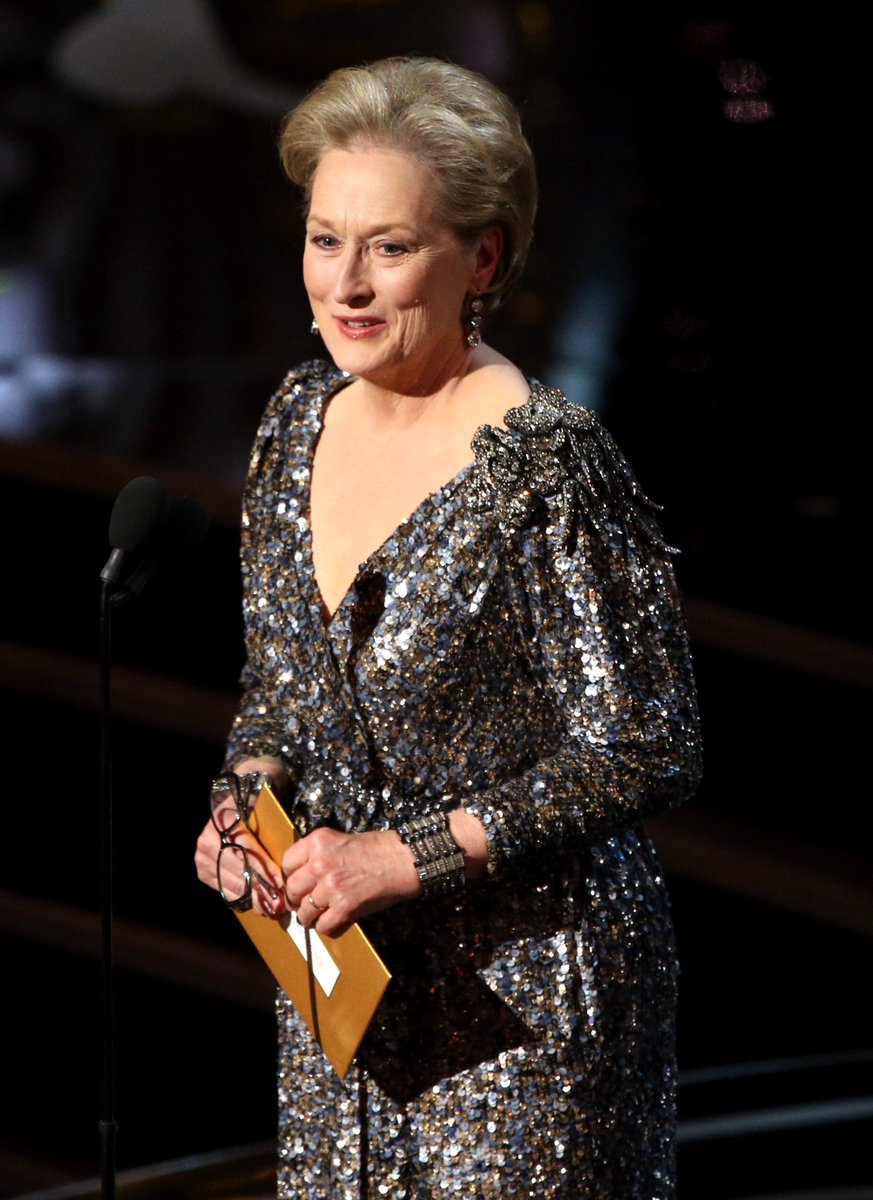
⚪️ Have Meryl Streep finally present Best Picture
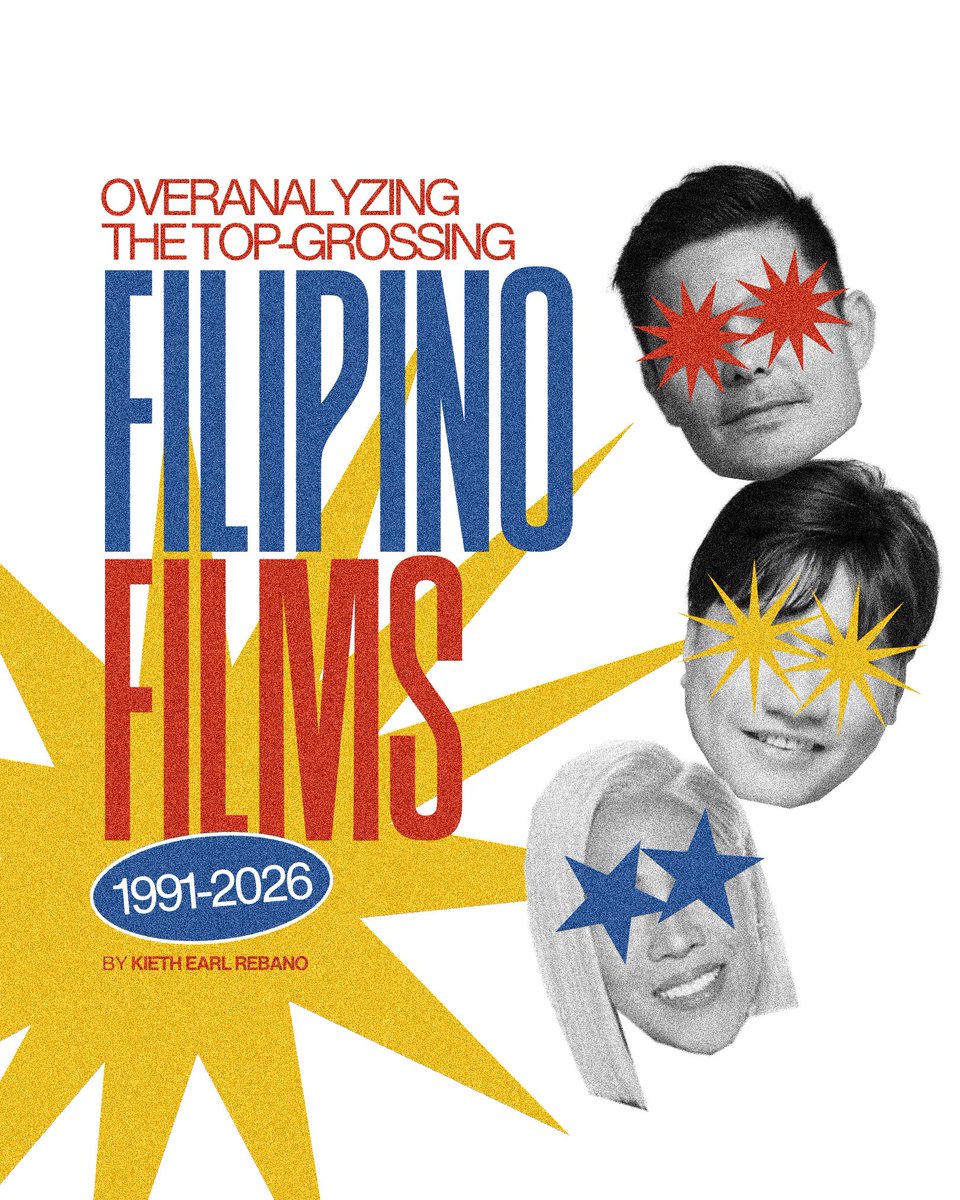
Check out this visual deep dive into the biggest commercial successes of Philippine cinema, analyzing box-office trends, stars, genres, and studios from 1991–2026*!
Olivia Lamasan’s In My Life (2009) holds a space in the Pinoy cinema canon because it treated gender and sexuality as lived, settled truths, situating a gay son within a life already in motion. It shifted the work of change onto the mother, and quietly, onto us as the audience.
What Rory Quintos’s Anak (2000) understands is that Filipino realism is never just about restraint, but more so about emotional truth that is performed out loud. Filipino realism IS melodrama.
This monologue by Claudine Barretto, 20 years young when this was filmed: perfection