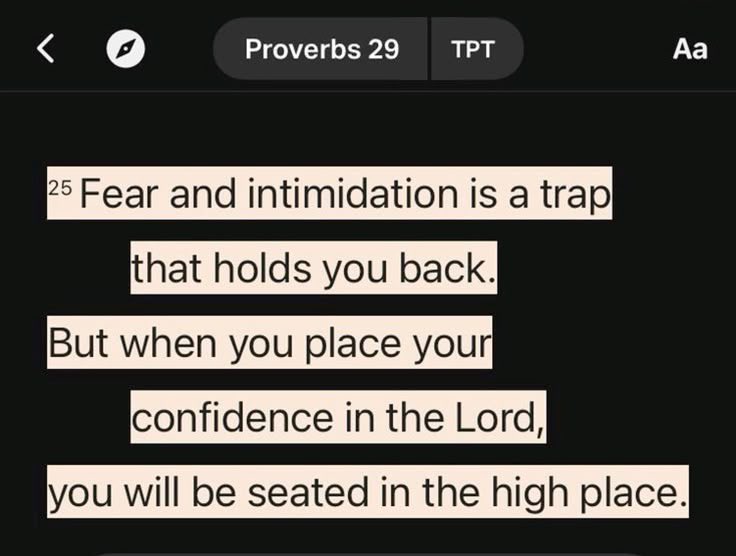
you think your desires are lofty and unreachable and God sends a glimmer of possibility your way to remind you that you are worthy of your dreams, and they are much nearer than you think.
THE PROFESSOR: THE OPINION
Yesterday I happened to sit down to catch up with the evidence of Professor Somadoda Fikeni before the Madlanga Commission. What I encountered was not merely another public servant appearing before another commission. It was something far more intellectually unsettling: an interrogation of the machinery through which the South African state has learned to produce the appearance of governance without necessarily producing the outcomes of governance. Fikeni, appearing in his capacity as Chairperson of the Public Service Commission, was unapologetic, intellectually forthright and devastatingly candid. His central proposition—that South Africa is a “cemetery of best policies” because policies are too often not implemented—should disturb anyone who still believes that our principal problem is simply the absence of another strategy, framework, task team or commission.
But it was the phrase “political economy of inefficiency” that deserves to escape the confines of the Commission's transcript and enter our national vocabulary. Fikeni was not merely describing incompetence. He was inviting us to ask a much more uncomfortable question: what happens when inefficiency ceases to be an accident and becomes an ecosystem? If policies exist, implementation mechanisms exist and oversight institutions exist, yet implementation repeatedly stalls, the analysis must move beyond incompetence towards incentives, interests, political protection, institutional fragmentation and the beneficiaries of non-performance. That is where political economy begins.
His observation about political leadership turnover is equally revealing. Fikeni indicated that during his more than five years at the PSC he had seen four ministers, noting how a minister may arrive with enthusiasm for reform only to leave before that reform takes root. State capacity requires institutional memory and continuity. Ministers may come and go; the machinery of the state cannot afford to continuously reset itself. Otherwise, government becomes an endless procession of beginnings—launches without completion, strategies without institutional memory, recommendations without implementation and reforms without sufficient time to mature.
Fikeni also connected institutional vulnerability to inequality. Officials operating at the lower levels of the state can become more susceptible to inducement, while fear of losing employment can make public servants vulnerable to political pressure. This is not an argument that poverty excuses corruption. It is an argument about structural vulnerability. Professionalising the public service, protecting officials from improper interference, strengthening ethical safeguards and ensuring credible vetting are therefore not peripheral human-resources questions. They are instruments of institutional integrity.
And here lies the great paradox of South African governance: we have accumulated an extraordinary architecture of policies, legislation, strategies, oversight mechanisms and recommendations, yet repeatedly struggle to convert architecture into performance. Two days before Fikeni appeared before the Commission, President Cyril Ramaphosa signed the new Public Service Commission Act into law, strengthening the Commission's mandate and extending its reach to local government and public entities. The law also creates stronger mechanisms for requiring executive authorities to report on implementation of PSC decisions. The timing is almost poetic: the state has strengthened an institution responsible for monitoring implementation at precisely the moment its chairperson was telling the country how profoundly implementation has failed.
That should be one of the central lessons of the Madlanga Commission. We do not need another beautiful report that gathers dust in a government archive. We need to break the cycle in which diagnosis becomes documentation, documentation becomes recommendation,
stop trying to kill your demons. give them a job.
* take the anger to the gym
* turn obsession into building something
* clean when your mind feels chaotic
* make art out of heartbreak
* let regret make you kinder
* use jealousy to figure out what you actually want
* turn resentment into boundaries
* let anxiety push you to prepare, not panic
* use your need for control to build better routines
* pour loneliness into learning how to enjoy your own company
Advocate Chaskalson asked Professor Fikeni, with a bit of a despondent chuckle, what can this Commission do, how can they frame recommendations in a way that they will get implemented, considering that recommendations from many other Commissions, including the PSC itself, are not being implemented.
His response depressed me. 😭 He said first of all, there's no political will and administrative will to implement and follow up. No resourcing either for implementation.
Most importantly though, it's when he says, those in Treasury for example who will say "what is the cost of doing this", they should be asked, "what is the cost of not doing it".
In the security establishment, he says, the cost of doing nothing, is in the lives that are lost. The cost of doing nothing, it's not the statistics, it's the pain of every family going through the challenges that otherwise could have been avoided.
He's basically warning the Commission that there is a high possibility that their recommendations will not be seen through. They'll bank on the fact that after 3 years we would have forgotten. And life will go back to what it was.
#MadlangaCommission
For many who watched this video, it was a warning from the future.
Over 8 million views across YouTube and Instagram.
One of the most raw encounters I’ve ever had.
👇🏼
Again, there’s no single time that I don’t mourn Anybooks App!
That app saved me during the Covid year.
Never in my adult life have I devoured literature because of the ease and exhaustive supply of books on that app.
That was AN APP! The bar was in the stars for real.
Yeah… it sounds like a joke, but it’s actually true 😄
When YouTube was created back in 2005 by Steve Chen, Chad Hurley, and Jawed Karim, the original idea wasn’t “let’s build the biggest video platform in the world.”
It was more like: “What if people could upload videos to introduce themselves… like a video dating profile?”
The concept was similar to a dating site where instead of just pictures and text, you’d upload a short video talking about yourself, your interests, what you’re looking for, etc. In fact, early on they even tried to get users (especially women) to post these kinds of videos… but nobody really showed up for that purpose.
So the idea flopped.
But something unexpected happened…
People who did use the platform started uploading random videos, clips, personal moments, funny content, anything. And that’s when the founders realized:
“Wait… the real value isn’t dating… it’s video sharing.”
So they pivoted completely.
Instead of forcing a dating use-case, they opened it up for any kind of video content, and that decision changed the internet forever.
The very first video ever uploaded “Me at the zoo” wasn’t a dating intro at all. It was just a casual clip. And that basically set the tone for what YouTube became.
Who was the Oxford economist who proposed (about 25 years ago) that each individual's appetite for risk is down to the fact that we all subconsciously have pre-cognitive knowledge of the date of our deaths?
Most things you see day to day had a decision behind them. That parking meter, someone had to decide to put it there. The butter is at the back of the grocery store was several decisions, of where to place the refrigerated sections, where it’s been sourced, to even make it at all. Even the subtleties of our world are all highly intentional. I feel like I take that for granted
master your craft so completely that it becomes your language. not the language you speak to impress others, but the language you think in. where the work isn’t separate from you, isn’t something you do, but something you are. where your hands know before your mind does. where you’ve repeated the fundamentals so many times they’ve dissolved into instinct.
it’s not just talent. it’s mind and body numbing devotion. it’s showing up when inspiration left. it’s the thousand hours nobody saw that make the one hour everybody wants.
excellence is a religion.
and the only prayer that matters is practice.
It sounds funny until you realize that is a whole life philosophy in one sentence. You sit there with your giant emotional Stanley cup, refilling it all day, proud of yourself. You drink your 2 liters, 3 liters, you count your bottles like a good kid ticking boxes. On paper, you are doing everything right. And still your tongue feels like paper, your skin looks tired, your head hurts behind the eyes at 16:40, and you are one minor inconvenience away from wanting to lie face down on the floor. You keep thinking the answer is more of the same water.
Nobody tells you that sometimes you are not lacking volume. You are lacking minerals. You are lacking anything with weight.
Electrolytes sound like a gym word, but really they are just proof that the body does not run on purity. It runs on salt and mess and tiny charged things that hold the water in place. Think about how different it feels when you drink a glass of cold orange juice at 09:12 after a bad night of sleep compared to your fourth bottle of plain water at your desk. One hits like “oh, I exist again.” The other just runs straight through you, and twenty minutes later you are in the bathroom wondering why your organs still feel like dry towels.
A lot of people live like that. Drowning in content, in advice, in “healthy habits,” and still emotionally dehydrated. They scroll for three hours consuming wellness tips in bed, wake up at 7, drink water, do their 10 minutes of journaling, take 8000 steps before dinner, and still feel this static emptiness in their chest. They think, weird, maybe I need another habit tracker.
No one explained that habits are just water. Minerals are something else.
Minerals are the things that actually carry charge through your life. The phone call where you finally say what hurt you instead of being “chill” again. The ugly 23:37 breakdown in the shower where you admit you are not “fine, just tired,” you are lonely and scared you wasted three years on the wrong thing. The bowl of pasta you let yourself eat slowly without scrolling while your brain keeps trying to sprint ahead to the next problem and you keep dragging it back to the plate. The real rest day that is not secretly a productivity cosplay.
Of course plain water feels safer. It is neutral. It does not wake anything up. Electrolytes sting a little on the way in. Salt on a cracked lip, sugar in a starved system. Orange juice tastes so sweet after dehydration it almost hurts. It reminds your body of how long you have been ignoring it.
Same with life. You can drink twenty self help books and still be dehydrated if you never put in one real mineral: a boundary, a no, a goodbye, a yes that you actually want, not one that sounds impressive on Instagram. You can go to therapy and carefully avoid saying the one sentence that would actually change your blood pressure. You can talk about burnout like it is a scheduling issue instead of the fact that you do not believe you are allowed to be a human being who stops.
Everyone loves the aesthetic of “clean water.” No one posts “I added salt because my nervous system is fried from 10 years of people pleasing and pretending I’m chill with everything.” But that is what actually fixes things.
Sometimes the reason you feel so tired is not that you are underperforming. It is that everything you pour into yourself is frictionless. It does not cling to you. It does not bind. It slides right through and leaves you pee-clear and soul-empty.
The body tries to tell you. The headache at 17:23 that hits in the supermarket lighting. The way your vision gets grainy when you stand up too fast. The random heart flutters when you lie down, like your chest forgot its script. You drink more water, thinking you are being good, when what you need is to eat actual food, sprinkle some salt, sit down for fifteen minutes without being “useful.”
TFG BOSS WARNS OF GAMBLING CRISIS
The Foschini Group CEO, Anthony Thunström, has warned that South Africa’s growing online gambling addiction poses a greater threat to the economy - and his business - than Chinese fashion giant Shein.
Speaking after TFG’s half-year results, Thunström said gambling is draining consumer incomes, leaving less money for retail.
The group reported revenue growth of 12.2% to R31.4 billion, but profits fell to R944-million due to weak demand and higher costs.
Thunström called gambling a national crisis, urging action as addiction undermines both families and the retail recovery.
Full story - https://t.co/p6lCih16Ss
I’m Human Enough To Feel Disappointed”
Julien Alfred 🇱🇨 got a bit emotional as she explained the cramp she experienced right before the 100m Final. Said she’s still grateful to be leaving with hardware because she didn’t in 2023!