@DHZB_Akademie "3D Advanced Echocardiography Workshop" (happening January 22- 24, 2027) makes it clear why this is way "more than just 3D."
The program bridges advanced imaging with intensive clinical realities”specifically targeting ICU management, complex valvular heart disease, mechanical circulatory support (MCS), and heart failure.
Perfect for clinicians who want practical utility, not just pretty 3D pictures.
Yes, it’s a 3D workshop but we are taking it straight to the ICU
At the #echofirst Workshop , we aren't just looking at static valves. We’re tackling the tough cases:
Echo in ICU: Deep dives into ECMO hemodynamics and using echo to guide acute fluid management.
Critical Decision Making: Using acute heart failure echo to trigger therapy (from diuretics to MCS).
Live Knobology: Real-time mastering of GE & Philips systems.
Register & view the full program: https://t.co/tqmJDqUuqQ
Just take a look at this GOAT line up 🔝
@alex1708ander@alexsfelixecho@dr_benoy_n_shah@iceman_ex@echo_batman@FGraziani_Grace@VictoriaDe32503@Ph_Bertrand@StellEkaterina@echo_stepbystep@fiore_corrado@LunaGargani@ArgaizR@papadocardio@eromerodorta@mauripieroni72@KemalogluOz@JanKnierim@echotainment@DonalErwan@FH_Verbrugge
Mant thanks to all collaborators to achieve this relvant work! 👏👇Electromechanical Profiling in Genotyped Dilated Cardiomyopathy with Left Bundle Branch Block - PubMed https://t.co/kl7fQV4pbF
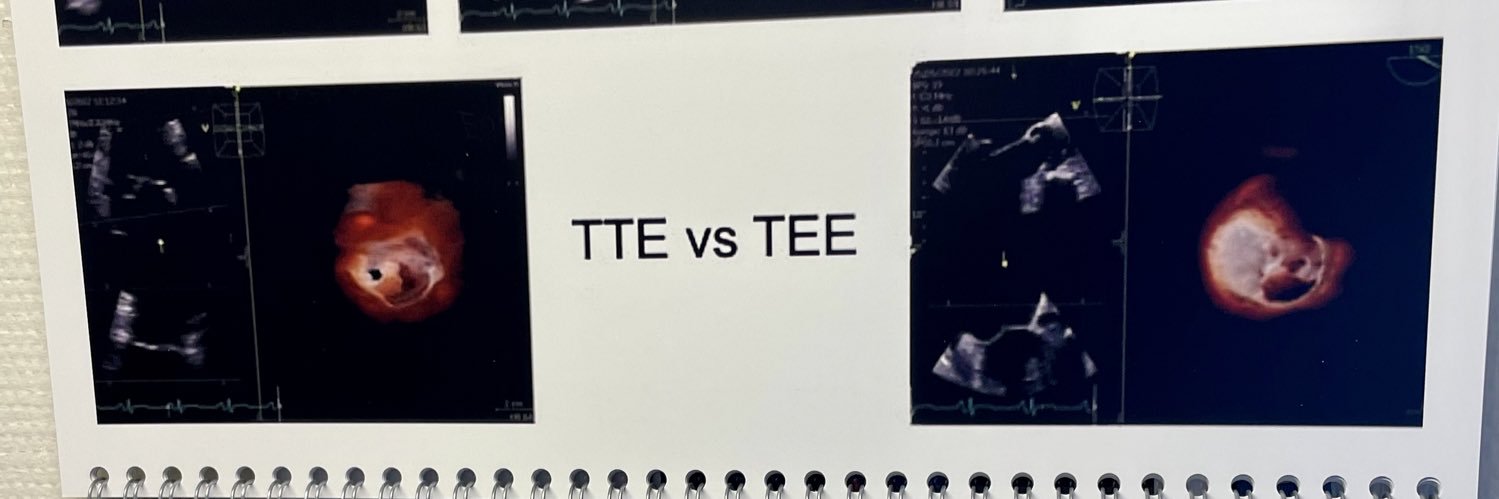
The pulmonary valve may be elusive, but TEE gives you four fantastic (the Fanta4☺️) imaging windows and at least one is usually open - for Doppler interrogation (⚠️ alignment ⚠️)
Keep searching #echofirst
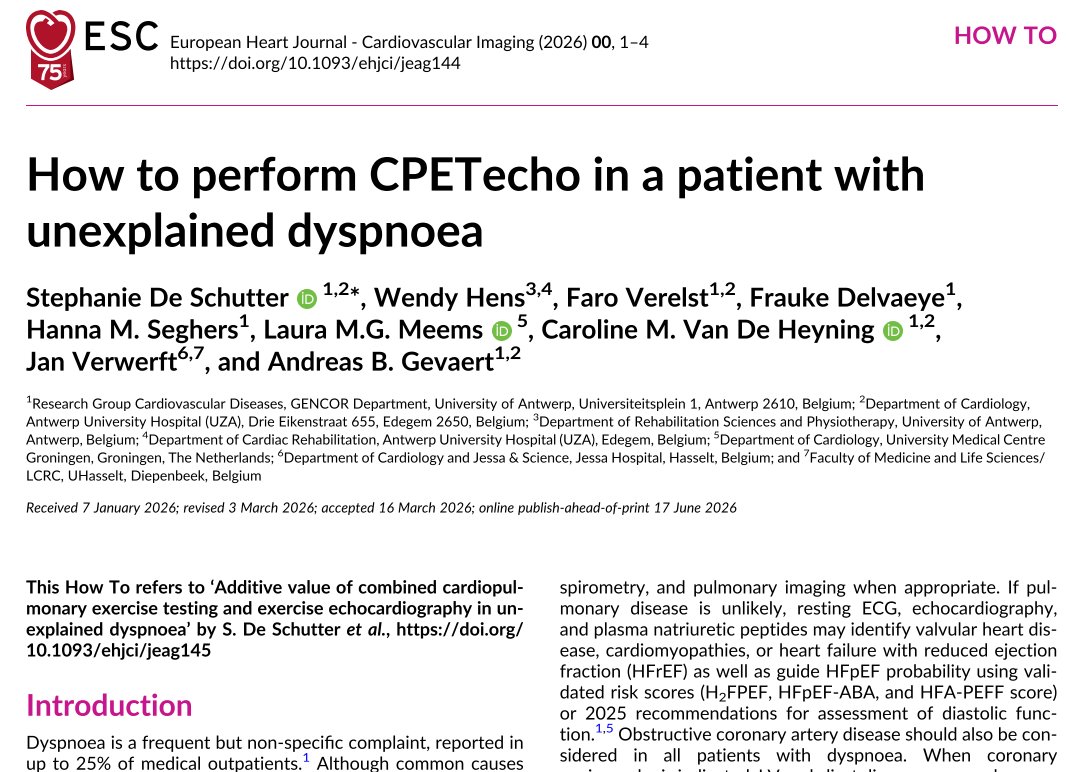
Great 🧵on how to perform combined #CPET and #ExerciseEchocardiography, and why integrating both provides substantially more diagnostic value than either test alone.
https://t.co/YTLKaQi1KS
#TR is more than a valve disease. Our review in @ESC_Journals (#EHJHF) proposes a pathophysiology-based framework:
Optimize heart failure, relieve congestion, reassess RV function and comorbidities, then intervene at the right time in the right patient. 🔗https://t.co/IMCG3q9SaM
@NMerke Exactly! Especially in 3D VCA: gain settings can create any VCA you want. My approach: first reconstruct the normal 2D planes from the 3D dataset. Then compare the reconstructed colour doppler image with the normal 2D doppler images. If they look exactly (!) the same, go to VCA.
Thx my friend but it is not only showing the settings but also to highlight these in #echofirst talks on the big stage
e.g. if talking about the 3D VCA coz in this specific topic it is crucial to have adequate FPS
@NMerke@EACVIPresident@escardio Top topic. Funny just talked about it to my fellows. And it's also crucial to not to hide these, and other numbers on the machine. Turn the all numbers "on" in the machine settings, that they are presented beside your image. Again, a crucial topic Nicolas :-)
Let´s try to take a closer look in the next #echofirst talks during the upcoming #echoMeetings around the world
what image settings the speakers are using
In #echofirst it is pivotal to be aware of the settings of the machine to ensure that our results can be trusted
In national & international meetings I do miss this in echo based talks almost always
@EACVIPresident@escardio
My Conflict of Image Quality
Frequency
•2D Imaging: 1.4/2.8 MHz
•2D Color: 2.3 MHz
Frame Rate
•2D Imaging: ~50 FPS
•2D Color: 25–30 FPS
•3D (LV EF): 20–25 FPS
•3D Valve : 20–30 FPS
•3D Color: 20–25 FPS
Image quality requires balancing frequency, frame rate, spatial resolution, and temporal resolution. Optimizing one parameter often comes at the expense of another.
In #echofirst it is pivotal to be aware of the settings of the machine to ensure that our results can be trusted
In national & international meetings I do miss this in echo based talks almost always
@EACVIPresident@escardio
My Conflict of Image Quality
Frequency
•2D Imaging: 1.4/2.8 MHz
•2D Color: 2.3 MHz
Frame Rate
•2D Imaging: ~50 FPS
•2D Color: 25–30 FPS
•3D (LV EF): 20–25 FPS
•3D Valve : 20–30 FPS
•3D Color: 20–25 FPS
Image quality requires balancing frequency, frame rate, spatial resolution, and temporal resolution. Optimizing one parameter often comes at the expense of another.
@Hragy You are right! Sport used to be about sportsmanship!
Today is all about cheating.
If they kick the ball out everybody calls it its own
When they kick someone they claim to be innocent 😇
It is all about money 💰
@DHZB_Akademie "3D Advanced Echocardiography Workshop" (happening January 22- 24, 2027) makes it clear why this is way "more than just 3D."
The program bridges advanced imaging with intensive clinical realities”specifically targeting ICU management, complex valvular heart disease, mechanical circulatory support (MCS), and heart failure.
Perfect for clinicians who want practical utility, not just pretty 3D pictures.
Yes, it’s a 3D workshop but we are taking it straight to the ICU
At the #echofirst Workshop , we aren't just looking at static valves. We’re tackling the tough cases:
Echo in ICU: Deep dives into ECMO hemodynamics and using echo to guide acute fluid management.
Critical Decision Making: Using acute heart failure echo to trigger therapy (from diuretics to MCS).
Live Knobology: Real-time mastering of GE & Philips systems.
Register & view the full program: https://t.co/tqmJDqUuqQ
Just take a look at this GOAT line up 🔝
@alex1708ander@alexsfelixecho@dr_benoy_n_shah@iceman_ex@echo_batman@FGraziani_Grace@VictoriaDe32503@Ph_Bertrand@StellEkaterina@echo_stepbystep@fiore_corrado@LunaGargani@ArgaizR@papadocardio@eromerodorta@mauripieroni72@KemalogluOz@JanKnierim@echotainment@DonalErwan@FH_Verbrugge