George Adamson was killed 37 years ago in an ambush a few miles from his isolated camp in northern Kenya. He was on his way to pick up visitors at his dirt airstrip when his Land Rover was attacked by gunfire from three Somali bandits.
He wrote of Lions, "Like people, they can look impressive, beautiful, curious, ugly or plain. The best are adventurous, loyal and brave." George always claimed that lions have a sixth sense; in an uncanny foretelling of his death, the whole pride of lions and lionesses gathered outside the camp the night before he died - as if paying their last respects to the man who had always been their protector.
RIP Father of Lions, also known as Baba ya Simba. Your enduring legacy lives on.
Joseph Kodonyo.
https://t.co/dYodVHYOfI
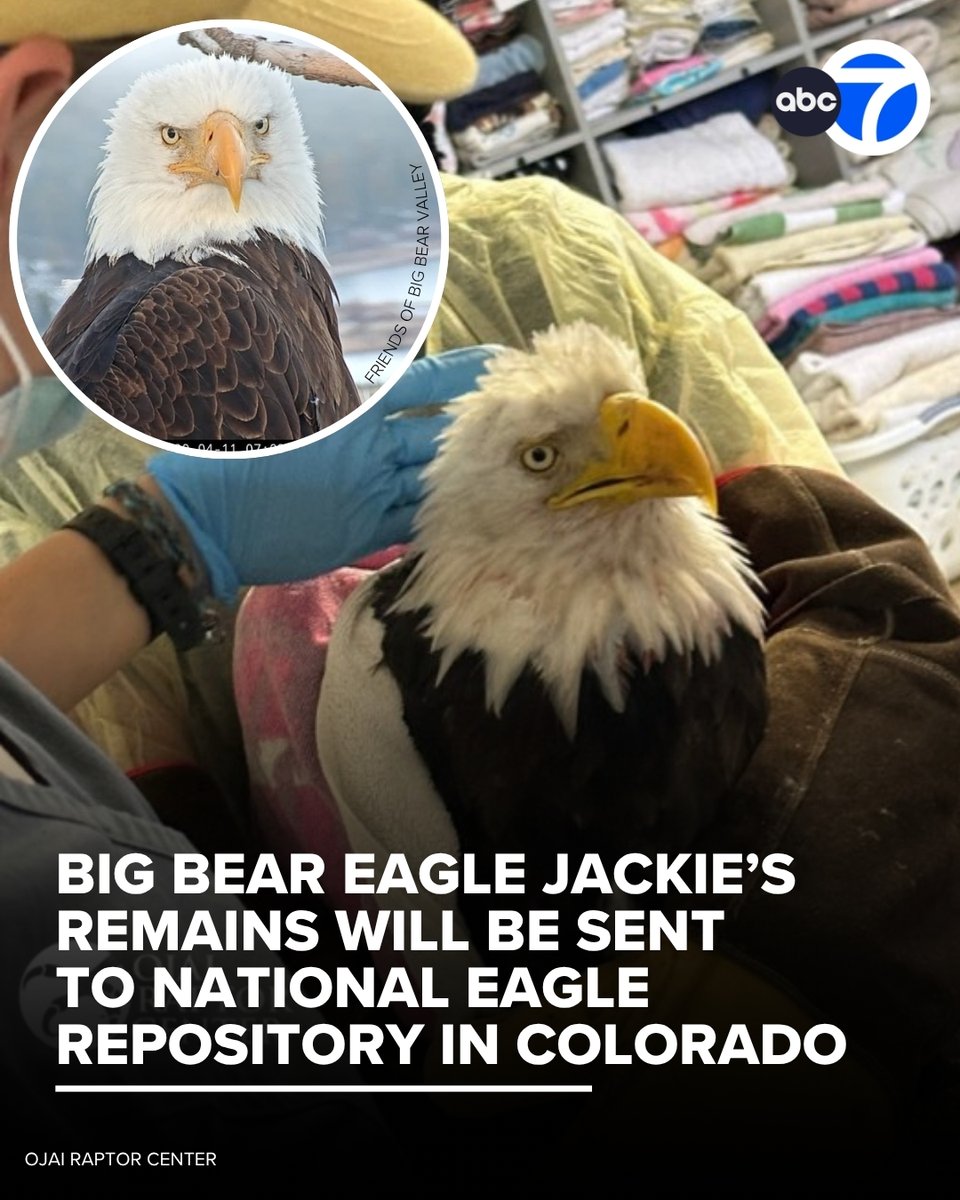
In recent days, vet teams discovered that beloved Big Bear bald eagle Jackie experienced additional health challenges in addition to her previously diagnosed anemia and kidney inflammation. The California Department of Fish and Wildlife shared that Jackie had a large blood clot in her wing and kidney, liver abnormalities, lung abnormalities and inadequate bone marrow response.
Read more: https://t.co/Jxe574nqTZ
A very rare white Bison walking in Wyoming.
White Bison hold deep cultural and spiritual significance, particularly for many Native American tribes.
For the Lakota people, the appearance of a white buffalo is sacred, symbolizing the return of the White Buffalo Calf Woman—a figure representing both blessings and warnings.
🎦 Credit: Jesus_86 (Instagram)
Your Three Minutes Of Serenity ❤️
This remarkable film shows a paddle boarder’s close encounter with two curious whales in Argentina. The drone footage was captured by photographer Maxi Jonas who spotted the Southern Right Whales playfully swimming beneath the board of Analia Giorgetti. She was on the water during her birthday and described the chance meeting as a "magical moment."
🎦 Credit: Maxi Jonas.
According to the California Department of Fish and Wildlife, in compliance with federal law, Big Bear eagle Jackie's remains will be transported to the National Eagle Repository, which is a "one-of-a-kind facility operated by the U.S. Fish and Wildlife Service's Office of Law Enforcement."
Read more: https://t.co/ROgxY5pgLJ
The first ever recorded sighting of a rare orange-colored snowy owl in Michigan 🦉❄️🌕
This extraordinary bird was photographed flying directly in front of the full moon, creating a scene that feels almost unreal. Snowy owls are already rare to see in the wild, but one with this unique orange plumage has never been documented here before. A historic moment for birdwatchers and wildlife enthusiasts alike.
📸 Matthew Collins Photography
Robert Redford at his cabin in Sundance, Utah, in 1974.
Robert Redford’s 1974 cabin in Sundance, Utah, is a striking example of mountain modern architecture and reflects his longstanding commitment to conservation. Designed with architect John Shirley, the home was built using native fieldstone and rough-hewn pine logs, allowing it to blend naturally into the rugged landscape of the Wasatch Mountains.
Instead of embracing traditional Hollywood extravagance, Redford opted for thoughtful, intimate spaces, including a circular glass-walled room for reading scripts and a windowless music room inspired by Pueblo kivas. Filled with handwoven textiles and Native American art, the cabin later became an early creative hub for the Sundance Institute and helped inspire a broader 5,000-acre conservation effort that protected the surrounding canyon from commercial development.
In 1960, David Latimer planted a spiderwort sprout inside of a large glass jar, added a quarter pint of water, and then sealed it shut.
He opened the bottle for the first time only 12 years later, in 1972, to add some water and then sealed it for good.
The self-contained ecosystem flourished for more than 60 years as a perfectly balanced garden and self-sufficient ecosystem.
The bacteria in the compost ate the dead plants and broke down the oxygen released, turning it into carbon dioxide, essentially forming a microcosm of Earth.
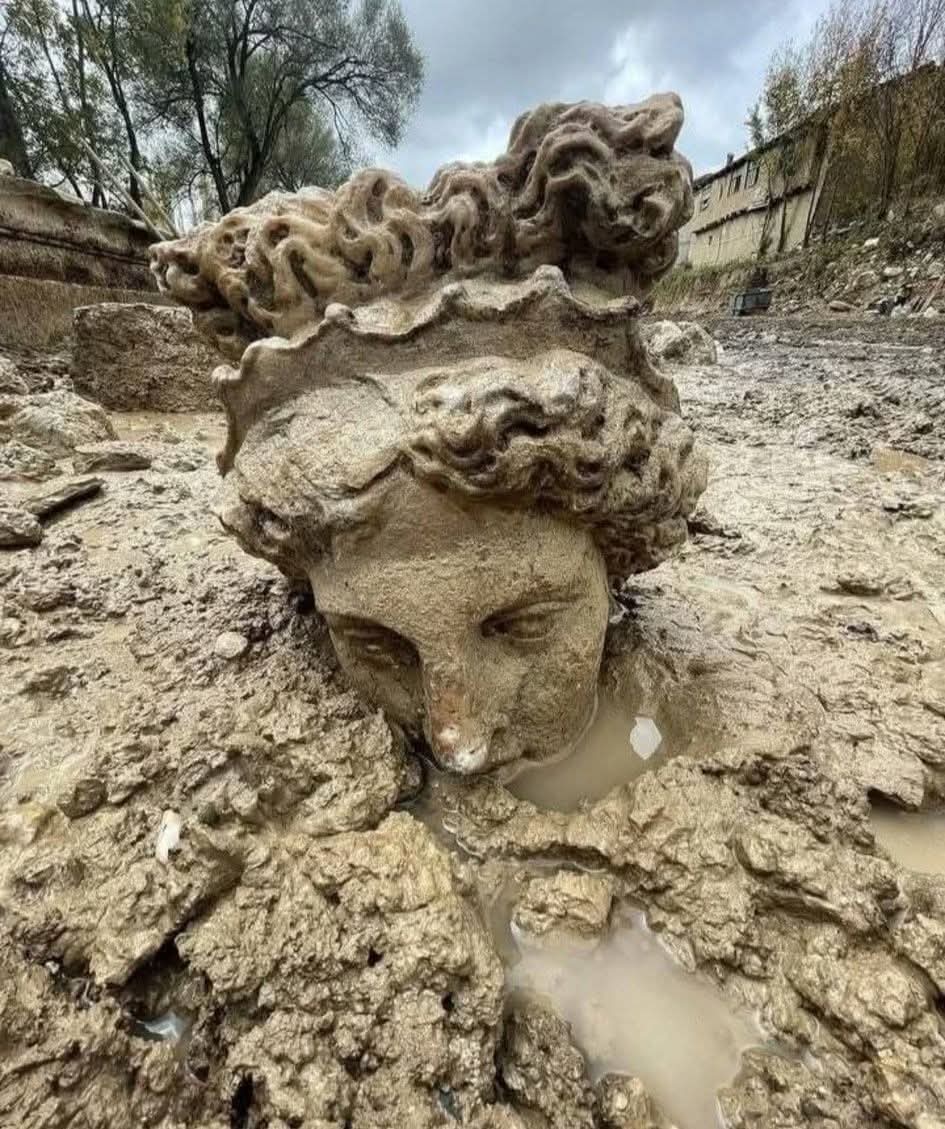
A 2,000-year-old marble head of the Greek goddess Aphrodite was unearthed in Türkiye 🇹🇷
In 2021, excavations carried out in the ancient city of Aizanoi in western Kütahya province, the heads of statues of Aphrodite, the mythological goddess of love and beauty, and Dionysus, the god of wine, were unearthed.
The excavations in the ancient city, which was included in UNESCO World Heritage Tentative List in 2012 and located 50km from the city center, are being continued by the Kütahya Museum Directorate.
Excavation coordinator Professor Gökhan Coşkun of Dumlupınar University told Anadolu Agency (AA) that the work in Aizanoi, a site which dates back 5,000 years, was carried on without interruption with 100 workers and 27 technical personnel.
Noting that they have been sustaining their work in a creek bed in the ancient city of Aizanoi recently, Coşkun told that the statuary heads of Aphrodite and Dionysus were unearthed in this creek bed.
"These are important findings for us, as they show that the polytheistic belief culture of ancient Greece existed for a long time without losing its importance in the Roman era," he said. "The findings suggest that there may have been a sculpture workshop in the region."
Home to one of the most well-preserved temples in Türkiye, dedicated to the Greek god Zeus, the city of Aizanoi is easily comparable to Ephesus in its grandeur and importance. Initially inhabited by the Phrygians, the area was converted into a city in 1st Century BC, by the Romans and includes unique spots such as a temple; four roman bridges, two of which are still in use today; the world’s first known indoor marketplace, with inscriptions of the prices of goods sold still visible on the walls; theaters; roman baths and an ancient sacred cave.
#archaeohistories
As the @NASAArtemis II crew approaches the Moon, they will get a firsthand view of the Moon's surface. One of the most striking (pun intended) features they will see is the craters which mark its surface, and are especially numerous on the far side, which the crew will be able to directly see. These craters are formed by impacts that have happened over the history of our Solar System and act as a sort of historical record of the conditions around the Earth and Moon.
The Earth has had many impacts over its history that have had big consequences on our planet (just ask the dinosaurs...), but plate tectonics, weathering, and volcanism have erased many craters on the Earth, and with them, the record of this history. The Moon helps us fill in the picture and tells us a unique story about our planet's past!
Even so, there are still many craters on Earth, but many are often not as easily visible as those on the Moon. Some, like Manicouagan Crater in Quebec, Canada, are very readily seen from the @Space_Station. This crater was created over 200 million years ago, when a 5 km asteroid crashed into the Earth, and is over 70 km wide. I saw this view through the Cupola window as I was exercising and had to pause to take a picture!
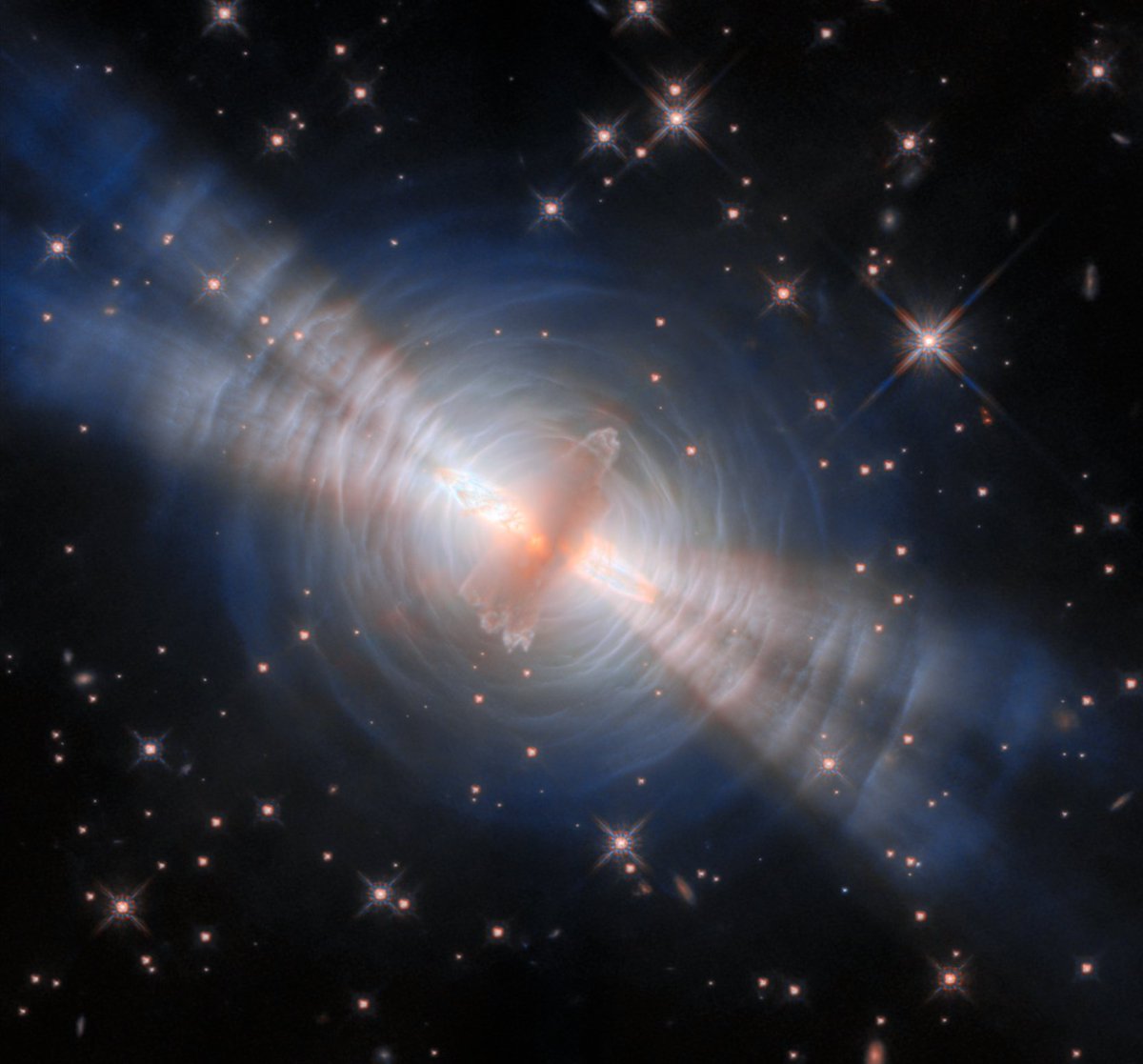
So that’s what a swan’s egg looks like… 🤔
This @NASAHubble image reveals the central star “yolk” and dense dust cloud of the Egg Nebula, located about 1,000 light-years away in the constellation Cygnus (the Swan).
On my first mission I completely fell in love with space photography - tough not to when you’re graced with this kind of unique perspective of viewing all that Earth has to behold from above. I’ve been so happy to bust out the array of impressive lenses that we have up here once again, and this time with even better cameras (Nikon Z9, vs the D5 from my previous mission).
I was lucky enough to capture some pretty good aurora (northern lights, here over Alaska and Canada) on my first timelapse attempt of the mission, stay tuned for more!
Hoping for some impressive solar events to put on a fascinating show like the ones a few months ago.