Composer, Musicologist, Author, Katch co-founder, Architect of Pandora Radio's Music Genome Project, with various thoughts about music, data, and taste
Nice video promo by @DGclassics:
Giovanni Gabrieli was first great Venetian composer, bridging the Renaissance and Baroque eras (teacher of Schütz).
And in 1600, Venice was the cutting-edge musical capital of the Western world.
🎅 Our musical Christmas journey this advent continues in Venice with Paul McCreesh and Gabrieli's 'A Venetian Christmas'. It explores how the First Christmas Mass in St. Mark's Basilica might have been celebrated in the 1600.
🎧 → https://t.co/sfgeejBiXX
Lo, the poor voice artist in our AI world:
I recorded myself doing a VO mock-up for my PBS show trailer, gave it to @elevenlabs, and got back a pro-sounding baritone narrator, “Josh”.
I really want to hire a human, but damn…
Remembering a dear friend Jim Salestrom (@jimbosalesbo) - singer, songwriter, great human - who left us far too soon
Here singing his “Grateful for the Evening”
We’re grateful for you, Jim, and will miss you. Now angels really do walk among us
https://t.co/M2A25xGLQi
The power of harmonic soundwaves…
Traveling at a few hundred cycles per second (the guitar chords collectively), they can even make water bugs dance!
No wonder they move us so!
Careful what you wish for…
The @OpenAI Board wished to right a wayward ship by firing @sama, but instead made a folk hero out of him and @gdb, laughingstocks of themselves, and their company on the verge of ruin.
Oops…
Happy to see an excited announcement from Google Deepmind’s Music AI program Lyria:
https://t.co/9Krpa9QVea
Anxious to check out its functionality, and see if it exceeds the bland results of their MusicLM. Will report back…
@sama’s smart variation on Lincoln’s quote:
You can get a few people to use your product all of the time, or many people to use your product some of the time…
If you want to be a successful start-up, he says, build a great (not good) product — and do the former!
Sam Altman on why you shouldn’t track absolute user growth in the early days of a startup
“Nothing but a great product will save you; you can get everything else right and it still won’t work.”
He points out that almost all startup founders get the following wrong:
“It is more important to have a small number of users that love you than a lot of users that like you… Eventually what you want of course is a lot of users that really love your product, but that’s almost impossible to do.”
In practice, you have two choices:
Deep and Narrow: “You have a small number of users that really love you and then find out how to find more and more of those users and broaden the appeal of the product.”
Shallow and Wide: “You can have a lot of people that sort of use the product once or twice and kind of like it and try to figure out how to get them more engaged over time.”
“With high confidence, I can say that you want to start with a small number of users that really love you. Almost all great companies have products that start this way.”
He argues that a good indicator of users loving your product is retention and frequency of use:
“In fact, I think this is so important that you actually shouldn’t track absolute growth in number of users in the early days of a startup. You should just track how often they’re using it… That’s a good early indicator of users that love you—better still is them spontaneously telling their friends to buy your product.”
Follow @startuparchive_ for more tactical startup advice!
#Onthisday in 1989, the Berlin Wall fell, and on Christmas Day, Bernstein conducted a concert in Berlin with musicians from both east and west. He changed the word “Freude” (Joy) into “Freiheit” (Freedom). The recording was titled “Ode to Freedom”.
🎧 → https://t.co/izbPATSccu
As a co-founder (at Katch) myself, I concur with @reidhoffman’s sober, if clichė, observation.
Being a founder means failure is not an option, and so the “balance sheet” matters more than “balance”.
It’s even worse if you’re a founding CEO, which (thank God) I’m not.
Reid Hoffman on why the best founders don’t have work-life balance
In the clip below, the founder of LinkedIn addresses the classic question on work-life balance at startups:
“I actually think founders have no balance… If I ever hear a founder talking about how ‘this is how I have a balanced life’ and so forth, they’re not committed to winning… The really great founders are like: ‘I am going to literally pour everything into doing this. Now it only may be for a couple of years… But while I’m doing this, I am unbalanced at this thing.’ It’s not to say that you don’t take breaks or you don’t go on dates or whatever else. But you’re super focused on this because it’s really hard and there’s lots of ways to die.”
Elon Musk emphasizes this as well:
“If other people are putting in 40-hour work weeks, and you’re putting in 80 hour work weeks, you will achieve in 6 months what takes them a year to achieve, which will greatly improve your odds of success”
Why make such extreme sacrifices?
Well, as Paul Graham puts it in his essay How To Make Wealth:
“Economically, you can think of a startup as a way to compress your whole working life into a few years. Instead of working at a low intensity for forty years, you work as hard as you possibly can for four.”
In the early years, you will have to make lots of sacrifices and shouldn’t really expect much work-life balance if you want your startup to be successful.
But you can view it as an opportunity to compress your whole working life into a few years.
And hopefully excitement about what you’re building and the extremely-talented team you’re building it with make those long hours way more fun and rewarding than a normal 9-to-5 job.
Any reason to re-visit the Goldberg Variations is a welcome one.
Such high praise for @VikingurMusic has gotten my attention, and the sprightly-performed clip here (the first half of Var. 1) is promising.
An early birthday present, perhaps?
🤩 @VikingurMusic dreamed of recording Bach's Goldberg Variations for 25 years. Now, his dream has come true, and the album is being celebrated everywhere.
🎧 → to Víkingur Ólafsson's album "Goldberg Variations": https://t.co/lHWDlEeHOZ
Now things really start to change!
Cool new technology that helps you learn or write or draw things? Great.
Cool new technology that helps you buy things? Shit howdy!
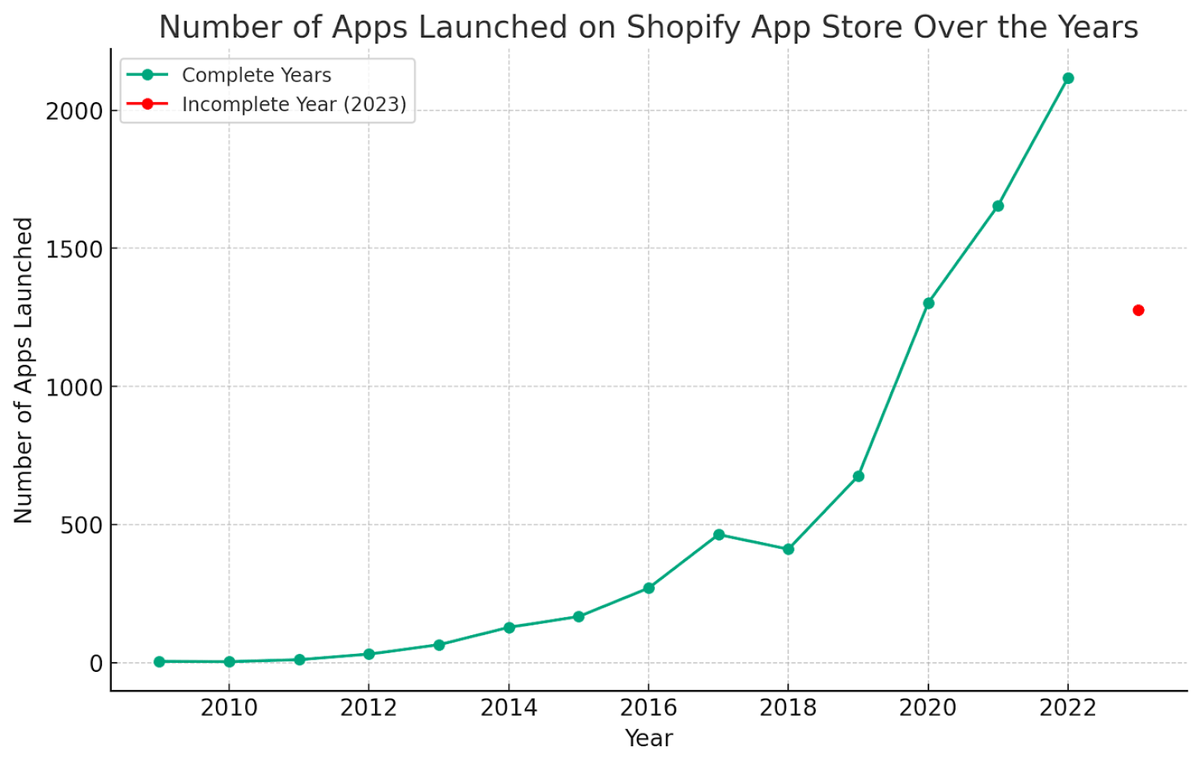
Today, OpenAI announced they are releasing the ChatGPT Store, an App Store for ChatGPT
Shopify Apps: 33,000 apps, $561M of revenue
App Store: 1.8M apps, $910B of revenue
ChatGPT Store: 0 "agents", $0 revenue
Probably millions of agents, billions revenue soon
I wish I had created an app for Apple App Store in 2009 when App Store came out
I wish I created an app for Shopify App Store in 2009
Tons of opportunity to be building for ChatGPT right now. I wouldn't want to miss it.
These paradigm shifting moments happen once every 15 years
--
Follow me @gregisenberg to follow along me building businesses for different communities.
Listening to the “last” Beatles tune, “Now and Then” - a gift to us Beatlemaniacs.
A haunting minor-chord progression, clever form, hints of “Julia”, “Dig a Pony”, and “Because” (can you find them?).
A historic curiosity, but a welcome one.
https://t.co/TsGzbZMcVF
“How lucky was I to have those men in my life” - @PaulMcCartney in this moving doc on the making of the “last” Beatles song.
So cool to see the thinking, emotion, and technology behind “Now and Then”.
And seeing Paul back at Capitol’s Studio A (where I also got to record 😏).
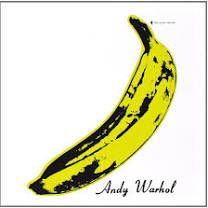
Listening to the The Velvet Underground & Nico, their fascinating 1967 debut.
Points forward, for sure, but also to their eclectic influences: Dylan, the Stones, Crumb, Shankar, etc.
And with half the songs based on a I-IV harmonic pivot, also quintessentially American.
Toccata and Fugue in D minor
Night on Bald Mountain
Dance macabre
Symphonie fantastique
Music for Strings, Percussion, and Celeste
All good examples of “scary” music
But it’s worth asking: how is the brain able to convert mere soundwaves to fear?? Boo!
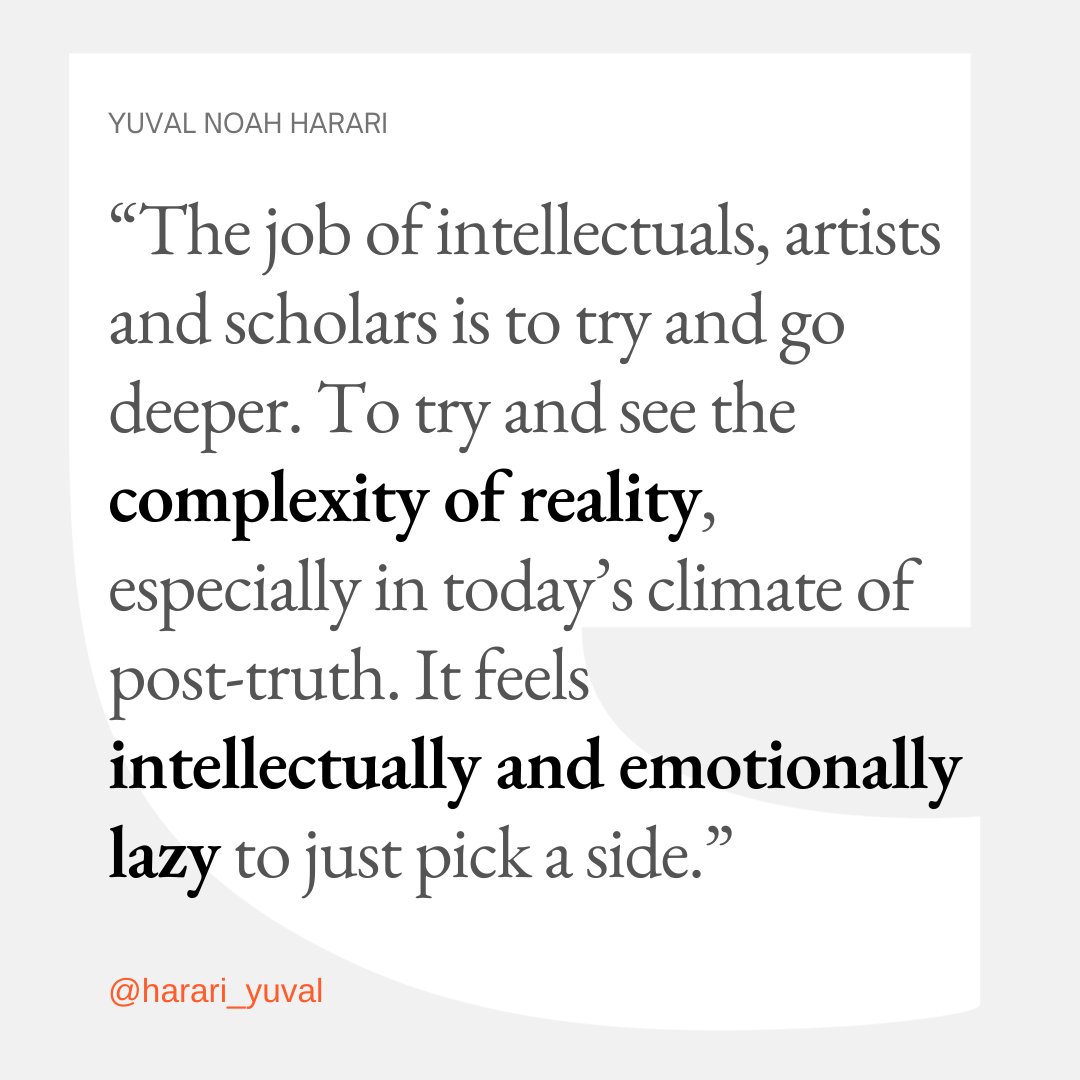
As @harari_yuval notes, nothing can be understood by embracing a single perspective
Indeed, it’s not just our “job” to seek out the complexities of “reality”, it’s an inevitability if one is being intellectually or artistically honest
Reality, lest we forget, is quantum
During times of conflict and suffering, we can only hope that outsiders who are not immediately affected will nurture seeds of peace. The job of intellectuals, artists and scholars is to try and go deeper. To try and see the complexity of reality, especially in today's climate of post-truth. It feels intellectually and emotionally lazy to just pick a side.
#quote #war #peace #hope #empathy #truth #criticalthinking
An astute observation by @SouthPark creator Trey Parker on why some stories work better than others:
Not a series of “and then…”, but a sequence of “and therefore” or “yes, but”… to keep the audience leaning forward.
The same, by the way, applies to composing good music.
Students at NYU asked the creators of South Park the million-dollar question:
“What makes a good story?”
They gave one of the best explanations of story I’ve heard:
“If we can take the beats of your outline, and the words ‘and then’ belong between those beats… you got something pretty boring.
What should happen between every beat you’ve written down is the words ‘therefore’ or ‘but.’”
They go on to say, “That gives you the causation between each beat, and that makes a story.”
Point 1:
There’s an idea in storytelling called ‘Promise, Progress, Payoff.’
Essentially, a story is a neverending cycle of promises that are paid off over the span of the story.
It’s a cycle of expectation and resolution. Cause and effect. Conflict and progress.
Point 2:
A story isn’t a bunch of random events thrown together.
A story is a series of but / because / therefore moments.
A famous example:
• Harry discovers he's a wizard. Because of this, he goes to learn magic at Hogwarts.
• But then he learns Voldemort wants to kill him and rule the world.
• Therefore, he must find a way to defeat him.
Point 3:
‘And’ implies a simple continuation.
‘But / Therefore’ give prior events meaning through causation.
‘But’ implies conflict. ‘Therefore’ implies progress.
I’m reminded of a Hemingway quote:
“Prose is architecture, not interior decoration.”
Great writing is intentional. It doesn’t wander. It builds upon itself.
***
I hope you enjoyed that! If so, follow @nathanbaugh27 for more ideas and writing like this.
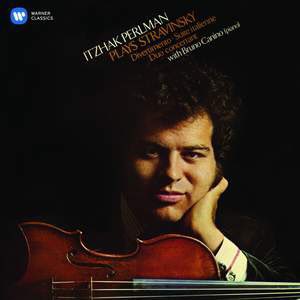
Listening to Stravinsky’s Suite italienne, for violin and piano, performed by Itzhak Perlman.
Rarely is a transcription “better” than the original (the ballet Pulcinella, after Pergolesi), but to me, it’s far more potent emotionally.
Musical neo-classicism at its finest!
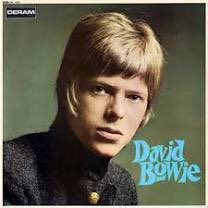
Listening to Bowie’s eponymous 1967 debut album.
A feisty, if at times odd, vaudeville pop album, containing striking seeds of Hunky Dory - especially in its frequent harmonic audacity.
Check out the Bacharach-esque “There is a Happy Land”.
So much wonder here:
The beauty of this image.
The mind-numbing variety in relative scales.
The astonishment that we can calculate this speed.
The mystery of a future collision.
The humility and gratitude we all SHOULD feel.