NEW: No technology currently exists to repair damaged brain tissue and fully restore lost function. FRONT aims to enable millions with what is considered permanent brain damage to regain lost functions, including motor control, vision, and speech. https://t.co/uaAhiQV7bf
Millions of Americans are living with the damage caused by strokes and traumatic brain injuries.
Today we launched a program in ARPA-H to restore function to the neocortex.
Glad to see this published: Trigeminal nerve stimulation as a 'semi-active' TMS control condition: Heart-Brain Coupling identifying 'sham' response to TMS.
Implications for power calculation, future meta-analyses and TMS trial design.
https://t.co/eElf6KMV5t
Great collaboration with Roberto Goya-Maldonado, @NolanRyWilliams, @JonathanDownar, @AleksandraDojn1 and @Jcoetzee
FDA Commissioner Dr. @MartyMakary tells @JillianMichaels on NewsNation’s #OnBalance that the agency needs to "listen to doctors" and expand its research on psychedelic drugs, calling it a top priority for the Trump administration.
MORE: https://t.co/kA65G1x4R7
This is such a fascinating area of research
🧲 10 iTBS (rTMS) sessions/day
⌛️ 50-min intersession intervals
☀️ Up to 5 consecutive days
📋 50% response / 40% remission just after tx
🗓️ 60% remission within 1 month
https://t.co/yUN2AADR2v
Another magical TED in the books. This year felt especially meaningful as I got to share the experience with my parents.
A standout for me was a session curated by our brilliant friend @Liv_Boeree. IMHO it was the most powerful of the conference. Not a dry eye in the room after a devastating talk on factory farming.
Another highlight: talks from two dear friends, @NolanRyWilliams and @DeanOrnishMD. Nolan spoke on the healing power of ibogaine, Dean on reversing Alzheimer’s through lifestyle medicine. I have no doubt their work will profoundly shape how we approach mental health, TBI, and neurodegeneration.
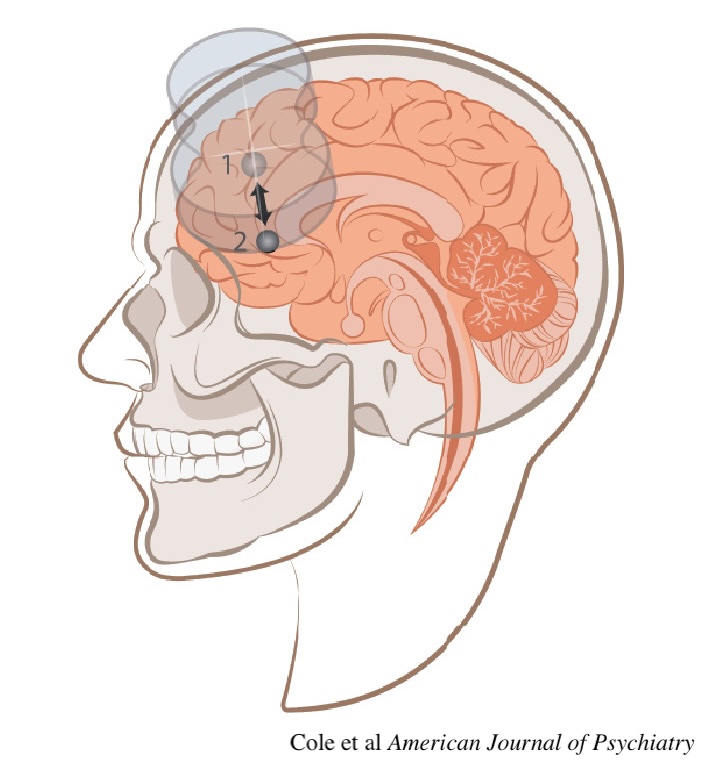
My hypothesis was inspired by an episode of the @hubermanlab podcast with @NolanRyWilliams where they discussed advances in rapid Transcranial Magnetic Stimulation (rTMS) for the treatment of depression utilizing the SAINT protocol. (3/12)
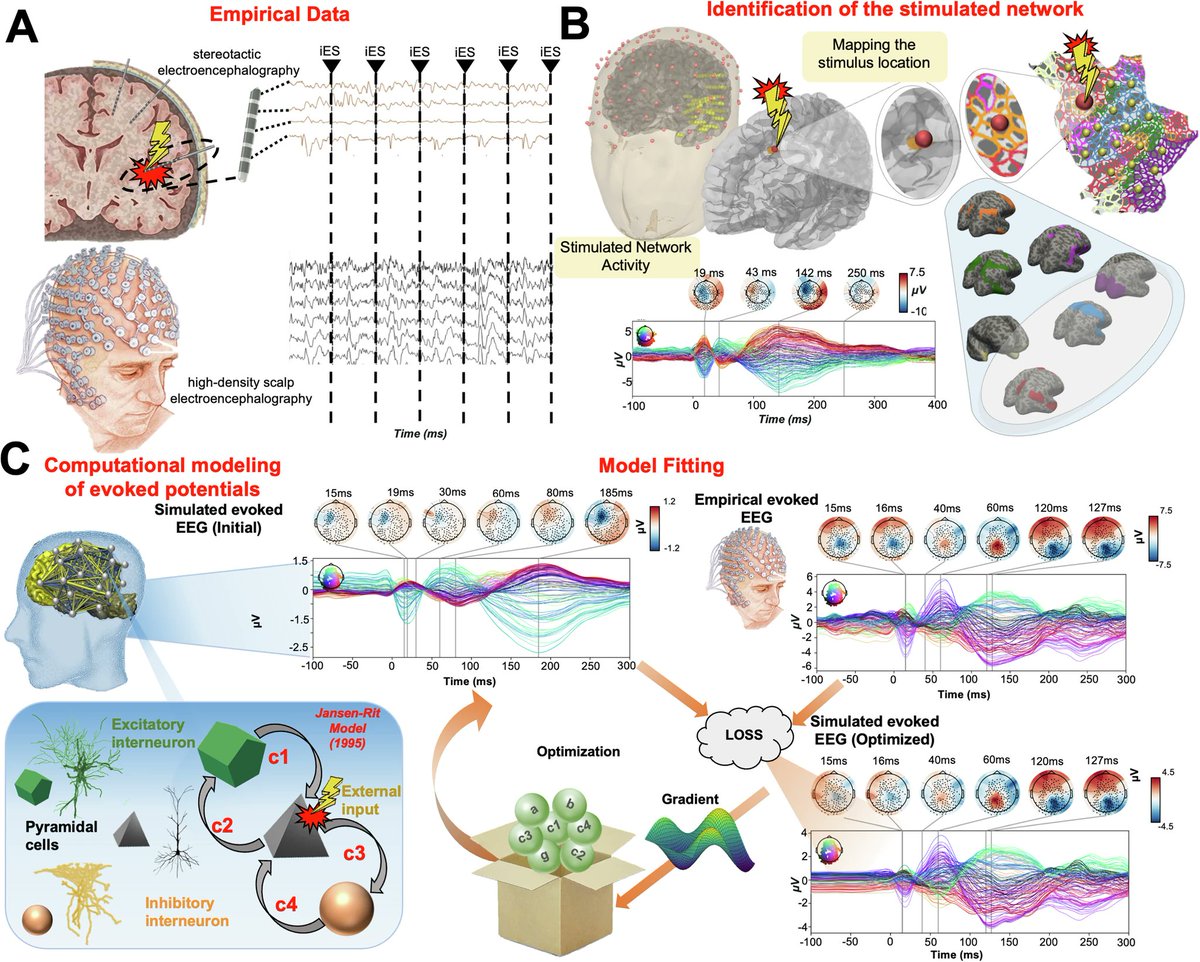
1/11 How does our brain's hierarchical organization impact its response to stimulation? We found striking differences between "high-order" networks (involved in complex cognition) vs "low-order" networks (handling sensory/motor functions) @NatureComms
https://t.co/LyjzKhEbju
Ever wonder why some brain regions are more excitable? Using intracranial stim and recordings in humans, our team led by @Momi@saraparmi@StanfordBrain@andreapigorini@neurodidact @KellerStanfordU discovered a fascinating hierarchy in these neural responses 🧠⚡️
And Nolan's Stanford Ibogaine study with veterans was jaw-dropping. One treatment session resolved their traumatic brain injury and had an enormous curative effect on all mental health co-morbidities measured (depression, anxiety, PTSD). It also cures OUD https://t.co/Sogh8kORdb
P͢s͢y͢c͢h͢e͢d͢e͢l͢i͢c͢ ͢S͢c͢i͢e͢n͢c͢e͢ ͢S͢y͢m͢p͢o͢s͢i͢u͢m͢ ͢2͢0͢2͢5͢
1) From dosing octopuses with MDMA to treating stroke disability 💊🐙🧠
Gül Dölen closed out the science updates with her work on the mechanism of action of psychedelics. From the animal work, she discovered that psychedelics act as a master key to reopen critical periods of metaplasticity in the brain (and this does not happen with the drugs of addiction, like cocaine, alcohol or meth). We naturally pass through several different critical periods as children, and they rarely reopen in adults (they reopen for about two weeks after a stroke as the brain tries to heal itself from physical injury, but then the window closes again). “For 100 years we have had the intuition that we are bad at curing the diseases of the brain because the relevant critical period is closed.”
How? Psychedelics relax the extra-cellular matrix, that assemblage of proteins and sugars that resides outside our neurons and can retard the formation of new synapses. The length of this relaxation period is much longer than the psychedelic trip itself, lasting up to weeks (see graph for the correlation of trip duration and integration period length). The type of critical period of learning reopened depends on the set and setting.
To further test her hypothesis, we are helping fund her PHATHOM study to extend this to a neurological condition — recovery from stroke disability. It appears to work in mice, and trials are now underway in humans, using psychedelics and digital physical therapy in patients who have lost motor function from a stroke in the past. It would be a major breakthrough… and a testament to per her persistence, having been rejected for NIH funding seven times now.
2) Nolan Williams' lab continues to learn from the 30 special forces veterans who cured their traumatic brain injury (TBI) with a single session of ibogaine, a powerful psychedelic. Their self-reported intensity of the mystical experience correlated strongly with the degree of recovery from PTSD.
And a qualitative update from a discussion I had in the poster session: they analyzed the personal written journals of the veterans, and many of them privately wrote the same thing: “I felt my brain healing.” It’s an interesting perceptual metaphor as there are no sensory neurons in the brain. We have been funding this work as well.
3) Ellen Bradley of UCSF is studying psilocybin in Parkinson’s Disease (PD) 🍄
Why? Depression precedes PD in about half of patients. A loss of dopaminergic neural function is part of the pathophysiology of PD. Psilocybin has been shown to effectively treat depression (in various clinical trials). PD is characterized by synaptic loss, and psilocybin is a psychoplastogen, increasing the pool of available synapses. PD is characterized by neuroinflammation, and psilocybin is anti-inflammatory. So far, they have found psilocybin acutely treats the depression (with a 9 point improvement in MADRS scores) and the effect on Parkinson’s itself is a longer term endpoint of the study.
4) Fellow Estonian Pilleriin Sikka of Stanford is studying the transformative experiences some people experience while under anesthesia. Some report hyper-real dreams that relieve them of PTSD.
5) Jessie Muir of UC Davis is curious about the phenomenon of cuddle puddles in humans and animals on psychedelics. He studies the Dorsal Root Ganglion (DRG) neurons are sensory neurons located in clusters along the dorsal roots of the spinal cord and mediate sensory perception. He found the serotonin 2A receptors commonly engaged by psychedelics, documented their activation with psychedelics, and noted that they modulate the sensation of the burning spice capsaicin, changing the pathway of sensation to perception. Psilocybin is also analgesic to neuropathic pain. I think he should make the metaphorical mashup: we contain multitudes of doors of perception.
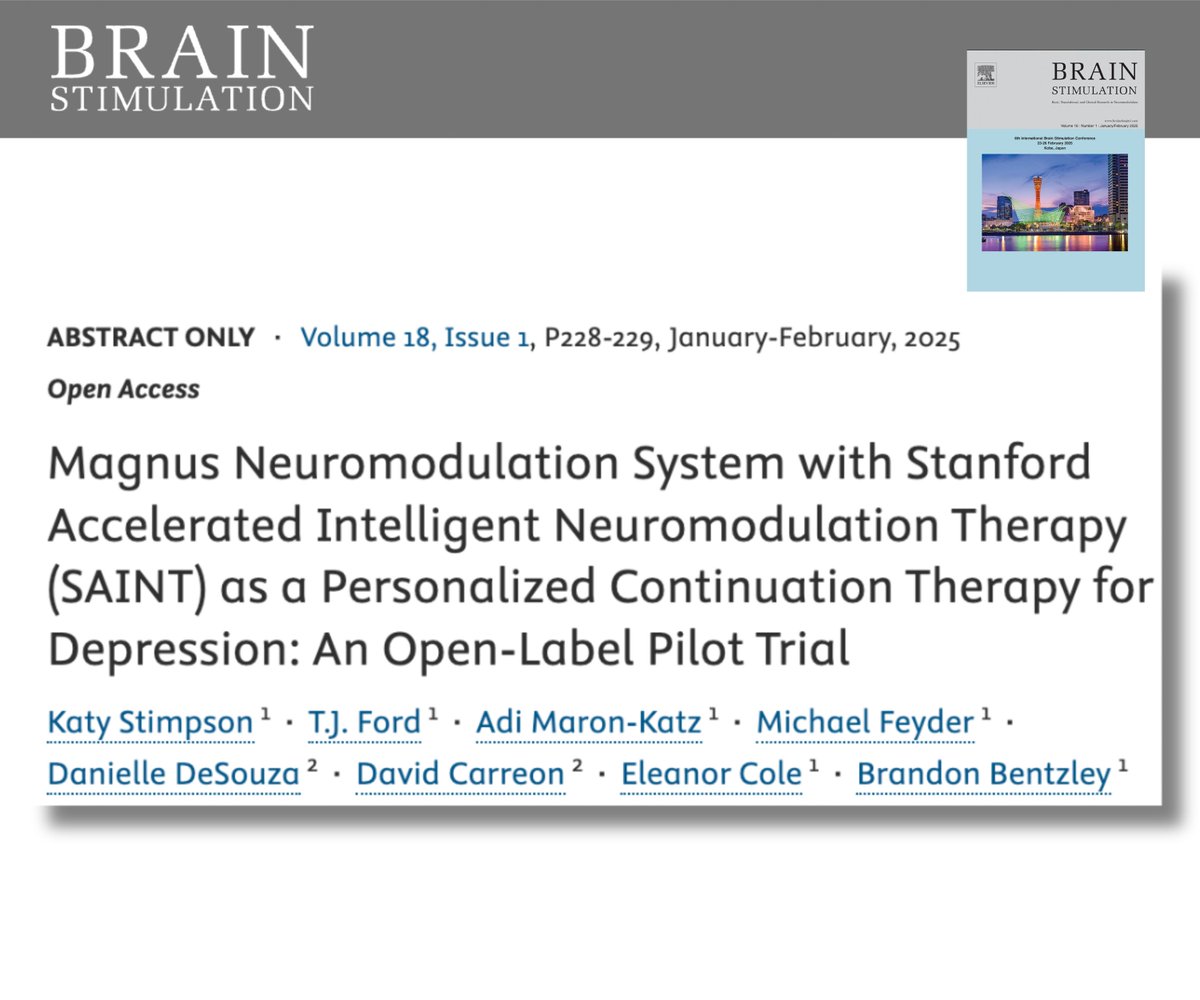
SAINT-TMS brings 70-90% with treat resistant depression to remission.
How? 10 sessions a day with fMRI guided magnet over 5 days.
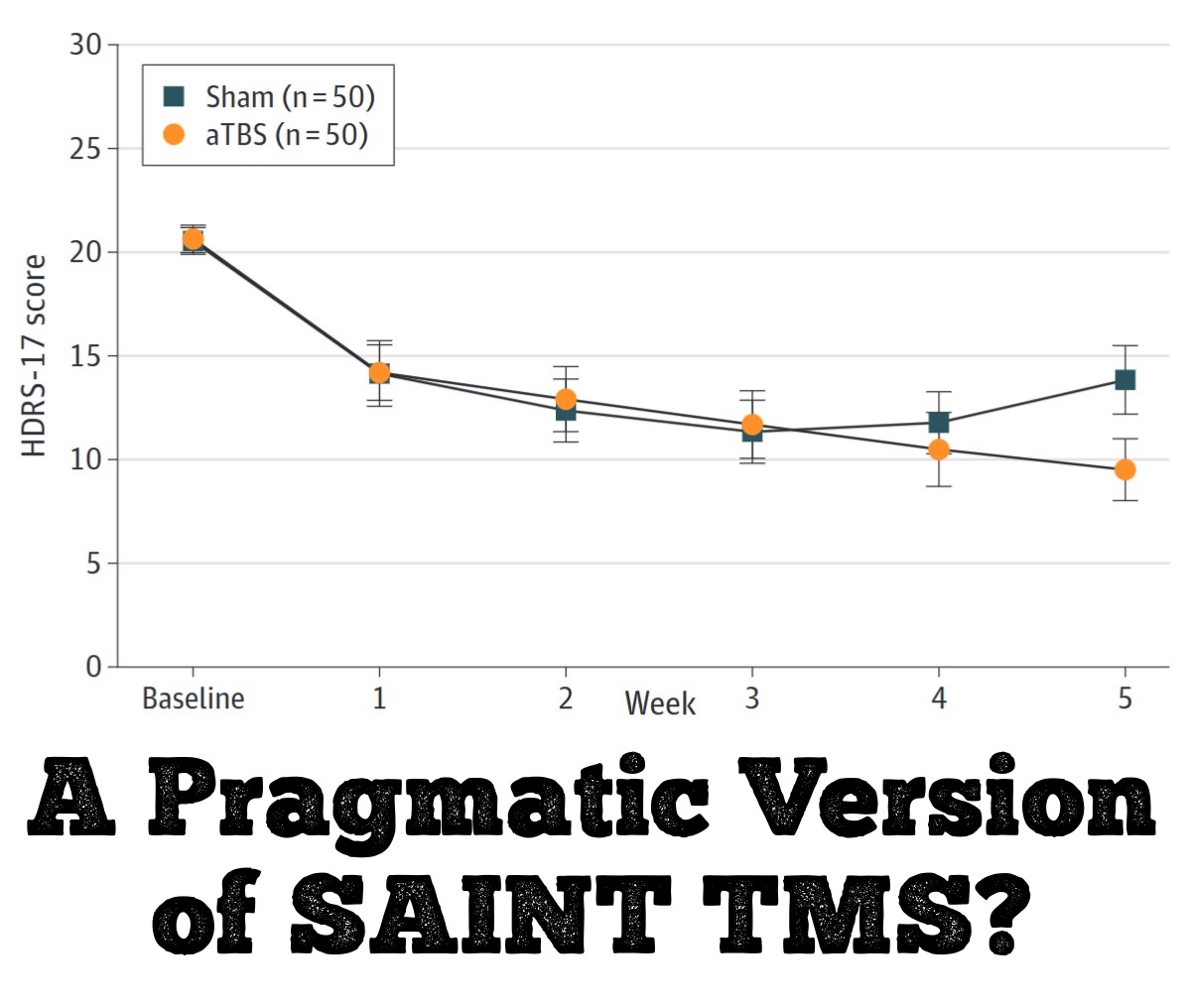
This new study claims similar results with 3 sessions/day and no fMRI, but with remission rates of 34%, I'm not convinced:
https://t.co/5ShwaGjEFA
anytime and anywhere, accessible to all. A wearable repetitive transcranial magnetic stimulation device | Nature Communications https://t.co/Vhif9Qnz81
Yunyi Han, Fang Jin and team publishes: Accelerated personalized iTBS targeting brain circuits (dlPFC-VTA) significantly reduces negative symptoms in schizophrenia vs. sham (Cohen’s d=0.83). Imaging changes linked to improvement.
https://t.co/VMbSQuQAJn