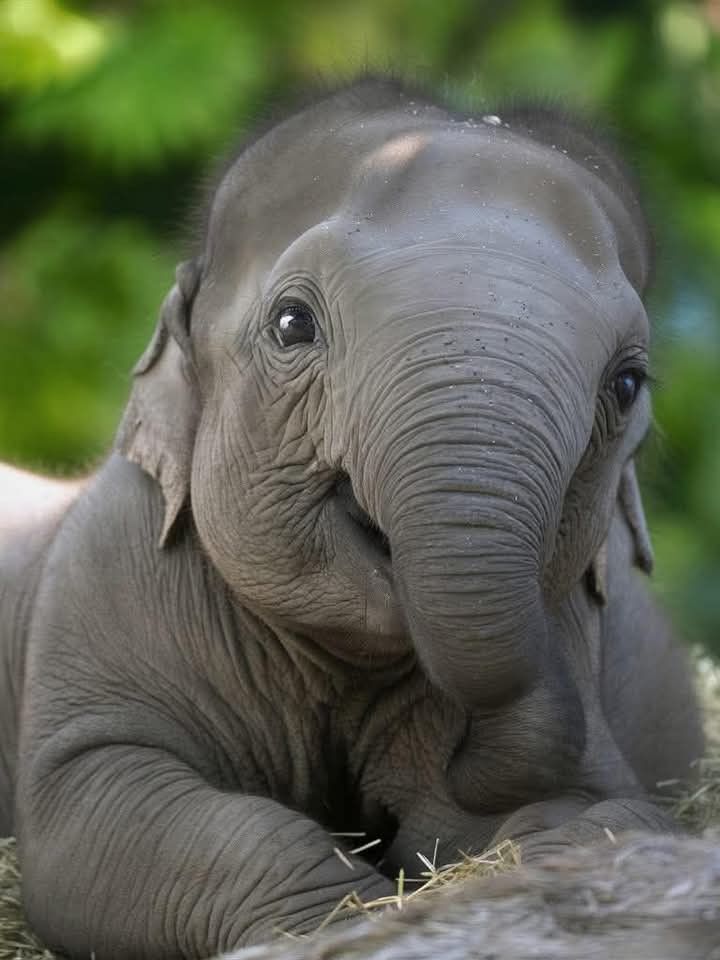
At the heart of our work is a simple mission: to create safe, nurturing spaces where orphaned wild animals can heal, grow, and rediscover the rhythms of nature.
Moments like this one, captured in Kaluku, show just how vital that care is — a playful scene made possible by tireless dedication, around-the-clock support, and a deep belief in second chances.
Help us protect these beginnings: https://t.co/RNRO7wx54j
From the tiniest trunks to the hungriest gulps, #MilkMondays are all about the lifeline we provide orphaned elephants.
Take Ushindi: Each day, she enjoys the efforts of our Keepers, who prepare warm feeds to mimic what our orphans would have received from their mothers. It’s a rhythm of care that happens round the clock — day and night, rain or shine — offering not just nutrition, but love, comfort, and routine.
It may look like a simple bottle, but it represents survival, growth, and the promise of a wild future. You can help us keep the milk flowing: https://t.co/ZLJQceLG0f
When Enkesha was rescued in February 2017, a wire snare was so deeply embedded around her trunk that it had nearly severed it. Just a year old, she was in visible agony — and without urgent intervention, she wouldn’t have survived. Thanks to the combined efforts of KWS, Mara Elephant Project, Mara Conservancy, and our SWT/KWS Mara Vet Unit, Enkesha was saved.
Supported by our Keepers and the other orphans, Enkesha demonstrated bravery and a fierce will to live, as she came through a long period of recovery at our Nairobi Nursery
Today, she’s at our Umani Springs Reintegration Unit, from where this kind and nurturing soul plays the role of nanny to the Umani herd’s many wild-born babies — a remarkable transformation for a calf who came so close to tragedy.
Her story is only possible thanks to our wonderful donors 🙏
Read Enkesha story at: https://t.co/3S635AmaKY
The tiniest baby elephant I've ever seen. Elephant babies are so cute and vulnerable, always staying close to mum for protection & nurturing🐘🥰 Heart-warming ❤️🐘
Elephants don’t fall over when sleeping standing up due to a unique anatomical feature called the “stay apparatus” in their legs. This system of muscles, tendons, and ligaments locks their joints, particularly in the knees and elbows, allowing them to remain upright without active muscle effort. It’s like a natural brace that supports their massive weight—adult elephants can weigh 2,000 to 14,000 pounds—distributing it evenly across their sturdy, column-like legs. Their low center of gravity and wide stance also enhance stability. This adaptation is crucial for large animals, as it conserves energy and allows them to rest without collapsing under their own mass.
🐘 Craig
📍Amboseli NP 🇰🇪
This little fella had a second chance at life thanks to the Sheldrick Trust. He is an orphan currently being raised at the trust and will one day join over 200 orphans who have returned to the wild.
[�� roan.carrhartley]
First beach holiday with mummy must be exciting for this newborn elephant 🐘🥰. Part of elephants life is water, which is even more important during dry season. Newborns need it too as much as the mother and the caring will always ensure they cool their large bodies daily! 🐘🌊❤️
Time flies when you're having fun in a safe and protected space!
Little Lenny — Lima Lima's first wild-born calf — is now six months old! Growing up in the lush Kibwezi Forest, he spends his days under the watchful eyes of his many nannies, including 'big sister' Mwana. Forever in the company of best friend Sulwe, who was born just a few weeks after him to Sonje, he's increasingly enjoying playing an older sibling style role for himself, to the herd's youngest member, Zigi, born to Zongoloni this year!
Enjoy the moment we first met Lenny at: https://t.co/mTrtkDfgkK
#BornToBeWild
Big steps for three nursery big girls!
Sholumai, Mushuru, and Sileita have officially graduated from our Nairobi Nursery to the Voi Reintegration Unit — marking a major milestone on their journey back to the wild.
Mushuru dove headfirst into Tsavo life (quite literally, by commandeering the water trough!), Sholumai wasted no time coming out of her shell and making friends, while Sileita initially took a more slow and steady approach, staying close to her Nairobi Keepers who travelled with the trio.
At Voi, the girls will continue to grow, learn, and explore independence until one day, they choose to reclaim their place in the wild.
Thank you to all those who have supported their journey thus far. Read the full update - with film - at: https://t.co/rsvCpollNg
Chapeyu’s story is a unique one, given his age: On 13th February, our SWT/KWS Kulalu Anti-Poaching Team reported a speared elephant near the eastern boundary of Tsavo East NP.
Our pilot flew to the scene and found a young bull — seven or eight years old — with a serious wound to his front ankle joint. He cut a lonely figure, trying his best to hobble along. The injury was dire, and at his age, he was also highly vulnerable to lions.
The plan was for the SWT/KWS Tsavo Vet Unit to treat him in the field and let him heal. But as the operation unfolded, it became clear he was on a fine line between life and death. The spear wound was terribly infected, compromising the joint.
If the bull was to have any hope of survival, multiple follow-ups would be required. To preserve the bull’s life and give him the care he needed, Dr. Limo deemed it necessary to bring him to our Voi Reintegration Unit. While certainly older than a typical orphan rescue, he fell into the adolescent age bracket and would be in good company among our Voi orphan herd.
We named him Chapeyu, and you can read his full rescue and recovery story - and add him to your foster family - at: https://t.co/v0KPddUbVI