Dear #Tangem users, this is about our money, not marketing. So read and share!
i like tangem but there is a problem....
Tangem responds very quickly to positive posts about itself. Yet when these questions are asked, they keep ignoring them.🤬
Tangem and I follow each other. So the chance that they simply did not see these questions is basically zero. At this point, it does not look accidental.
It looks deliberate. They are choosing not to answer.
And that only increases my suspicions.
I have asked @Tangem these security questions multiple times.I still have not received answers !!!
So I am going to keep asking publicly.
I will also ask Tangem communities worldwide to support these questions.
Because these are not minor technical details.
Our private keys and our money depend on the answers.
My questions are very simple:
Which exact firmware runs on our Tangem card?
Was that exact firmware build independently audited?
Does the production binary match the source code that auditors actually reviewed?
Saying “we’ve been audited” is no longer enough.
Kudelski’s 2018 audit covered firmware version 1.28!!
Tangem firmware has evolved significantly since that audit.
Tangem’s SDK references later firmware generations and features, including versions 4.39, 6.21, 6.33 and 8.58.
So the obvious question is this:
Which firmware runs on each Tangem 1.0 and Tangem 2.0 cards?
And which independent audit covers that exact firmware version?
Riscure’s 2023 review examined firmware code, architecture, NFC commands, key isolation and side-channel protections.
It reported no private-key exposure or exploitable firmware backdoor.
That is a strong security result.
But the public report does not identify the exact audited firmware version or production binary hash.
Was the audited firmware 6.21, 6.33r, or another production build?
Users currently cannot independently verify that connection.
Tangem’s immutable firmware should make this one of its strongest security arguments.
Instead, users still cannot easily connect their card to a specific audit.
Tangem could solve this with one simple public table:
Card Model → Firmware Version → Firmware Hash → Audit Firm → Audit Date
Closed-source firmware should not require users to accept:
“Trust us, it was audited.”
The standard should be:
“This exact firmware runs on your card. Here is its hash. Here is its independent audit.”
The Coldcard incident showed why firmware provenance and key-generation transparency matter.
A Secure Element and an independent audit are important, but they are not complete answers.
Users should know which firmware generated and protects their private keys.
They should also know whether auditors reviewed that exact production build.
Tangem already has a strong security story.
Kudelski, Riscure, Cure53, EAL6+ certification and immutable firmware are meaningful security arguments.
What is missing is the verifiable link between each card, its firmware and its audit.
Publishing that mapping would remove unnecessary uncertainty.
It would also set a much stronger standard for closed-source hardware wallets.
So @Tangem, please answer these three questions directly:
1. Which exact firmware runs on each Tangem card generation?
2. Which independent audit covered each exact production firmware version?
3. Can users verify the production firmware hash against the audited build?
These are reasonable questions.
Tangem users deserve clear and verifiable answers.
Tokenize, manage, and scale.
Palmyra Foundry is where raw agricultural potential is forged into tradable, trackable digital assets.
Learn more via link in the first comment
A design file leaves a designer, goes to Würth, then to a print shop, then to the customer who ordered the part.
Four companies. Four separate systems. Four versions of what happened.
Securing the file is the part everyone expects to be hard, and it is the part that is furthest along. Encrypting a design, splitting it, and releasing it only to an authorized machine is engineering we know how to do.
What stops the industry is the record. Who was allowed to print, how many times, and what was actually produced. Everyone in the chain needs the same answer, and none of them can be the one who holds it.
Give the record to the designer, and the print shop is trusting them. Give it to the distributor, and everyone else is. Put it in a shared database, and someone still administers it, which means someone can still change it.
This is the problem we are working on with Würth, and it is why the record sits on a blockchain. Not the design. The account of what was licensed and what was printed, written once, visible to all four, owned by none of them.
For the engineer who spent three years on that design, it means something simple. She can let it travel, and still know what it did.
One week until @TOKEN2049.
The Cardano ecosystem is showing up together.
30+ ecosystem presentations at the Cardano booth.
The Cardano track in the ORIGINS Hackathon.
A fireside chat with @F_Gregaard.
Community side events.
Everything you need for next week, one thread. 🧵
Cardano is deepening its enterprise presence in Japan. 🇯🇵
We’re partnering with @PacificMeta to combine Cardano infrastructure with local market expertise and enterprise integration, helping Japanese companies bring real-world blockchain use cases to life.
Less talk about enterprise adoption. More of it actually happening.
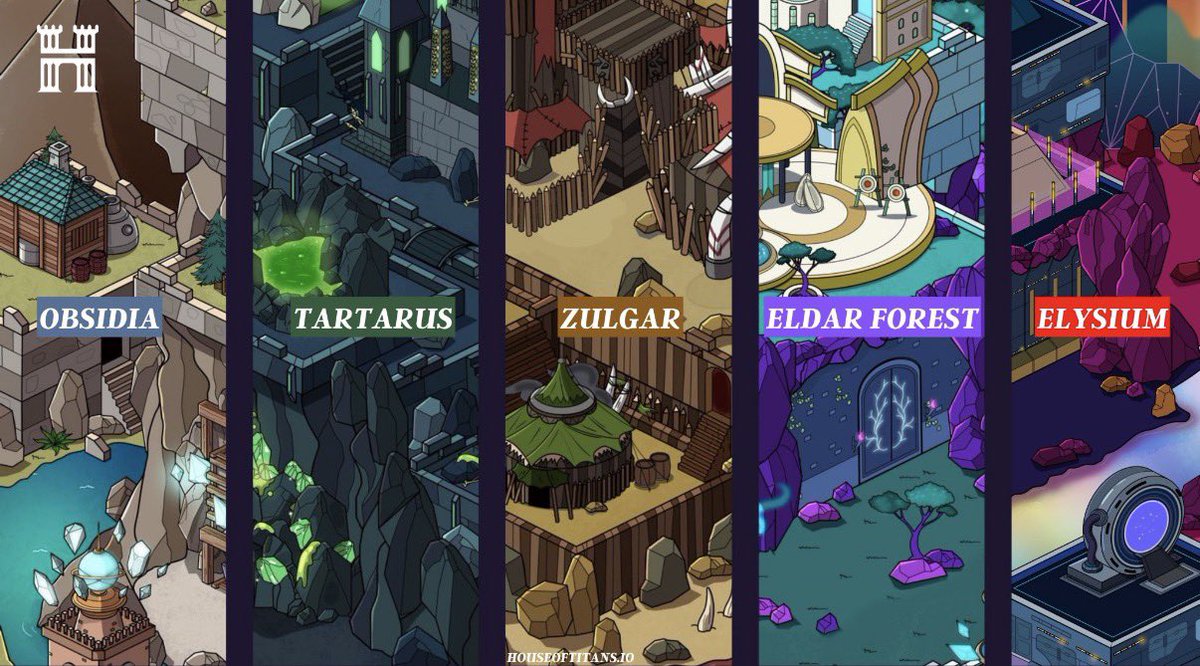
October is going to be a BIG month in the House.
Atlas launch month. Let’s fucking go.
And a few more tokens sent to the flames. 🔥
The best staking & burn mechanism in town.
October, we’re coming. 🫡
Iagon Insight Beta is live.
Cardano data through one API: addresses, balances, UTXOs, assets, transactions, staking, pools and governance.
Already on Blockfrost or Koios?
Point your app at a new base address, add an Insight key, and your calls keep working.
Get started - https://t.co/IPfunsdgvr
So excited to bring this over the line and finally align CNA/CNT with ADA and bring unprecedented distribution to builders on Cardano. But also the opportunity to tackle some of the largest opportunities out there right now who use @FireblocksHQ
Cardano Native Tokens (CNTs) will be supported on @FireblocksHQ.
That means every exchange, bank, and fintech using Fireblocks will be able to custody, send, and receive CNTs with the same policy controls they already use for every other asset.
Special thanks to @emurgo_io and the Pentad as well as @IagonOfficial for helping on this journey.
$2,378,641
Earned by node operators for their contribution to the Iagon network — with $14K+ in the past 30 days.
The Shared Storage and Compute Economy is taking shape, and already rewarding the people who power it.
Thank you for running the network with us.
More metrics in the Ecosystem Stats app → https://t.co/vzJdXV3YlP
The first two revenue-funded $IAG buybacks are in.
Iagon revenue is now flowing back into $IAG. A small start, but a meaningful one: the model is in motion.
JUST IN: Cardano is now part of the official x402 SDK.
Any app or AI agent can pay for an API call in $ADA or any CNT over a web request. No account, no API key, no checkout page.
Every service already on x402 can switch Cardano on.
The agent economy just got a Cardano rail.
Raw, organic, and ethically sourced.
The Winter Harvest 2025 Zambian Forest Honey is flying off the digital shelves.
Support Zambian beekeepers directly through Palmyra Express via link in the first comment.
Cocoa cooperatives drown in farmer lists, bag counts, warehouse logs, and export files.
Palmyra Pro aggregates that work into one verifiable record from individual plots to central storage.
Compliance becomes a daily workflow instead of an emergency before shipment.
Link in the first comment.