Out now @PLOSCompBiol 🧬
A simple tool to tackle the complexity of non-deterministic genotype-phenotype maps and understand their shared features https://t.co/i3riibzpWF
Thus, purely local adaptive walks can reliably reach high peaks, without any foresight, just due to the landscape structure. We find similar features in the original empirical landscape.
Full details now on bioRxiv: https://t.co/SgMSV8RPIX
🧵 New preprint:
In 2023, Papkou et al. reported an empirical fitness landscape with a striking property: >500 local optima ("peaks"), spanning both high and low fitness. Despite this ruggedness, >75% of simulated adaptive walks reached the top ~14% of peaks.
Why? The low–to-intermediate region is big (so any specific peak has low probability), and the fitness gradient guides walks through this region quickly. So walks tend to pass by these lower peaks rather than getting trapped.
We are celebrating today the graduation of the #BISTMaster#MMRES 2024–2025 class! 🤩
The ceremony features the Master directors & inspiring insights from 2 young group leaders of the #BISTCommunity: Tamara Vázquez @_IFAE and Nora Martin @CRGenomica
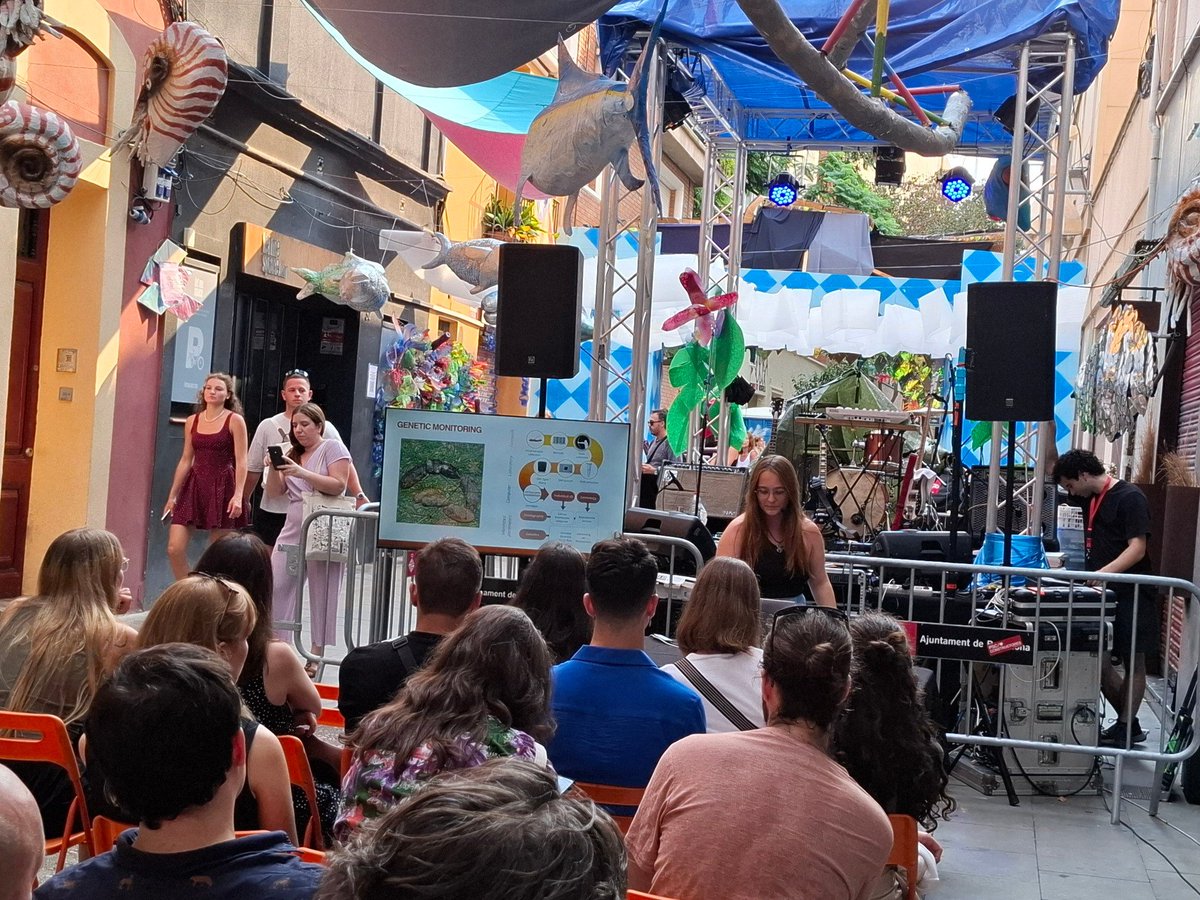
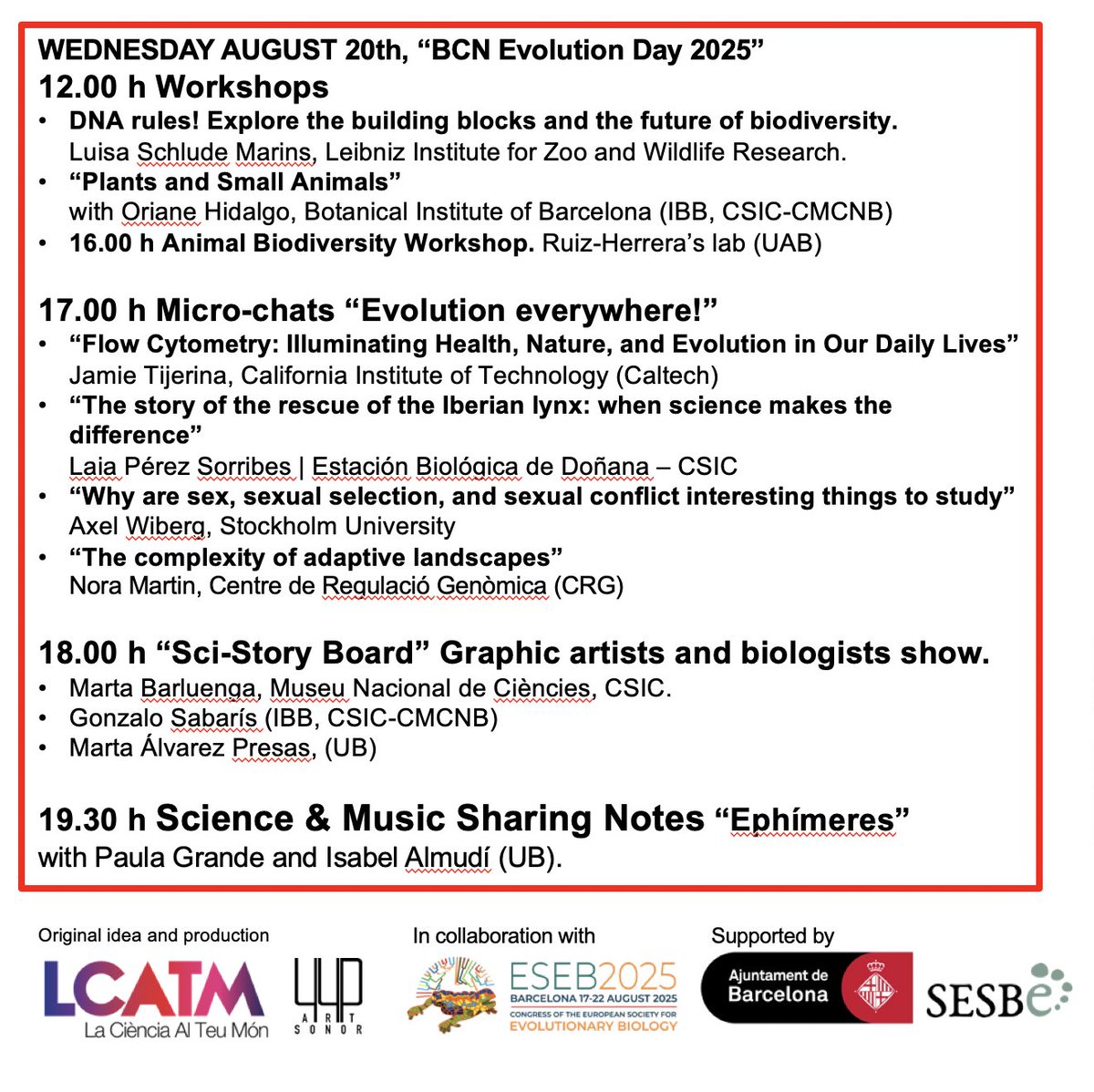
“The complexity of adaptive landscapes”
@Nora_S_Martin@CRGenomica
“Why are #sex, sexual selection, and sexual conflict interesting things to study?”
Axel Wiber @Stockholm_Uni@Dros_EU
“The story of the rescue of the Iberian lynx: when science makes the difference”
@lperezsorribes@ebdonana
“Flow Cytometry: Illuminating Health, Nature, and Evolution in Our Daily Lives”
@jamietijerina@Caltech
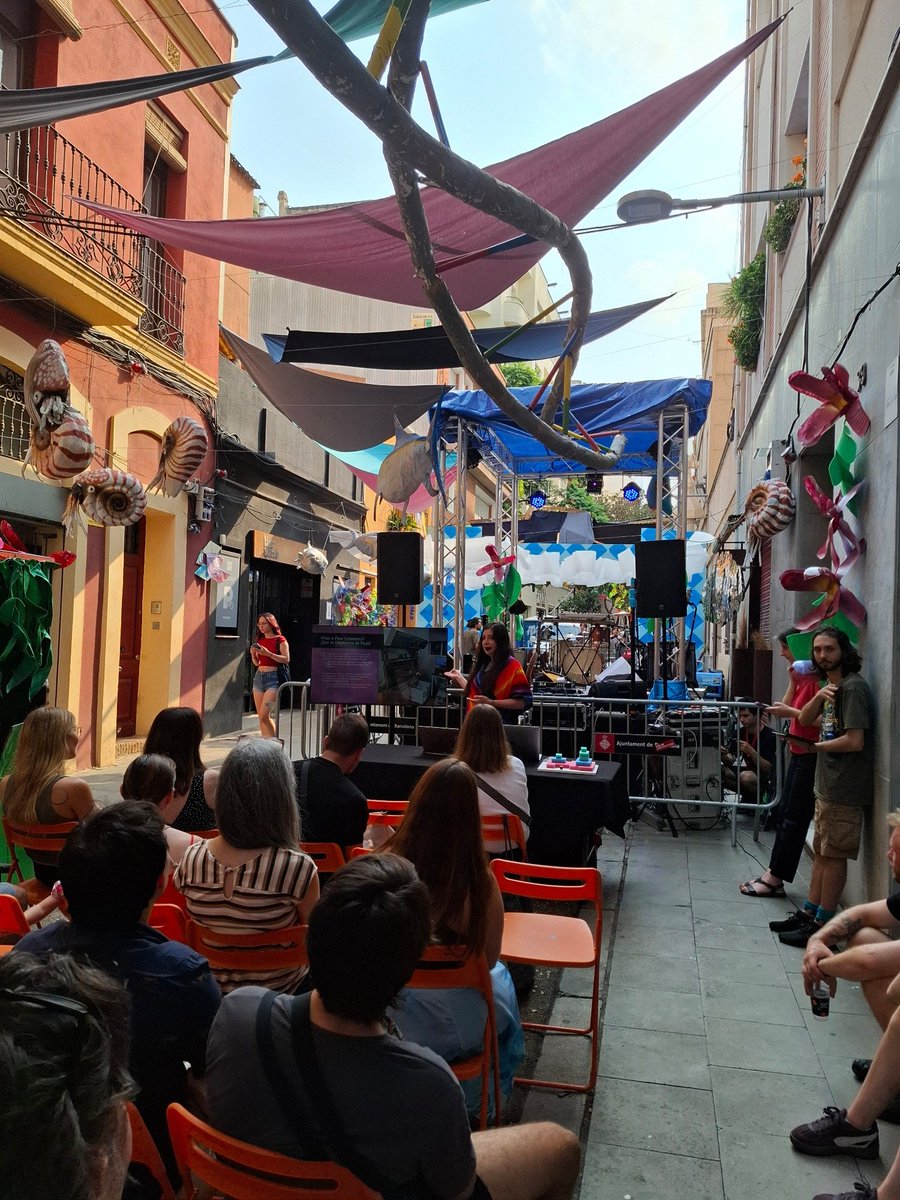
#festamajordegracia #ESEB2025 satellite outreach activities by @LCATMon AUGUST 20th, #BCNevolutionDay
📢 Deadline to apply to the #BISTMaster is Mar. 4! Apply in this round for higher chances of getting a BIST Tuition Waiver.
Have questions about the programme or application process? Join our online info session: 🗓️ Feb. 25 🕓4:30PM (CET). Register here 👉https://t.co/ifGBlEACqe
New preprint with @M_Srivastava_ & @louis_research: what shapes the fitness landscape topography when building fitness landscapes from genotype-phenotype maps (here with random phenotype-fitness assignment)?
https://t.co/OrZh445Bw9
Happening now!
@BCNCollab Symposium “Modelling biology across scales”
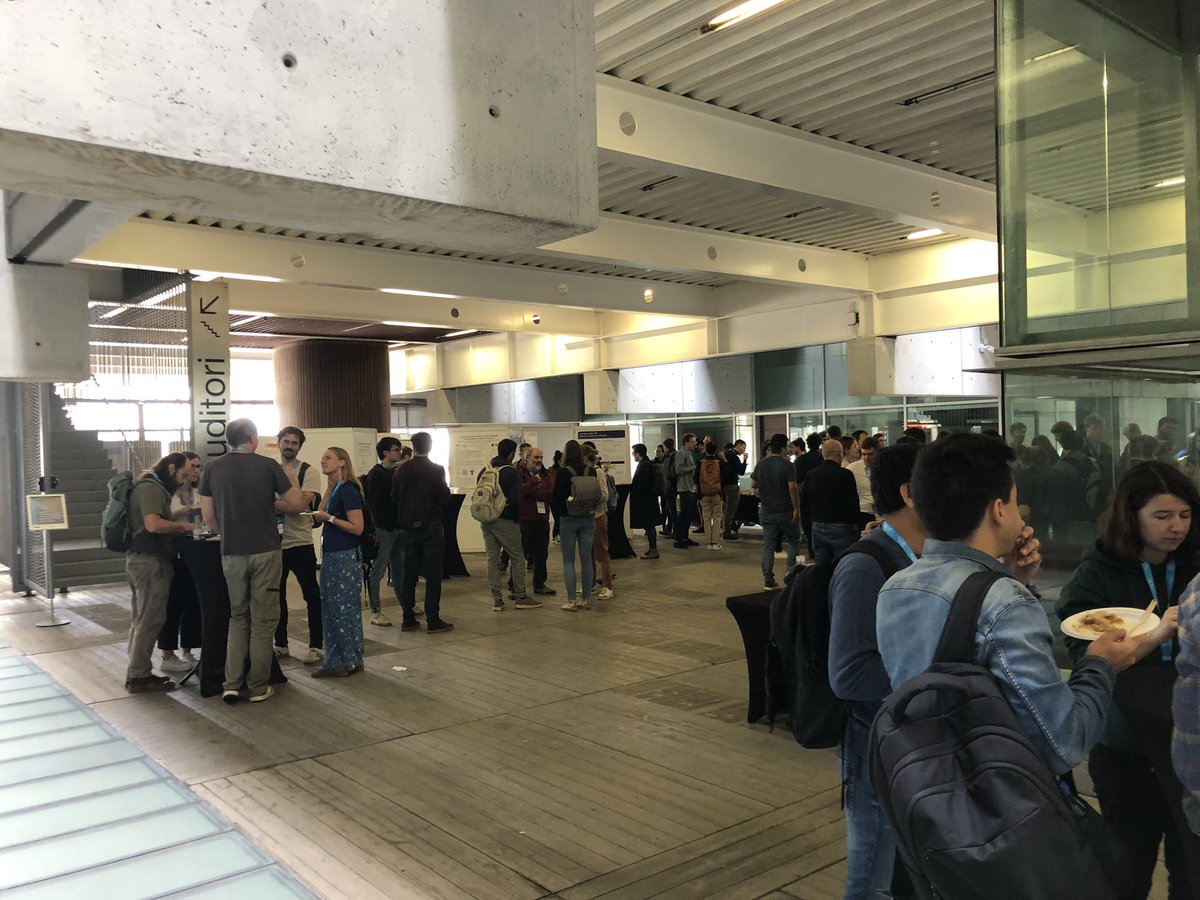
Organized by @Nora_S_Martin and @rmartinezcorral, the meeting showcases applications of computational, mathematical and theoretical methods in biology, ranging from single molecular structures to tissues and populations.
With 12 invited speakers, 20 flash talks and over 70 posters!
⚡ Last days to register to the 2024 Collaboratorium Symposium: "Modelling Biology across scales" organised by the @BCNCollab Independent Fellows @Nora_S_Martin & @rmartinezcorral
📅 28 & 29 October 2024
📍 @the_prbb Auditorium
➕info & registration https://t.co/RJDsEQoF26
Should we model phenotypic changes through random mutations as a constant-rate (Poisson) process and why does this decision matter for evolutionary predictions?
Read now in Mol. Biol. Evol.: https://t.co/bxizCTUJvL
Summarised in this excellent thread by A Stoltzfus:
I didn't see the significance of this until @Nora_S_Martin pointed it out just now
Consider adaptive evo from phenotype P0 to one of two options P_r (red) or P_f (blue)
Relative mut rates to red and blue matter, sometimes as much as fitness diffs
1/3
https://t.co/lwzSw6Jrel