We improve #treeequity by planting tiny #Miyawaki forests in & around #Chicago, because all communities deserve trees and the health&climate benefits they bring
Invasive plants lead to an overall reduction in #biodiversity . They compete with native species for limited resources. They can harm our health and our economy. Learn more in our latest blog! https://t.co/gfiZnZy0zO
Read about incredible local Chicago climate action in medical education, clinic sustainability, and community initiatives in this edition of Chicago Medicine @CMSDOCS. Featuring @toddsack@MyGreenDr@NordsonGreen and many others
https://t.co/gnSkN9WFme
Here's how to improve biodiversity to keep these ticks out of your yard. While this sustainable approach might not solve your tick problems immediately, implementing actions that improve biodiversity in the long run is good for you and your local area. https://t.co/dRuJNTPWz7
Education is a vehicle for supporting individuals to get activated and to see that they can really be in a position to make change, says @GaurabBasuMDMPH in @grist.
Learn about his fellowship to train docs in community organizing for #ClimateAction:
https://t.co/S9GZxwCZB5
@HarvardCCHANGE's own, @GaurabBasuMDMPH & team, have a new study that strongly affirms our departments commitment to #EH progress. Explore the impact on critical issues like #ClimateChange and community organizing principles in health professionals!
https://t.co/xjqqcAfaAl
Our GivingTuesday match has been extended to December 29, 2023.
When you give, you help us...
•offer shade during heat waves
•reduce flooding
•support pollinators
•create a place to release stress, exercise and socialize
https://t.co/RuA3qQ20gh
Our new paper describes the 1,150 species we found in our urban backyard in @brisbanecityqld over 1yr. Trees, shrubs, & weeds (instead of manicured lawn) provided lots of habitat for a shocking amount of wildlife on an urban lot https://t.co/xqpCHWYV93 in @ESAEcology
After 16 years of working on this issue, I’m committed to set the record straight on #Forests4Climate.
We have never said 🌲 alone could fix our climate. But they can really, really help.
In fact, they already do. All of the trees & forests across 🇺🇸 together capture nearly 16% of our CO2 emissions as measured by @EPA GHG Inventory.
We are increasing this contribution to reducing GHGs with actions to protect, restore & grow trees and forests in urban and rural areas alike. We use science-based approaches that assure these efforts also help protect people & biodiversity.
This movement has been in place for more than a decade, driven by people & orgs of all kinds across 🇺🇸 and across political lines. It’s about all of us, not any individual.
It’s time to end mischaracterization of this movement by outside commentators so we come together and get to work. We don’t have a moment to lose.
@AmericanForests@Benioff
“The result would be that adult trees of a species would tend to maintain a kind of minimum “social distance” from each other.” This is incorporated into the #Miyawakimethod https://t.co/KT63tUyDHs
🌳species diversity increases the overall function & stability of the ecosystem.
🌳diversity🟰varying responses to threats (like having a diverse investment portfolio)
🌳a diverse mix of trees can support a much wider range of animal life #biodiversity https://t.co/zyMJAyAeOg
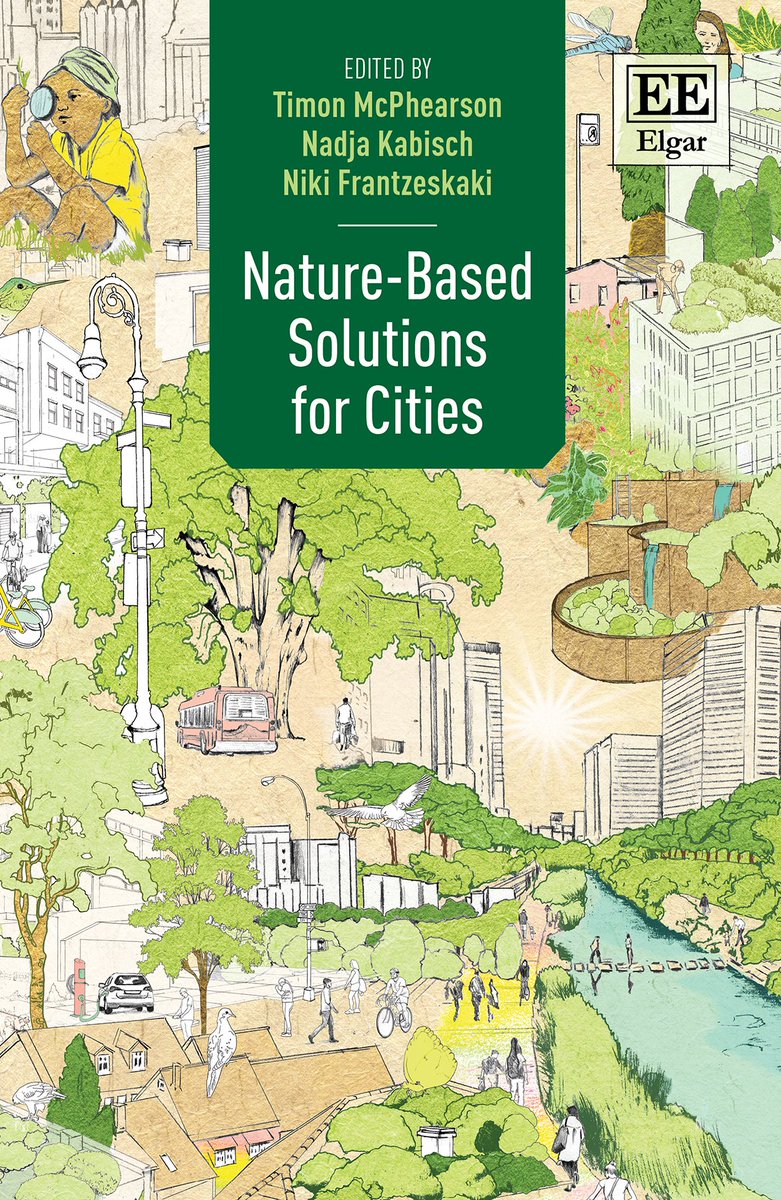
🎉 New open access book, Nature-based Solutions for Cities, is now available from @ElgarPublishing, edited by @timonmcphearson @NadjaKabisch @NFrantzeskaki. Explore the state of the art in advancing NBS for cities across the world 👉 https://t.co/pgPdbQuC7X
This @NaturalAreasNYC study shows that In NYC, forested natural areas were 13 degrees cooler than nearby landscaped trees on the warmest days of the year. #tinyforest#miyawaki#extremeheat https://t.co/6cVZPTN2bc
Planting Miyawaki #tinyforests encourages the formation of carbon-rich networks of mycorrhizal fungi (also known as the #woodwideweb )
https://t.co/bMifWe8uMu
#Miyawaki forests are a #naturebased solution for extreme heat, flooding and other impacts of climate change. We love seeing this @abcnews coverage! Tiny forests are springing up in urban areas to combat climate change. https://t.co/r3DX8f2DFj
Check out our new blog on extreme heat & tree equity authored by our intern Sam Baudoux. Sam grew up in France and has vivid memories of heat waves in his hometown. He studies Environmental Biology at Université du Québec à Rimouski, in Canada. https://t.co/cCo9f8P8Xo
If you work or volunteer with an organization that encourages tree plantings in residential yards or parkways in the Chicago region, we'd love to hear from you! Please fill out the survey below. It should take ~ 10 min! (2/2)https://t.co/lb3NK6uXsm @LifeAtPurdue@MortonArboretum
Your Input is Needed! @ChicagoRTI is partnering with researchers from Purdue Univ. to better understand how greening organizations around Chicago work with residents and each other to promote tree plantings across diverse communities. @LindsayEDarlin1 #treeequity (1/2)