IMO: Bitcoin ETFs may be getting hit by an “AI IPO liquidity vacuum.”
Institutions that rode Bitcoin and crypto exposure higher now have a rare chance to position for SpaceX, Anthropic and OpenAI.
Bitcoin ETF outflows are likely part of a broader capital rotation out of liquid risk assets and into the coming AI/space mega-IPO window.
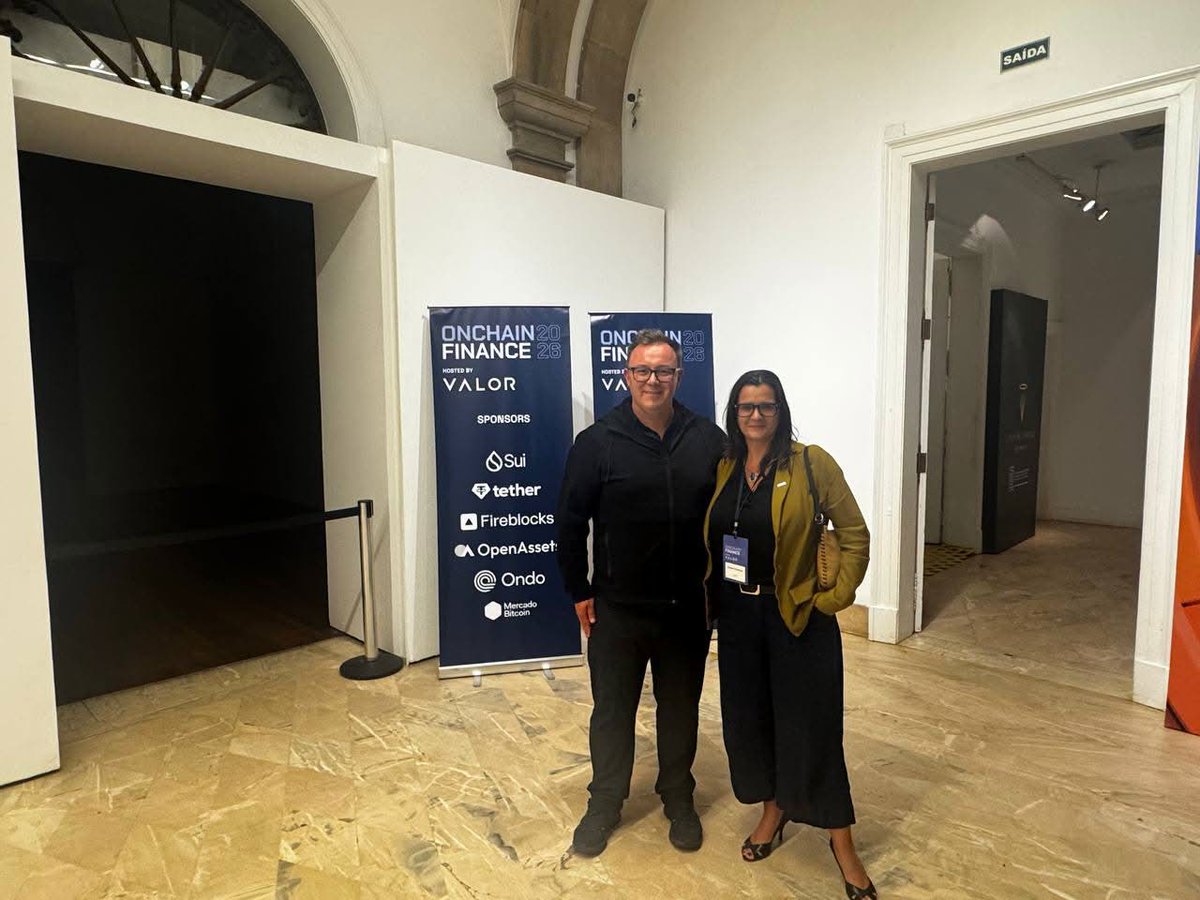
Yesterday at @valorcapgroup's Onchain Finance event, the conversation focused on a key piece of onchain finance: standardization.
@gaborgurbacs joined representatives from @Kaleido_io, @OpenZeppelin, @Mysten_Labs, and @lfdecentralized, exploring how shared standards can support institutional adoption.
The conversation continues today with more panels and perspectives from across the ecosystem.
OpenAssets is in São Paulo for Onchain Finance 2026, hosted by @valorcapgroup, on connecting traditional finance and the onchain economy.
@gaborgurbacs is joining as a speaker, with the team on the ground, alongside leading banks including @itau, Safra, BTG Pactual and others shaping onchain finance.
This is exactly the conversation institutional tokenization has to move forward.
In a new MFWire column, @gaborgurbacs draws the parallel to ETFs: the firms that engaged early defined how distribution worked.
Tokenization is at that same point now. RWA assets under management are still under $1 trillion, the standards are being written, and the firms participating early get a seat at the table shaping what comes next.
Read the full piece ↓
https://t.co/ZS7QvMRQCN
Markets may be underestimating the divergence happening beneath the surface. The macro thesis:
• Consumer sentiment is near record lows despite stocks hitting new highs
• The top 10% of Americans now drive ~50% of all consumer spending
• Asset owners continue benefiting from inflation and rising markets
• Bottom-tier consumers are being squeezed by higher costs and stagnant purchasing power
• Historically, extremely low sentiment has been a strong contrarian bullish signal for equities
The economy may be splitting into two realities:
one driven by assets and capital appreciation, the other pressured by inflation and declining affordability.
Source: @APompliano
"My bitcoin model has the average price of bitcoin today at $134,000. The mispricing today in bitcoin is as large as I have ever seen before."
- @porterstansb
The SEC isn’t rejecting tokenized equities; it’s refining the framework for a major market upgrade.
The direction is clear: tokenized assets and blockchain-based settlement are inevitable because they improve efficiency, collateral mobility and global access.
The focus now is implementation, not if it happens. Very excited to work with regulators and market participants to make this a reality, just like the Bitcoin ETF.
Implementation is exactly where standards, compliance, and settlement infrastructure prove their value.
And where institutional tokenization becomes real.
In a recent conversation on @CryptoAmerica_, our CEO @gaborgurbacs framed the next phase of digital assets clearly.
What comes next is bigger than ETF flows: tokenized financial instruments built for broader access, efficiency, and scale.
At @SuiNetwork Live, @gaborgurbacs framed institutional tokenization through a Web 2.5 lens: connecting traditional financial systems with blockchain rails.
Faster settlement, practical compliance, and simpler UX are what make adoption possible at scale.
This is where @OpenAssetsInc is focused: building the infrastructure layer that makes tokenization practical for institutional markets.
Tokenized assets are already running in production across institutions, but these systems still don't speak the same language.
Our COO and CTO @suren319 wrote a new article with @lfdecentralized on why open standards matter now, and how OTAS approaches the gap: aligning identity, compliance, asset structure, and settlement, while keeping each institution's internal stack intact.
https://t.co/LJA2Zs4VVX