1. We are so thrilled to show you our very first visual essay. Be sure to check out this stunning and thought-proviking contribution and share it with friends and colleagues!
I was pleased to be asked to create the first visual essay for @NorwegianReview
'The Quarry: Stories from Fragments' explores temporal overlaps and invisible narratives in stone & the void @RomanAldborough
Look forward to seeing what essays come next!
https://t.co/iTkF9N1XKo
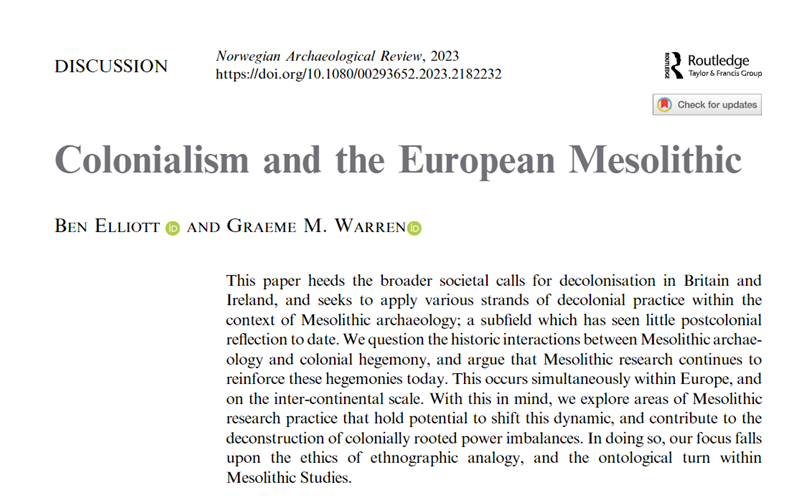
new OA paper with the wonderful Ben Elliott @ArchSoundScapes just published in @NorwegianReview - "Colonialism and the European Mesolithic".
Tx to NAR for invitation to submit. Tx to Ben for fascinating discussion, ongoing collaboration & friendship 1/6
https://t.co/uvS3AikGlj
New article finally out in @NorwegianReview Fully #OpenAccess on ‘Residence, ritual and rulership: a state-of-the-art for royal places in early medieval Ireland’. Paired with article by Gabhor Thomas and Chris Schull, with critical comments and response https://t.co/YWYMVIEmNQ
4. And: '...whether identifying as artists or not, archaeologists are already producing a wide variety of magnificent visual material – and we simply want to do what we can to render this part of our craft more visible.'
https://t.co/hpmCLC9zA2
1. We are so thrilled to show you our very first visual essay. Be sure to check out this stunning and thought-proviking contribution and share it with friends and colleagues!
I was pleased to be asked to create the first visual essay for @NorwegianReview
'The Quarry: Stories from Fragments' explores temporal overlaps and invisible narratives in stone & the void @RomanAldborough
Look forward to seeing what essays come next!
https://t.co/iTkF9N1XKo
3. ...As carried across in Rose Ferraby’s essay in this volume – our very first visual essay – images and text should work in symphony to carry a narrative, told as much through the mood and tactility of the visual as the focused address of the written.
"Who’s Afraid of the S-word? Deviants’ Burials and Human Sacrifice"
Yet another exciting article from our upcoming and final issue of 2020.
https://t.co/yNKTyGCo5y
Two engaging new book reviews out now! @carolinewjones write about the book Working at the Sharp End: From Bone and Antler to Early Mesolithic Life.. by Groβ etal & John C: Barrett has reviewed Lucas' book: Writing the Past. Knowledge and Literary Production in Archaeology
We've been looking forward to this announcement!
A diversity of visual material constitutes a significant part of the archaeological record. With development of new technology and more accessible devices this significance has only increased.
@tandfonline@tandfnewsroom
Therefore, we invite visual essays as a venue for the publication of this material and for creative interweaving of textual and visual research communication:
https://t.co/TA3jdRcSHd
Keep your eyes peeled for the soon publication of this little gem of a comment on our not so open access articles discussing precisely, accessibility, in our latest issue:
https://t.co/rYF2Jcs634
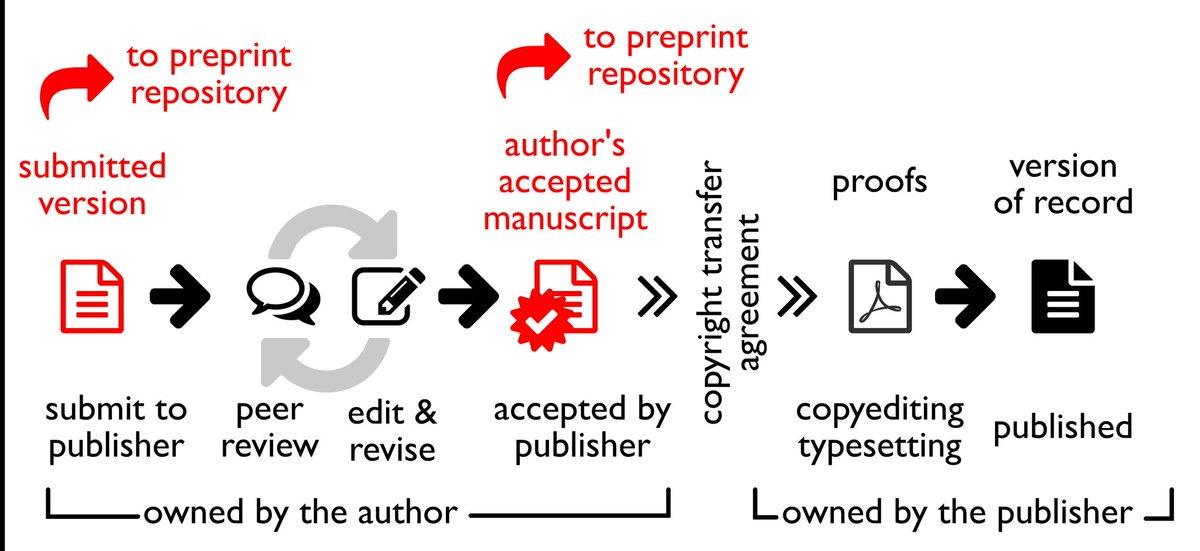
@DrJenniferBates@MichaelESmith There is a little-known open access option called "green OA", which is free for the author & free for the reader. It's a great option for Archaeologists. I describe it in this short comment to appear in @NorwegianReview: https://t.co/VkybLT3AUm (img from https://t.co/v8WE6JBGpB)
@benmarwick The irony of these being behind a paywall is not lost on the editorial board either and OA is a recurring topic. For now though, Taylor & Francis do allow authors to share pre-/post-prints of their articles.
"Collaborative, Public, Participatory: Pros and Cons of an Open Archaeology"
Editor-in-chief Þóra Pétursdóttir opens the upcoming issue of NAR with editorial about some specific themes discussed during our roundtable at @archaeologyEAA conference in 2018
https://t.co/hor6z1kyzo
@RachaelKiddey "I’ll Tell You What I Want, What I Really, Really Want! Open Archaeology that Is Collaborative, Participatory, Public, and Feminist"
https://t.co/xtMejAp9Ig