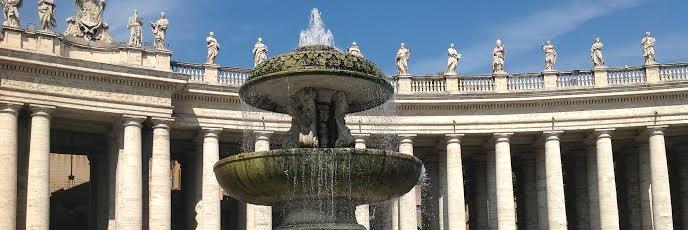
Prague Astronomical Clock.
It measures Babylonian and Old Bohemian time, shows the movements of celestial bodies. It was first installed in 1410, making it the third-oldest astronomical clock in the world and the oldest clock still in operation.
Remain ever humble and teachable, knowing you do not hold all understanding; a heart open to instruction never ceases to grow.
Roy T. Bennett, The Light in the Heart
During pregnancy, a small number of the baby's cells naturally pass through the placenta and enter the mother's blood circulation. This phenomenon, called fetal microchimerism, allows tiny groups of these fetal cells to settle in the mother's body and persist there for decades following childbirth.
What makes this particularly fascinating is that many of these fetal cells function similarly to stem cells. They can travel throughout the body, integrate into various tissues, and, in certain instances, respond to sites of injury.
Studies conducted over the last twenty years have detected fetal cells in areas undergoing repair, such as healing heart muscle, regenerating skin, recovering liver tissue, and other organs involved in regeneration. Some of these cells seem able to differentiate into the specific cell types required for repair, for example, becoming cardiac muscle cells, liver cells, or immune cells. Others may play a supportive role by secreting substances that promote tissue healing and dampen inflammation.
While their effects are not entirely predictable, fetal cells are repeatedly found in tissues actively engaged in repair.
[Kara et al. (2012): "Fetal Cells Traffic to Injured Maternal Myocardium and Undergo Cardiac Differentiation" (Circulation Research)]
[Wang et al. (2004): "Fetal cells in mother rats contribute to the remodeling of liver and kidney after injury" (Biochemical and Biophysical Research Communications)]
Glorious Archangel Raphael,
angel of healing and companion on the journey,
I ask you to intercede for me before the throne of God.
Bring healing to my body, mind, and spirit,
and guide me toward whatever will restore me to wholeness.
“He who assists the souls in Purgatory by his prayers will afterwards be assisted by them.”
— St. Alphonsus Liguori
St. Alphonsus is reminding us that praying for the souls in Purgatory is an act of real love.
These souls are already saved, but they are being purified before entering the full joy of Heaven.
They cannot earn new merit for themselves, so our prayers, Masses, sacrifices, and indulgences can help them.
And according to the tradition of the saints, those we help may one day pray for us before God.
If you knew someone was waiting for your prayers, would you still put off praying for the dead?
If your suffering feels wasted but you wish it could actually mean something, this Capuchin mystic discovered a secret: pain offered with love is never lost. St. Veronica Giuliani used hers to rescue souls no one else remembered... ⤵️
St. Veronica Giuliani had a deep love for the souls in Purgatory.
She was a Capuchin Poor Clare nun and mystic. Under obedience, she wrote about her spiritual life and the graces God gave her. Pope Benedict XVI said that she offered herself for sinners and for the souls in Purgatory.
Think about what that means.
St. Veronica did not run away from sacrifice. She joined her pain to the suffering of Jesus and offered it for souls who needed help. She knew that only Jesus saves us, but she also knew that nothing offered to Him with love is wasted.
And this is not only for great saints.
The Church teaches that the souls in Purgatory died as friends of God. They are saved and will enter Heaven, but they must first be cleansed of everything that keeps them from perfect union with Him.
They cannot return to earthly life and perform acts of penance. But we can pray for them.
The Holy Mass is the greatest prayer we can offer for the dead. We can also offer Rosaries, indulgences, fasting, acts of charity, and the pain we patiently accept each day.
Now stop and think about this.
Some souls may no longer have anyone on earth who remembers their name. Their relatives may have died. Their friends may be gone. No one may be asking for a Mass or whispering a prayer for them.
But God has not forgotten them.
You may never know the soul your prayer helps. Yet through the communion of saints, even a small act offered through Jesus can bring real help to a soul being prepared for Heaven.
Offer a Rosary. Request a Mass. Give up one small comfort. Offer today’s pain instead of wasting it.
St. Veronica Giuliani, pray for us and for the Holy Souls in Purgatory.
💬 When was the last time you prayed for a soul whose name you will never know?
Erling Haaland paid $134,000 for a 430-year-old Viking kings manuscript, then gifted it to his hometown. He said: “I’ve never been a big reader, but I want people to read about those who came from my area.”
Erling Haaland and his father, Alf-Inge Haaland, quietly acquired one of Norway’s greatest literary treasures at auction: a 1594 edition of Snorri Sturluson’s Kongesagaer. Translated by Mattis Størssøn from Old Norse into Danish, it was the first printed history of Norway and helped preserve the stories of the nation’s medieval kings for generations.
Widely regarded as one of the most significant works in Norwegian literary history, the copy purchased by the Haalands was the only complete edition still in private ownership. It sold for 1.3 million Norwegian kroner (about $134,000), setting the record as the most expensive Norwegian book ever sold at auction.
Instead of keeping the rare volume in a private collection, the Haalands donated it to the library in Time Municipality, where Erling grew up. The book is now on public display, and the donation also funded a reading competition to inspire local children and young people to discover Norway’s history and literary heritage.
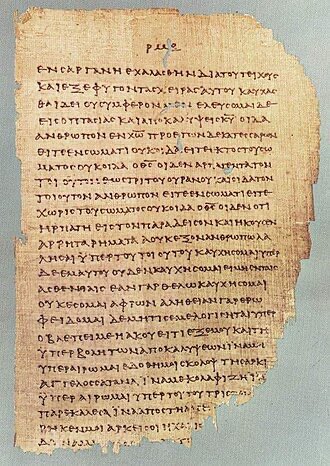
The New Testament is the most well-preserved ancient document in history.
There are over 5,800 Greek manuscripts — and thousands more in Latin and other languages.
By comparison:
Most ancient works survive in fewer than 20 copies.
The message of Christ wasn’t whispered in secret.
It was copied.
Preserved.
Protected.
For centuries.
The oculus of the Pantheon is the only source of natural light for the ancient temple. No glass, no covering, nothing between the interior and the elements. Which raises an obvious question: what happens when it rains?
The answer reveals just how brilliantly the Romans thought ahead. The oculus is not a design flaw... it is part of a carefully engineered system. As warm air rises and escapes through the opening, it creates a convective current that accelerates drying after a downpour. Meanwhile, the rotunda's floor, concave at its center, was deliberately shaped to collect any rainwater that does enter and funnel it toward 22 drainage holes hidden in its surface.
Nothing was left to chance.
And yet, for centuries, many believed that rain never entered the Pantheon at all. The legend, born when the building functioned as a church, held that the heat of countless candles burning inside would generate a rising column of air so powerful it could atomize falling droplets, making rainfall virtually invisible.
Nearly two thousand years after its construction, this marvel remains the largest unreinforced concrete dome ever built on Earth.
Yes, through fetal microchimerism—a well-documented scientific phenomenon—cells from a child (you, as the fetus) cross into the mother's bloodstream during pregnancy and can persist in her tissues, organs (including the heart), and bone marrow for decades or even a lifetime.
It's bidirectional too: some of her cells stay in you. The images illustrate this cellular exchange and the enduring bond. Fascinating biology, not magic!
The Shroud “Wipe Test”, Explain This MethodThat layer on the glass is the Shroud image. Watch it wipe off, then tell me the mechanism that fits: surface-only, no pigment layer. Comment your best method.
𝗜𝗳 𝘁𝗵𝗲 𝗥𝗼𝘀𝗮𝗿𝘆 𝘄𝗲𝗿𝗲 𝘂𝘀𝗲𝗹𝗲𝘀𝘀, 𝘁𝗵𝗲 𝗱𝗲𝘃𝗶𝗹 𝘄𝗼𝘂𝗹𝗱 𝗻𝗼𝘁 𝗵𝗮𝘁𝗲 𝗶𝘁 𝘁𝗵𝗶𝘀 𝗺𝘂𝗰𝗵. 📿🔥
Fifteen promises were given to those who pray it faithfully.
Not vague feelings. Not aesthetic spirituality.
Actual promises: protection, grace, perseverance, and help at the hour of death.
This is why the Rosary has survived empires, heresies, revolutions, and hell itself.
You don’t pray it because it’s pretty.
You pray it because it works.
Our Lady didn’t offer suggestions.
She gave instructions.
Sit with that. 📿✝️
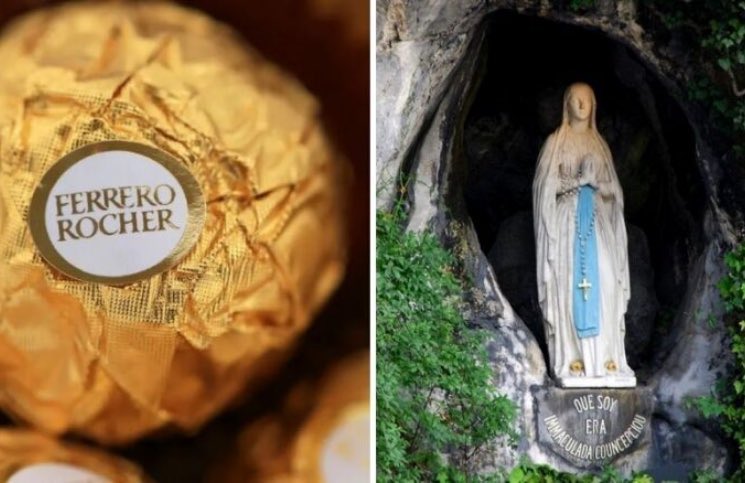
Michele Ferrero, the Italian billionaire who founded the Ferrero group, one of the top chocolate manufacturers in the world, was a devout Catholic who held a special devotion to Our Lady of Lourdes. It's said that the company's chocolate brand, Ferrero Rocher, was named in reference to the grotto of Massabielle, where the Virgin Mary appeared in Lourdes. "Rocher" means "rock" in French, and the chocolate wrapper indeed resembles the surface of a rock, which could be a nod to the rock walls of Lourdes where Our Lady appeared. It's rumored that he placed an image of Mary in each of his factory buildings. On the occasion of the company's 50th anniversary, Ferrero remarked, "We owe Ferrero's success to Our Lady of Lourdes. Without her, we can do very little."
PRIESTS ARE NOT SUPERHUMAN
Last Saturday, July 5, 2025, Fr. Matteo Balzano, a Catholic priest of the diocese of Novara in Italy was found lifeless in the parish rectory where he was working as an associate priest. He was 35 years old and just 8 years in the priesthood. That morning, his parishioners had come for Mass as usual but when they could not see their priest (which was unusual), they went and found him dead in his room. He had taken his own life.
In November 2024, Fr. Dennis Conway, another Catholic priest from a diocese in the United States of America also committed suicide. There are many other such tragic stories but they did not make it to the social media space. These are not isolated events. They are cries from a wounded priesthood that many still fail to see and echoes from the silent struggles of priests which many still fail to hear.
The society often views priests as flawless: always strong, always holy, always available. They are expected to counsel others but never break down, preach hope but never feel despair, carry burdens but never collapse. That image is not just wrong – it is deadly. I remember when I lost my immediate elder brother about 2 years ago and someone told me not to cry because I am a priest. I am happy I did not heed to that. I cried and till date, I still cry because I am human.
You see, behind every collar is a man - flesh and blood - who gets tired, feels lonely, battles doubts, and sometimes cries in silence. Yes, priests are consecrated, but not immune to depression, burnout, or trauma. They are not angels in cassocks. They are human.
The tragedy today is that when priests struggle, many suffer in silence. Why? Because society - even within the Church - often punishes vulnerability. People say: “How can you be tired?” “You are a priest, pray harder.” “You have no family - what stress do you have?”
This pressure to be perfect isolates priests. They fear being judged if they admit they are weak. So many wear a smile at the altar and carry hidden wounds in the dark. But remember that even Christ Himself wept. He felt anguish in Gethsemane. He got tired on the way to Calvary.
To the faithful, see your priests as human beings first, men called by grace, yes, but still human. See them as servants who need rest, not sacramental machines. See them as shepherds who also need tending. See them as brothers who need solidarity and mutual presence, not distant icons.
Pray for them - daily. Ask them sincerely: “How are you doing?” Allow them space to be human - without unrealistic expectations. Encourage professional mental and emotional support when needed. Stop gossiping and start listening.
Priestly ministry is beautiful, but it is hard. Really hard. Many priests carry griefs they cannot name, disappointments they cannot share, and expectations they cannot meet. Yet they show up - for us. Let us also show up - for them.
To every priest reading this: You are not alone. You are allowed to be human. Your worth is not in your performance. Even Christ fell under the weight of the Cross - and he got help. Do not be afraid to ask for help too. Do not be afraid to speak up. Reach out. Do not carry the burden alone and in silence. You are not a superhuman.
May the soul of Fr Matteo find rest in the Lord🙏🏿
Fr. Ugochukwu Ugwoke, ISch